
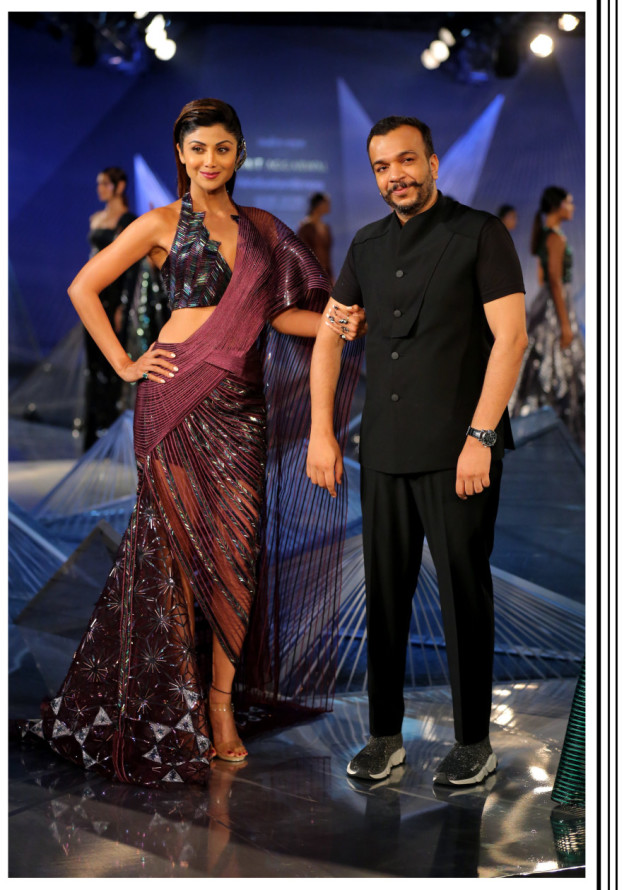
Evolution of primordial forms, the final frontier is what forms the basis of Amit Aggarwals couture offering as he delves deep into DNA of not just organisms, but also primates with Tanira Sethis luxurious groundwork.
By Asmita Aggarwal
It is his first couture show that is peppered with a mix of nervousness and some trepidation, but Amit Aggarwal is not one to succumb to the headiness of the heart, rather he lets his mind and logic rule. Thats why his line is a mix of maths, a subject only Gods selected few are chosen to understand and biology- how organisms exist in their structural quality. And the physics is what Amit adds as he attempts to replicate a bio organism, thats why the name of his line Crystalis, a blend of crystals with chrysalis, how a pupa becomes a butterfly, developing wings.
The key is decoding complex molecular structures and how they come together to form a pattern. Amit has this time worked with Tanira Sethi and highlighted only one fabric —- cashmere, hand woven in France, which has been the mainstay of Taniras brand. The difference is Tanira uses it in an unstitched form in a sari and Amit has given it shape, totally altering its soul but giving it a distinct dimension.
In the past, the designer repurposed brocade, Pochampally and bindi sheets as sustainability is the basis of his entire design approach, this year for ICW 2018, he and Tanira have made two dichotomous concepts come together —- luxury (cashmere) with industrial materials (metallic strips). His embroideries are not done with fine resham threads, but metallic waste strips and he has done even zardosi and aari work like rendition using strips that create a grid of sophistication.
It has been a labourious, and painstaking journey and the intricate workmanship from moodboard to final ensemble is what has kept us up for the last three months, he says. Earlier Amit used glass and plastic to execute his embroideries, heat moulding, cording and draping to craft a new language in couture. Women today are not looking at clothes as just what they seem like, in fact it is an extension of their personalities. Marriage too, even though it is traditional, is not considered an occasion where you cant be yourself. Thats why it has become calmer in terms of both colours and cuts, women dont want to be swimming in layers of fabrics, he explains.
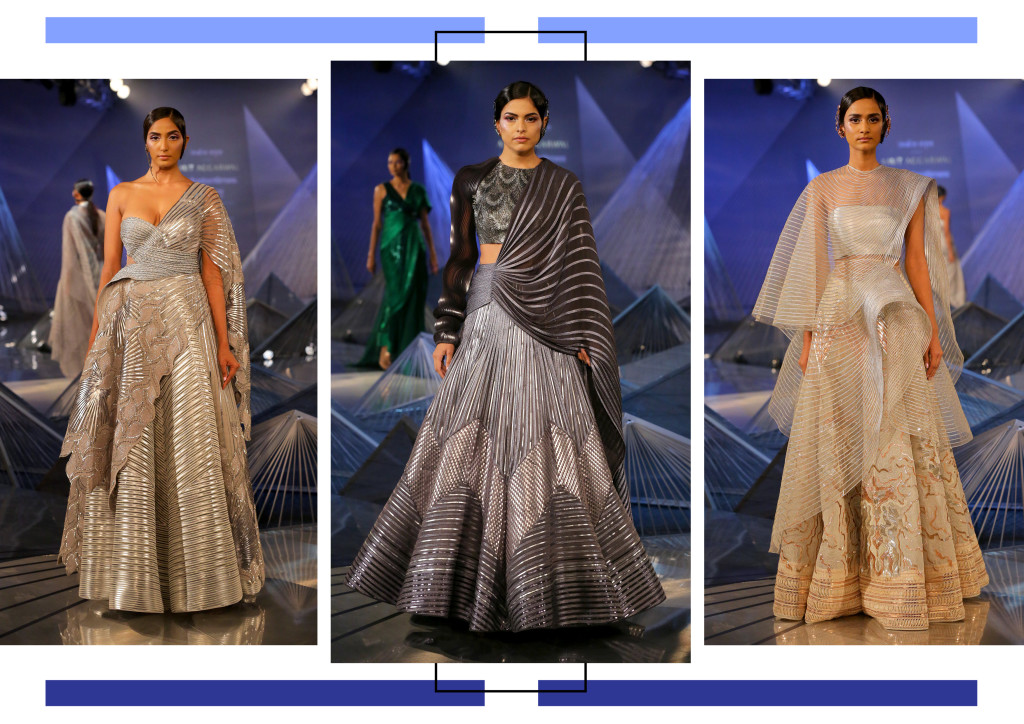
There are no can cans under his lehengas and the structure comes from pattern cutting keeping all his outfits, including the most outlandish one below one-and-a-half kilo. Weightless is the new cool, along with airy and breezy looks, heavy is out and so is the desire, to look like a light bulb on your W-day.
The lace that he added adds drama and the glass pipes as embellishment glamour, along with tapes and chords (some have fine badla work inside) making it impossible to even see the underneath fabric (fine silks and georgettes) as it is so nattily surface treated. The lehenga and sari have been combined to create a cross breed or sorts, a morphed version.
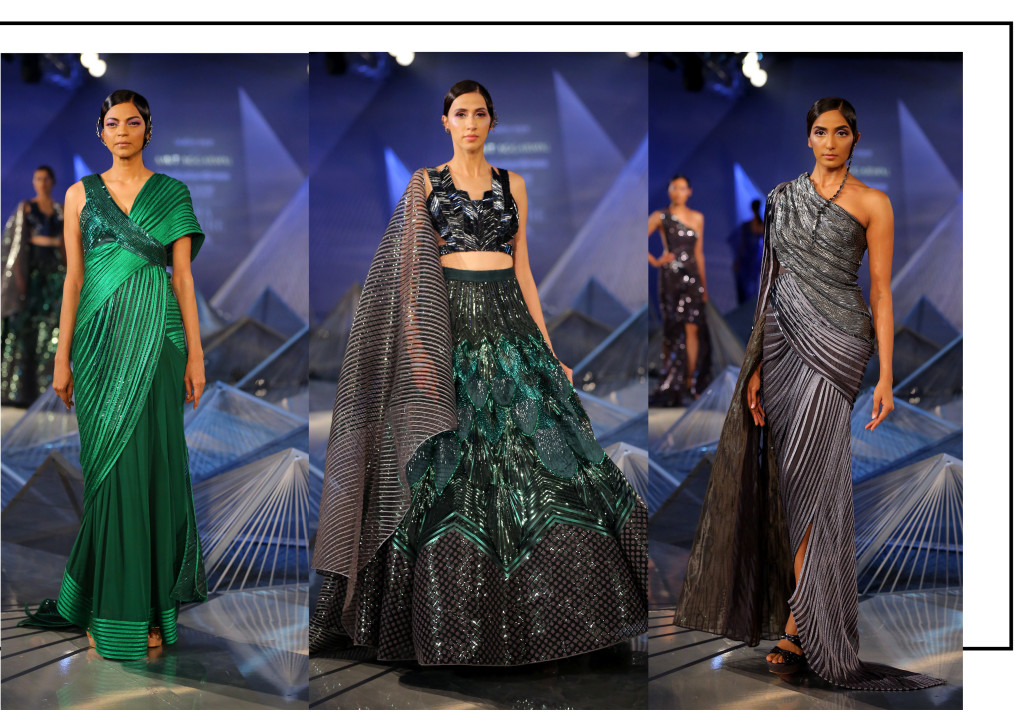
Amit realises that being weighed down literally and metaphorically by tradition or the lehenga is obsolete, and globalisation has paved the way for looking at the narrative through the prism of changing times. The millennials are not ones to blindly follow or ape Bollywood even though visually it has marketability and star power and can give your brand impetus. So when we say here comes the bride this time around, she might not be wearing red, and she may choose to keep it light and not like zardosi but just something that declares her independence is more subtle and sensitive ways!