
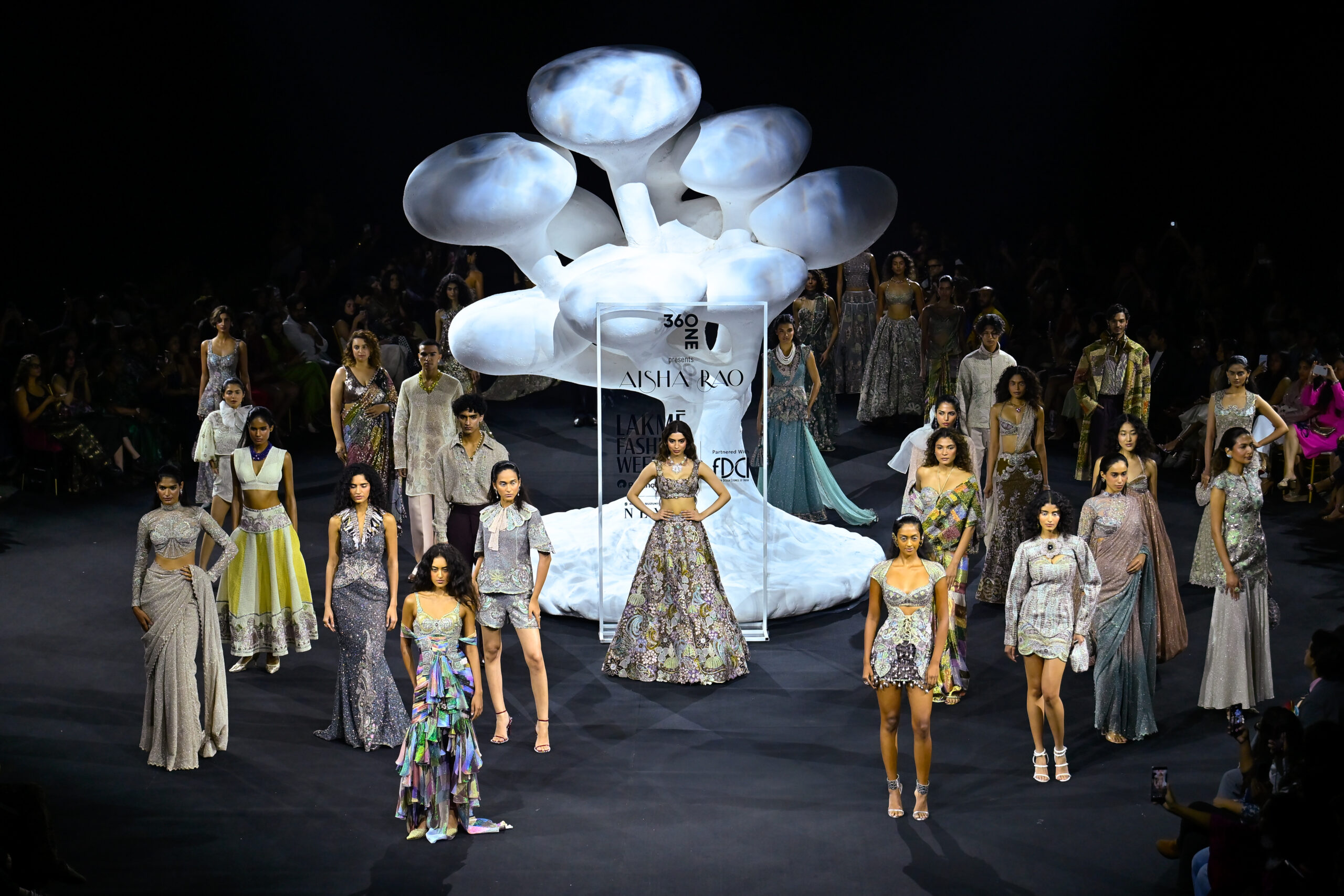
From unabashedly loving colour, paying tribute to Japanese flowers, to engineering her own mesh-like fabric for LFW, Aisha Rao, hopes to go “green” by being mindful.
By Asmita Aggarwal
If you ever see Aisha Rao’s Hyderabad home, you will know how her upcycled philosophy reflects there too! The terrazzo tiles, almost 12 to 13 different colours have been used in the dining area, they were lying waste. She decided to break them down, add vibrancy all over the place, where she enjoys meals with her family. After all it was a monumental effort, took four years to build, she feels a sense of despondency when you ask if sustainability in bridal wear can be ever possible?
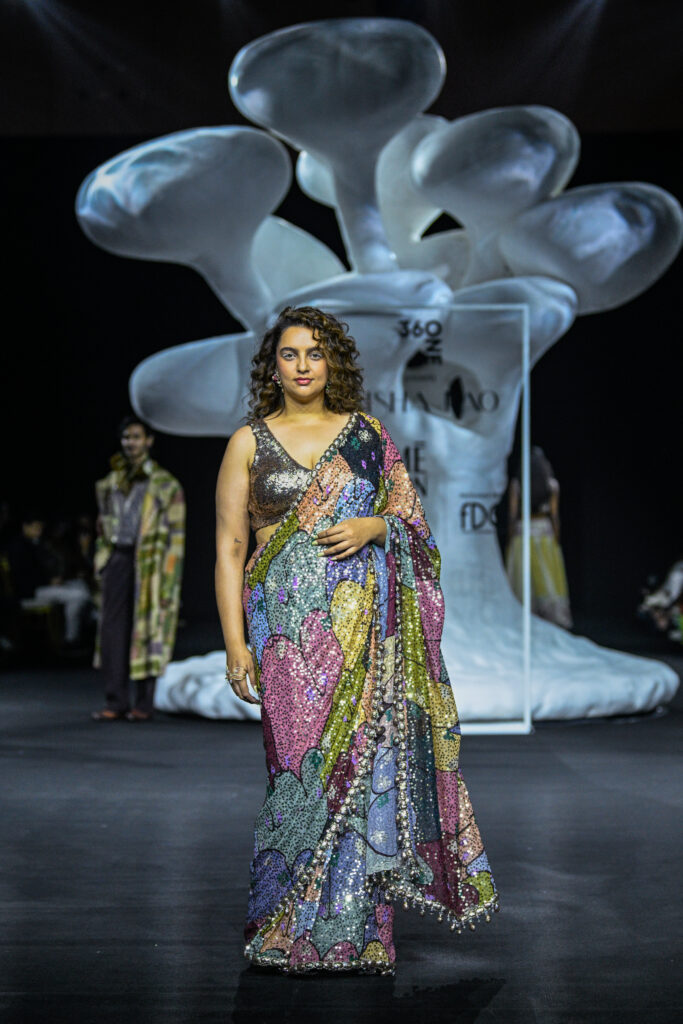
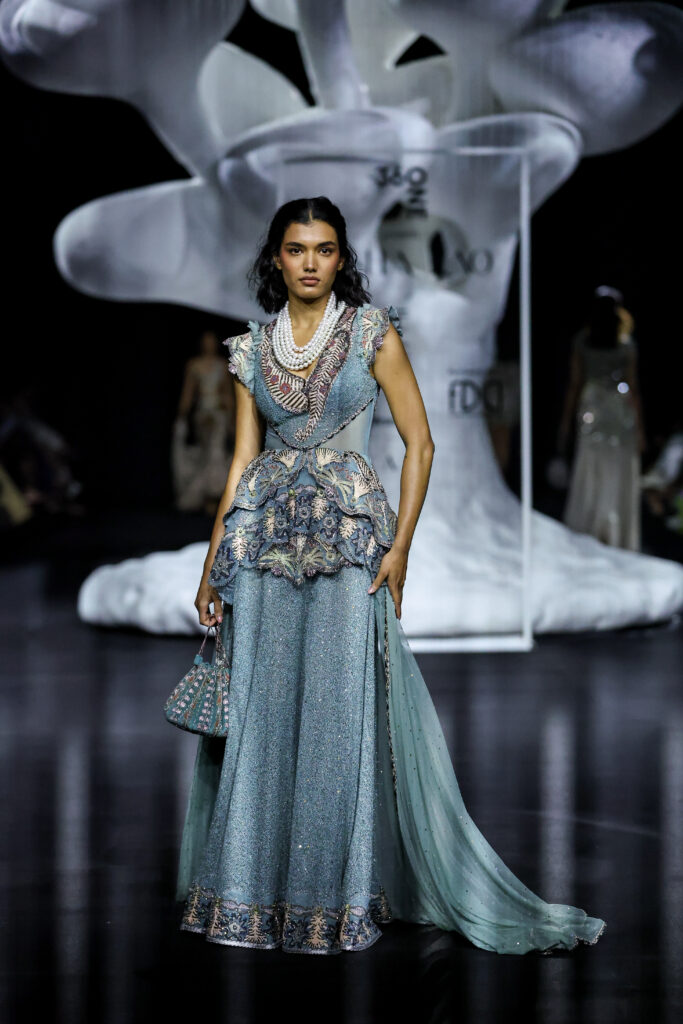
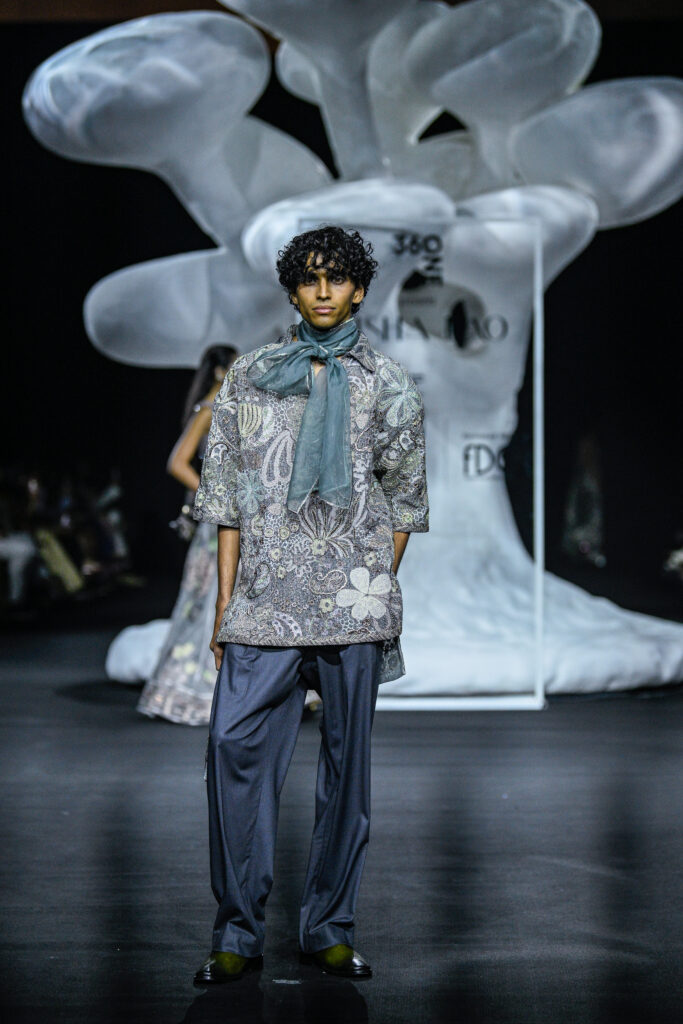
Brides who are generally eco-conscious also don’t want to channel this “green” sentiment on their big day—”there is a general apathy, I feel if you are really green it must reflect in your daily grind,” she clarifies adding you must be mindful of everything from leaving lights on, to indiscriminate use to air conditioning, or choosing to take out the car for small distances.
Her style for LFW is predominantly pret, Indian modern style, funky shararas, co-ords, dressy (you can wear on destination weddings) in wearable silhouettes, she decided she will make her own fabric rather than sourcing from China/Korea. “After R and D we made a mesh-like fabric—using badla, Resham, cotton threads– jaal was engineered,” she adds, saying it was a laborious time-consuming process using water soluble paper.
The collection is titled “Inter-Hana”, “Hana” refers to in Japan, appreciating seasonal beauty, flowers — rebirth and renewal of spring, et al. Inter translates to in between seasons, also interwoven (like Interlaken in Switzerland ‘in between lakes’).
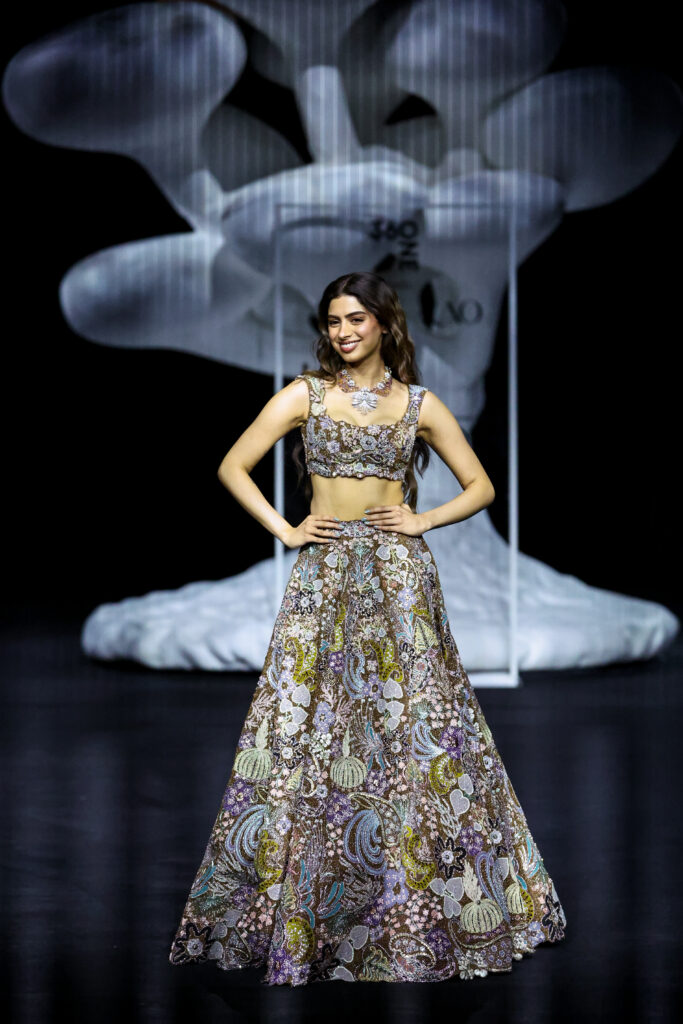
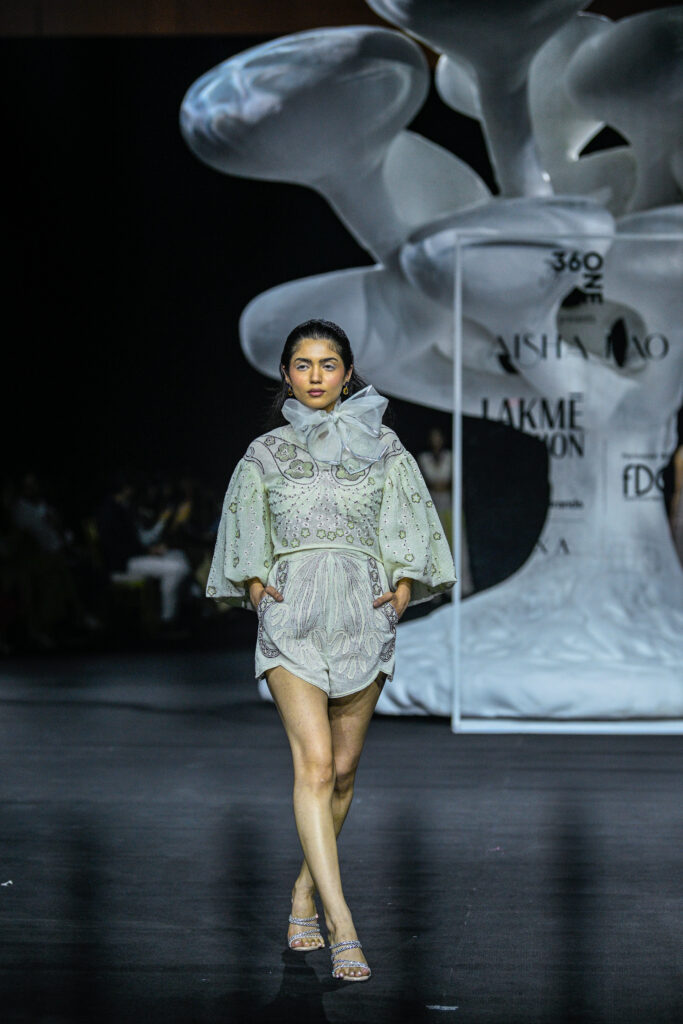
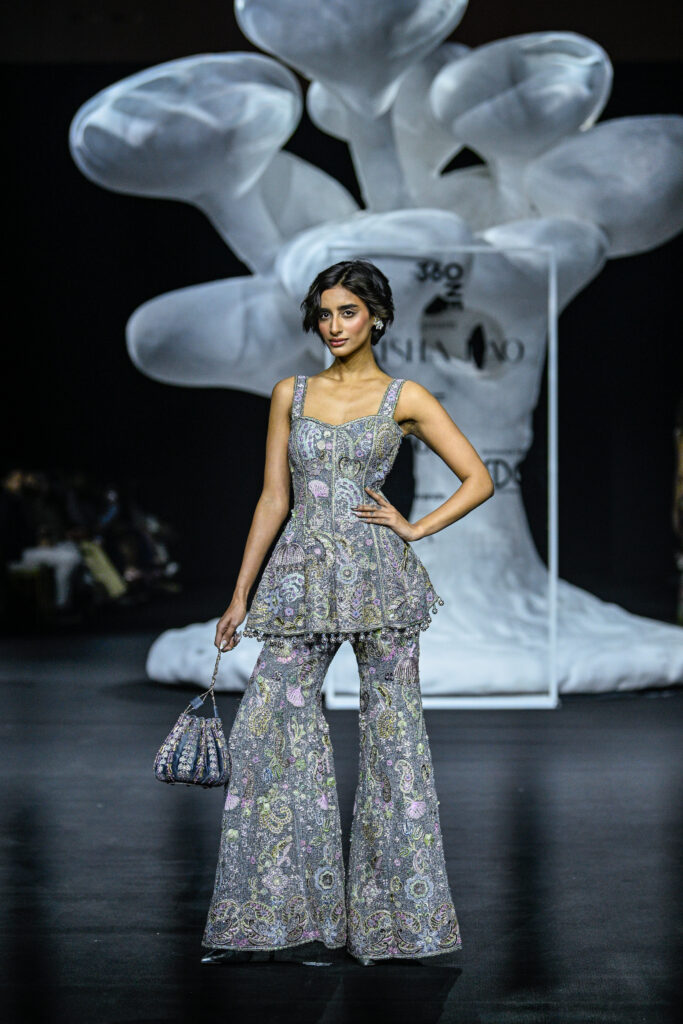
For her sustainability is not just about crafts, and artisans, but also how well you treat and pay your workers, at the grassroot level, giving them PF to ESR. She has also taken the first step towards setting up an ETP effluent treatment plant in her factory, along with getting solar equipped, moving to an industrial zone. “We wanted product level self-reliance, didn’t want to import, you can see what is happening geo-politically, we try to source domestically,” she adds.
Interestingly her bestselling lehenga “Dreamlight” has an engaging soulful story behind it, it may be wild at heart, using an avalanche of sequins, beads, bugle beads, nakshi to poth, but the beauty is all the things that fall down, during reversing is not thrown away, but washed, cleaned, and reused. “I’m not saying I am zero waste, but re-embellishment can save waste, lessen carbon footprint. We buy a Tesla, not because it is electric, but it is also a beautiful looking car, with great design,” she smiles.
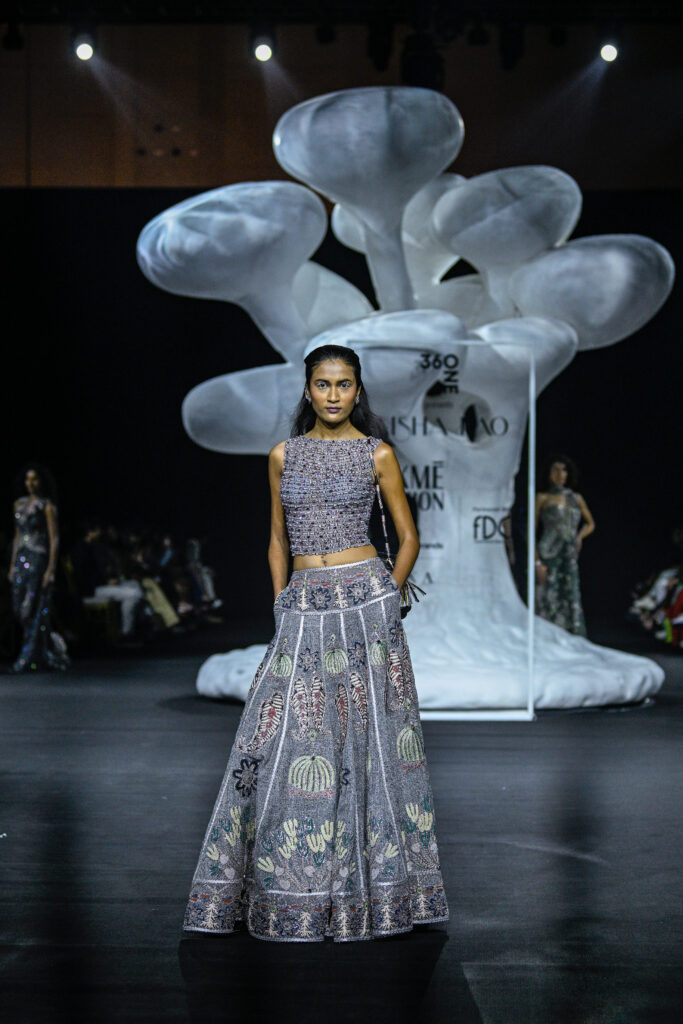
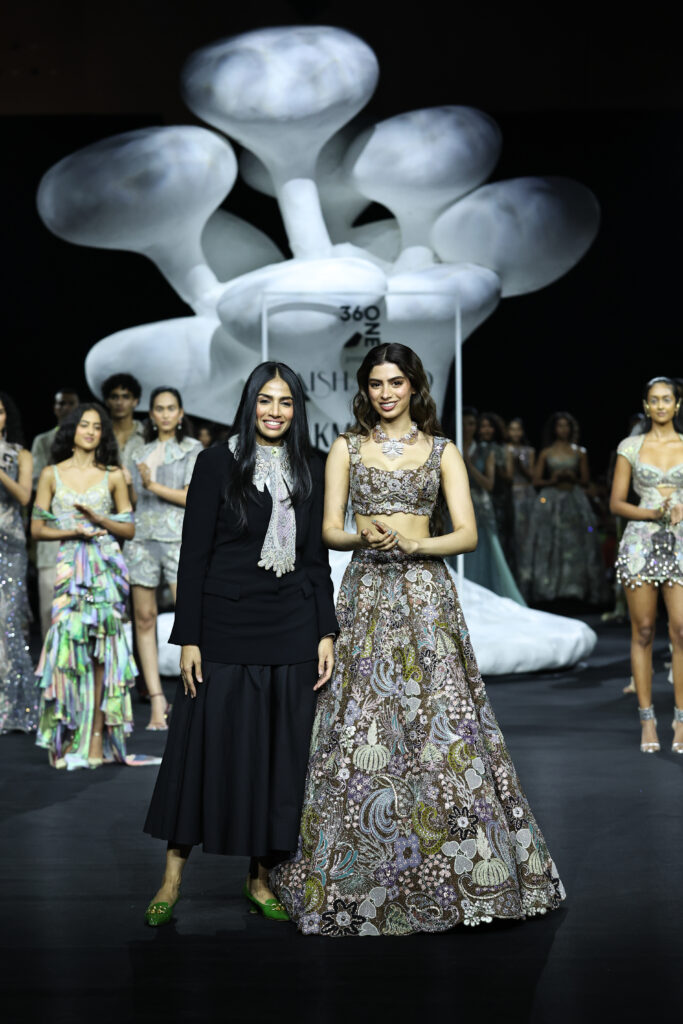
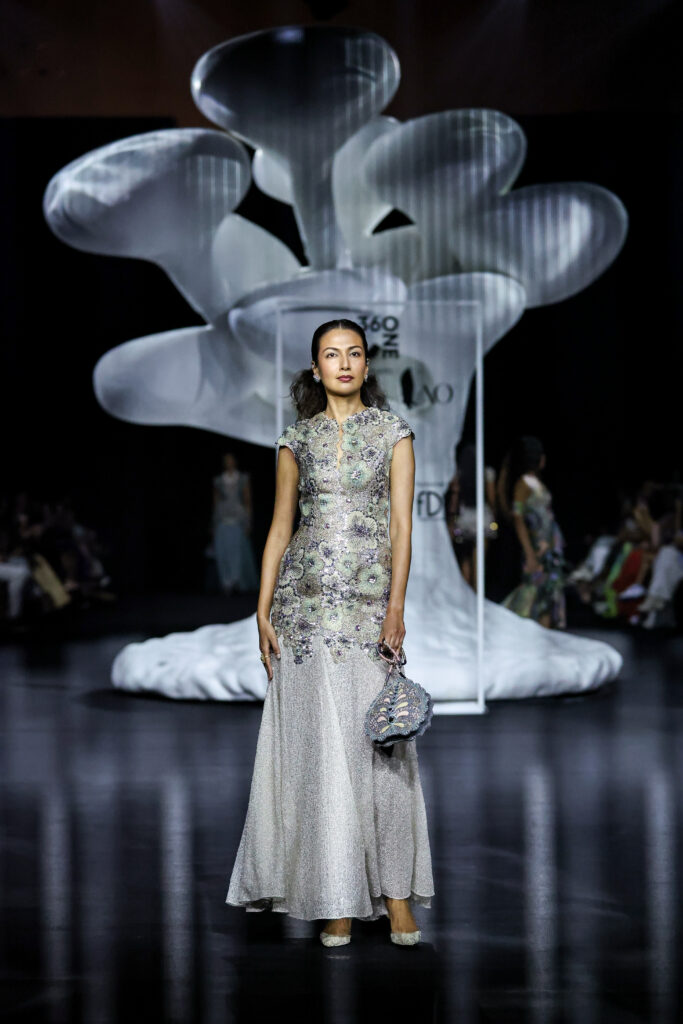
The difference between Hyderabad and Delhi even though they both love bling is people here care about quality, willing to pay any price for it; even men are opening to colour albeit slowly. “I love the exuberance hues offer, it’s my signature I can never get enough of it. But having said that we down South always celebrate our culture. Rashmika from Coorg, draped saris in Telugu way, Vijay wore a dhoti, with an elastic on top. If you see my home, it’s a riot of conflicting and contrasting shades, just like my wardrobe, not grey or beige,” she laughs. Though she believes your environment influences you, even the way you think, her husband has also attempted to adopt tonality abandoning blacks, “it is a good stimulation” she laughs.
Crafts are always on her mind—raffia interwoven in mesh, dori techniques, macrame approach, offering a crochet look, not French, but an Indian undertone is done in-house. Influencer Juhi Patel VMA look with those swinging tassels- hand-embroidered with beads, sequins, crystals, and layers of fine thread work was a winner. “It took 900 hours to make this gown, almost 1,500 tassels, hand-knotted individually along with embroidery with over 70 shades of thread,” concludes Aisha.