
The grand finale designer Aneeth Arora takes us on a round trip from Swedish pottery Delft, Chinese porcelain to French textiles toile de Jouy at LFW.
By Asmita Aggarwal
It is “finally finale” Aneeth Arora grins as she enters the 16th year of her brand Pero, ready to dazzle us with her handmade with love wonders at the LFW X FDCI finale. The NID Ahmedabad alumni who studied at NIFT, knew at 18, she had to move out of Udaipur, her hometown and that adventure brought her to Delhi.
Her innate sense of simplicity comes from her mother, who would stitch her dresses, and now works with her (factory) along with 60 in-house women artisans they support. “I’m in awe of these hard-working women-get up early, cook and clean for entire family, work with us, go home, then again feed their kids. Even then they are ready to do overtime. Just like my mom who comes home with me, then wants to make something nutritious for dinner,” she adds.
Her brother who is “money man” in the family is the “mind” of the business, Aneeth calls herself the “heart”. There are no distractions in Aneeth’s life, there is intense focus, just like her Hello Kitty collaborations, make each piece labour consuming but edgy. “Growing up I never had many toys, I was always in my own world, got an occasional Barbie when I got good ranks. I learnt how to be open hearted like my mom, pour her love, it helped me through life, and specially living in a city as cut throat as Delhi,” she laughs.
Recalling an interesting incident, she says, she was asked to sew buttons on her dad’s shirt, she resisted, little did she know that would be her life! Didn’t know she would do clothing, before like all girls, confused, she wrote exams, took coaching classes for architecture, fine arts, applying to NID to NIFT. “I didn’t clear the NID exam first time, studied textiles in NIFT. I do believe in the universe and its magic tremendously,” she affirms.
In these 16 year-long journeys, she has learnt to be grateful, realized she can’t do this alone, she has thus built a strong team. “I was simple, had not studied business, observed no one was doing Jamdanis, started getting them specially woven, got many orders. Thought I was doing something right,” she adds. The same experience was with crochet, but clusters move at snail’s speed. She learnt how to deal with that too, now nothing fazes her. “We work six months in advance, this year the theme for LFW finale was blue and white, it was a seamless fit,” she says.
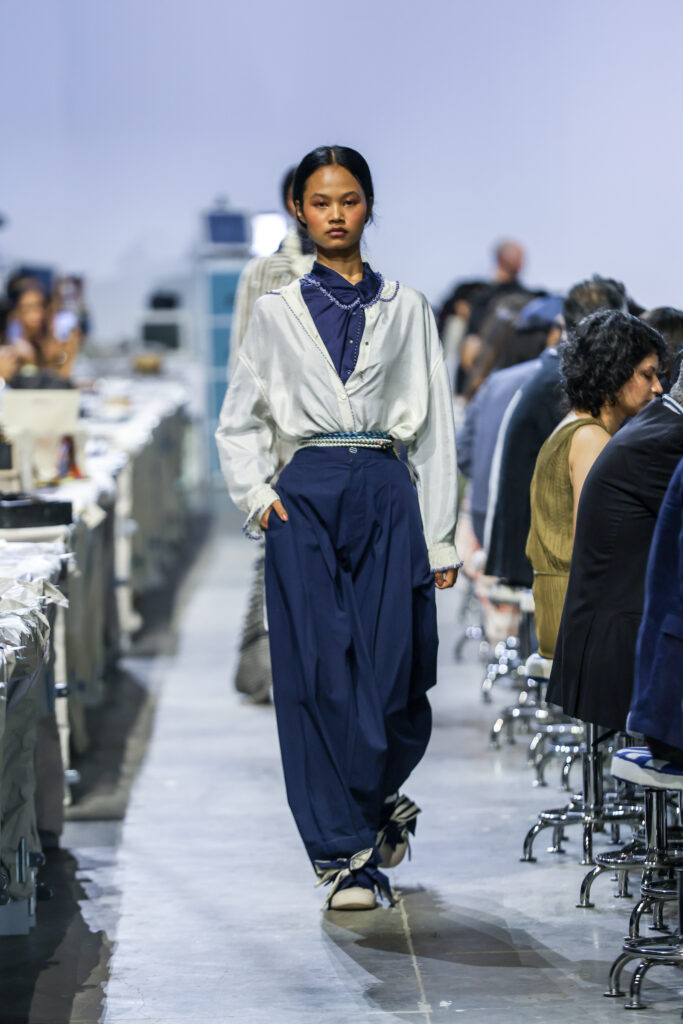
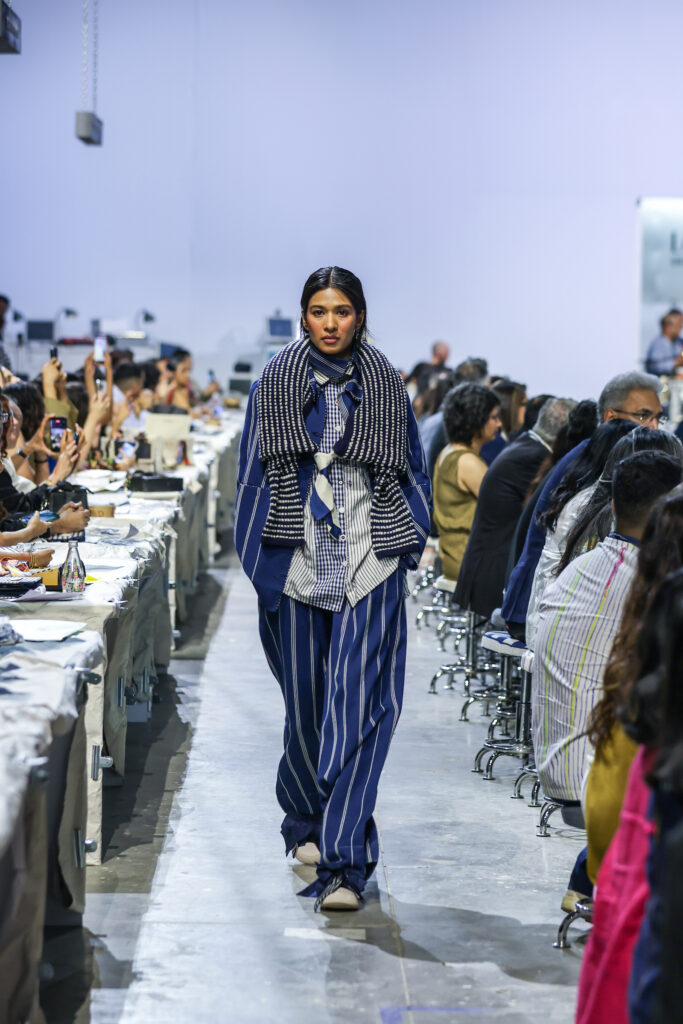
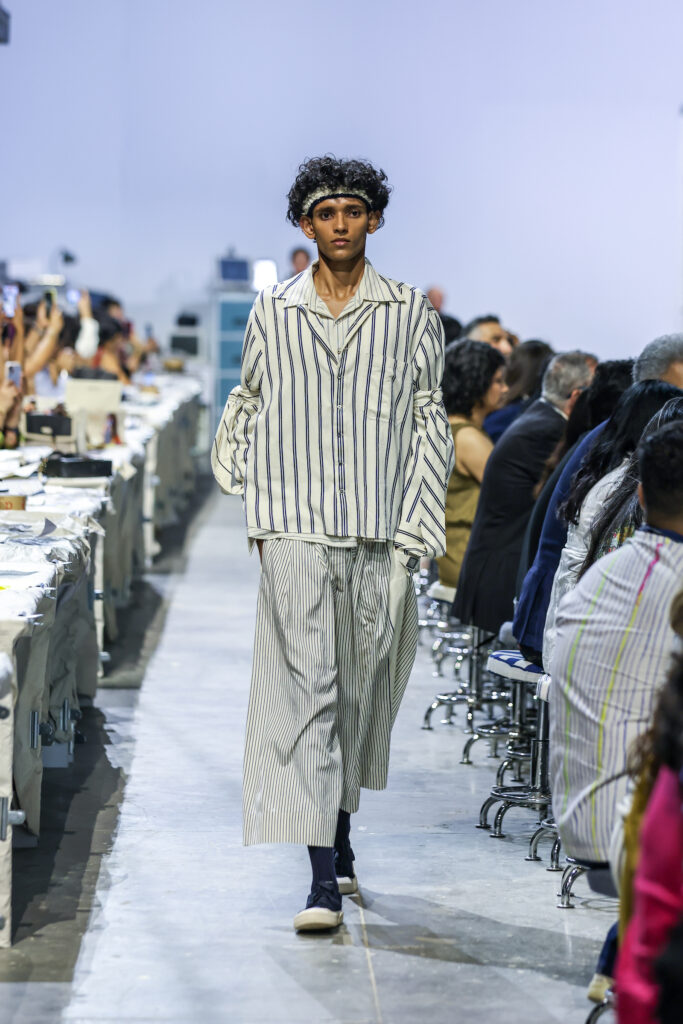
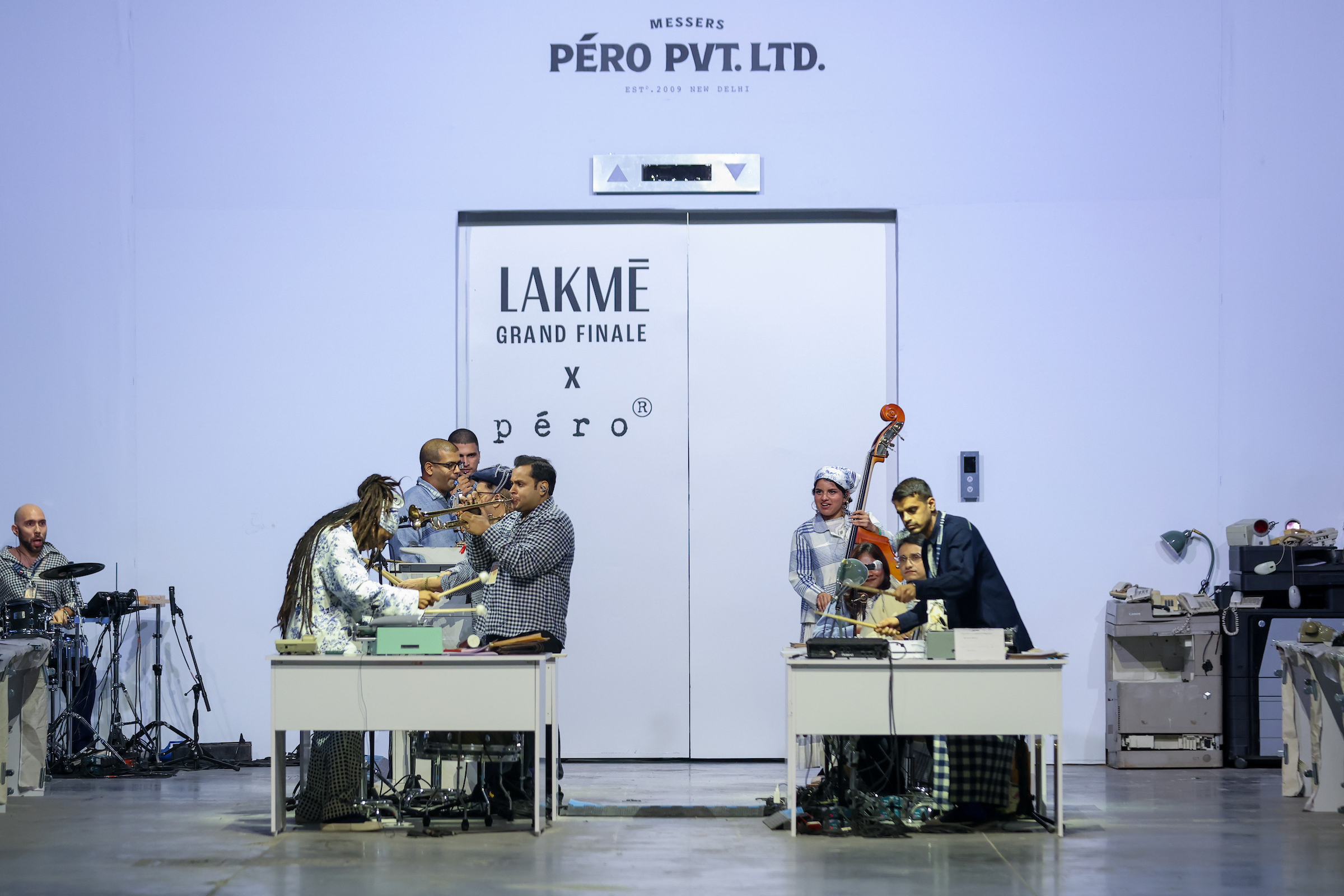
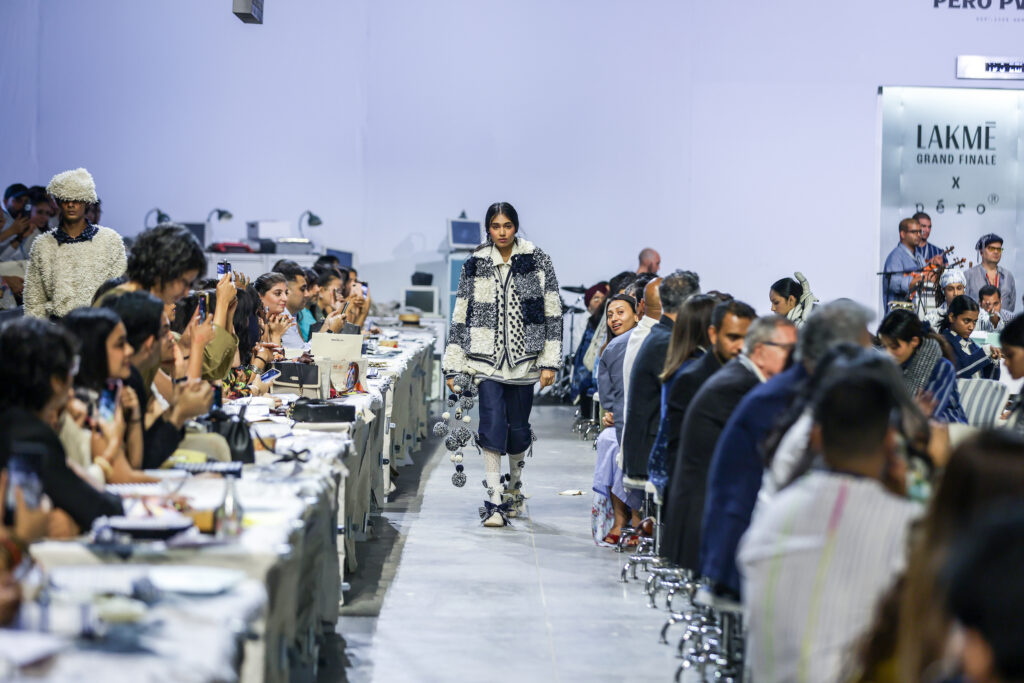
She is showcasing a winter line as per the season, even though in India there isn’t a heavy winter. Her austere theme – being at office from 9 am to 5 pm and then looking forward to that freedom, “breaking free”! Basically the “out of office” feeling.
“Imagine that emotion when you are writing an email to take seven days off, I’m trying to encapsulate that happiness,” she laughs. She designs clothes not just for working women, but as separates, something you can add to your existing wardrobe. “We had a 75-year-old client who still hasn’t lost the child within,” admits Aneeth.
There are always add ons to all her styles, pom poms, tassels, to frills. The process is like a child who is sitting with her Legos on the floor, trying to build something new and exciting with the same blocks.
Aditi Ranjan, her professor at NID, said to her, “don’t stop the creative exploration till you are satisfied, always begin from the simplest idea,” she remembers. This thought translates to her khadi with just red selvage, she often says, people must wonder how it is made. Never compromising on quality, “one artisan one piece philosophy” she channels.
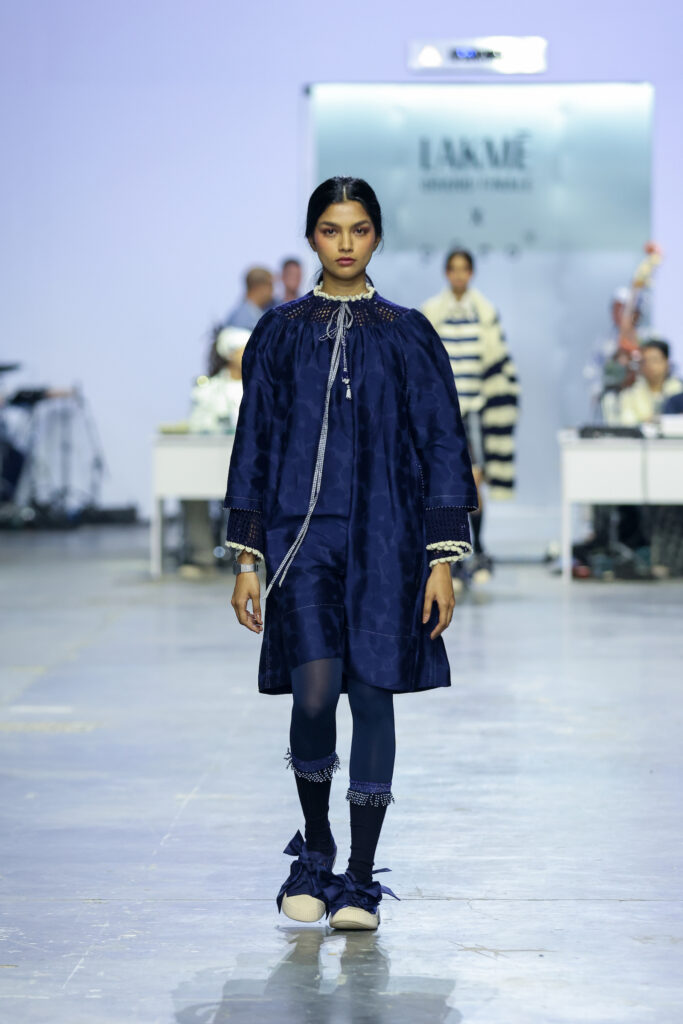
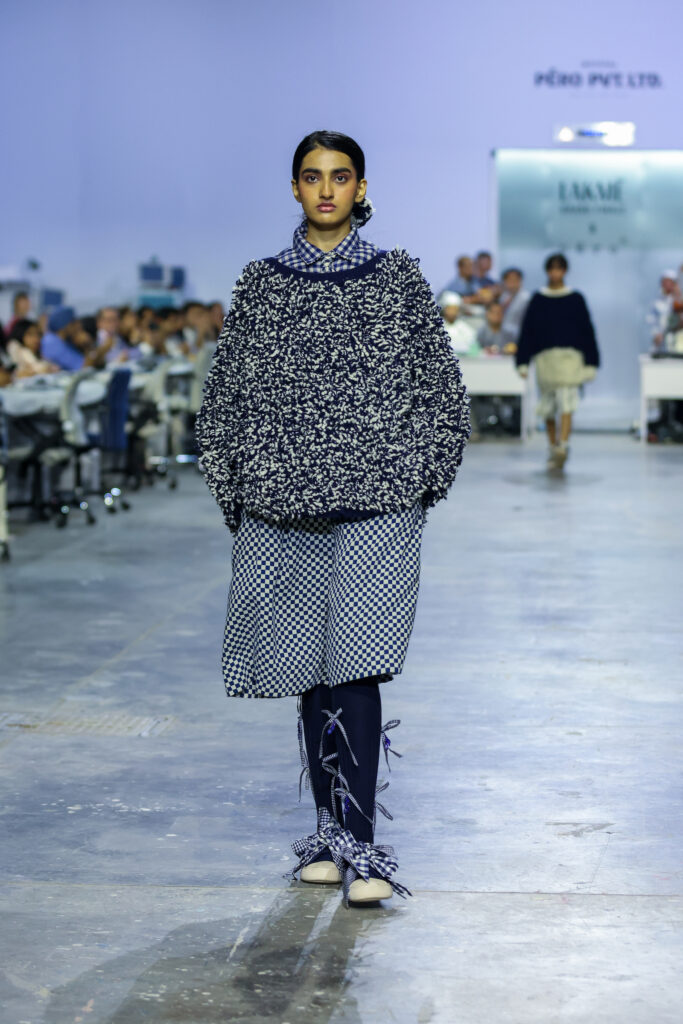
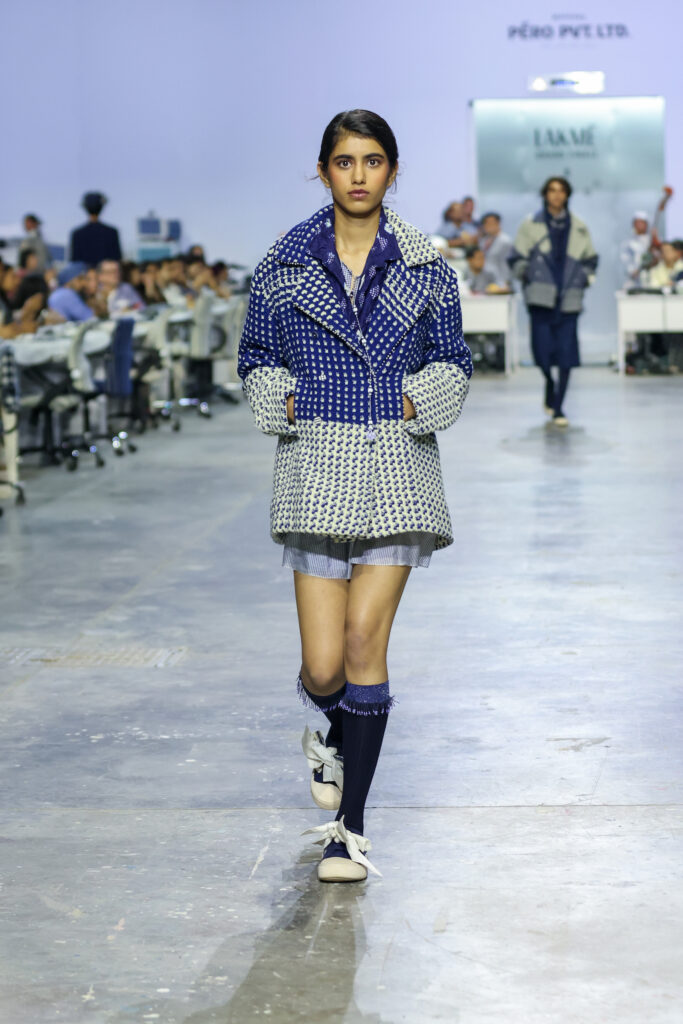
This LFW, she has done navy and white, it is a shift and surprise as she is known for her burst of colours and florals, in French textile toile de Jouy or “cloth from Jouy” (a little town near Versailles) an integral part of French history.
It originated from Ireland, but Franco-German artisan Christophe-Philippe Oberkampf’s factory in Jouy-en-Josas, made it quintessentially French. “We have used references from Swedish pottery, 17th-18th century Dutch blue-and-white tin-glazed technique. There are references from Chinese porcelain too,” she explains.
Pero is a handmade luxury product, it is slow fashion, time consuming, but she never ever wants to do Paris Fashion Week. “It is a 15-minute show. Can one see the detailing? We have been doing trade shows from season one, from Tranoi, French, White in Milan, Premium in Berlin. They love our ikkats, bandhinis and Patola,” she explains, adding she likes the one-on-one interaction rather than an impersonal showcasing.
She has an enduring love affair with checks, NID exposed her to looms, the first pattern she ever made was checks. “It has endless possibilities, so many permutations and combinations can be achieved, it is also the simplest form of weaving,” she concludes.