
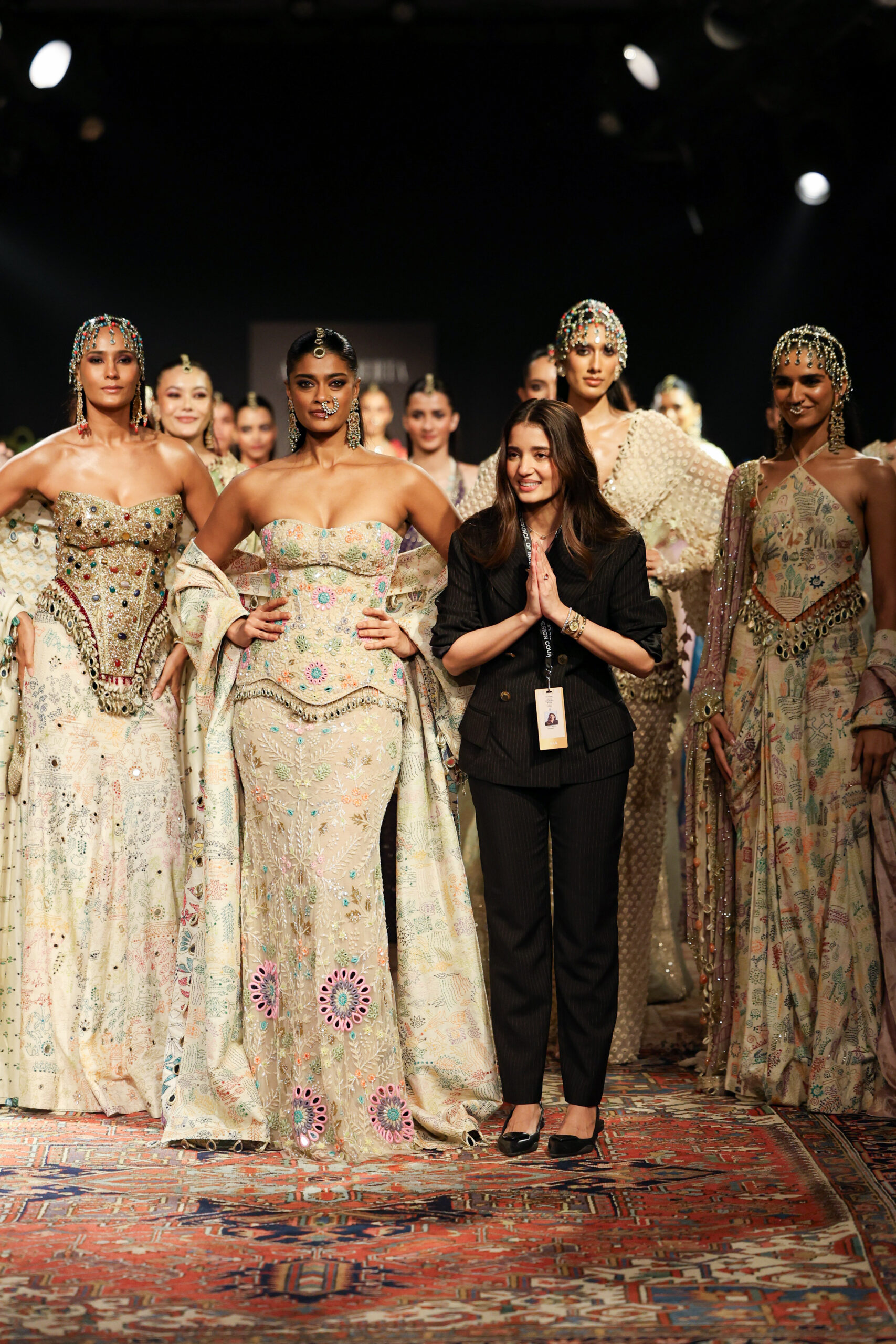
Whether it is Anshula Kapoor, or Suhana Khan, even Natasha Poonawala, Arpita Mehta dressed them in traditional crafts, with a modern twist.
By Asmita Aggarwal
“I’m a Gujarati, I grew up around Bandhini and mirror work, it is part of my DNA, most religious occasions at home, we would be dressed up. I saw my aunts, grandmom, mom in saris. I knew I would work with it,” says designer Arpita Mehta, who studied Apparel Manufacture and Dress Design from SNDT University in Mumbai, later interning with Manish Malhotra.
The craft gradually found its way into bridal wear, but subtle difference was -it wasn’t done traditional Gujarati multi-coloured, loud way, but a more nuanced look. “I think I learn with every line I make, embroidery I can control in-house, but when you work with artisans you need to work around their deadlines. Real craft takes time-looms are to be worshipped,” she adds, smiling, “No piece will ever be the same wherein lies its beauty.”
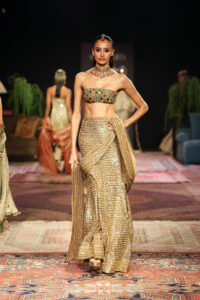
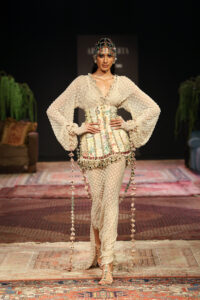
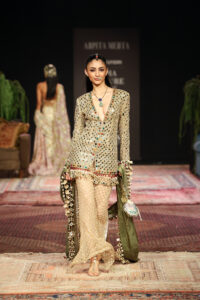
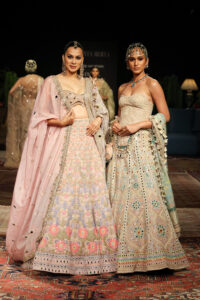
Two years back Arpita’s journey began working with Bandhani, she wanted to do justice to its appeal, but wanted it watered down. It wasn’t conventional shape-ghagra choli, it was tone-on-tone, single tone, neither did it have Kutchi or kori work. “It had more finesse, smaller bandhans were made, generally it is done on Gajji silk, she transferred it on crepes and georgettes, with cut dana. “I took away the colour and decided to offer pastels.
This year she also made her closest friend feel special-Anshula Kapoor, producer Boney Kapoor’s daughter was getting married to a Gujarati screenwriter Rohan Thakkar. She wanted to wear Patola, double ikkat, so embroidery with applique with Patola motifs was her way to pay homage to childhood memories.
“The dupatta was naturally-dyed Patola with gold thread embroidery, a tedious piece which took two months to execute. I don’t think I can ever make a piece like this again,” she admits, adding her mom also wore a Patola, but the burst of colour wasn’t to her liking. “For Anshula’s choli-skirt was Bandhani and Banaresi, I wanted to reinterpret it.”
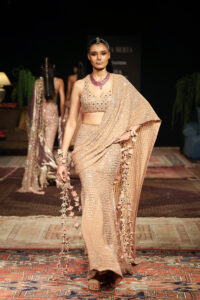
In May this year, Arpita decided to dress industrialist wife turned style maven Natasha Poonawala, in conjunction with stylist Rhea Kapoor for a charity ball in New York. “Kantha is a textile which hasn’t been explored in haute couture, so I deducted the drama and made it more versatile. “Couture should be relatable, not intimidating, but unique,” she confirms.
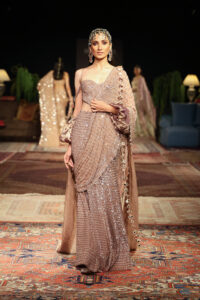
ICW 2026 there are lehengas, saris, corsets and pencil skirts—she is big on textile, Bandhini, tissue, kantha combined, the potential is immense. As she moves on to the 16th year in business, she wants to be honest to her vision, go by gut feeling. “It is fun working with self-made brides, they exude confidence, are more organised, and make my job simpler. Unlike the privileged who can’t make up their minds, spoilt for choice,” she adds.
Bollywood and social media have been a game changer, “everyone has an opinion, and that POV can also be bought for a price-it is a grey area,” she says, adding it is an additional advantage to be married to a “genius” Kunala Rawal, “we give each other candid feedback.”
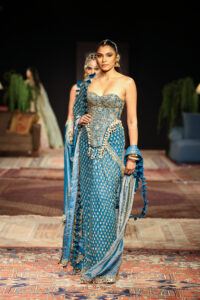
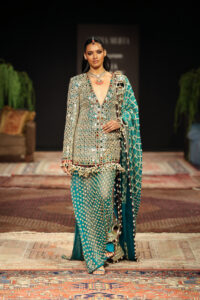
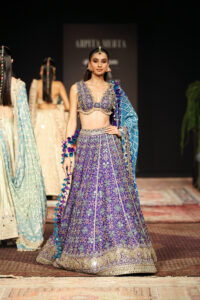
When she dressed Shah Rukh Khan’s daughter Suhana, in a tissue Muga silk sari, she loved it, “many young actresses may like corsets and gowns, but Suhana, loved the natural silk, ordered one in rose gold, kasab and tissue too.”