
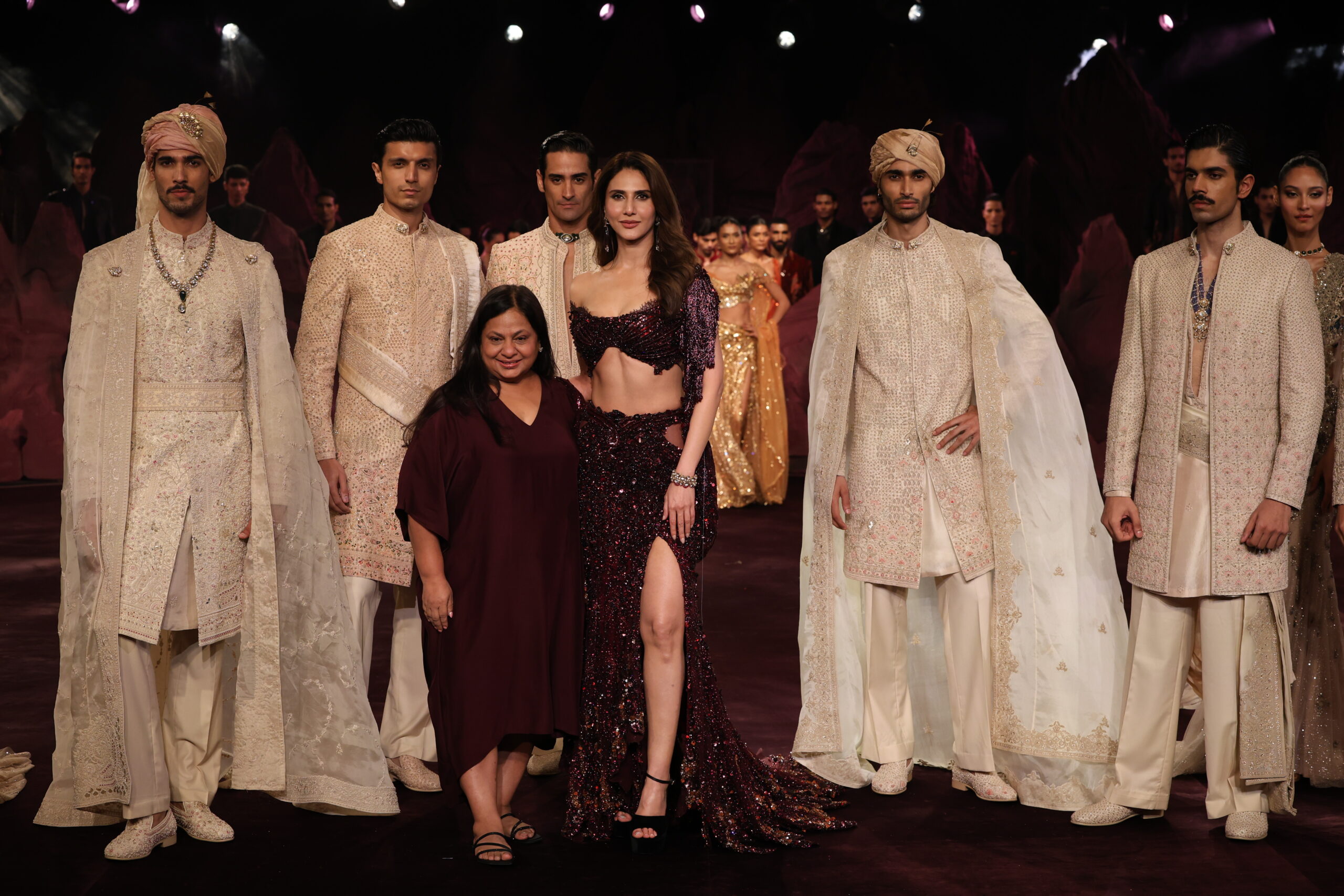
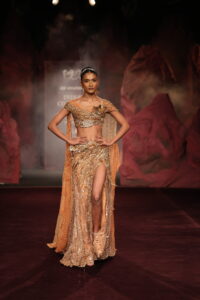
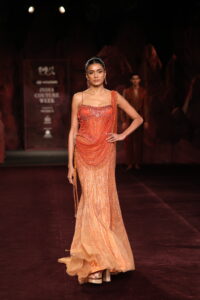
Designer brings the artistry of Kashida, jaali work as Kashmiri paisleys offer engaging textures; Vani Kapoor wears Brahm flower petals recreated in the trail of her aubergine gown, as menswear brings alive Jamevar embroidery.
By Asmita Aggarwal
The ICW set mimicked Himalayan mountains, abode of Lord Shiva, thus began on the chants of Aigiri Nandini, to Mahamrityunjaya, declaring how women today are unafraid, in more ways celebrating how they have come into their own. The spotlight wasn’t on a petite girl, who can carry off a slinky gown, but plus-size model/activist Sakshi Sindwani who managed to work it with equal ease. Dolly J studied at the Patna College of Art, grew up amongst gardens, mango farms, flowers, so the aromas of Floribunda, a large part of her carefree childhood in Patna, still fresh in her mind.
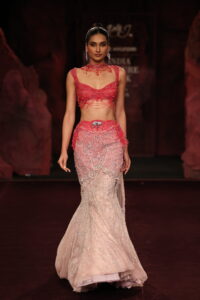
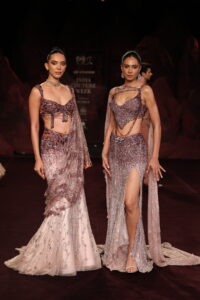
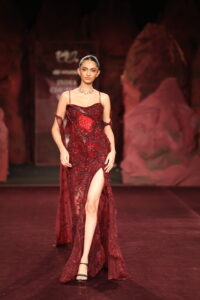
Dolly began as an artist, “steel man” Subodh Gupta was her senior in college, she was known for sculptures and oil on canvas, till she moved to designing. “Brahm Kamal no one sees blooming, as just for a few hours at night it comes to life and dies, like the soul, it leaves with us-an invisible force. I was looking for the meaning of life, Hindu texts offer that infinite wisdom– the ephemerality of life and its vagaries,” says Dolly. Thus, Vaani Kapoor’s trail is the petal mimicking the Brahm Kamal, which shows up in the form of brooches and clutches.
Dolly’s mother, a collector of textiles and art has been an integral part of design journey, the silver fans that she gave both the daughter, became ignition for her couture show just like the trunk full of Jamevars she left, collected over 90 years. “I have loved Kashida because of its intricacy, and to replicate the paisley was a task, as we embroidered it, took us almost six months, extremely delicate,” she adds.
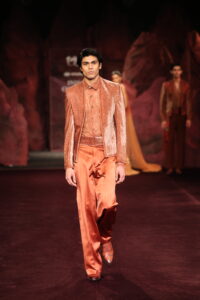
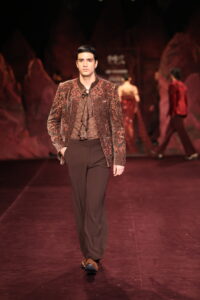
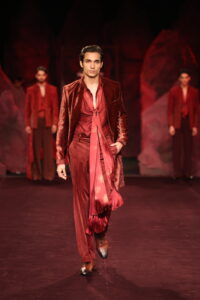
For the first time Dolly has introduced menswear, it comes emblazoned with lace, as she believes men are now wanting an X factor, “I’ve seen boys roaming around with swatches looking to match their bride’s lehenga. A large part is to also capture memories, plus social media pressure, they want to look equally good.” Couture has always felt deeply personal to Dolly Jhunjhunwala, it’s not about exquisite craftsmanship or beautiful silhouettes; it’s about the emotions they hold. “It can bring back nostalgia, mirror your mood, become a part of your story. For me, couture isn’t just fashion; it’s a feeling you carry with you, long after you’ve worn it,” says the self-taught designer. “My mother always said, ‘Never be afraid of failure.’ Those words have stayed with me throughout my life.”
True couture is inherently sustainable, it is crafted to be treasured, preserved, and passed down through generations. After 20 years in fashion, Dolly believes, many times she has seen ups and downs, business has weathered storms, but your passion is still alive, you’re already halfway there.
Her first runway show in India was in 2010, and it’s a moment she remembers with great fondness. The collection featured crochet kalidaar sarees adorned with intricate Pichwai-inspired embroidery. “Craftsmanship has always been the soul of our brand. Banarasi has been constant because of its rich heritage, though this year we’ve consciously taken a step back to explore new directions,” she adds.
This year at ICW the focus has been on menswear, highlighting the beauty of Kashmiri kashida embroidery. “I’m also excited to bring at least ten sarees to the runway this year,” she adds. “I’m quite surprised by how adventurous, aware men have become when it comes to dressing. The new-age groom is more open to experimenting with silhouettes, colours, rather than following only traditional choices,” she explains.
While classic sherwani will always hold its place for the D-day, the groom is looking for something more personal, an outfit that reflects his individuality and makes his celebration truly his own. “This year at ICW, I’m quite excited about how we have explored jaali work, created purely with weave of threads, with no cloth as the base and layered it over Kashmiri paisleys, creating a unique interplay of texture and artistry,” she adds.
“Indians have always shared a deep emotional connection with embroidery, it is a celebration of artistry, heritage, and storytelling. For me, luxury is not about excess; we create lighter lehengas by using refined techniques, thoughtful detailing, that allows the beauty to shine without overwhelming the wearer,” says Dolly.
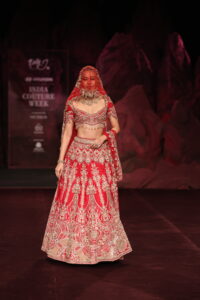
“Gen Z wants to enjoy weddings, dancing, not like us sitting on the stage, when we got married, so we make purpose driven clothing for a conscious generation, so that it can also be reused. Of course, I bring my grandma and mom’s emotions in what I do, so that it has enduring value for me. We have pre-stitched, pre-draped, saris with jaali work on pallu and skirts,” she explains.
“When I’m not designing, I’m someone who finds joy in the little things, spending time with my loved ones, observing the world around me, and drawing inspiration from everyday moments. I believe these experiences shape my creativity and keep me connected to life beyond fashion,” she concludes.