
Ready for a swim?
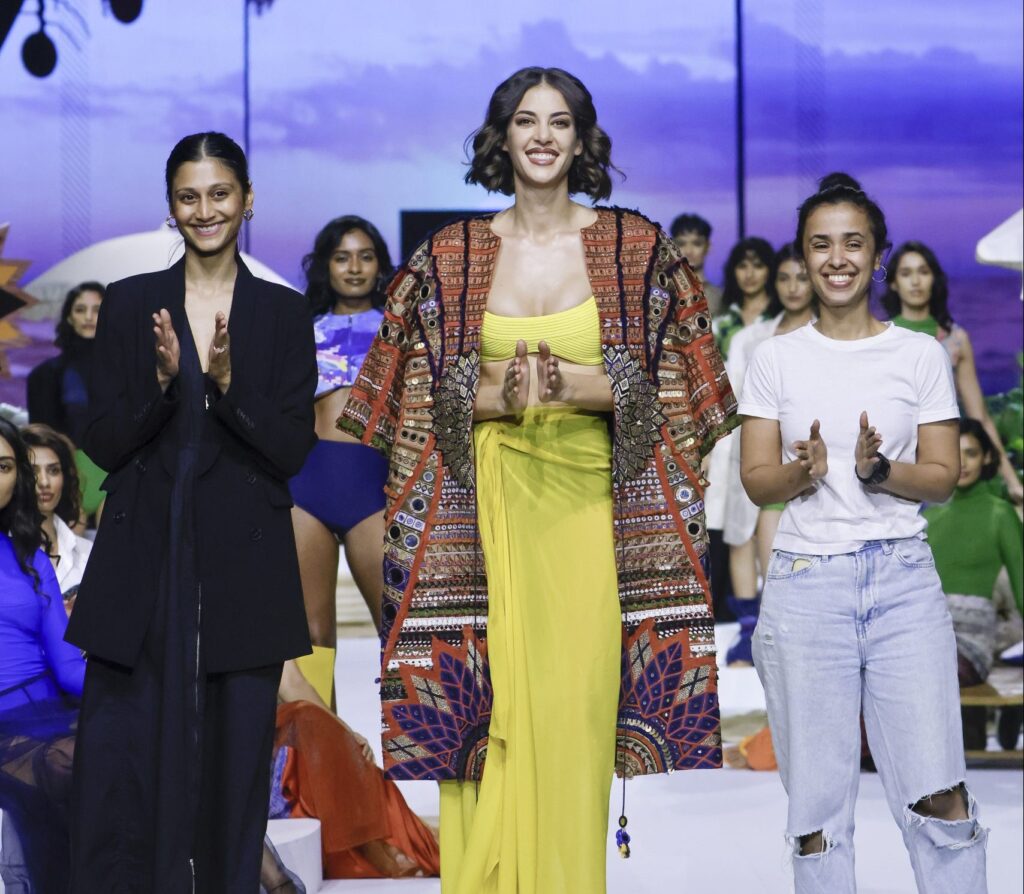
Saaksha Bhat and Kinnari Kamat launch a swimwear edition, complete with their signature micro pleating, and elevate it with quilting and ikat. But the Gujarati genes hold strong with their unadulterated love for mirror work! By Asmita Aggarwal Saaksha Bhat and her sister-in-law Kinnari Kamat, understand embroideries like no one else, after all they have been creating swatches for some of the best fashion houses from Elie Saab to Balmain to Gucci. And if you go by Bollywood popularity, Karisma Kapoor, Kalki Koechlin and Aditi Rao Hydari have loved their ode to craft. Kinnari Kamat, you could describe as craft lover, and Saaksha Parekh, a lawyer by profession, born and brought up in a family of actors and filmmakers knew the uphill task they would be submitted to in fashion, but that didnt deter their trajectory, only emboldened it! They dressed the Without Me hitmaker, Halsey in an infinity blouse and two-toned skirt, as well as Sharon Stone for the Drew Barrymore show; Saaksha exclaims, I think Indias beautiful prints, colours and most importantly hand craft which has intrigued the West. We have such a rich tapestry of artisans, and their work is so uniquely intricate which has put India firmly on the fashion map, she says and admits India-inspired prints, and micro-pleating have been the brands mainstay over the years. Kamats family is in the textile business, she studied fashion design from NIFT (National Institute of Fashion Technology) while Bhat, studied law at the University of Manchester (UK) and had a buzzing practice but they both confess their love for everything Indian—Ikats and lehriya prints layered with mirror work, tassels, thread work and appliqué, which they execute almost effortlessly. Bhat, who grew up in a South Indian family in Manchester and Kamat a Gujarati is from Liliya (in Amreli, Gujarat) thus the love for Bandhani, lehriya and aari work is evident. This season for LFW X FDCI 2024, they are introducing swimwear which is extremely exciting for us. We have done quilting techniques on top of the swimsuits to add richness and drama. We have added a lot of sheer chiffons and silks as layers to the resort wear making it fun and young. A key technique of the brand —– hand micro pleating takes centerstage with many garments utilizing this hand craft, says Kamat. Layered dresses, sheer skirts, and oversized blazers is the key to their look for 2024, the idea was to play around with masculinity and combine it with femininity. The play and balance with both you see an inspired form of the ikat in many garments that are unexpected – on swimwear and on skirts. We have used mirror work again in modern ways – lining the sleeves of capes, scattered on miniskirts and filling bomber jackets, says Kinni. For them doing womenswear and menswear is not very different, they are not as opposites as they once were. The modern man and modern woman have many similar qualities – they want to dress as chic-ly as possible without compromising on comfort. Oversized jackets have spilled into womenswear from menswear, and there is so much overlap when it comes to printed co ord sets, embroidered shirts and the use of silks and chiffons, says Saaksha. The outdoors was a big concept in their collection and introducing swimwear into the resort collection and emphasizing the need of getting outside in luxurious comfortable ensembles was their lighthouse. I would say prints are our forte. Its a difficult area to constantly innovate, as prints can be very polarising. They are usually loved or hated and seldom are people on the fence about them. Its important to keep finding sources of inspiration and what better country than India to deep dive into archives and history books, says Kinni. The women they design for have become bolder, more experimental in their choices and will not compromise on quality or comfort. Emotionally they are stronger than ever, resilient and know exactly what they want. They appreciate hand craft, locally sourced fabrics and ensembles that can be mixed and matched within their own wardrobes. It was important for us to make sure we design and sell separates that can be reworked, says Kinni. Staying relevant is an ongoing learning experience. It is important to keep one eye on the ball (your own creativity) but also a pulse on the ever-changing needs and wants of the modern woman. To survive you must be open to change, be humble and want to learn on an everyday basis. We still have not explored AI in the workplace. But of course, it will play a prominent part in years to come. AI will be able to design, conceptualize and execute. The digitalization of fashion is a reality not a question mark, concludes Saaksha.
Monochrome Contrasts
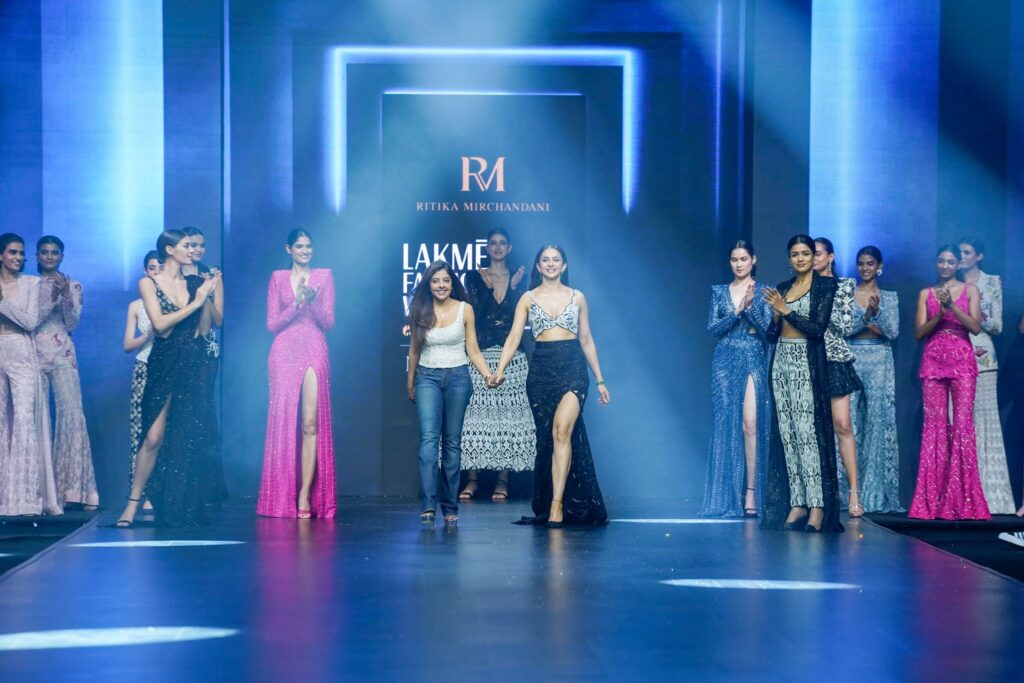
Ritika Mirchandani offers tone-on-tone, summer pastels with placement bling for occasion wear this season. By Asmita Aggarwal My mother has been the most inspiring figure in my life. As a designer herself, she introduced me to the world of fashion from a very young age. Growing up surrounded by her creativity and passion for design, deeply influenced my own interest in fashion. Her guidance, and support have been invaluable to me, shaping me into the designer I am today. She continues to motivate me with her talent, dedication, and love for fashion, says Ritika Mirchandani who is showcasing her line at LFW X FDCI 2024, Mumbai. Known for her eponymous label by her name, has been dressing women in her ubiquitous shimmering shararas and interned with Ralph Lauren after studying at the Fashion Institute of Design and Merchandising, Los Angeles, believes her journey in the fashion industry has been both challenging and rewarding. I’ve had the opportunity to express my creativity through designs that reflect my unique perspective and style. My achievements include creating collections that resonate with women who are looking for stylish and comfortable clothing, says Ritika. The landscape of womenswear has evolved significantly since she entered the industry. One notable transformation is its expansive growth, largely driven by enhanced accessibility. Thanks to the proliferation of online shopping and e-commerce, women now enjoy a broader array of fashion choices. Additionally, there has been a notable change in consumer expectations, particularly regarding quality. Modern women prioritize factors like fabric, construction, and durability, fuelling a demand for high-quality, enduring garments. The emergence of social media has profoundly impacted the womenswear market. Platforms such as Instagram have revolutionized how fashion is consumed and promoted, offering designers and brands new avenues to showcase their creations and connect with a global audience. This heightened visibility has democratized fashion, making it more inclusive and accessible. These shifts have influenced how women engage with fashion, fostering a greater willingness to experiment with diverse styles, trends, and brands. This has resulted in a more vibrant and diverse market, she believes. For this season, she anticipates several trends to be prominent. Monochrome looks are likely to continue being popular, as they offer a sleek and sophisticated aesthetic that is easy to style. The shift towards tone-on-tone and monochrome bridal wear reflects a desire for understated elegance and timeless appeal in wedding attire. Summer pastels are also expected to be a key trend, as these soft, muted hues evoke a sense of freshness and lightness that is perfect for the warmer months. Pastels are versatile and can be easily incorporated into various styles, making them a popular choice for both casual and formal looks, she explains. Overall, these trends reflect a preference for simplicity, elegance, and versatility in fashion, which aligns with the current emphasis on comfort and practicality in clothing choices. Ritika offers mix-and-match so she designs pieces that can be easily mixed and matched with other items in the collection or with existing pieces in a wardrobe. This allows for endless outfit combinations and extends the wearability of each garment. My designs feature contemporary silhouettes that are on-trend yet timeless. These silhouettes can be styled in various ways to suit different occasions, adding to their versatility, she adds. The collection for 2024, can be worn as separates, such as pairing a blazer with trousers or a skirt. As a designer, she believes that incorporating bling into Indian occasion wear dressing should be done thoughtfully to avoid overwhelming the outfit. While a touch of glamour can elevate the look, too much bling can make it appear excessive. Instead, I recommend using bling strategically as accents to highlight specific areas or features of the outfit, such as the neckline, cuffs, or hemline. This approach adds a tasteful sparkle that enhances the overall aesthetic without overshadowing the outfit’s elegance. Remember, moderation is key when it comes to bling in Indian occasion wear dressing to maintain a sophisticated and refined appearance, she confides. Though the lessons she learnt from Ralph Lauren and Cynthia Rowley, like the former taught her, the importance of attention to detail as he is a maverick from the design of his garments to the presentation of his stores. Brand consistency is what takes you far. Both Ralph Lauren and Cynthia Rowley have maintained a consistent brand image and aesthetic throughout his career. This includes everything from his classic Americana style to his iconic Polo logo, she adds. While Ralph Lauren is known for his classic style, he has also shown a willingness to innovate and adapt to changing trends. Overall, the key lesson from Ralph Lauren is to create a brand that is not only stylish and aspirational but also timeless, consistent, and customer-focused. My USP lies in our commitment to sustainable and ethical fashion. We prioritize versatile materials and production methods, ensuring that our garments are not only stylish but also environmentally conscious. In terms of embroidery and embellishment trends for this year, we are seeing a rise in intricate embroidery appliqué. This technique involves attaching pre-made embroidered patches or motifs onto garments, adding a unique and detailed touch. It’s a great way to add texture and visual interest to garments, and we’re incorporating this trend into our designs, she adds. Additionally, she is experimenting with new shapes and silhouettes this year, moving away from traditional cuts and exploring more asymmetrical and exaggerated shapes. This adds a modern and avant-garde twist to our designs, allowing us to offer something fresh and exciting to our customers, she admits. As a designer, she advises women who shop seasonally to focus on investing in versatile pieces that can easily transition between seasons. Look for timeless silhouettes and high-quality fabrics that will last beyond the current season. These pieces can be layered or accessorized to suit different weather conditions, allowing you to get more wear out of them. Instead of following every seasonal trend, consider incorporating them through accessories or statement pieces. This way, you can stay current
Princess of style
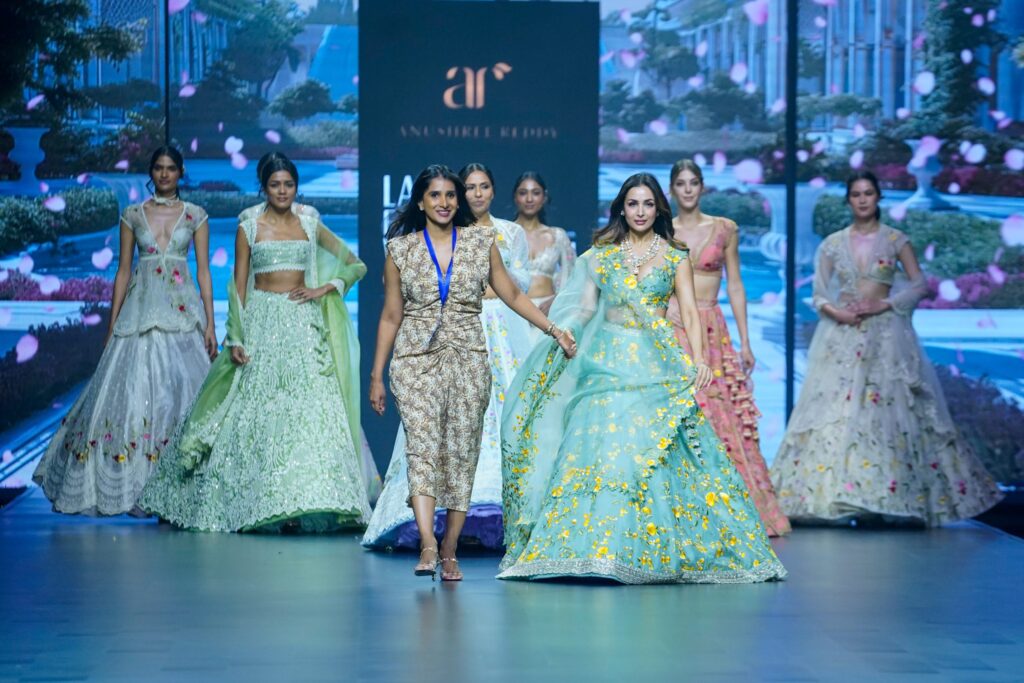
Niloufer Khanum of Hyderabad was the OG of fashion influencers with her Westernising the sari, adding exquisite pearls and it is this regality that Anushree Reddy recreates in organzas this season for the bride who chooses subtle shine over overt bling. By Asmita Aggarwal It has been a ten-year long journey she considers herself lucky that she does occasion wear, which offers both consistency and continuity and according to a CRISIL Research, the Indian wedding and celebration wear apparel market was estimated to be approximately Rs 1100 billion. There is no adapting to drastic changes as this sector is robust and it has the unique ability to service itself all year round with the myriad players in the fray. Being in the business you must be aware of all its time taking aspects—marketing, styling, shoots, everything matters to remain relevant to an audience with shifting tastes. As her forte remains floral prints, Anushree Reddy, felt this USP was soon replicated by competition rather swiftly as the designer landscape has similar products, but today her distinct ethos differentiates her from a sea of also-rans. Her price points and product quality are synonymous, plus having different ventures gets you diverse wedding shoppers. The zardozi, cut dana, threadwork, pearls, always serenades someone looking for somethingwhether it is the mother of the bride, the bride, the extended family or cousins. The awareness that a bride brings today on the table is unprecedented. She may be simpler with fewer elements and bling, but she knows exactly what she wants, admits Anushree, adding you cant get away with what you showed last season. This year is a year of pastels and soft pinks, plus no one is asking for the once staple red with its diminishing popularity, but what she does do is make each piece versatile and personalised. If the lehengas is heavy the second skirt will be much lighter so that she can dance the night away, no one wants to feel restricted. Inspired by Princess Niloufer of Hyderabad, who Anushree terms as the OG of fashion influencers she narrates the incredible tale of the Turkish princess, married to a Hyderabadi prince. The dazzling beauty of Princess Begum Niloufer Khanum Sultana Farhat (1916 1989) was one of the last princesses of the Ottoman Empire and was married to Prince Moazzam Jaah, the second son of the Nizam of Hyderabad, so it was natural that Anushree dipped into the citys history she was born in. Many museum runs later and armed with catalogues and photographs she embarked on paying a tribute to this long lost beauty. Known for her sarees and jewellery, the princess was photographer Antony Beauchamps muse, and was credited for adding Parisian grace to the Indian sarees which were made by Madhav Das in Mumbai. She loved chiffons and crepes, and wore them often with a broad woven Banaras brocade border. Niloufer was the woman behind the term Indo-Western as her silk saris came with lace frills, and an abundance of sequins made by even Lanvin in Paris. Custom pieces came from Indian weavers, and till today her wardrobe is still studied by fashion students. Her collection of sarees are now treasured at the New York Institute of Fashion Technology, explains Anushree, alumnus of the London School of Economics. The 2024 line by Anushree pays tribute to the grand embroidery that the Princess loved, in silk, net and tissue, with pastels and exquisite embellishments. Her sari sometimes was designed in France and then when it came to Hyderabad, she had it embroidered by Indian artisans, adds Anushree who studied vintage photographs almost 100 years old and recreated the magic of her pearls embellished organzas with vintage flowers blooming on diaphanous saris. Interestingly, thats not all that Anushree is busy doing, she recently launched get wedding décor company that takes forward in inspiration and style what her occasion wear entails. So, the panthers and bright florals are replicated in her décor company that she believes is an exciting vertical to her already successful business. The visual language is the same, and it really gives me joy to be a part of the celebration. Not just designing but also taking a leap of faith by deciding the theme and concept of each function, she concludes.
AK is Ok
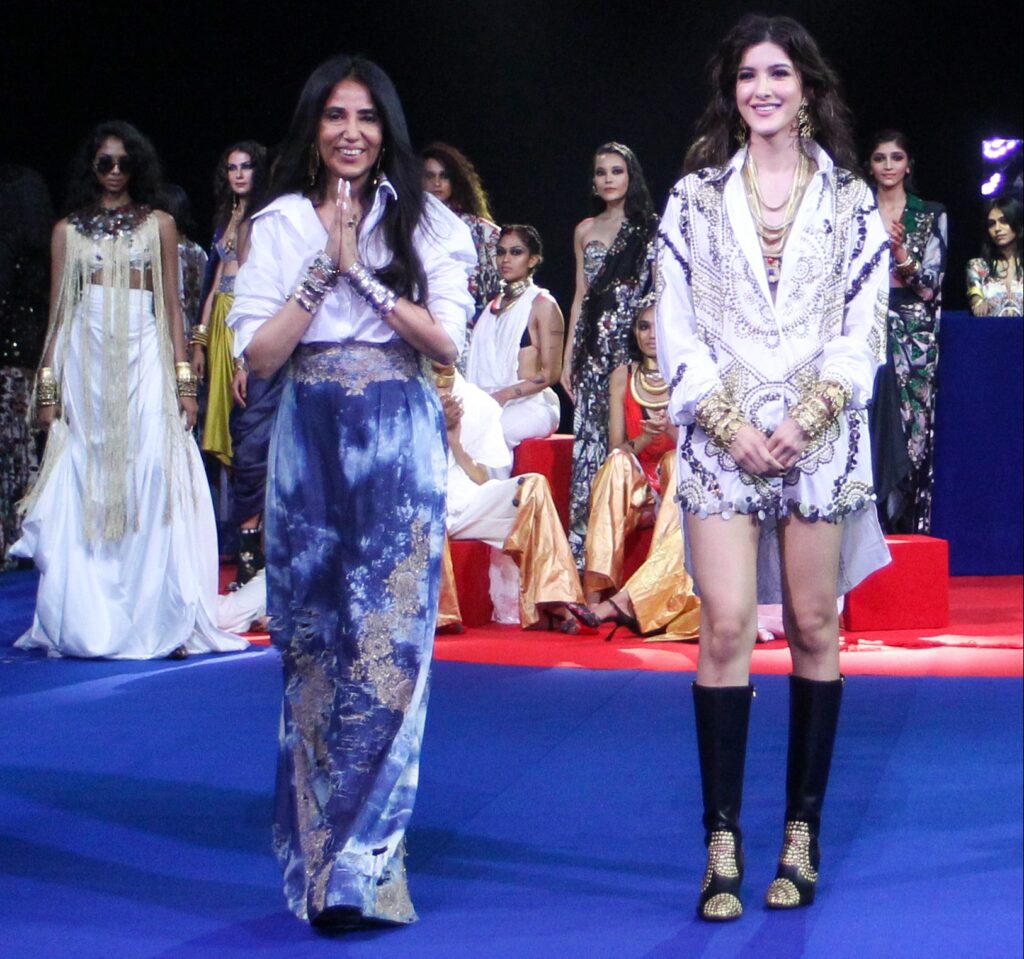
The twins Vishesh and Viraj, one an artist, and the other born with a business acumen, embarked on a journey to give their mom Anamika Khanna a respite when they started AK-OK, but now it has a legion of followers owing to its unpredictable prints, placements raw embroideries, tattered denims and bustiers worn with her sheer ubiquitous dhotis. By Asmita Aggarwal What is it that serenades an audience as much as the magic of monochromes, of course in Anamika Khannas case, a bit of distressed denim added to the heady concoction? Maybe it’s timeless appeal, or that you just can never go wrong with this combination! AK-Ok was started when Anamika was extremely unwell and her twins would often ask her if she was ok, thus the moniker, which grew into an almost pret line, hoping to appeal to GenZ. But this year for LFW X FDCI 2024, it seemed as if Anamika was dressing women like her, confident, who were not interested in impressing anyone, they prioritised comfort and above all wore separates they could wear something already existing in their burgeoning wardrobe. Her new found love for Kaftans with pockets, oversized pant-suits in white with placement prints and artworks, shirt dresses cinched at the waist with gold chain belts, fabric manipulated to create textures on high waisted skirts as well as extreme tessellation showed us that Anamika is moving to an era where day to night dressing is mandatory. Candy wrapper gold with shiny coats, her love for tatters and holes, as well as risqué necklines, without being too overt was her way to add a little sexiness to the mundane. You can never have a show without the various avatars of the dhoti, transparent to translucent, draped to pleated, worn with denim busters to long coin embroidery jackets, AK-Ok has various options to choose from. The balloons pants, denim cut up and broken, with embroideries with threads hanging, zari unfinished, the incompleteness kind of completed the look, as if announcing, in this I find that I can relate to the state of minds of the current generationa lack of wholeness, a constant searching. Shanaya Kapoor the star daughter decided to tell us that in the sweltering summer heat, which can descend on us anytime now, a white shirt is enough to take you through the day, of course with the addition of chunky bangles, an air-conditioned neckline and layered bracelets!
Alpha Women
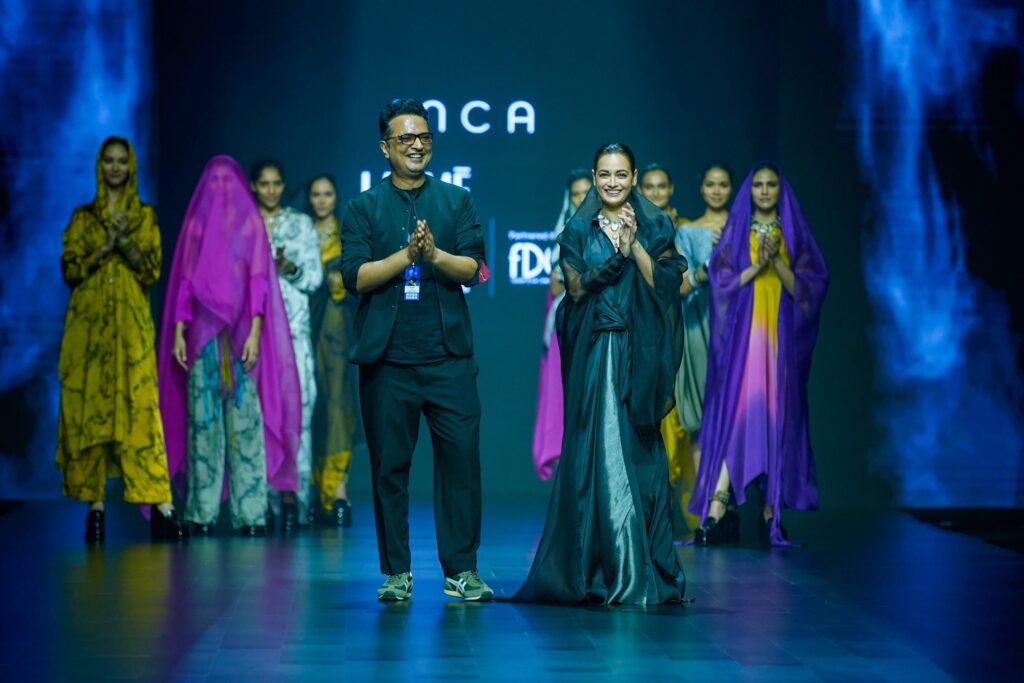
Inca or incarnation by Amit Hansraj is for women who are mature, confident and know that clothes are extension of them not the other way round and it is this individuality that he hopes to celebrate each season. By Asmita Aggarwal Amit Hansraj has been in the fashion world for the last 20 years, but coming from a small town, Hamirpur, unlike the glamorous Dharamsala, in Himachal it was not an easy task to break into the fashion industry, which is till today a playing ground of the affluent. His sojourn to Delhi and first stop was Ghaziabad, where he had little or no exposure to fashion, and worked odd jobs like backstage helper, till he got a break to work with Malini Ramani, then Ritu Beri which took him to Paris and of course Bina Ramani. I owe my fashion education to these three, I learnt by observation, says Amit the founder of the label Inca, which showcased at the FDCI x LFW 2024. Soon, he began styling, and luckily got to study various aspects of fashion, and also co-founded a label with Amit Aggarwal, then moved on to work with Zubair Kirmani. Tina Tahiliani is a visionary, and I worked at Ensemble as a curator, brought in contemporary fashion from 2017-2020. The burnout forced me to take a break and came back to Delhi from Mumbai. The pandemic happened and it turned everything on its head, he reveals. It was almost a sabbatical from the crazy universe of clothes, and this gave him time to ponder over what he can call his own, and the isolation made him think. He saw the terrazzo flooring with those chips, unlike the heavy-duty rich homes marble, being alone he was often staring at the floor of his rented home in Hauz Khas. Then he decided to create a line of curtains, with similar patterns, which later took shape of a capsule collection with a help of an off duty graphic designer and skilled masterjee. Inca is the short form of incarnation, he explains, the concept of God is timeless and as he is quite interested in Hindu philosophy, he thought this would be ideal. His ideology is oversized clothing but not frumpy but cool, think Smita Patil and Parveen Babi he laughs, both are his favourites. His clothes are a collection of experiences, maybe in some ways an ode to the invisible people we see around us, as he says, my label was made with multiple broken moments. Fashion must be enjoyed is his mantra, the inner working of the garments is effortlessness, and you feel good and sexy without revealing too much, sexy is a feeling, he believes. Everyday things and incidents inspire him and fashion should be not be restricted to palaces, Kashida, kings and queens, but if you look at the Taj mahal no one is talking about the thousands of workers who built this monument of love! History is not written by the common man we all know that, he smiles. Remembering his childhood he says, his dad was extremely progressive and well-travelled by he did not come from money, so his label is a celebration of what he saw, those who were marginalized, had no voice, he hopes to tell those stories. I launched the sari, but it is functional, it can be worn, while you are doing all kinds of jobs—that includes dusting your book shelf, he says, adding his choice of show stopper was keeping this philosophy in mind too. Dia Mirza is an actress and an activist she has lived her life on her own terms, as she ages, she has not chosen to continue in a race, and taken on any and every Hindi movie that comes her way. I find older women attractive, because experiences of life make you confident, there is a glow of knowledge, and that confidence adds charm to your personality. Dia choses to live life by what she believes I find that endearing, he admits. Hansraj cuts his clothes circular, the fabric manipulation gives it the freedom to take the shape of the wearer, and his evolved clientele, if they dont see an armhole is not terrified by it, in fact they embrace this new shape. I love monochromes, and silks, satins and pure fabrics in mustards and purples, he concludes, as he opened his store in the Kila last year filled with his vintage artifacts/photographs that he has collected over the years. I dont understand the whole influencer space I cant resonate with them. But I feel I want to make a label that makes the wearer feel happy, and only then will she think of me again, he signs off.
Think Chill
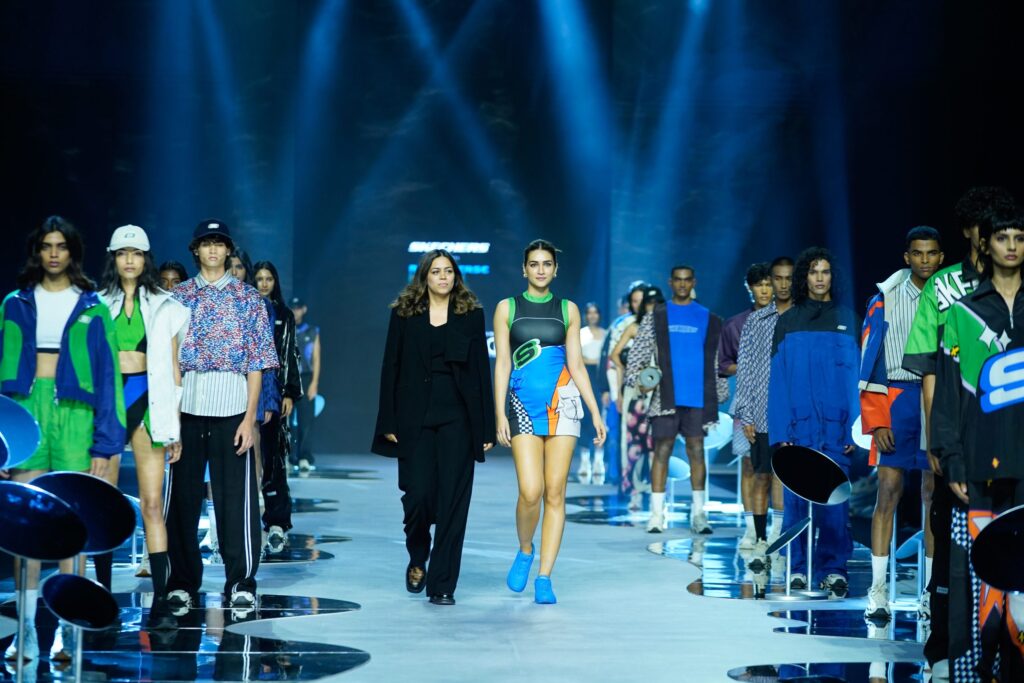
Remember The Jetsons, and the 90s trend Vaporwave? Kanika Goyal brings that shiny high gloss vibe to the line she has designed for the American brand Skechers. By Asmita Aggarwal After four years at NIFT Delhi and then Parsons New York, where she studied for two years, Kanika Goyal was ready in 2015 to launch her label. And she says with a giggle, I am a very happy person, so clothes are a good medium to share my joy with others. Kanika runs two label, KGL (Kanika Goyal Label) a bit exclusive and Kilogram aimed at the mass market, now she has embarked on a new aesthetic, to be the only designer to be hired by Skechers, the California-based comfy sneaker company to design a line of apparel for India. The show is theirs, she corrects me, adding, and the creative direction is mine. Almost 16 articles and 31 looks were launched at the LFW X FDCI 2024 showcasing in Mumbai, for spring summer, taking you back to the era of the nubile Britney Spears crooning Kiss me baby one more time, of the 90s when the pop star was a sensation and could be seen on every billboard. It was the pre-internet era, I would say it was rather bold, for Sketchers it is more of a fun take on the 90s fashion, a Y2K appeal. Thus, you see the pop art, checkerboard patterns, logo mania and lots of colour blocking, says Goyal, as she reveals she started with athleisure when she first launched her label almost nine years ago. She has paid a tribute to Vaporwave aesthetic outfits, which are futuristic, think chrome, shiny robots, flying cars, and metallic shoes, as if you are The Jetsons (George, his homemaker wife Jane, and their children, Judy, and Elroy, have a robotic maid, Rosie and a talking dog, Astro). These sometimes random trends which are said to be back in 2024, are an offshoot of the electronic music scene, visually it is all over the place— it has elements of techno, retro and futuristic. Think VHS tapes, gaming graphics, pixelation, school logos and The Simpsons. I call it nostalgia with an effective colour blast, says Kanika who has added glitches, cyberpunk themes, geometric lines and peppered it with eye-catching neons. The key to what she has done for Sketchers is mixed comfort with style, as generally the shoe is considered a boon for a certain older generation, but Kanikas intervention is making it cool for GenZ. The apparel is relaxed, oversized, and she added parkas, bralets, dresses, cropped jackets, trench coats, T-shirts with a more youth centric approach, with separates so you mix and match. Fashion is cyclical and even though I love architecture, and the 70s, I feel this collection has really brought me back to the 90s which are making their presence felt everywhere—movies, to fashion, she confides adding that these sporty ensembles can take you from day to night. Tangerines, emeralds, aquas were merged with metallics in high gloss, to give the entire collection a high sheen look, a kind of over-the-top appeal. You can wear it on vacations, even though it is performance wear, it has a distinct lifestyle element to it, she confesses adding that her approach to this has been individualistic, in some ways an extension to what her brand stands forcool graphics and a chill vibe.
An evening Soiree
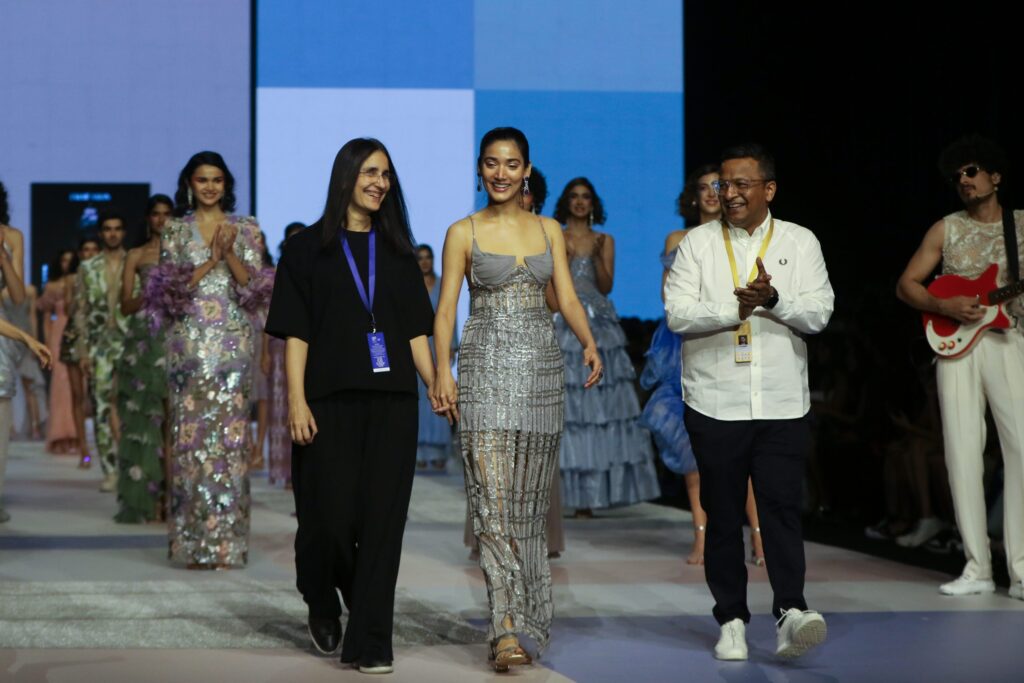
Paras and Shalini of Geisha Designs offer sundowner clothing complete with cording, macrame, as nostalgia remains their anthem for this season, creating the various elements of nature, through fabric manipulations. By Asmita Aggarwal Olsen twins label The Row banned phones in their showcase recently at the Paris Fashion Week 2024 show and went back in time, to an era in the 80s and 90s when photographs were released a week later. Maybe in India no one will have the courage to take this decision, but when Paras Bairoliya is quizzed on this brave move, he admits, Social media is about brand communication and it is essential, I agree that the lens of the smartphone camera cannot capture the sights and sounds your eyes can. But it can take your collection to millions of people through technology. Content creators every hour keep the buzz on, their feed is fresh and interesting. Paras and Shalini even though they have been in the fashion game of chess for the last 25 years where survival is an art, believe their biggest achievement is they have remained relevant for a younger audience too. Nostalgia is their anthem and luckily, they are excited each year to experiment with new techniques and materials. Indian craftsmanship and global flavour have been our mantra. Plus, the concept has always been soft and romantic, we are not into conversational clothing. We service diverse markets, and carry forward the same ethos in our décor business, packaging, clothes, and luxury, says Paras. The scope of dressing has now expanded, there are destination weddings, thematic events, sundowners, and Geisha Designs understands the power of customization. This year at LFW X FDCI 2024, it is dressing for a sundowner, maybe not trousseau for the bride, but certainly occasion wear for the extended family complete with cocktail dresses! The biggest trend of 2024 is people have time to think about what they want, and thus there is a rise in demand for tone-on-tone, play of texturization in their line The Elemental Symphony. Each element whether it is air to water has a play for dynamism with structure and fluidity, as each one has its own individuality. Their new ways of beading make the garment look lighter than it appears, as well as fabric molding which embodies a certain sheerness, a glossy surface, looks as if molded on body forms. This concept allowed the duo freedom of expression. From pleats to tucks, making it appear as if there are ripples of water on the fabric, was an interesting expedition. In the changing landscape of fashion there are many clients who come to Geisha Designs and ask them to convert their old brocade saris into something new, so a trench coat with quilting was executed making it red carpet ready. These experiments with cut and fabric make our journey exciting, and keeps us on our toes, says Paras Bairoliya. Tulles, satins, and organza have been used for drapes-like saris, worn with jackets, chiffons have come with metallic textures, and sheer with gloss. The chiffons are layered and come with laser and 3-D printing, along with various techniques and macramé added to give it a couture feel as well as cording. Moms are a more generous and loyal audience, Paras laughs, they are also a lot fitter and wants to make shopping an experience, plus, the confidence she comes in with is exemplary. She is seldom influenced by her friends and buys exactly what she feels will work. But the 20-year-old is another story, he smiles. She will jump on the next trendy label, and is a tricky customer, as her want for new is endless.
Right to Repair
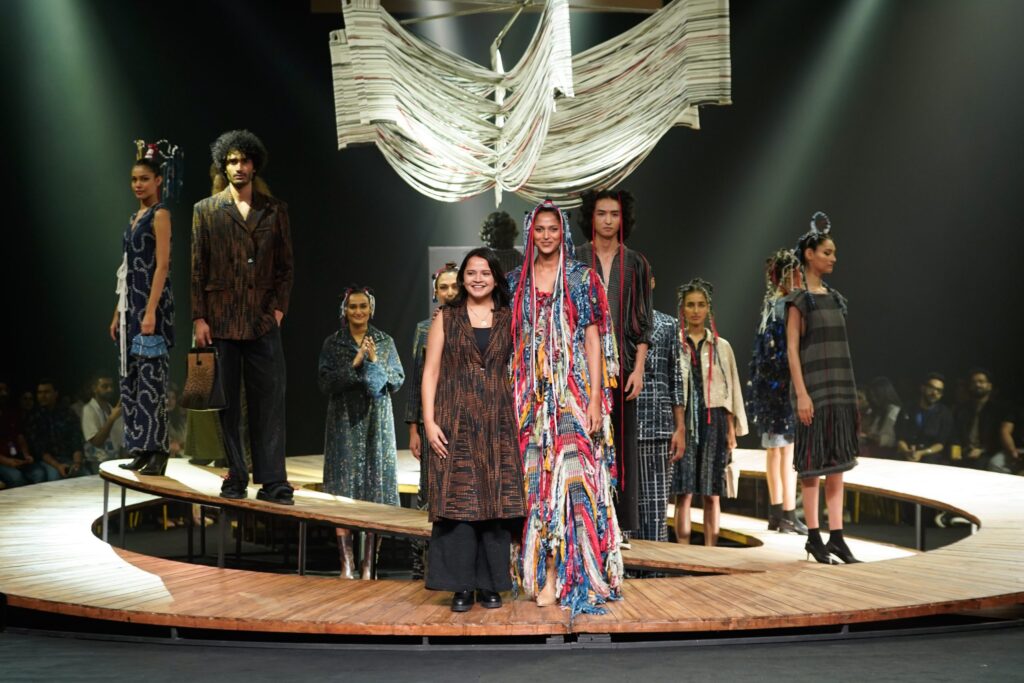
Ashita Singhal started as a curious fashion student wanting to know how to upcycle waste, and thats how Paiwand, her label was conceptualized. Winning the Nexa Spotlight and telling us that re-woven is austerity personified; she is consciously saving the planet one less stitch at a time. By Asmita Aggarwal She was quintessentially far away from anything remotely fashion, as the Delhi-born and raised Ashita Singhal founder Paiwand Studios fathers business is of electrical wiring and her mom a homemaker, but the capital and its inhabitants did turn on their charm on the young aspiring fashion student. She graduated in fashion design from Pearl Academy of Fashion, in 2018 and her graduation project was the one which won her the Nexa Spotlight. Learning pattern making in college, she understood the enormous waste fashion generates, which is the reality of fast fashion. Most of her projects for college submissions revolved around upcycling textile waste, thus the moniker Paiwand, lagana or to repair. Blue Pottery, the title of my Pearl Academy project, was a wholesome way to recraft what was considered waste, weaving it into something spectacular. It also won me a $25,000 James Mcquire grant that helped me start my business, says 28-year-old Ashita, who used to get the katrans from either ragpickers or export houses. Clothing is second skin, it must be special, so I began a concerted effort to undertake R and D on the kind of textiles we wear. The only way to upcycle was to visit local markets and procure materials and then elevate it with patchwork and hand embroidery. My in-house handloom unit is focused on innovation and we have successfully upcycled leather, flex, cotton to silk, polyester and knits, she admits. The beauty of working with waste is, its unpredictability, it is limited, so you have to be imaginative, and keep looking at options, developing around the concept, you find ingenious ways along the process. There is no stagnancy in the colours or yarns, but yes, the biggest challenge is to justify costing, as consumers tell us, it is made out of waste, so it should be cheaper, she laughs. City Blues, the title of her 2024 line for the Lakme Fashion Week 2024 X FDCI was around the Nexa theme Urbane and this is where her love-hate relationship with Delhi came into play. Ashita loathes the mass consumerism and herd mentality, but admires how the Capital gives her the space to express herself, looking at the multiplicity of life, through like-minded individuals. I wanted to showcase the contrasts —we are inspired by streetwear, but I have intermixed it with understated luxury, she exclaims. There are blazers, jackets, dresses, and conceptual pieces which push the design envelope. Jod is her showpiece, woven on handloom, it is two pieces connected without a single stitch, showcasing the binding through contrasts. This line has effectively utilized knit waste, block printed scrap, whatever she could find and flex which is easy to get in local bazaars. At the Nexa jury the members couldnt believe that our pieces which had a couture feel were crafted out of scrap, they were both esthetically and visually appealing, she confides. Offering a lifetime guarantee to repair outfits when consumers buy from her, she believes, interiors and hotels, allows her a chance to diversify, as her dream collaboration must be with Eileen Fisher, the American conservationist and designer. The price range is Rs 10,000 upwards, to Rs 40,000 and Paiwand also offers customization. We also use jamdani, traditional weaving techniques, zari, as well as double circularity where we recycle our waste which we call- re re woven or woven twice. The future for us as a brand is establishing a signature brand identity and maybe acquiring a distinct global presence, she signs off.
Hoops of Hope
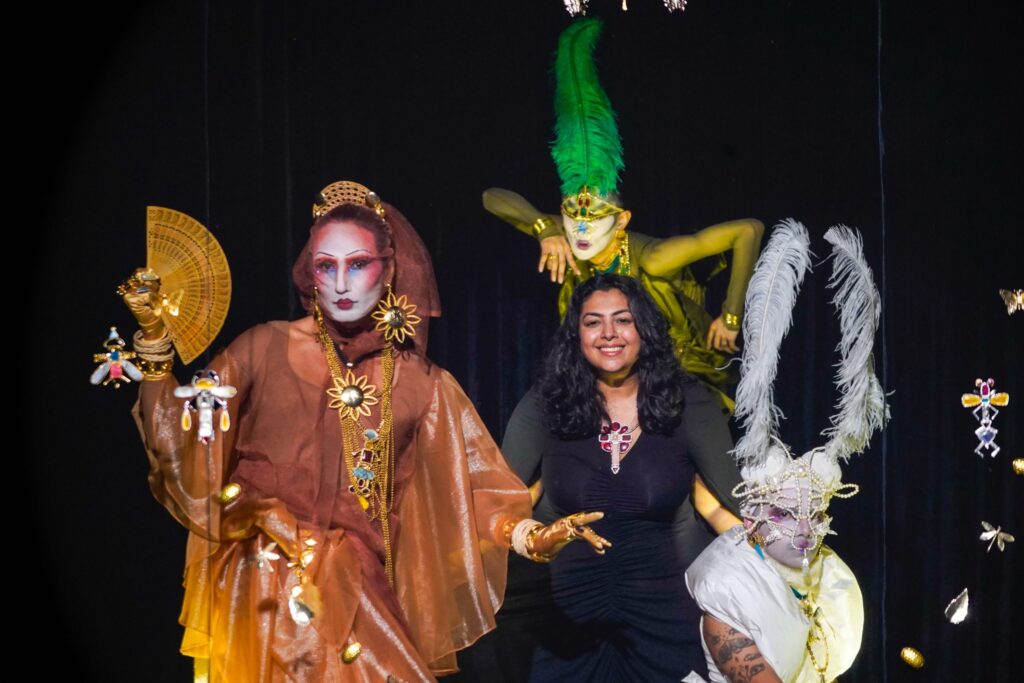
Nitya Arora of the accessories brand Valliyan celebrates its 15th anniversary by paying tribute to bugs and beetles, quiet warriors, in a new sci-fi avatar, who help balance our fragile eco-system through her brass and copper gold plated jewellery. By Asmita Aggarwal The brand got its name from her grandmothers blessings, as the hoops (balliyan) she was presented with came with a promise of a lucrative future—thus the moniker Valliyan, twenty years ago also a tribute to her robust Punjabi heritage. Though it has been a bumpy ride as the market in 2008, was immature and lacked any concept of fashion jewelleryit was either silver or precious, nothing in between. Her journey began with fashion pop ups, where questions like how to wear fashion jewellery, what is it made of, came up, also why should costumey earrings be so expensive? It was a potentially growing segment and the market had to be created, it didnt exist back then, explains Nitya Arora the founder of Valliyan, who was in some ways ahead of the curve in both ideas and design, though since the time she began the market had been flooded with new players. In many ways Nitya knew the way to grab an audience was online, thus unlike designers who started their website during the Pandemic when they were forced into e-commerce, Valliyan had theirs up and running since 2013. Only through our online retail we could go viral with our ear cuffs, midi rings and evil eye bracelets as well as your initial (name) embedded jewellery, she explains, as her first store in Kala Ghoda, Mumbai ten years ago was started when the fashion destination was get to win the huge popularity it enjoys today. At a time when social media was non-existent, Nitya knew films had a huge power, she had after all interned with Kunal Rawal. She took a leap of faith and designed jewellery for Sonam Kapoor starrer, a fashion forward film, Aisha. Trained at the Parsons School of Design, US, she knew jewellery would be her calling even though she studied fashion design as she made what she wanted to wear and could not find in the Indian market. Valliyan is crafted out of copper and brass, then gold plated, some of her pieces are made from cane, wood, acrylic and even bamboo. Fascinated by furniture weavers, she sat down with them to learn the techniques and then trained under artist Ashiesh Shah, when she was barely 15, the desire to learn and grow was omnipresent. I did many different things while growing up and was the first brand to sell exclusively at Bombay Electric. Women through Instagram have a lot more exposure now they know how to dress, accessorise and the content online has boosted their confidence. The Pandemic also changed our relationships with ourselves and people dressed nattily to be online, they want to spend money to look good and are not waiting for occasions, she adds. The beauty of fashion jewellery is its accessibility and pricing, unlike things you put in the locker and forget, this can offer multiple options, thats why her LFW line is titled Valliyan 5.0. There was a time when I did a show every year, and it always excited me even though LFW did not have a space for accessory designers. My latest line is a mix of handmade with technology coming together beautifully. Focus is on bugs and beetles and how they are little robots working in the background invisibly in our lives. They balance our ecosystem and have never been given credit for their work, says Nitya. In addition, for LFW X FDCI 2024 there are butterflies, dragonflies, with a space age, sci-fi feel, presented in a theatrical manner, she admits. Coming from a business family, she was often questioned about her need to work, and was hugely protected while growing up, but from Marine Drive to work with Kunal Rawal in Marol, Nitya took that painful drive everyday. It was crazy work hours but the learning with Kunal was stupendous. When I launched my label I self-taught myselfmerchandising, production, finances, design to retail and wholesale, and today we are celebrating 15 years of the brands inception, she smiles adding that she is proud of herself, being able to survive in this cut throat world where brands struggle to live everyday.
Wear Calm
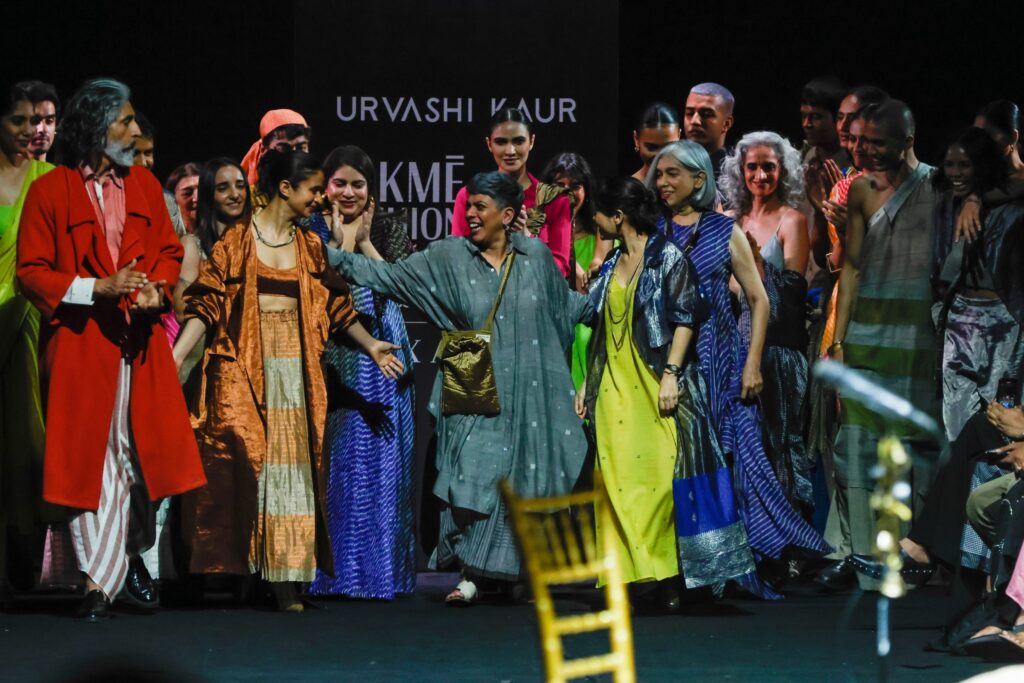
Urvashi Kaur had all the makings of a hit showa bevy of intellectuals from Ratna Pathak Shah to Rasika Duggal as well as relaxed clothing armed with natty wraps, coppery saris, easy tie ups that announced the arrival of a comfortable spring, as she completed 15 years in the business of fashion! By Asmita Aggarwal Maybe the biggest support system for Urvashi Kaur has been her artist mom, who is always seen silently sitting or watching the show. But this time, the ex-army chief General J J Singhs wife Anupama was on the ramp, dressed by her daughter, in a long carefree bandhani dress, with vibrant shades of magenta to match her vivacious personality, as she smiled and clapped for her on the runway at the LFW X FDCI 2024 showcasing. Kaur decided to be back with a bang, and celebrate her 15th year in the style business with everyone who maybe stood by her on this tenacious journey of ups and downs. As her septum ring took centerstage along with the barefoot musician, who enthralled us with his flute to ghungroos, and of course dreadlocks, Kaur was telling us all that relaxed is the new cool. And the new cool is also Ratna Pathak Shah, the actress who choses intellect over box office slavery much like her other showstoppers from Manto actress Rasika Duggal to Masaan star Shweta Tewari and even the lovely Tilottama Shone, they all wore her free-spirited checks and tiered dresses that caressed the runway. In all terms, the show was inclusive tall, short, oversized, bearded, bald, bespectacled, turbaned, Kaur didnt leave anyone out of this myriad mix, as her dhotis graced women and men both creating a unisex wardrobe, frankly the future of fashion. The play of exaggerated collars, double collars, wrap pants, tie ups, asymmetrical dresses, risqué bustiers as well as metallic everything from pants to coats and cover ups, her love for copper and gold was evident this season. Sari and pants, in neon, layered dresses, play of hems, models reading books, content creators, stylists like Gautam Kalra making their way on the runway along with a turbaned model carrying a Lulu Guinness-esque Lip bag, who famously exclaimed, My red lips are my signature, my trademark, sparked the lip clutch craze. The play of stripes was extraordinary by Kaur, and Ratna Pathak doing the twirl for us was fun too, so was Shwetas brocade ink blue coat, however, the message was chill—be yourself, embrace your flaws, dress in subtle shine. The fabric bags, along with comedian Mallika Dua were artsy and so was Kaur in her grey dhoti with a buttoned down shirt as she did a little jig for us to tell us, I am happy to see what I achievedI made women super comfortable!