
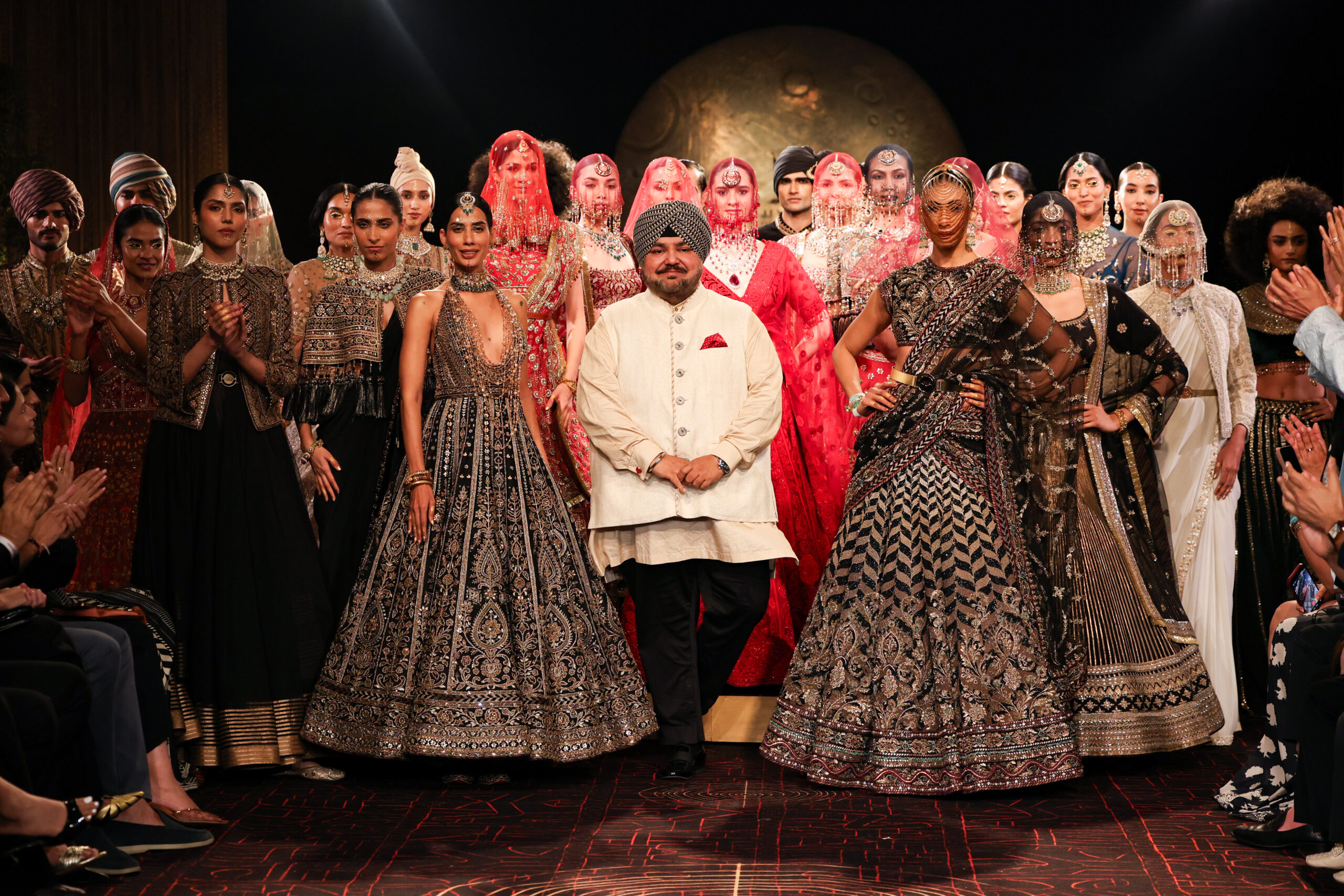
34 years later Valaya misses Bal and his effortless poetry, at ICW his embroideries are more textural than overtly decorative, silhouettes carry quieter confidence; bride should feel elegant, not exhausted with the weight of embroideries.
By Asmita Aggarwal
If you ask J J Valaya the one thing he misses about fashion today his immediate response is–Rohit Bal. “Rohit possessed one of the most instinctive artistic minds our industry has seen. There was effortless poetry to his work that couldn’t really be taught. I remember several conversations over the years where we’d laugh about the madness of putting together shows under impossible deadlines. Despite the pressures and inevitable rivalry that exists in fashion, there was always mutual respect. His absence has left a genuine void in Indian fashion,” says Valaya.
The designer who completes his 34 th year in fashion this season has never shied away from expressing love for the East, Balkans and Ottoman empire to Silk Route. He attributes this to being a “Royal nomad” place where ideas, architecture, textiles and people constantly borrowed from one another. “I don’t travel looking for fashion. I travel looking for stories. Fashion simply becomes my way of retelling them,” he adds.
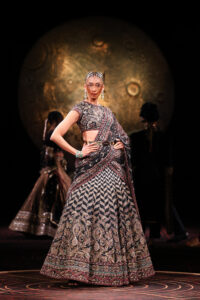
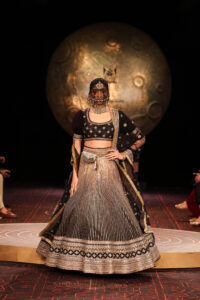
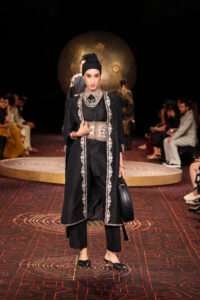
The paisley is a recurring leitmotif in his repertoire, like signature Chevron, former is a rare motif that belongs to almost every civilisation that touched the East. It has history, movement and poetry within a single form. Chevron, on the other hand, represents structure, rhythm and geometry. One is organic; the other architectural. “Together they’ve almost become two languages through which I tell the Valaya story,” he explains.
With each designer bringing his magic to couture it almost becomes an emotion, a feeling, nostalgia, also a mood. Couture for Valaya becomes part of life’s milestones … a wedding, an heirloom, a memory that travels across generations. Long after the fabric has aged, what remains is the emotion attached to it. “That, to me, is the true luxury,” he says.
Valaya recently launched a line of bags, being an Army kid, he named one after his parents, he admits, he learnt discipline from his father, grace from mother. “My father taught me that excellence isn’t accidental; it’s built through consistency, there are no shortcuts to hard work. My mother showed me that kindness and dignity never go out of fashion, whilst exposing me to the art of embroidery through her teaching embroidery to soldiers’ wives at army welfare. Between the two, I probably learnt that talent may open doors, but character determines how long you remain inside,” he explains.
Couture is made to last, repaired instead of discarded, preserved instead of consumed, garments often become heirlooms rather than seasonal purchases. Valaya has consciously explored upcycling and responsible craftsmanship, including collections like “The Living Loom”, where waste textiles were reimagined into couture or working closely with Tencel.
“Moreover, sustainability isn’t only about materials. It’s also about creating something that deserves to exist for decades,” he adds.
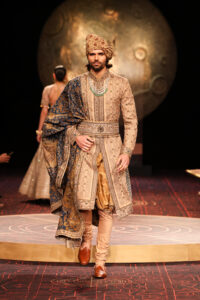
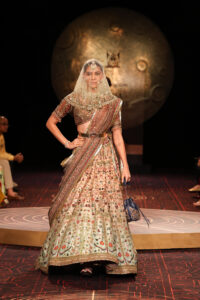
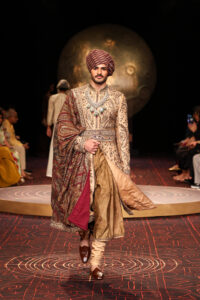
It is the era of intelligent luxury –it doesn’t shout or try too hard. It’s thoughtful in design, respectful of craftsmanship, timeless in appeal and relevant beyond trends. It understands quality, proportion, restraint and purpose. “When every detail has a reason to exist, that’s intelligent luxury,” he explains.
Valaya’s first major show in India was in 1992, the year the label was born. Even then, he wasn’t interested in following trends. He was fascinated by India’s forgotten aristocratic elegance … its travellers, its royal houses, its layered history. The collection reflected that fascination through richly detailed garments, handcrafted textiles and a storytelling approach that would eventually become synonymous with the brand. “In hindsight, I wasn’t launching a collection. I was introducing a point of view…. My point of view,” he adds.
In Tarun Tahiliani, Valaya admires his understanding of drape, construction and contemporary Indian occasion wear is exceptional. Anamika Khanna redefined Indian silhouettes with the kind of ease that she has. Abu Jani & Sandeep Khosla are Masters of drama and scale. Their commitment to unapologetic opulence has created an unmistakable visual language. “Ritu Kumar is a true pioneer. She preserved and celebrated Indian textile traditions long before heritage became fashionable,” he adds.
What’s interesting is the groom who is finally participating in fashion rather than merely accompanying the bride. He’s willing to experiment with colour, jewellery, layered dressing, textiles and embroidery without feeling constrained by old definitions of masculinity. “That’s incredibly liberating as a designer because you can now tell a richer story through menswear,” he says.
In ICW 2026, for Valaya every collection begins with a story rather than a trend. This season, he has explored proportion, layering and surface treatment, colour palette has become more nuanced, the embroideries more textural than overtly decorative, and silhouettes carry a quieter confidence. “The intention wasn’t to become different for the sake of surprise. For me, it’s always about meaningful and gentle evolution without losing identity,” he adds.
Indians are obsessed with embroidery as it became synonymous with value, it is often measured luxury by weight rather than design. “I think that’s changing. Today’s client increasingly appreciates cut, proportion, fabric, finishing and the story behind the craftsmanship … beyond embroidery alone. Embroidery remains beautiful… but only when it serves the garment rather than overwhelms it,” he adds.
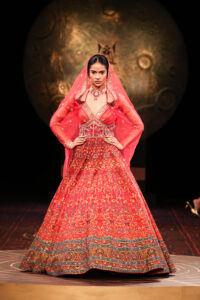
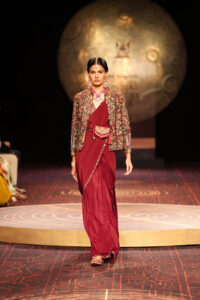
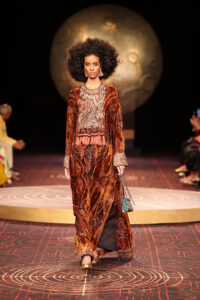
Interestingly, weight isn’t only about reducing embroidery. It’s about engineering. Valaya rethinks fabrics, foundations, construction techniques, embroidery placement and distribution of weight across the garment. “The objective is simple: a bride should feel elegant, not exhausted. If we’ve done our job well, she forgets she’s wearing couture,” he grins.
The real Valaya is quiet, private. He is happiest with a camera in his hand, travelling somewhere unfamiliar, discovering history at antique and flea markets, or simply observing people and architecture whilst wandering and sipping coffees. “I don’t think I ever really stop being curious. Even when I’m not designing, I’m collecting ideas without realising it,” he confirms.
His parting shot, “Separate the designer from the businessman. Many brilliant designers fail because the business fails … not because the creativity does. Study why it failed with brutal honesty. Was it the product? Pricing? Distribution? Ego? Timing? Capital? If the passion still exists after answering those questions honestly, then begin again …. but don’t begin the same way. Failure only becomes permanent when you stop learning from it.”