
Separates are new cool at LFW
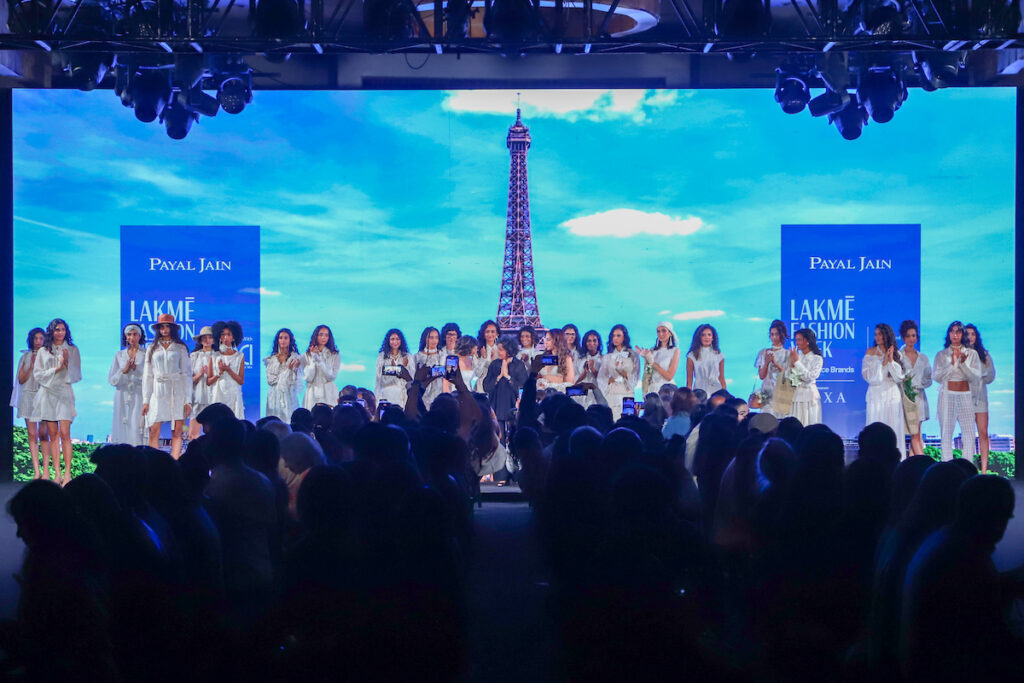
Payal Jain gives us nifty wearable options, Tarun dresses the groom’s extended family in dhotis-pearls, while Pankaj and Nidhi serenade mocha, and Samant Chauhan flirts with sci-fi bejewelled shoulders. By Asmita Aggarwal Shouldn’t fashion be wearable, easy, and non-fussy? If you are a believer of separates, Payal Jain has just the collection for you with a Parisian vibe! Think crochet and jute bags with flowers and crinkled skirts—she went for light embellishments, beads, tone-on-tone. If you see the history of Payal over the last 27 years, she has always had her favourites—from Chikankari which she keeps floral to Chanderi and mulmul. The natty lace collars with bell sleeves in pristine white, the indigo dyed denim shorts with coats, front knotted “happy” blouses, and her dexterous cutwork made us think about a relaxed summer. The crochet is done by hand laboriously that she used as a third element to rev up her austere offerings. The showstopper wasn’t former TV star Mandira Bedi or influencer Nitibha Kaul, but Katrauan from Banaras, delightfully airy cotton. The jumpsuits with bows tied to sleeves, came with wicker suitcase bags, triple layered strings of pearls were omnipresent, fabric flower belts, and everyone’s favourite “reader women with glasses” who love books not fleeting trends. Samant Chauhan The boy from Bhagalpur has crafted a unique journey in fashion—he serenaded the Middle East market, made a killing—this year he went all white, with hints of shimmer. He decided not to deviate from his style “long and cinched”. Gowns came with a diaphanous cape, some with one shoulder trail. His play with placement embroidery on the closure of long jackets was interesting as well as pleated gowns with starbursts. Structural detailing in exaggerated uplifted shoulders, tulle skirts worn with bejewelled bodices, he made shoulders his focus—sci fi-heavily embellished. Flapper trims on coats in charcoal black, basket weave, crinkled gowns and swinging fringes in rusts and olives. Asymmetrical flamenco skirts, tiered, peplum bejewelled corsets with riding pants made sure he has something for everyone who wants to look part of the swish set. Pankaj and Nidhi If anyone knows how to stay on the trend wagon, it’s the husband-wife duo Pankaj and Nidhi, who have built a huge business in the last 15 years. If mocha is the Pantone colour of the season, pleated capes were offered with stockings worn over stilettoes— along with appliqué, embossing and placement embroidery, three superheroes. They went for solid colours, didn’t let other hues in, mirror work and princess sleeves, added tassels and fringes, but the innovation was the sheer and polka dots mix as well as tulip dresses in slate grey. Crochet is climbing the fashion firmament like a tall vine, as organza capes accompanied roomy pants. Bejewelled bustiers, cutwork extensively used, shoulders upturned and stiff, in this mix was lithe 90s model Sapna Kumar always fabulous. Tasva: Tarun Tahiliani The dhotis and jackets in tone-on-tone, one never really tires of it, especially in menswear, but what stood out in this show is the older, real model coming of age, he may not conform to society’s standard may be small and stout, but he is reclaiming his right to the catwalk. Mogras on the wrists as well as men in shawls woven Tanchoi and Banarasi, some with the disappearing moustaches, the Patiala salwars, chokers found soulmates in sunglasses. The waistcoats came with functional pockets in mints and blush pinks, as white-haired men above 70 are maybe Tarun’s new customers. Happy to see Kolhapuris and Chef Ranveer Brar in a sherwani, just like the following female model in one too, making it unisex. Live tabla and guitars, dhols, a marriage procession, the largest conglomeration of male models, just like the song played in the background by the former Spice Girl-Geri Halliwell it was literally “Raining men”. Velvet sherwanis, creams met coffee hues, as pleated dupattas with sherwanis and pearls swirling was ideal for the groom’s extended family dressing.
Pondicherry, French, silk velvet printing
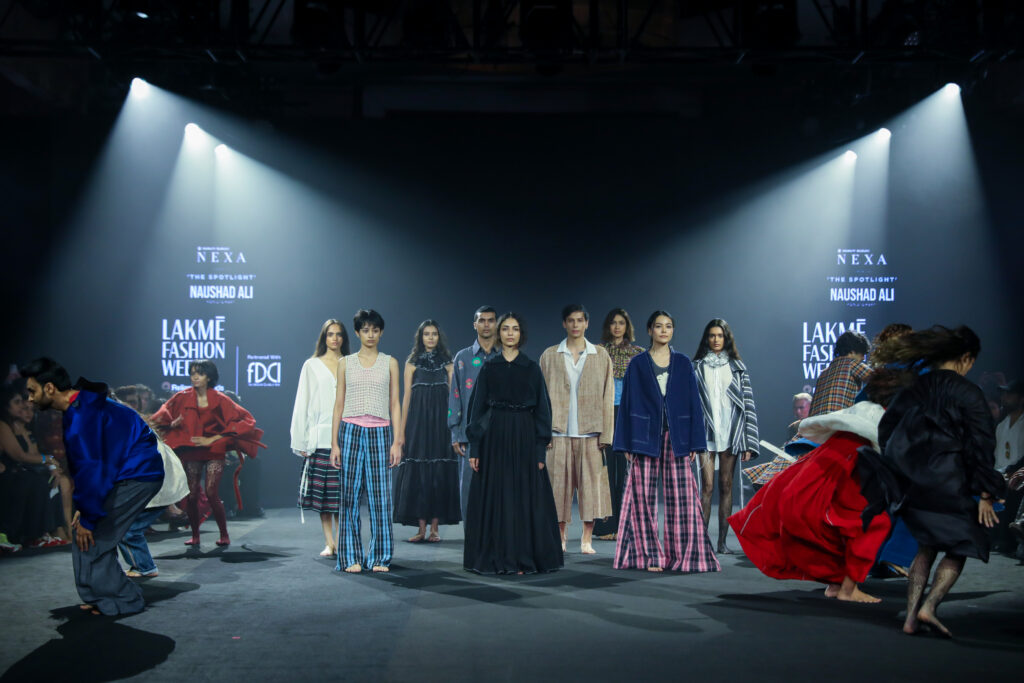
Craft-soaked Bandhini to experiments with Chikankari, Naushad Ali adds a European influence to Indian textiles serenading a global buyer. By Asmita Aggarwal His father is a textile merchant, based in Pondicherry, so Naushad Ali grew up surrounded by fabrics from Bengal to Orissa, he would sit on the bundle and watch TV as a young boy. His interest grew to study fine arts, and cleared NIFT Chennai, where he studied textile design. “Auroville had a huge influence on me—specially its multi-cultural approach. The predominant French influence, people from different nationalities co-existing teaches you how the world has no boundaries. When I began my brand, I knew it had to be global,” he adds. He believes there is a lot of misconception around textiles, it is only restricted to Indian wear, but you can channel French elegance with a kurta. “A lot of my friends shut down businesses in Covid, it is an interesting and challenging time, every day I see new brands on Insta, who will survive only time will tell,” says Naushad. Celebrating ten years of his brand, the NEXA spotlight winner, believes his USP is showcasing textiles in a refreshing way, just like the poster on his office wall, “Why should sustainability be boring?” He keeps researching, when he takes up a craft, admits, “when you buy from us, you know its depth, like our Chikankari, we have introduced it with a stronger identity, used in a contemporary way. Just like Bandini and indigo, two of our signatures with a distinct European influence,” he explains. The play is in the motifs rather than the conventional paisley; it is more global in its appeal and demeanour. “We live in one world due to Insta, but I maintain the dignity of the technique I work with, though the result is a cocktail with my interesting ingredients. I fear monotony, each piece must not be repetitive,” he says. His experiments with silk velvet printing, maintaining the consistency of the ink, became his bestseller. “I am a Tamilian, grew up in the South, if you observe Indian women, while shopping at Nalli, they know their saris, quality of gold, and are aware of what they are paying for. Same with Bengal, women value crafts, and culture. After all, fashion is a desirable product, it must 100 pc look good,” he explains. LFW X FDCI 2025 he is focusing on yarn dyed indigo, denims hand woven in Bengal, South Indian checks from Madurai, without abandoning his USP Jamdani. “Now I see a uniformity in dressing, everyone looks the same, but a white shirt can look different depending on the personality of the wearer, and most importantly region-South to North,” he confesses, adding people used to dress for themselves in the past, now that spirit is lost somewhere with social media onslaught. Interestingly, he talks of the rising culture of thrifting, like the jacket he made for his Pondichéry based French client Vincent. His son wore it 10 year later and sent him a picture, the key is trendless clothing, it may lie in your cupboard, but is never obsolete. “We wanted to open with contemporary freestyle dance to establish a connection with the clothing, channeling the spirit of exchange of garments act on the ramp. We all love dressing each other, there is joy in it,” he explains about his presentation. Does one need money to survive in fashion? He has an engaging hypothesis—you can be privileged to inherit dad’s burgeoning business, but have zero design sensibility. “Creativity and commerce must co-exist,” he reiterates, adding, “I like to address the feminine side in menswear, embroidered silk shirts, gender fluid, simple tailoring, spotlight on fits. The future is responsible fashion, that withstands the test of time,” he concludes.
Who needs a showstopper? asks Ankur
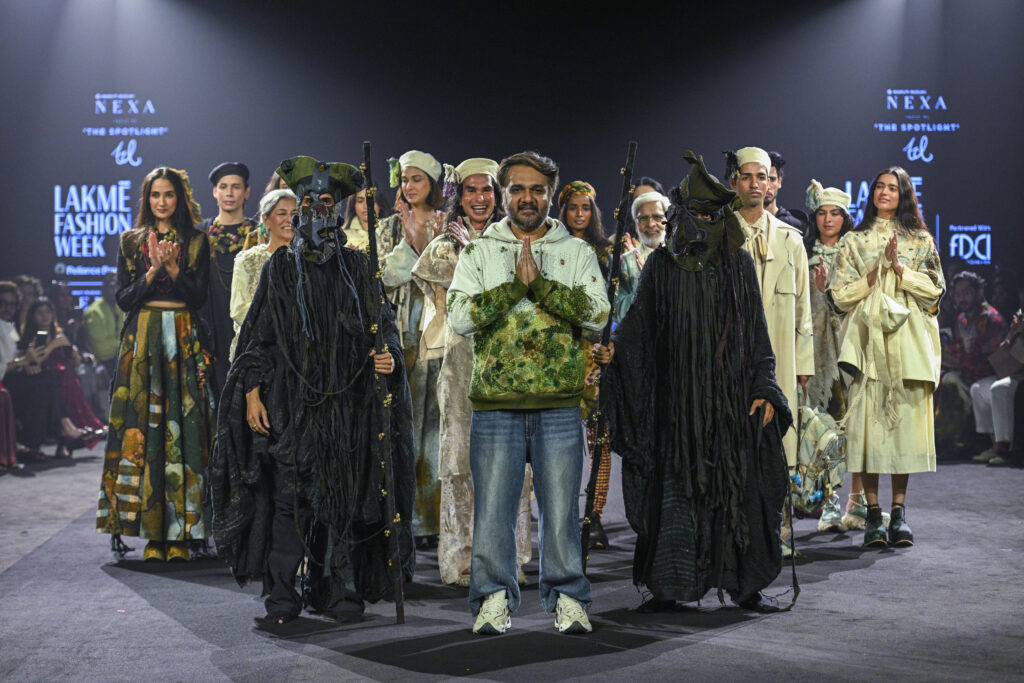
Converting waste into textural garments with a strong sense of identity, Ankur Verma of Til tells us, 3 months to craft one cape, several artisans create magic with just the power of discarded fabrics. By Asmita Aggarwal If experience counts for anything in life, Ankur Verma of Til would be the flagbearer. From Bottega Veneta to Armani, Sabyasachi Mukherjee to Varun Bahl, Ankur Verma has been there! Sometimes a “pause” in life helps you rethink, and re-access, thus his line “Breathe”, though he is gearing up for the Fashion Trust Arabia, representing India in Doha. “Til” the moniker for his label, or body textures— wrinkles, freckles has been his muse, though vibrancy is in his DNA, this time he channeled a softer palette—ivory, blacks, beige, combined this with patchwork, upcycling and created something new from something old. If you look closely, there are artistic traits in him that he employs to make things other than fashion—like the Doll house, completely made from waste—including cushions to sofas, furniture. It started as an idea for his six-year-old daughter, ignited the desire to take it forward by making dolls, charms, jewellery, even brooches. Intermingling organza and sheer, an easy line, with textural layering, experimental and innovative. This is despite the fact he admits “capital backing is not strong for young designers, this kind of work needs a lot of investment. It is entirely done by hand, one installation took three months to craft as it is laborious. “We used zardosi technique and the most expensive item I have in my collection is almost Rs 125000, a fully worked on jacket. Believe me when we started it was tough to sell something completely done by hand for Rs 22,000! Now there is a sea change in customer understanding,” he admits. From the pintuck kurta he wore, to creating garments entirely out of waste, it is free size, like the cape shawl. You can throw it on anything—jackets, sari, and even roomy pants. Nexa is celebrating its tenth anniversary, and they have selected three past winners Naushad Ali, Ankur Verma and SWGT. “Fashion is not just about lehenga-cholis, this doesn’t represent our culture. Look at how streetwear is burgeoning, hoodies to track suits, who would have thought this would ever happen?” he asks. People in India go after tags, “Made in Italy”, “Made in France”, what about Made in India? Isn’t there pride in this? he questions. “I’m old school, I do not browse through shows sitting on my couch. I believe in personal touch, you cannot see detailing online, even if you zoom in. I do not want to spend on photoshoots to serenade my buyers,” he says. Men, he believes are experimental, most of his women’s wear is being adopted by men, a corporate honcho inquired if Ankur could add collars on a woman’s jacket so that he could wear it! “My Afghani hoodie kurta is unisex, much loved,” he adds. One of the few who believes celeb showstoppers add nothing to the show, that’s why he convinced his 72-year-old father to walk the ramp again, both age inclusive and breaking boundaries of the “ideal face”.
Then and now with Ashish Soni
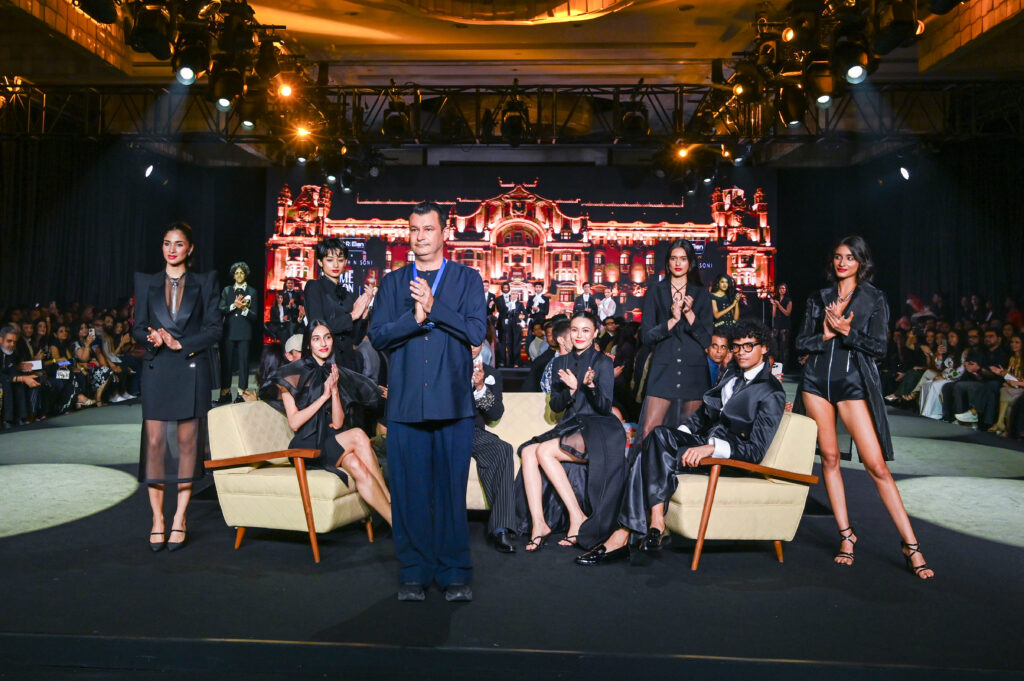
From trying to market the crisp, white tailored shirt in the 90s, to working with revered stylists like Deep Kailey, to now an entire collection with just black, Ashish is going back to his roots. By Asmita Aggarwal It was the year 2000, when India Fashion Week began at the Taj Palace hotel, IMG used to manage it, Ashish Soni was one of the few who was part of that exclusive community. This was 25 years ago, today tastes have been sharply refined, understanding is better. He may not remember his first collection’s name but he does recall he used denims, felt, and was told to follow the international calendar which works a season ahead. “There were only a handful of us, we had done trade shows, that’s all. Our exposure to fashion was going to Khan Market and buying American Vogue, as there was no real time coverage or social media chaos,” he adds, saying he could never make Indian clothes. The struggle was teaching the Indian audience that a crisp white shirt for Rs 5,000 can also be luxury, you do not need to wait eight days for an embroidered sari. “Newspapers and fashion weeks were instrumental in fueling growth,” he admits. Pushing the shirt, he added button hole details, cutting armholes innovatively unlike ready-made shirts, it was more of educating customers back in early 2000. His most memorable show was “Sounds of Silence” in 2004, he credits FDCI for the success, it put him on the path to fame, got invited to London and New York fashion week post that. “It changed my life, using Indian fabrics I crafted a global language. Borrowed from Kutch, Gujarat, a tribal blouse, he developed a woman’s jacket,” he remembers, and it sold almost 1,500 pieces becoming a bestseller. Learning from the most distinguished stylists Deep Kailey, who in 2008 was directing covers for Harper’s Bazaar and Vogue was an eye opener. His sales agent was Florence Duchamp who launched Comme Des Garcon and introduced Rei Kawakubo, “she told me the Indian wooden hand made button is too polished, stitch it on the wrong side; such detailing really opened my metaphoric third eye,” he admits. Just when he was planning to settle in the US the markets crashed, but he did live in London for two years managing a South African brand Vanessa G. He then decided the focus had to be India, and till today Ashish has archived all his key pieces effectively. He has a women’s vest framed, his first foray working with fake crystals (Swarovski hadn’t come in) and mesh that sold enormously well. This year with RRelan, he showed his finest—sculpted tailoring, pattern cutting, using sustainable man-made fabrics, wool blends, polyester viscose to poly linens that do not crush. The cool-tex he has worked with is super light, loosely woven crepes, super fine shirting, textured knits creating women’s jackets and pants. “We have done Indian embroidery using belt hooks recycled that came in the wrong size, vendor refused to take it back, so we embroidered them. A sculpted bandhgala and a sheer skirt, sheer kurta with a sculpted sherwani that’s what I feel works well,” he explains, this along with his quintessential tuxedos for women a la YSL style. “The spirit is very Diane Keaton, I know as a designer I must make myself relevant, so I went back to my roots. In the 90s when everything was maximalist I decided to stick to minimalism. Less for me is always more,” he says, adding, “This year the show was entirely black but 30 variations of it, adding both texture and character.”
Life comes a ‘Crcle’
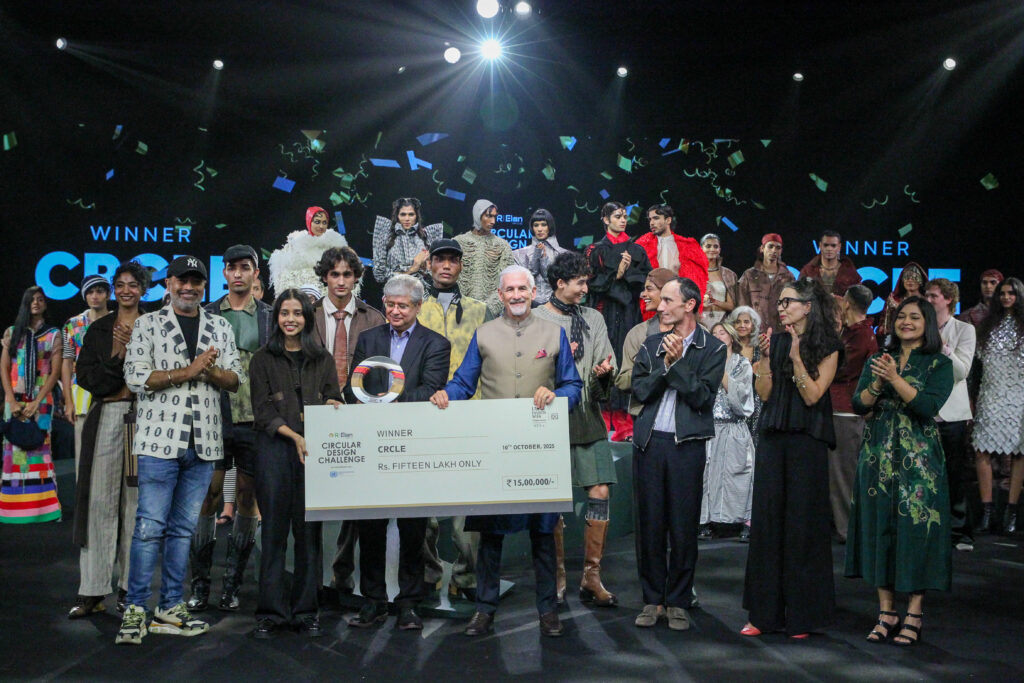
From Veganwool to banana leather, CDC finalist Varshne B is crafting a unique trek to not “save the planet” but give cool alternatives and watch out for her stainless steel bags. By Asmita Aggarwal Varshne B founded Crcle in 2024, born and raised in Chennai, after studying fashion design from NIFT, Chennai, she works with . She admits she loved two things—drawing and dressing up. Though growing up with no internet, only newspapers and few fashion magazines, she knew one day, she will close the proverbial “loop”, thus the moniker Crcle. “In college, I was alarmed at the waste fashion produces, I knew I wanted to do something in this field. Paulo Coelho quote rang in my ears— ‘Planet doesn’t need saving, we do’. It resonated with me and I decided to study design. For me ‘save the planet’ is a sign of human arrogance, we need to look within,” she explains. She began with weganool, 100 p c sustainable, zero-waste woven satin fabric, plant-based and a chemical-free, cruelty-free wool alternative from the Calotropis plant. She also works with banana leather. “Both are innovative and environmentally friendly materials, the latter is extracted from the banana plant, made from the stems and pseudo stems of the banana,” she adds. Way better than traditional animal and synthetic leather, though she also works with indigenous crafts like khadi, hand woven denims, and kala cotton. “We collect discarded materials from factories,” she adds. Like Balenciaga, she also has her version of the stainless-steel bag, refashioned from scraps and leather offcuts, sourced from metal units and leather factories in Chennai. She combines this with crochet, natural dyeing, and embroidery, “I like working with material innovations, converting leather belts into coasters, making a new version of lifestyle products,” she explains, adding, “we create unisex products, using natural dyes.” Mats are hand woven in Tamil Nadu, crochet from women’s groups, plus recycling waste through India Waste Group, where they collect studio waste, discarded pieces, and make something new with it. “Circular Design Challenge has given me this opportunity and I hope I can spread the message that we need to consume consciously,” she concludes.
From Fatehpur to Europe: Radhesh
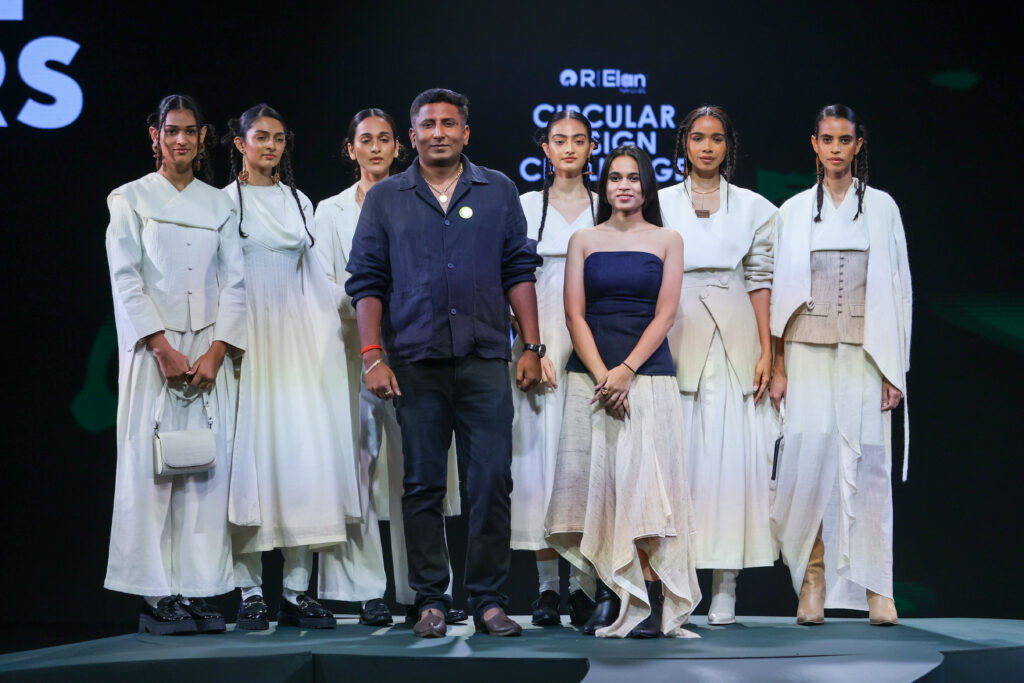
Imagine a shawl as soft as silk, but made from butchery waste, creating both livelihood for tribal women and circularity. From winning patents for his technology, to making wood free paper, Radhesh is a maverick hoping to create a new landscape of style, as a CDC finalist. By Asmita Aggarwal He has won a patent for his revolutionary technology where waste fowl feathers are sanitised and recycled into fibre, using natural ingredients. Radhesh Agrahari started Golden Feathers, his company with 20 women in 2019, today he has 1200 tribal women earning and running their homes. The chicken feathers are light, feels like silk. Growing up in Fatehpur, with zero exposure to fashion, dad was a government officer, he decided to go to NIFT Mohali, then won a gold medal at the Indian Institute of Craft and Design. “I realised there are many more professions than just doctors and engineers,” he laughs. “I come from a small town known for Bawani Nimli, 52 people were hanged by Britishers in 1858. On one side we have Ganga on the other Yamuna, nothing amazing. We lived a simple life, back then, like a tier 2/3 city,” says Radhesh. His work with Tribes India, as a purchase officer, for nine years exposed him to various craft villages, travelling to Baran, Asnawar, no roads, brick lanes where he discovered the most stunning hand work. “We had to buy artisanal products for 160 showrooms all over India, the exposure was enormous. I worked with the Bheel and Garasia tribe, who were traditionally tendu leaf pluckers, exploited by middlemen, earning Rs 80 per day. They started working with us and at home earned much more, creating a value chain system. The idea is not to make money but offer something sustainable to them,” he adds. Today Google and Morgan-Chase are his clients with 70 per cent exports and 30 per cent sales in India (Rs 6,000 for a stole), creating the best alternative to synthetic fibres. He has seen the power in looms, they can weave only 56 metres, but in handlooms women can go up to 60 metres. “I got my break on Shark Tank, we were offered Rs 700 crore for our patent, we never took it. We followed the Lajjat papad model, where raw material is given, and you can make things at home; at G 20 we won the top 8 startups award,” he says, adding machines must be semi-automatic, but tribal women must be involved. His tagline is “where style meets sustainability.” His next big project is wood free paper, and goal is to provide education, livelihood, and circularity to the marginalised. “Food waste like fowl feathers is the third most dangerous thing in the world, feathers create toxicity, and especially when it gets mixed in water. We process it in 27 steps laboriously and craft ultra fine stoles, shawls, mufflers, and can last up to minus 20 degrees. Only his company has a patent for fowl feathers. We have revived Indian crafts, wet spinning, and of course butchery waste which no one was using, lowering carbon emissions. We set up units in Pune, Rajasthan, and Jhalawar,” he adds. The feather-silk is crafted into fabric, keeps you warm in winters and cool in summers, and does not need to be dyed, as it is naturally off white in colour. “My target is not just India, it is the cold countries where winter is almost 8 months long, and they long for natural fibres. We are exporting to almost 11 countries in the world as well as Europe,” he admits. His journey started with showcasing in Dilli Haat and Dastakar, he made almost 386 products including hand made paper, but still faces several challenges like not allowing pickup of waste feathers, even though it emanates sulphur and methane gases which are extremely harmful for the environment and human beings, he concludes.
Meet next supermodels –Sky and Ava
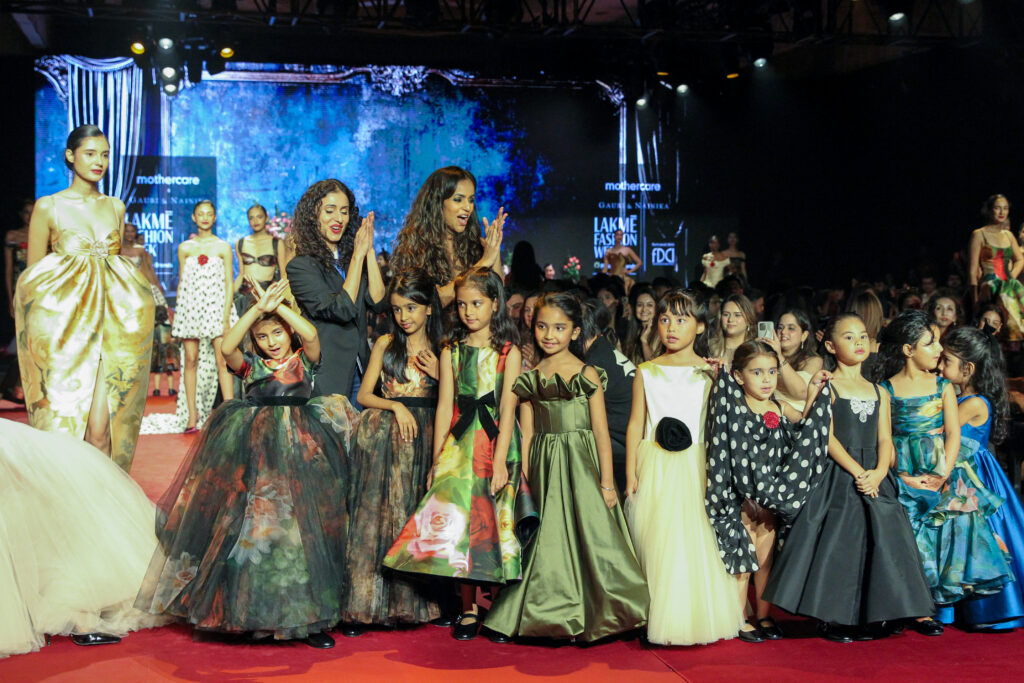
Nainika and Gauri’s daughters, give the catwalk some serious twirls, while Satya Paul announces Bollywood dreamboat Aditi Rao Hydari as their creative collaborator. By Asmita Aggarwal What happens when you have a live DJ, some moon, stars, and sun, mingling with the philosophy of “Papa don’t preach”. Well Shubhika knows young women, like quirky pink lehengas, she also believes dressing need not be about zardozi or kantha, but irreverent bags that come with pearl handles and sun shaped minaudieres. LFW X FDCI shows saw an influx of small dreamboats-including Nayanika’s daughter, as their tie up with Mothercare was surprising. Associated with red carpet, extravagant dressing, Priyanka Chopra in their backless neoprene number, it was a sea change from black gowns paraded with veils, and five-year-olds, in their floral full skirts beginning the show. Balloon and classic Balenciaga style envelope dresses, their signature big bows, polka dots, bunched up skirts channelled the spirit of the swinging 70s. Volume was their thing with tiered dresses in pleasing monochromes, European corsetry, a bit like what Scarlett O’hara wore in “Gone with the Wind”. Exaggerated and pixelated flowers on charcoal gowns, ruffled, and tiered, they decided to get Ava (Gauri) and Sky (Nainika) their daughters’ debut on runway. “We wanted to make clothes that sell—be glam, and introduce Princess dresses for girls (range for 3 to 6 years, some velvet suits for boys as well as bow ties). There is a book we used to read to our daughters–Kate and the Spanish Princess by James Mayhew, the whole show was inspired by this,” says Nainika. If you saw the Panniers or side hoops that they included it takes you back to the 17th and 18th centuries, a technique used to extend the width of the skirts. “Sky my daughter used to love the book, how the main character becomes part of a painting and gets to dress like a princess. We never made clothes for our daughters, though they saw us work all these 20 years. This was one opportunity to do so with Mothercare, it is a year-long collaboration, we have done 30 styles,” she adds. They used Mikado silk, tulle, printed luxe Duchess satin, using boning, bustle, and crinolines, very Marie Antionette styles. The empire cuts and tulip shapes were exaggerated, high lows used, in pure silk and chiffons, they abandoned polyester. “The prints were dark and moody, like an Albert Fernand-Renault painting or a Caravaggio, like an oil on canvas, with big roses,” she adds, admitting they didn’t name the collection, feeling it should be interpreted by the viewer in his own way. Satya Paul is undoubtedly a legacy brand, which understood that an Indian woman no matter how many gowns she wears, or aspires to buy will always wear saris. Almost 70 percent of our population thrives on it. Puneet Nanda and his father Satya Paul started this amazing journey in the 90s, with Genesis Luxury and till today their prints have been their showstoppers. David Abraham and Rakesh Thakore, creative directors of the brand, began with parrot green shoes, draped cowl saris, with bold flowers. And, of course hints of shimmer as their contrasts were engaging —deep blues worn with black and white stripes. From graphic to abstract prints saris worn as neck scarves, not pallas, one shoulder gowns in baby pinks, accompanied by long coats, sometimes knotted at the waist, they got circles, and dots printed as waists were cinched with leather belts. What is new is Bollywood beauty from Hyderabad, Aditi Rao Hydari, as their creative collaborator. “I am so excited, in fact thrilled to be a part of this. It is great to think creatively, play with fabrics, constantly come up with ideas, it is part of my DNA, part of who I am. Satya Paul is for women who own their femininity, it celebrates authenticity. It is a brand that is evolving like women do. I’m dreaming many, many dreams,” says Hydari.
Shibori, leheriya gets “imperfect”
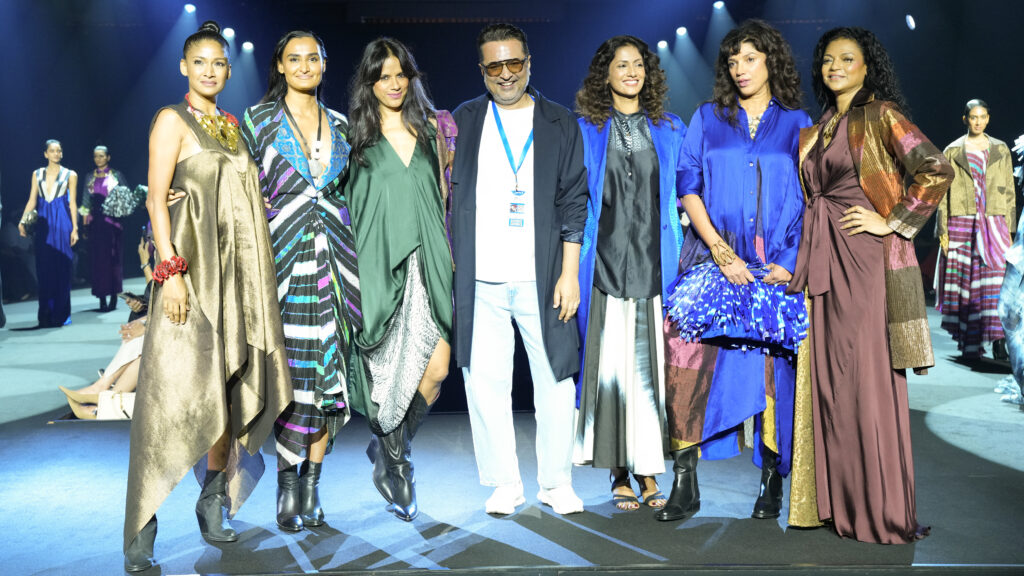
PR exercise is not always fruitful, as brands are not built on celeb dressing, but unique ideology, says Amit Hansraj of Inca. By Asmita Aggarwal “If Sonam Kapoor wears your label doesn’t mean you have arrived”, his point of view is refreshing, maybe because after 20 years in the business of fashion, he realized what really holds value. Amit Hansraj launched Inca, knowing the struggles of young brands, they get trapped in PR exercises, “make this celeb wear our outfit, send free clothes to this TV star” but this is not how brands are built according to him. In 2000 he started supplying to stores like Ogaan and Ensemble, though he had worked with Ritu Beri for six years, Amit Aggarwal too, decided he didn’t want to be an “Instagram genius”. “People who consume fashion are not scrolling Insta, influencers who ask you for clothes will never come and buy your outfits. You are basically not gaining anything by listening to PR demands. Rather relationship building works, a woman who is running a business will not be wasting time on social media. She will need clothes, and will come if you offer her quality,” he adds. Interestingly, he admits, Inca his brand is an exercise in “self-indulgence”, he does one size clothing, this time he added a bit of structure. “I love reversible things, like my jackets, traditional Leheriya got new colours, broke the lines, added vintage textiles, mixed it up. Then we added animal prints with hand blocks, which added depth. I do not like flat clothing,” he adds. His show had 90s supermodels—Carol, Indrani, Nyonika, Sheetal, all the beautiful women he wanted to dress when he began his career, today he got that opportunity. He is clear he does not want to put craft on a pedestal, but make it a day-to-day outfit, not something like your mom’s Banarasi sari lying buried in her cupboard. “Let me tell you something, craft clusters have been monopolized by big designers, they don’t entertain smaller designers. They want to work exclusively with them, all year round, there are many hidden challenges for young brands,” he confesses. Amit decided to do Kantha and Shibori his own way, with untrained women. “I love imperfection. I know many who digitally print Shibori, which I feel is reprehensible,” he adds. He does not want his clothes to look “crafty” this year, to accentuate his look, he began experiments with brass jewellery, made an exaggerated version with doris which he tie-dyed. “Used raffia, it is sturdy, as I didn’t want to use feathers, we revved up our jackets, it was the third element,” he adds. A big believer in “authenticity always works”, even though his Shibori is “made my own way, it looks real to me,” he explains. Dots, cutting in semi circles, is what fascinates him, especially what Carol Gracis wore. It is not size specific, cut on a bias, and takes the shape of the wearer’s body. “I am a textile addict, so Chanderi, linen and silk, organza is what works for me,” he says. After 40 years he admits, he knew his aesthetics even though it is an evolutionary process, “I followed what came naturally to me. Who knows maybe I will do bridal one day, like I dabbled in home and accessories,” he concludes.
Let’s welcome Akaaro pink!
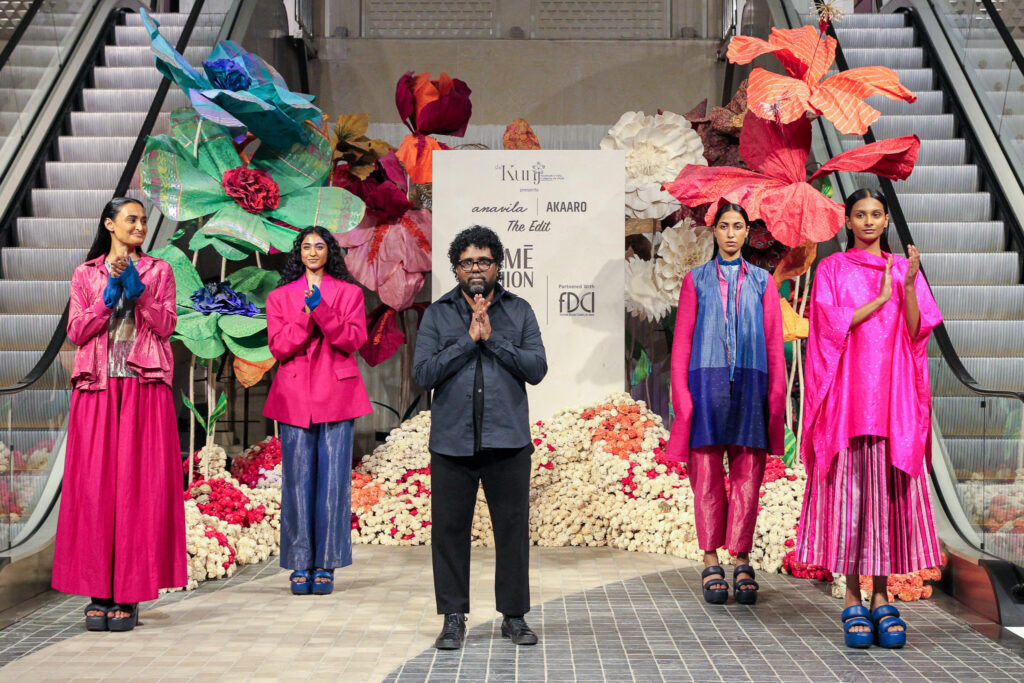
Valentino could have done forgettable pinks, but what Gaurav Jai Gupta has introduced in craft brings with it lightness, subtlety, and grace as Jamdanis take centrestage. By Asmita Aggarwal If you thought pink is only for Valentino, think again as Gaurav Jai Gupta of Akaaro has introduced his stunning version of a handwoven Jamdani sari, knotted to perfection, worn by model Roselyn telling us that you can wear it without any “borders”. His collection showcased at LFW X FDCI opening show at The Kunj, had shoes designed by him, with the help of stylist Nikhil Dudani. “Pinks made a bigger impact as it was on a quintessential Indian complexion. Textiles increase the scale of colour, it also depends on how well you can use the tonality of hues in your favour,” says Gaurav, honoured to be showcasing at the mecca of crafts, The Kunj. Just like his blues that still sell well, he decided to keep it minimal and clean, no layering playing with circle-dots patterns. Khadi silks, Jamdanis formed the fulcrum, and the one and only upcycled coat he made from the entire collection’s waste was a showstopper with dexterously executed patchwork. Metallics were omnipresent, and his signature Kinji sooti saris, played with oversized blazers. “Our outerwear is popular, mostly utility pieces, as we introduced almost 50 separates, wearability is of prime importance for us,” he adds. Engagingly, the sari has now been seen as a dress, or even a drape, he never serenaded the palla or pleats, for him it was more about the form. Ashish Karmali, stylist from Jharkhand helped him undertake many challenging drapes to add a third dimension. “Starlight” his LFW X FDCI line is in continuation of what he started with—”Skies Mine” and then “Moonrise”, from the sky to the moon, and now the pink horizon. “With wars and politically disturbing times, everything impacts me. We had to do a show in the US that got cancelled,” he admits, and showing at The Kunj was appropriate as it channels the “right energy”. Golden platforms, taking us back to 60s, balloon skirts largely roomy, you could easily spot the metallic sheen, with just hints of shimmer, no fuss even in the ponchos as the sleeves are longer, narrower, and exaggerated. “I don’t think people from South Delhi and West Delhi understand crafts, maybe they know about Bandhani and Khadi, but that’s all,” he laughs. What he does want to work with in the future, is printing and embroideries, or what he calls “surface texturing” in his design language. Madina, from Israel played the violin to let in the Jamdanis, which gave us a peek into their visual beauty ushering in lightness and subtlety.
Sari dress anyone?
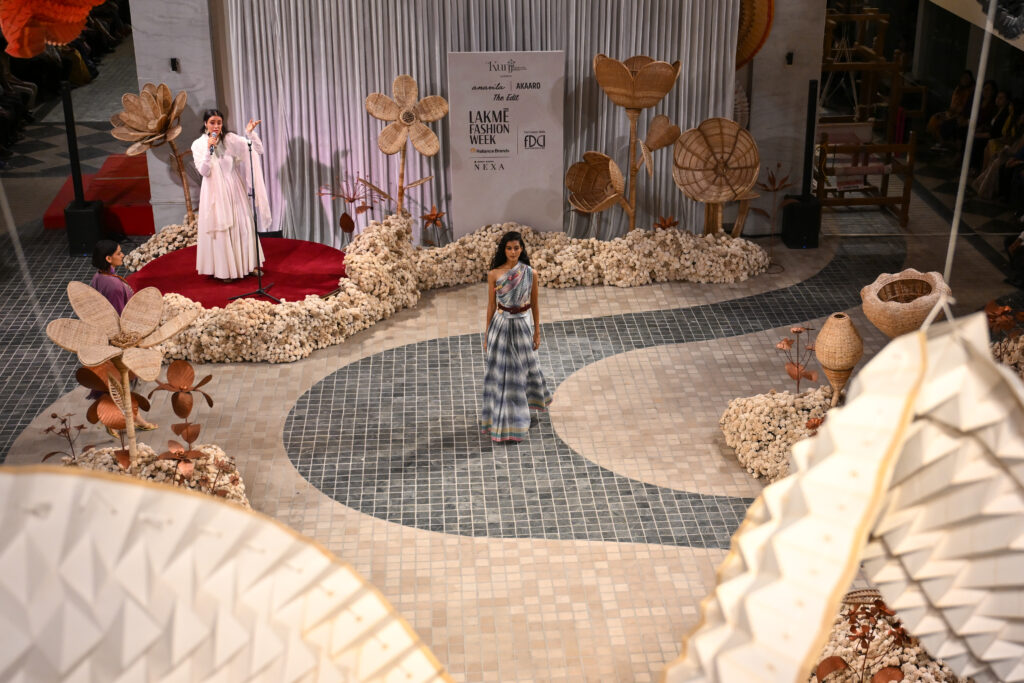
The opening show of the LFW X FDCI by Anavila Mishra and Gaurav Jai Gupta along with in house designers from The Kunj displayed the prowess of the sari, which is now not restricted by pleats and palla but has found a new disposition—jackets, Obi belts and knots. By Asmita Aggarwal Imagine being surrounded by art, culture and heritage, at the first glance at the roof of The Kunj, by the Ministry of Textiles, you are smitten by saris Ikkat, Pathani, Kota Dorias, Mekhla Chaddars, Narayan Peths, Sambalpuri to Maheshwaris, draped in Origami, by the inimitable Ankon Mitra, as you glance up. The waft of mogras on your wrist, and the cobbled ramp complete with wicker flowers, could there be a more befitting opening for the FDCI X LFW? After all, India is a nation known for its hand work, intricacy, and design thinking. The carved wooden pillars Chettinad style strike you, with their austerity on all three floors. Though everyone’s favourite undoubtedly was Suhail Bhan a Kashmiri Pandit, who has been perfecting the art of Bharatnatyam, setting the flow with his dexterous presentation. “I started learning dance when I was 12, learning from Justin, an American! I practise two hours daily, and teach also. Some are surprised to see men dancing, but they look so beautiful, it is an altogether different energy. Today there was more improvisation, as we danced for 20 minutes. Dance is about grace, control, and expressions, as well as how you involve the audience in your journey. I sing also, learnt for a year, it helps in dance,” says Suhail. Live music by classical singer Deveshi Sahgal began the opening show by Anavila Mishra, muslins and her unabashed love for whites. But what’s new is the sari is no longer being worn with palla and pleats, but jackets. “Sarmast”, references the Deccan, from the state of Wajd, thus the ode to handwoven linen, but it was a joy to see the Kerala Kasavu sari rubbed shoulders with pant suits on the notes of Aaoge Jab Tum by the inimitable Ustad Rashid Khan, an eternal fav. Saris came with Obi belts, trench coats, roomy Japanese jackets, telling us there are many ways to wear them. Blush pink looks fab in handloom cotton, as Kimono-style jackets revved up saris, lace bows in the hair completed the look. The show had “The Edit” by seven in-house designers of The Kunj curated by DC Handlooms Amrit Raj. “The look that we presented was entirely woven from waste like all our products, we showed styles on a male model, but all four garments are unisex. The kurta is a kurta dress, then a two-way top, jacket was reversible. The Kunj has been a great place for us to meet customers, and design for them accordingly, generating this level of work with artisans. We upcycle other people’s waste, this is my first experiment with B 2 C, it’ll help develop a deeper relationship with the customer,” says Bhavya Goenka of the label Iro Iro. Pedal looms we have used, natural dyes, extra weft technique to weave waste, Rohingya refugees have embroidered on linen. Interestingly, the belt has arrived and so has the long jacket, the broader the better, the Kutchi mirror work jackets, Ikkats in maroons, traditional saris draped almost sinuously around the body, pleats misplaced and palla disappearing, gave a peek into how innovatively the sari has metamorphosed.