
No white collar, it’s silver for Anamika
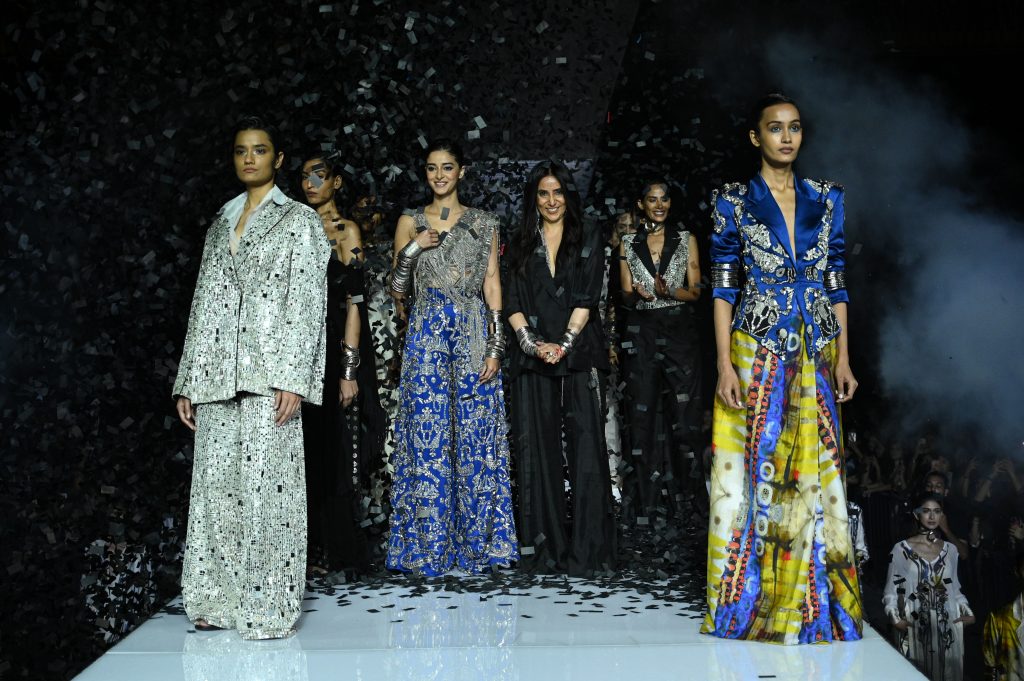
After almost 25 years, Anamika Khanna is hoping women in lucrative careers want something that is not just suits and blazers –maybe a silver tie, suspenders, daddy briefcase and some pearl encrusted denims from AK-OK! By Asmita Aggarwal India is all over the world, and it isn’t just “in India”, anymore maybe that’s why Anamika Khanna’s AK-OK for working women, is timed right, the market is ready for this, especially as professions are now unconventional. One could see nostalgia—daddy suitcases cleverly revived, splashes of colour, even though monochromes are her thing, denim is now slowly moving to her favourite list. Above all, no one can beat her in texturing—how she combines various techniques—patchwork, applique to mirror work at her show for LFW X FDCI. The ignition of the idea came from Rabari tribe who are movers never static—Gujarat, Rajasthan and have some Afghan influences too, she began researching, and found their silver stacking jewellery was phenomenal. She took those—and modernized it with suspenders, ties, chain loop belts, “you don’t need to wear silver only as a jhumka, if it can be a silver collar too”. She had that too—literally, workwear equals—”silver collar”, also the name of her line—like you have blue collar and white collar. “Let me tell you what I think is my biggest strength—I don’t think of the garment but the woman,” says Anamika, understanding the changing needs of modern women, their intimate relationship with clothing, and how it changes their mood. After 25 years in business, every time she does a line, she wants to incorporate something “forgotten or lost”, last season she also paid tribute to the Bonda tribe from Odisha. “Women bring not just power to the boardroom but also emotions and compassion onto work, I wanted each of the 50 pieces to reflect that,” she adds. If you look closely, the styling, it has a churidar, with a dhoti and collared skirt, each reference was out of India, but how to make it fashion Anamika knows. The show was about 9 to 5, and how workwear rules are being broken, in between this mix she revived her dhoti pants of the year 2000, churidars which she loves, as well as tattered holes and cut outs. “Designing as a profession is challenging, lot of people tell me take it easy, take a break, and while I am talking you, I’m sticking applique on a dress, this is my life, I live for fashion,” she smiles,
Clothes with feelings
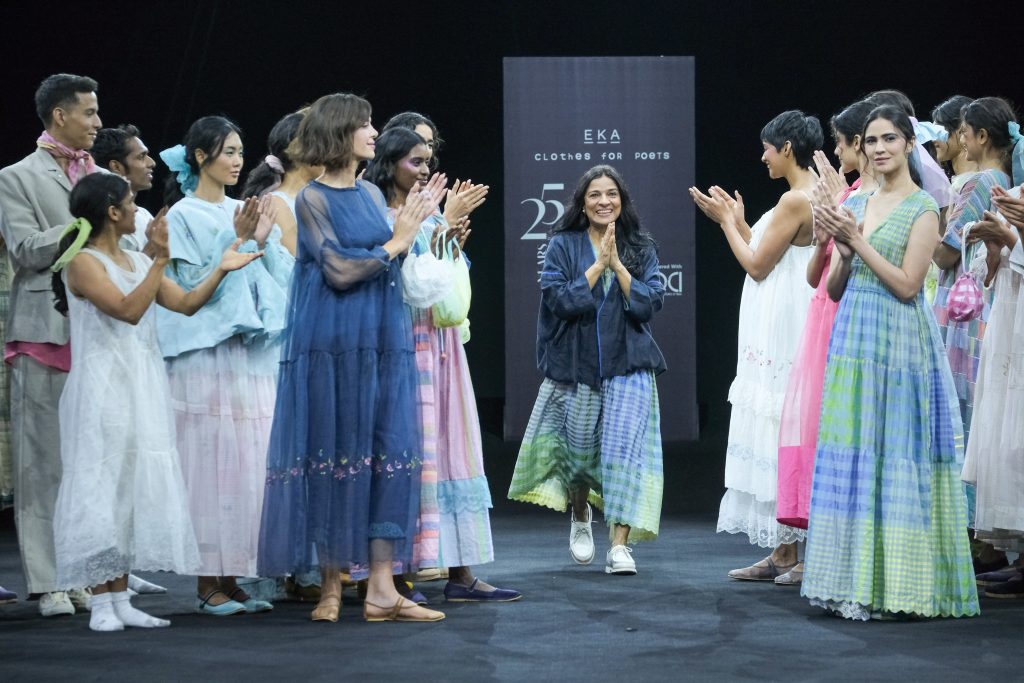
From serenading poets to artists, Rina Singh’s Eka is a case study of craft upliftment. By Asmita Aggarwal If clothes could have feelings Eka would be a right fit! Rina Singh, who built a brand, brick by brick, over 13 years believes it took years of developing product knowledge and working closely with clusters and weavers that helped her finally launch a brand. Unlike Gen Z who know marketing, but learn about product excellence along the way, their skills are so polished that business turns out to be good! “They do it right out of college, I took several years to have the courage and wherewithal to launch my label,” says Rina, adding, “the world of design has changed unequivocally.” Eka and Eka Core are two different ethos—but same mothership, the latter is ready-to-wear, younger, less moody, uses archival textiles and repurposes, so circular in ethos. Rina overdyes it, uses quilting, makes it trans-seasonal as most are leftover fabrics. Eka is known for its love for hand spun and slow, thus the making process is not instant and takes a year of planning. She took a concerted decision to be on the ramp, after a hiatus, to offer woven wonders from Bhagalpur, Banaras, Kota to Bengal, telling a story in Muslin, lace, inspired by Amer, Jaipur with its imposing mirror mosaics, for LFW this year, but she has interpreted it differently—appliqué to tiny embroidered motifs. The idea was to have movement in clothing, like choreography, how clothes adapt to the body and its wearer; as the DNA of the label remains the same every year, but the inspirations are rooted in craft upliftment. You may have boxy trousers, laces only show shifts in moods, things you can wear from Kutch to Tokyo, as it remains feminine, layered, and translucent—this time it’s silks, gossamer and diaphanous. “Sandeep my husband, is a pillar of support—he manages operations, so I am free to design, it takes a huge load off me, in the last decade, he has been a backbone. But I have learnt marketing needs to be loud, brands must have their own voice, and over the years I have learnt not to be rigid about my product,” she adds. Kurukshetra where she was born to agriculturalists, made a deep impact on her psyche growing up, she valued crafts and the “thinking before doing” process of clothing, where you deliberate rather than buy –it is laborious, time consuming, and expensive, but it is also timeless and hand spun, the beauty is unmatched. “I come from a Rajput family where traditionally women invest in weaves, pearls and Kashida, as well as vintage shawls, they understand aesthetics,” she says. Working with the European markets, especially Japan, Rina believes the real jewel in the crown in India is ready to wear, yet we are focussed on weddings, a money churner. “I know the Indian woman likes to be comfortable, yet classy, so why not give her craft-soaked offerings with hints of colour?” she concludes.
Back to the Future

From three decades of shimmer that Suneet Varma protracted, to the skater vibe that Paatni exuded or how meticulously Pawan Sachdeva tells men to change their stripes, the last day reverberated with passion! By Asmita Aggarwal
Painting Reality

A torch bearer of Communism and social equality, in the early 19thcentury, Frida Kahlo today has become a symbol of empowerment as our quest for liberation of the spirit longs for quietude. It is this tenderness with which Payal Jain celebrates 25 years! By Asmita Aggarwal
My Experiments with Truth

Ecologically sustainable and hand spun, khadi is a leitmotif for freedom of the spirit; there was no better way to say this than with Anju Modi adding it to the lexicon of the younger generation with dhotis, and monochrome check jackets By Asmita Aggarwal
Gods & Kings

Should fashion be evolutionary? Must it look at alternatives to cloth? Can paper be moulded? And are monochromes eternal…Pratap answers all this with quiet ease and an eye on the future By Asmita Aggarwal
Connecting the Dots

Zealous showstoppers, monochromatic renditions, wispy 80s, endearing Schiffli and some Shibori made day two of AIFW SS18 whimsical By Asmita Aggarwal
The Bell Jar
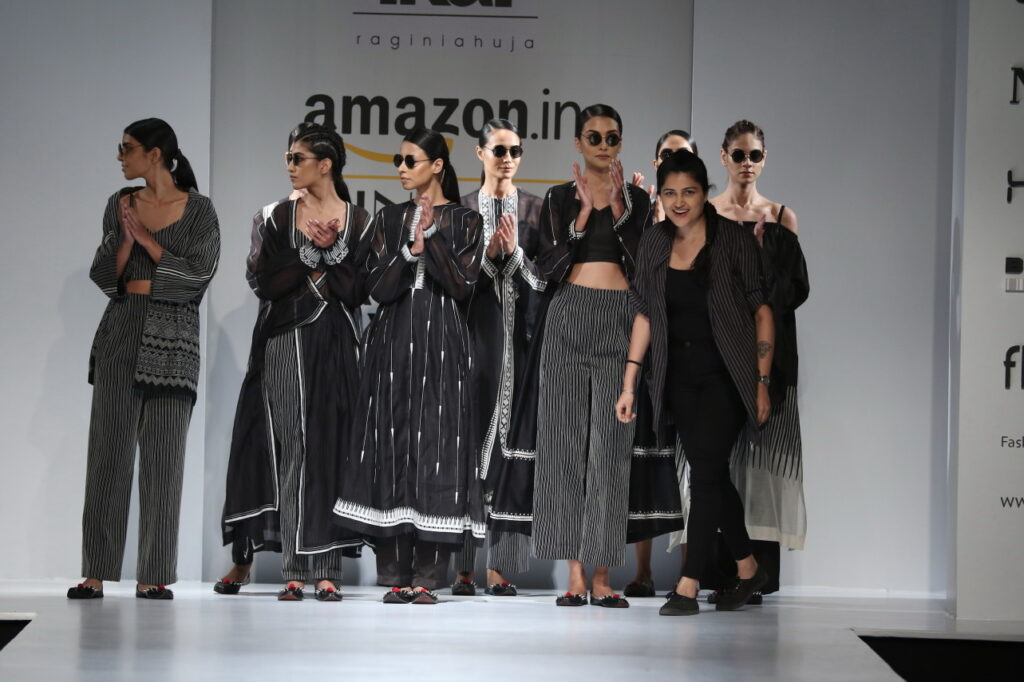
Ragini Ahujas brother Tanmay gets a touching tribute, as she raises pertinent questions about displaced refugees through soft as mul Chanderis and dexterously executed appliqué By Asmita Aggarwal
Pret-a-pleaser
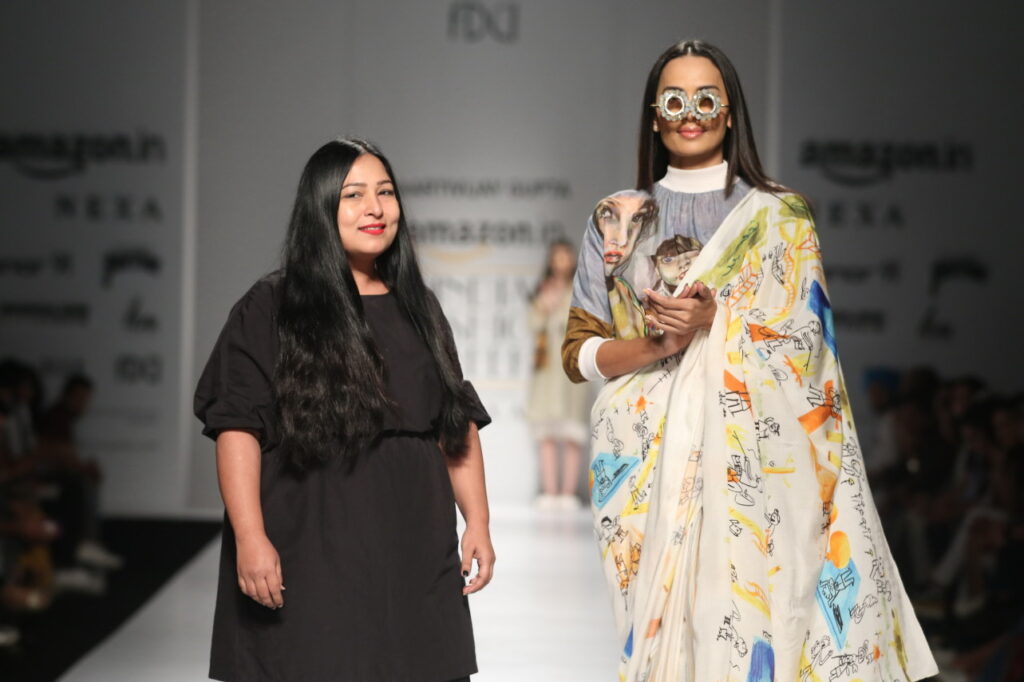
Indores Aartivijay Guptas rather unusual trajectory to fame has been sprinkled with stories of courage that took her from a traditional, small town Marwari girl to an astute businesswoman By Asmita Aggarwal
Pleats Please

Schulen Fernandes is carrying forward the legacy of Wendell Rodricks decision to drop out of the race of hectic fashion, and Samant Chauhans palette cleanser ivories and bold floral deluge interspersed with the science of human fragility as witnessed in Goethes Faust was enriching By Asmita Aggarwal