
Bill Clinton told us to be at MOMA: Gautam Malik
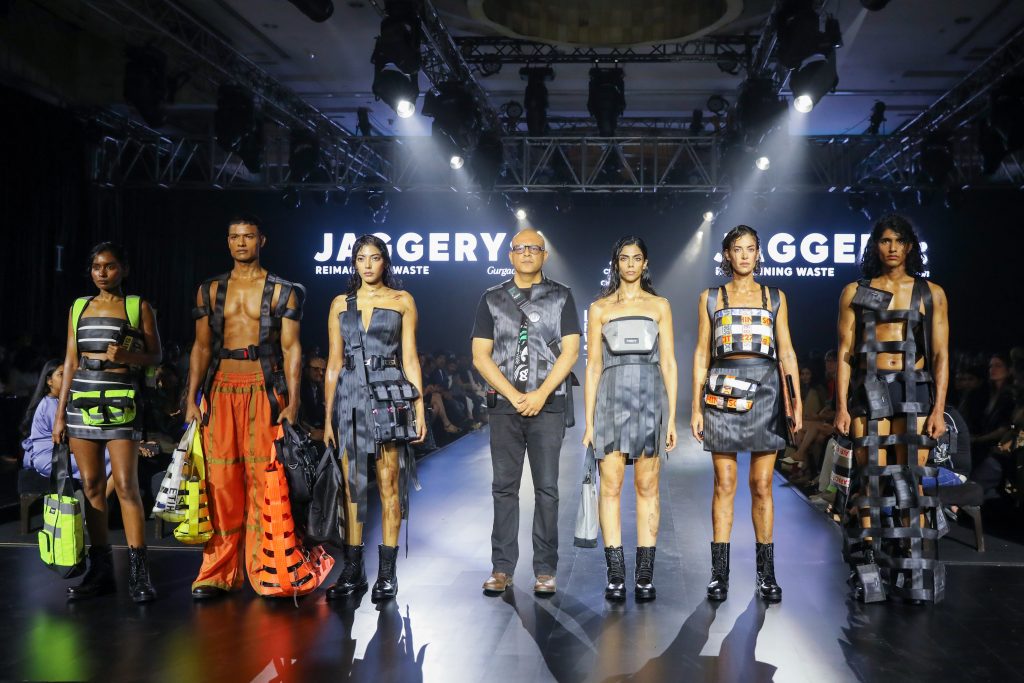
Making bags out of discarded seat belts, the JNU kid, who grew up with a father who taught quantum physics is today building a sustainable community one gilet at a time with his brand Jaggery. If Apple can sell electronics, why can’t jaggery sell bags? By Asmita Aggarwal Former US President Bill Clinton met him at the New York Fashion Week, recently concluded, and told Gautam Malik of the label sustainable Jaggery, that one day he hopes to see his products at Museum of Art (MOMA), New York, the store invites purpose-driven makers. So, the passionate entrepreneur went unannounced to MOMA and pitched his sustainable bags and ensembles, even though onboarding is online. Meet the social innovator, Gautam Malik part of the Circular Design Challenge in partnership with United Nations. You would never imagine a Jawaharlal Nehru University kid delving into fashion—it is not impossible but it is unprecedented. Malik’s parents are both professors—his dad taught quantum physics in JNU and mom super conductivity in Delhi University. It was surprising he chose to study fine arts and media studies from University at Buffalo University, and then Memphis University where he studied communication design. He says, whatever he learnt, he is applying to what he is doing today—whether it is documentary filmmaking, storytelling to making bags out of waste at Jaggery–Reimagining Waste, a women-led social enterprise. They upcycle discarded car seat belts, decommissioned cargo belts and ex-army canvas into sustainable products. “Since 2018, we have been able to divert 2400+ tons of waste from the landfills of Delhi, impacting the lives of 25,000 people,” he adds. His childhood sweetheart Bhawana Dandona, (University of Pennsylvania M.Sc in historic preservation) who worked in conservation of old buildings, found a meeting point in ideas. “We discussed structuralism, cultural heritage, and I loved jamming with her. When I returned from the US in 2010, I worked in the corporate sector in UA/UX design in India after ten years of living in America,” says Gautam. His experience is vast—Time Turner to Jabong, e-commerce designer, the creative head also launched a fashion magazine, but he calls himself a “social innovator”, someone who wants to impact society. In the year 2000, he got a chance to intern at Auroville, Pondicherry, where people from different nationalities have renounced their citizenship, are living as a community, he then decided he wanted to build one too, thus Jaggery. They work in Haryana to Jharkhand mostly with “aspirational districts”, most importantly with Nuh, known for its political tensions. “How do you decide who to work with?” he asks. “Jaggery” or “repurpose” the toss-up was there for the name of the brand, the former fitted in—-as while making jaggery nothing goes to waste; it is produced in small batches, the process is thus humanised, it leaves behind a witty flavour. If Apple can sell electronics why can’t jaggery sell bags?” he laughs. Growing up simply he went to Modern School, found a huge inequality in terms of social status, he would get Rs 25 weekly allowance, he learnt to live in that, JNU is in his DNA. “I had to come back from the US, as I saw India was the hot bed of startups, also living in the US you never feel part of it,” he admits. For LFWXFDCI he is donning a fashion designer’s hat creating bags and garments from repurposed car and airplane seat belts (cars which are 15 years old must be scrapped, according to government policy). This creates enormous waste—they use the rubber, roof lining, seat belts, residue, and have come up with a system wherein many NGOs (also Mayapuri car scrappers) are helping them source it. “We tie up with RWAS like we did in Gurgaon where we are based to start donation drives—you can give your old denims and corduroys and we will spin them into a new designer ensemble,” he admits. He believes in co-creating and partnerships, with Volvo Jaggery does corporate gifting, Tata any car scrapped they can utilise, they ask them to replace cardboard box boxes for Diwali sweets with recyclable bags, their new work is with EVs. “Earlier vendors would fleece us asking for money for things that are waste, they would just throw. They thought we are using it for profit, now they understand many years later what we are doing,” he adds. He faced many challenges, even how workers they would hire, when he would inform they are working with discarded materials, “why can’t we work with new ones? They would say. The bags he makes are sold at Embassy fairs like the US and Austrian as well as Dastkar though he knows the sword is always dangling for this bootstrapped company. “We never know when we will fold, we want to partner people who understand what work we do, it is a dual impact model. Waste is recycled, it is circular, creates jobs, we create a value chain. It’s an ethos-based brand,” he adds. You can get a wallet for Rs 750, and a duffel bag for Rs 7,000. “Also on offer are bespoke products, cargo belts come in different colours, we customise you can choose British, Qatar or Singapore Airlines, play around with the sequence. I started with just one employee Shahid bhai, now we are nine in total,” he says. FDCIXLFW line of garments are risqué-jackets, gilets, reinterpreting the Nehru jacket, corsets, and asymmetrical skirts. The philosophy is gender agnostic pieces, like the caged maxi dress it’s avant-garde but with an industrial vibe. “Society cages us, this is breaking free for me,” he concludes.
Arundhati Roy, Mira Nair, Kiran Rao and me share common artistic goals: Aneeth Arora
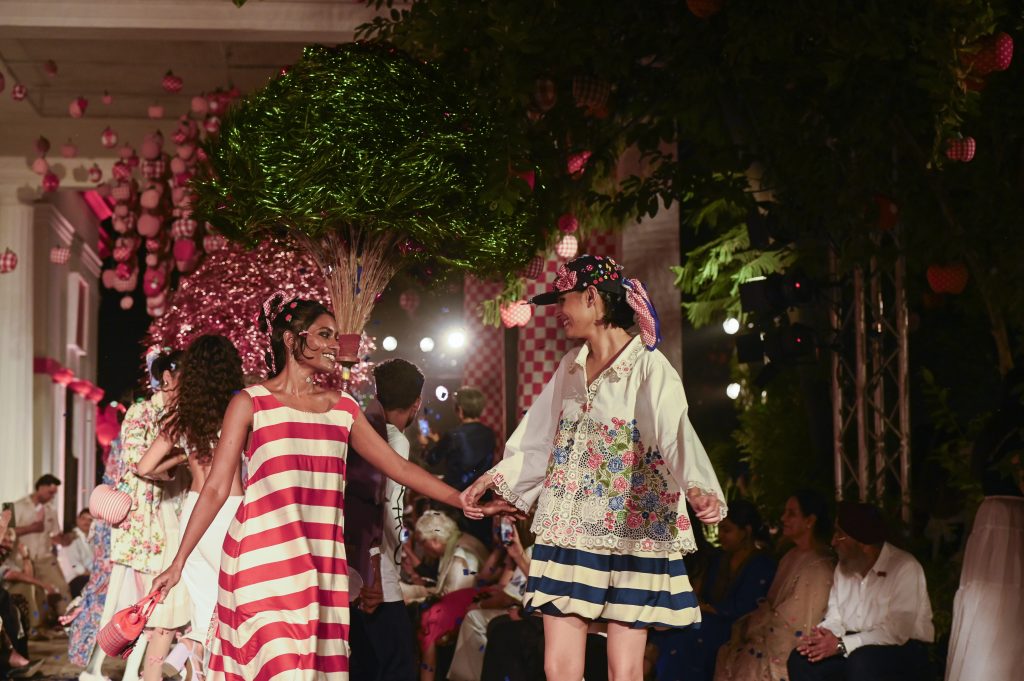
From little hearts floating on smocked dresses, Hello Kitty nostalgia, to intensive embroidery details, as well as design interventions on textiles, Aneeth Arora celebrates 15 years of Pero with a FDCI show at LFW. It has been a long road from Udaipur to creating a million-dollar business for this craft crusader. By Asmita Aggarwal Udaipur is a quiet town, very underexposed, living in a microcosm, but Aneeth Arora’s mom wore Garden saris, and Babita (the erstwhile Bollywood actress, better known as Kareena Kapoor’s mom) inspired kurtas and churidar sets, she loved fashion. She stitched clothes for a young Aneeth, from leftover fabrics from her grandfather’s kurtas—replete with cartoons, laces, patches, and flowers. “I do not know how she had children’s catalogues, Korean looking kids in them. In my friend’s circle when I went down to play in a middle-class housing society, in the evening, my dresses were admired. ‘The girls would say ‘look what Aneeth is wearing today’. My mom was quick too so every week I had a new one on,” says Aneeth, who opened the LFWXFDCI 2024 at 13 Barakhamba Road, in the capital. Entire building resembled a child’s birthday party! Thus, “nostalgia” plays a huge role in all her collections, this year is special, she celebrates 15 years of her brand, it is the core of her ideology. “There is a seriousness when we work with textiles, I thought there must be a lightness when we present it to the world,” she smiles. When her sojourn began, very few buyers understood textiles, there was no dearth of craft, but it did need refinement. Either they would starch the Jamdani too much or the wool was too coarse making the wearer extremely uncomfortable. Intervention must be from the yarn stage, is what she learnt at NID, Ahmedabad, also garments must feel good against the skin—like her Kullu Pattus, soft merino wool, refined, and it has been wholeheartedly embraced, the dyes used to bleed now they do not. When you see a Pero outfit, you will always notice little hearts floating around, somewhere there is romance, even though when she started, she was not sure if the buyer would like it, she would hide them in folds. It was her way of giving love to them through embroidered hearts, later this became one of her many intimate signatures. After two years Pero’s show is back, it is much anticipated, as she works with handloom, she wants nothing to be rushed—woven textures take time to execute. Pero shows whether it is a pajama party, or “Cuckoo and Co.”, with mad hatters or “Alice in Wonderland” are a treat for the audience, and what she is successfully able to do, is present textiles minus the rigidity, rather than being academic about techniques she makes it fun. “I learnt this from my mom, she would teach me through stories, she would sing ‘State and capital’ to me and I know it till today. I could never mug up or memorise, but storytelling always worked,” she grins, maybe that’s why you see models dancing, as confetti burst on the runway, it is part of her expression of style, transporting you into the world of a child, where she creates her own universe. In her press kits there is always a piece of Pero, once a year she shares her joy of crafting a collection, and like Coco Chanel she loves the flower Camellia, maybe because it represents resilience unlike other delicate ones, it can withstand harsh winters. “I like it, as it is underrated, the rose is considered the king, but I call camellia a modest rose,” she adds, even though Aneeth can never be seen donning florals, she is more of a Baby Breath or Forget-Me-Nots, the little blue flowers, kind of person. Unlike Rahul Mishra, or even Gaurav Gupta who in their own ways are marketing crafts to a global audience through Paris Fashion Week, Aneeth does trade shows, if given an opportunity she would love to. “Globally they don’t know our story, only our product,” she admits, Pero is available in 350 stores worldwide in 35 countries. Few know her fans extend beyond the swish set—she has ace photographer Dayanita Singh who comes and shares her latest projects, Booker prize winner Arundhati Roy works in her Patparganj studio known for the bright red letterbox standing outside like a modern-day mural, Mira Nair the famed filmmaker is a diehard Pero fan. “I am not much of a reader but I love pictures, I am a book collector and I have everything from art to architecture, we have always attracted alternate artists, like-minded individuals, filmmaker Kiran Rao whose film Laapataa Ladies is India’s entry for the Oscars. There is an honest relationship with them, pure appreciation from both sides,” she adds. Even as the world is corporatizing and fashion brands have been taken over by ABFRL and Reliance brands, Aneeth like Yohji Yamamoto or Issey Miyake does not want to sell her business—she wants to be small but impactful. She never invested in a huge retail space. “I do believe there is a right time for things to happen, the universe is a big planner, I want to create a space where I can tell my own story,” she admits. This LFW she is paying homage to the culture of DIY, GenZ loves making their own clothes. She has indulged in old textiles cutting them up and making new ones -patchwork—maybe it is grandma core but she has elevated it with French knots and crochet. There are beautiful Calcutta bedsheets in white poplin with red embroidery that have been converted into easy dresses. It also resembles Hungarian table cloth Aneeth saw, and loved the austere lines. Her constants have been Mashru and Patan checks, Chanderi and Maheshwar done in a DIY way, she mixed fabric together. But what about those who cannot afford a Rs 50,000 Pero dress? Some years back she had a capsule line titled “Lazy Pero” where embroideries were less,
Dress me up

Sprinkling of star power, woven wonders, sporty chic and the shining star of fashion week Gaurav Gupta, who crafted elegance from ocean plastic waste By Asmita Aggarwal
Classics over Chic
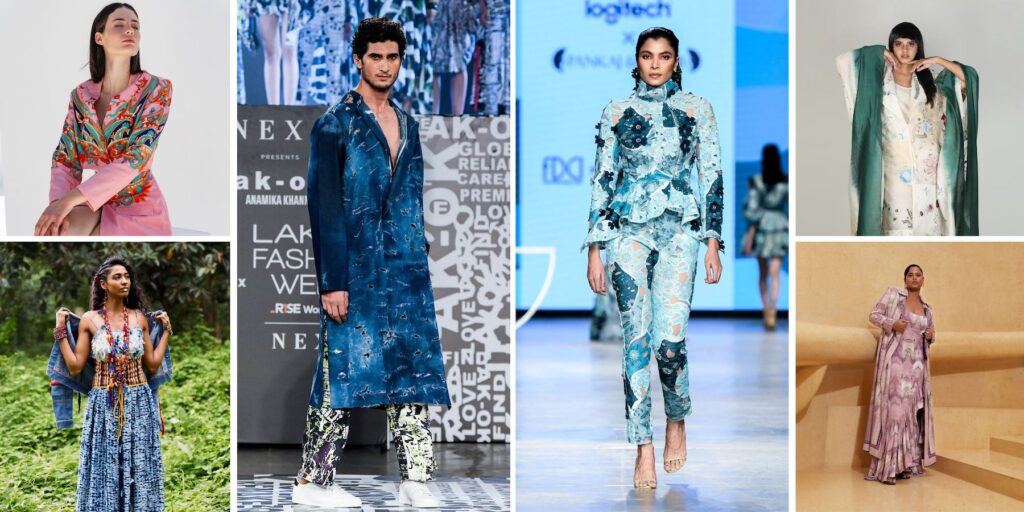
Anamika Khanna urges us to slow it down with easy silhouettes, while Payal Jain makes us all choose wisely. Nikita and Shruti get playful with exaggerated sleeves as their offerings beckon a long-awaited beach holiday By Asmita Aggarwal
Project Semicolon
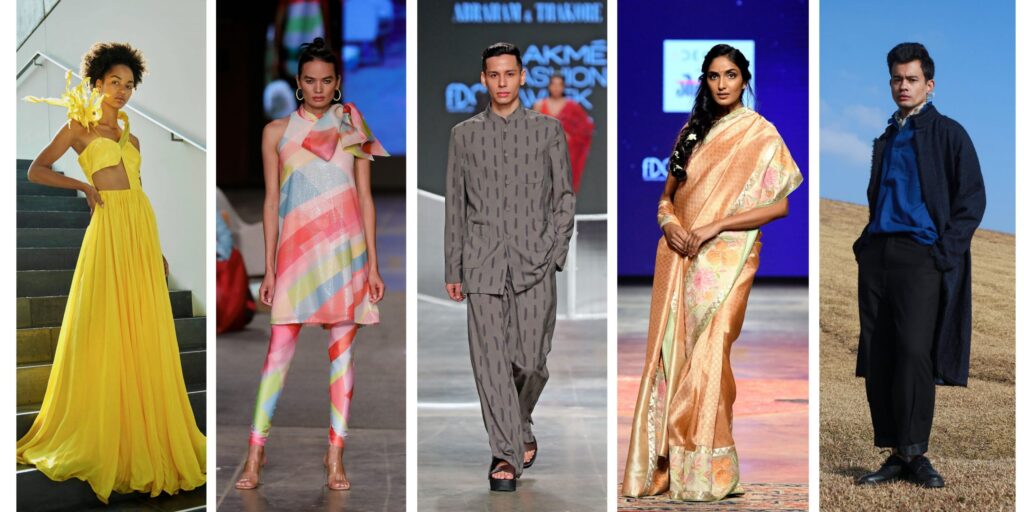
The beauty really is in minute details as Rina Singh will tell you or in weaves which whisper traditional bearings by Gaurang. The third day at FDCI X Lakme was about conscience buying By Asmita Aggarwal
Shine On
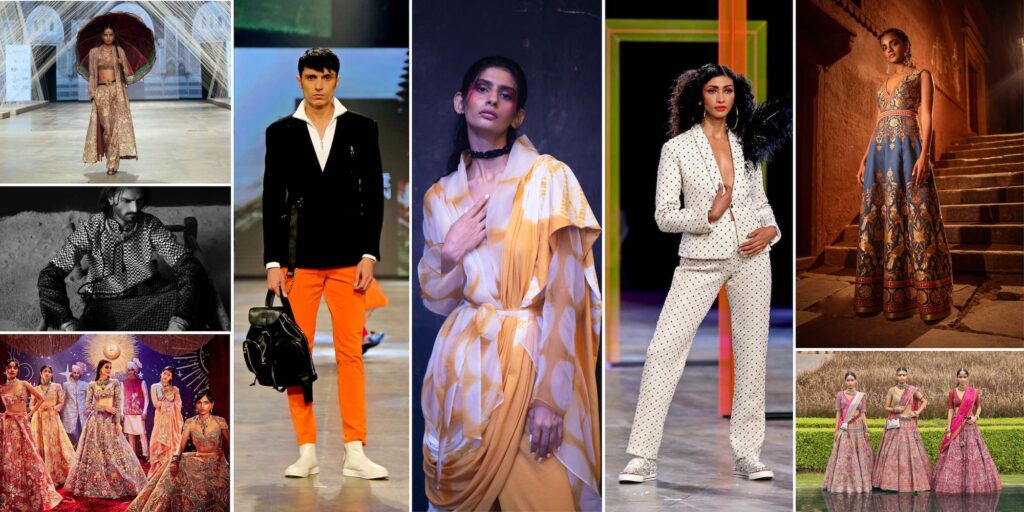
Day 2 of FDCI X Lakme Fashion Week was a celebration of celebrity daughters, paying homage to childhood impressions (Benaras and cot makers), as well as the pressing need to go organic By Asmita Aggarwal
Brave New World
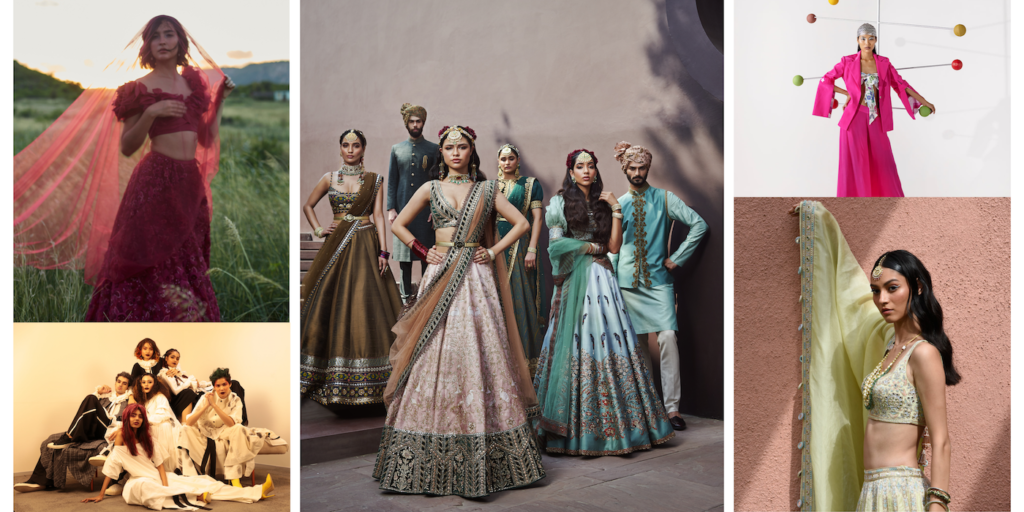
J J Valaya shows us the new way to wear skirts as prints beckon simplicity in Limerick and fabric manipulations replace the need for shine in Geisha Designs By Asmita Aggarwal
Eat, Love, Party
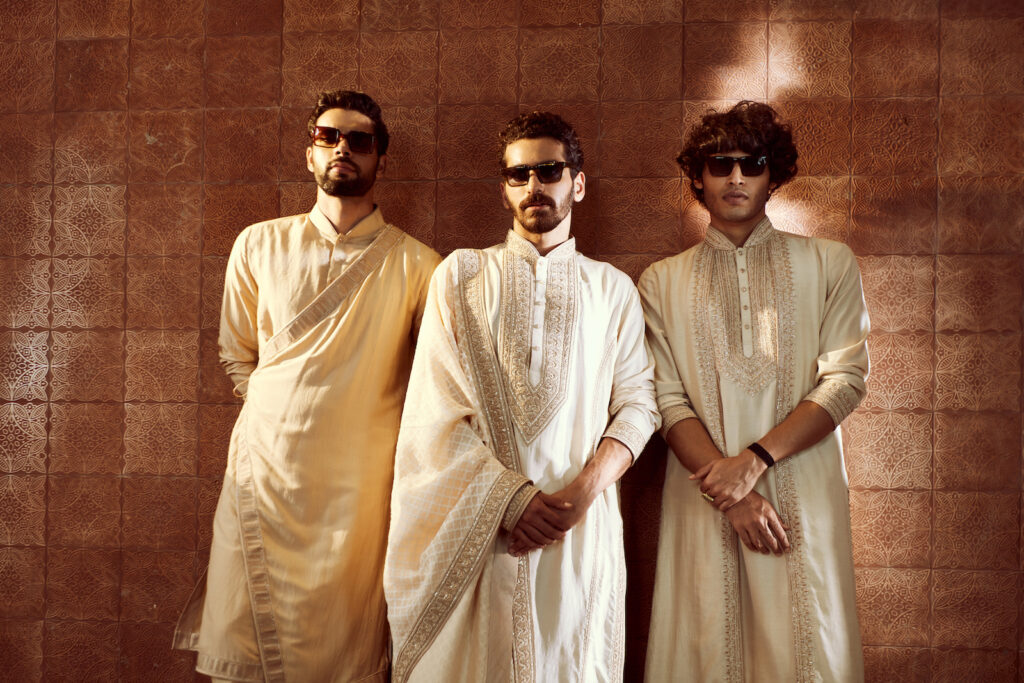
Tarun Tahiliani takes the capsule collection route to offer simpler, lighter ensembles to three generations without relinquishing his love for crafts By Asmita Aggarwal
Dressing on the Side

Clean and lean is what the world needs, both for body and mind, and if it gets translated to our clothes too, it’s a winning recipe, Ruchika Sachdeva gives us just that By Asmita Aggarwal
Ordinary Magic
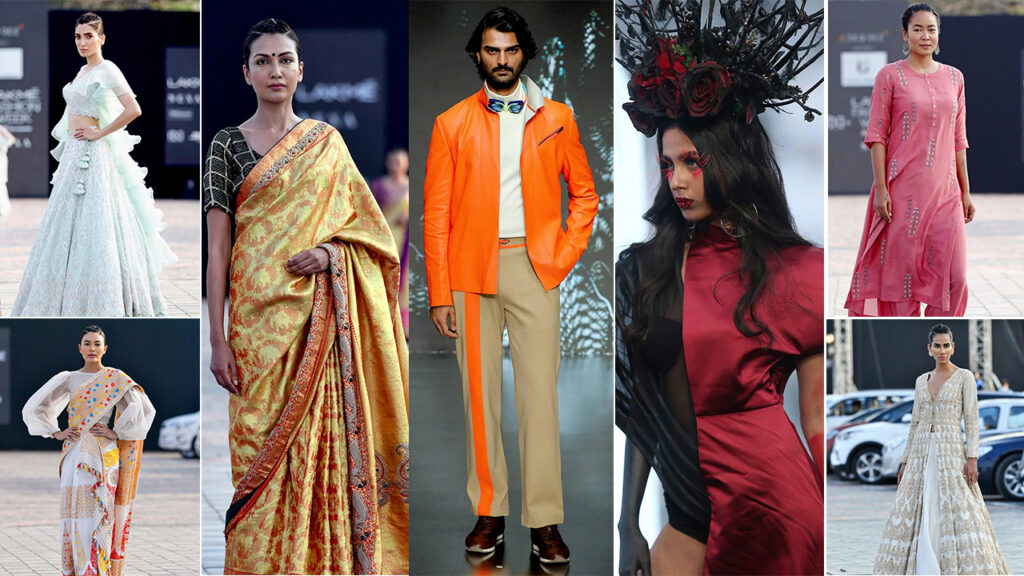
Pearl students add a silver lining to dark clouds; Pawan Sachdeva had men sizzle in fluorescents; while former engineer Sanjuckta doesnt let the gloom set in on looms By Asmita Aggarwal