
Rock band Queen manager’s son comes to LFW
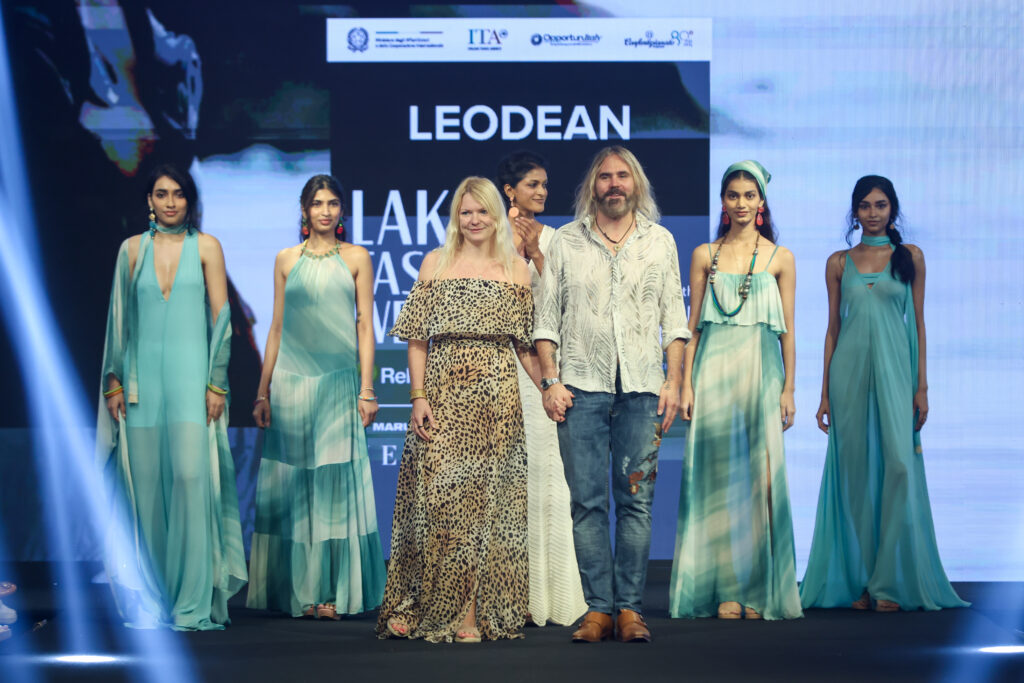
He fell in love with a girl in Karnataka, who studied Shakespeare in the jungle, launched Leo Dean his sailing brand, but the musician Oliver is more than just his legendary father Jim Beach’s son, he is a visionary. By Asmita Aggarwal Oliver Beach is the son of believe it or not of the man who handled Queen band, Jim Beach, by our very own Parsi Freddie Mercury. “My father toured with them for 40 years, and Queen has had an enormous effect on my life, even when I met Freddie as a young impressionable boy. I was one of the few who got to see things as an insider,” says Oliver. He was the frontman for the British indie pop/rock band Yellowire, he formed the band in 2010, after being the keyboardist for Wire Daisies. There are so many Queen songs that are memorable for him, choosing one is tough, but “Another one bites to dust” makes his heart dance. Being a professional musician he understands it better. “Roger Meddows Taylor, drummer for Queen, I saw him performing in England recently, trust me everyone’s hands were in the air,” he laughs. Leo Dean was started by him and wife, who studied at London College of Fashion, it is more her world than his, but “life takes many funny turns,” he says. “Music and fashion are interlinked, isn’t it? We both naively started the brand, loved old Italian Riviera style, also sailing something that I inherited from my family,” says Oliver. He admits he started Leo Dean without thinking about it, but the one thing that made extremely free is sailing on the Mediterranean. “We decided things must be ethically and sustainably done, give everyone a fair deal, so we moved to Italy,” he says. Having grown up in Switzerland and the UK respectively, lake sailing was a big part of his life, even though he stayed in Portugal for 15 years, Italy remains a special place. “I feel lucky to be accepted here and welcomed by the community,” he says. Though what brought him to India was his girlfriend who was studying Shakespeare in the jungles of Karnataka, many years ago, he travelled to Goa and Nepal. Now he wants to bring his daughter “to smell the spices of India” he adds. Leo Dean is inspired by a friend’s grandfather, it represents the chic of generations before, “he was a wonderful man, we thought it was an apt title,” he affirms. They craft using silks and viscose, launching the label five years ago, slowly developing it. “Most of our womenswear is flowing, feminine, luminary, shapes that accentuate the female form, offering floaty clothing, as we bring 50 pieces to LFW,” he says. With Leo Dean he admits you can go to the beach, then city for lunch and maybe even dancing at night, feeling fabulous! “I’m trying to watch Bollywood films with my wife, maybe get a glimpse of Indian life,” he concludes.
Indomitable Spirit
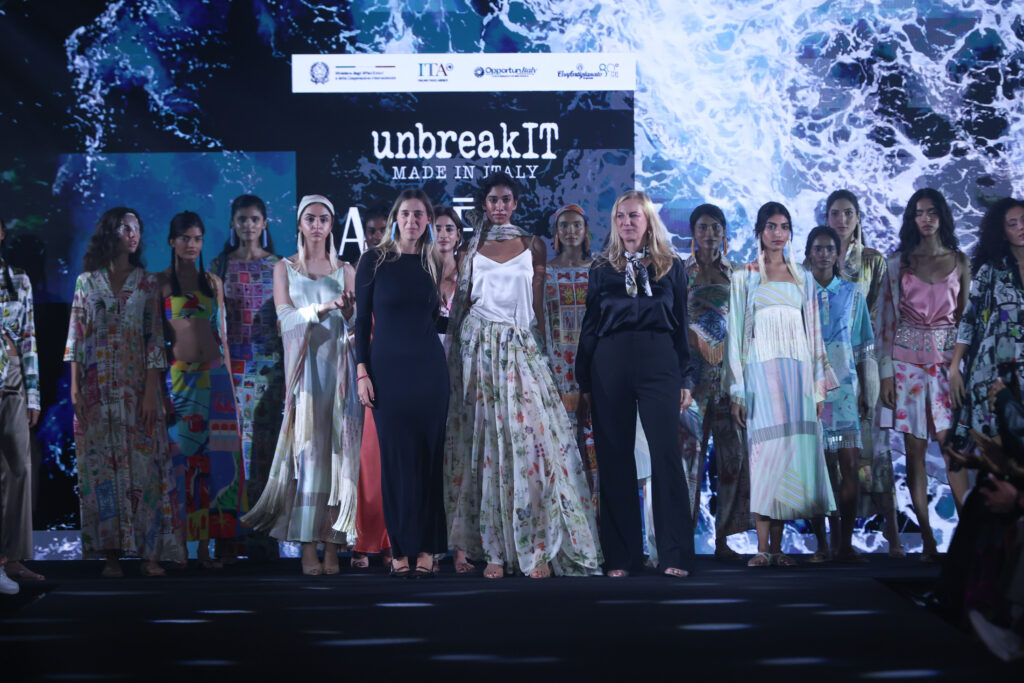
Giorgia Both brings patchwork, vintage aesthetic and cinema posters, with their Italian label Unbreak.It. By Asmita Aggarwal Thirty years ago, Giorgia Both came to India, she was in her 20s, and wanted to understand spirituality, Banaras ghats, the cycle of life and death, a philosophy of Karma that makes India so special, final journey within. “I travelled with my boyfriend, North to South, even Mumbai, sometimes took local buses, backpacked, it was incredible, a dream come true,” she says. She is part of Italian label Unbreak.It, launched 2007 in the heart of Milan, Italy, began as a creative vision of artist Silvano Negri. Giorgia, along with her two daughters, Lara and Mila, now carries forward this legacy, channelling the ideology, “Every piece is unique—like you.” Artist Silvano Negri was born in Monza in 1964, known for the legendary 5.793 km racetrack, the “Temple of Speed”, which hosts the annual Formula 1 Italian Grand Prix. Silvano was creative and commercial director at Vans, Atlantis Snowboard (snowboard brand from the 1990s), and Volcom (skateboarding), then product manager and creator of the Pacha shop, but with Unbreak.It he wanted to explore art, patchwork, and prints. Negri was a friend, we worked together even in Germany, after he passed away, I took over the brand,” says Both. The philosophy is quite simple-bringing vintage back, printing it a certain way, digitally that each piece looks like an artwork. “City Prints, Kaleidoscope patterns, French cinema posters, rock zines, and vintage postcards—are printed on silk and jersey. Our printing style is unique, it is done per metre, on both sides, so detailing is intense,” says Both. Both grew up around fashion, her mother ran a boutique in Italy, children’s clothing, she knew what it was like to interact with customers. Their offerings are classic, as the prints are extremely vivacious, for LFW they add fringes, tassels, pearls, on dresses, tunics, and nifty trousers, though they started with scarves only. “This season we have done 30 prints, our speciality is patchwork, inspired by vintage paintings. My daughter is an artist, though we also work with various artists from Munich,” she concludes.
Dressing Kanye West, Neymar, Italian style
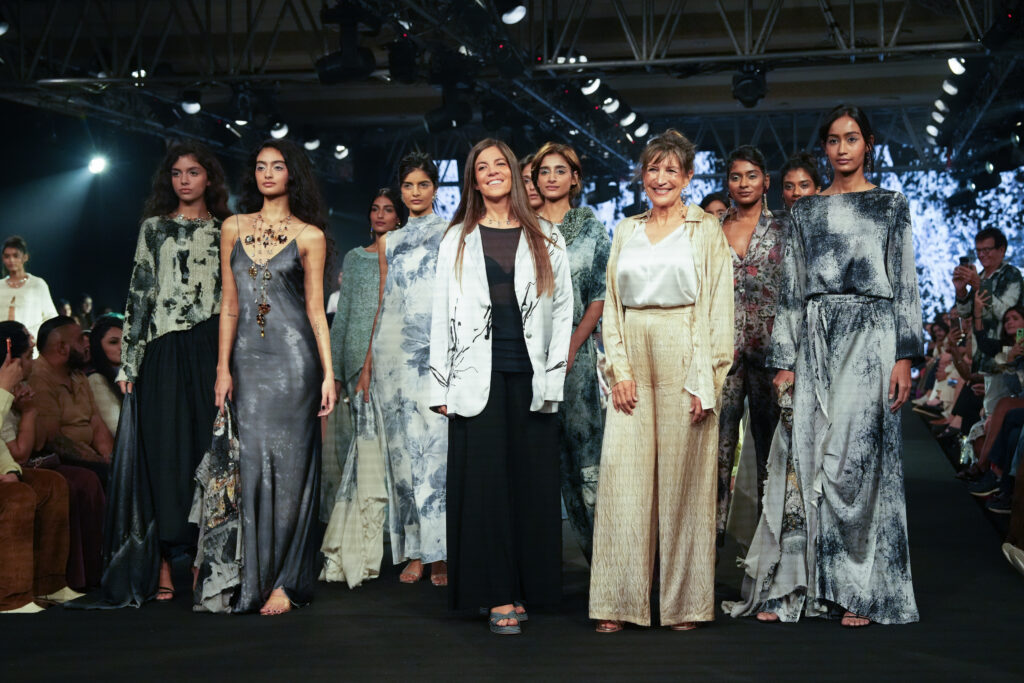
Imagine, wiping your paint-soaked hands-on finest cashmere, that’s just what Mirko Ghignone does with Avanti Toi, pure Italian luxury. By Asmita Aggarwal The first image that Giulia Marini has of India is her trip in 2017 to Rajasthan Agra, Delhi, as she loves cooking, she took a class to understand our flavours and spices. “I admired the stunning beadwork, embroideries and textiles, we have one from Rajasthan hanging in my room,” she smiles. Her adventurous spirit took trekking to Ladakh, climbing 4950 meters. “I had breathing difficulty, but it was a sight to remember,” she laughs. Though her hi-end cashmere label has dressed from Kanye West, Brazilian footballer Neymar when he won the Golden Ball to Rolling Stones guitarist Keith Richards who wore her printed butterfly’s shirt. Avanti Toi is a French word that means “ahead of you” and they are fashion-forward. The Italians are known for their mastery over hand skills, attention to details, a bit like our artisans, however, at their first showcasing at the LFW X FDCI, Avanti Toi, brings what many may be apprehensive of working with-cashmere. The third-generation Giulia, of matriarch Lia Gambetta who began the brand in 1955, with knitwear, gave it a new spin by signing up with artist Mirko Ghignone. Within the historic Liapull cashmere group in Genoa, Italy, they gave it an artistic touch, even though cashmere is considered extremely precious, Mirko made it disruptive. Avant Toi is different from the knitwear company born in the 1950s that worked with mohair and wool, later cashmere and silk. “Mirko began destroying and distressing cashmere, beginning as a blank canvas, using natural fibres. Though the story of the label is historic, when it began many locals were leaving the city, my grandma decided to hire and train them. Everything is made by hand, laborious but irreplaceable. We live by the sea and are 100 pc Italian by DNA,” says Guilia. Mirko, through technical experimentation, uses dyeing, air-brush coloring, blending and spray-painting to give cashmere a discerning touch. “He uses natural paints, pressure and heat to fix the designs, so they remain new even after years. He innovates constantly in terms of shades and tonality each season. We bring to India, the latest technique-camouflage, where he dips his hands in paint and cleans it on cashmere. You would be surprised why he would do that? Beauty of it is that he used to wipe his hands on paper, at the end, he saw the paper and found naturally made abstractions unique. He decided to try it on cashmere and silk,” he adds. Gulia didn’t study fashion, but international luxury management, she admits 20 p c of their cashmere offerings stay in Italy, almost 80 pc exported, even though Italian consumers are quality and design conscious. At LFW they are showcasing a line titled “Traces of Memory”, inspired by the border her city shares with France, it is the sixth-largest city in Italy and the capital of Liguria region on the northwestern Italian Riviera. She has used landscape they see around them, blue waters to flamingo. It was a historic maritime trading hub and starting point for Le Vie del Sale (Salt Roads), ancient mountain mule tracks that carried “white gold” (sea salt) from the Ligurian coast across the Apennines into Northern Italy. “I love the cloudy skies, flowers from neighbouring Provence,” she smiles. You would never think about repeated dye baths, deconstruction of edges, intentional pilling, painting, and aggressive washes, to create “Art to Wear”, as their tagline goes, but nothing has ever stopped the Italians, isn’t it?