
Fittings Day 2 A glimpse
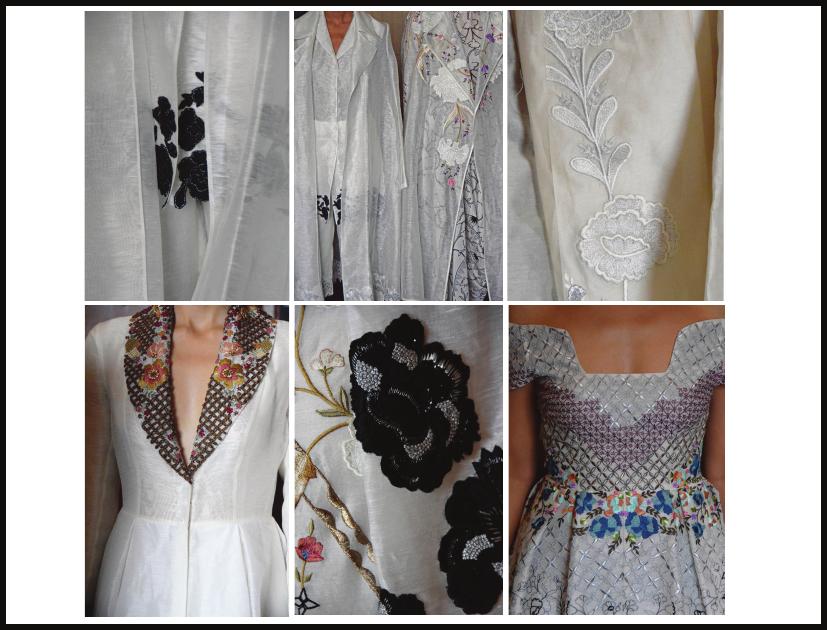
All hands are on deck at Eros Hotel on day two of fittings, as LMIFW is just around the corner. Whether it is Samant Chauhans vision of the future in white, or Diksha Khannas homage to the Middle East, eclectic concepts emerge in full force. A glimpse into what to expect from leading designers at Lotus Makeup India Fashion Week autumn-winter 2019 showcase; Woven Comic (Nitin Bal Chauhan) Nitin Bal Chauhans collection romances with opposites. Plenty contradictions are showcased through Chauhans use of a black and white colour language and drooping liquid forms on structural pantsuits. The designer uses intricate threadwork to create the illusion of hand drawings, some abstract, resembling galaxies, and others are elaborate caricatures, all of which come together on a monochrome canvas. This collection is Chauhans very own graphic novel, which utilizes threadwork, metallic detailing and pleats to tell a surreal tale. PC: Diya Mathur Desert Storm (Diksha Khanna) Embodying the spirit of the mystical souks and deserts of Oman is Diksha Khannas collection, an amalgamation of unexpected fabric combinations and manipulations. Khanna uses crochet to patch together pieces of denim and has developed an iridescent khadi denim fabric that is used to create evening dresses, athleisure wear, and sometimes even as a dash of detail on a pair of pants. White knit jackets with metallic coin details are paired with sheer white shirts and coral pantsuits are accessorized with a matching belt and quilted detail to create tone on tone ensembles. PC: Diya Mathur Marine Scene (Pallavi Singh) Languid fabrics are washed with colours from the sea, and sprinkled on with details that take their inspiration from aquatic creatures. From its colour scheme that ranges from the calming cerulean blue to an earthy sap green, to its wishy-washy textures and rhythmic motifs, Pallavi Singh brings to life a collection that constitutes of underwater elements. Surface textures resemble the gills of fish created from a clever play of triangular forms and added as detail on the sleeves. A recurring element is the cinched waist, either stitched or created with the use of a belt to taper the silhouette. PC: Diya Mathur Iridescent (Amita Gupta) Amita Gupta puts on a shimmering showcase, in which her denim zari fabric is a recurring leitmotif. Gupta uses a fluid and free flowing fabric, to create structure in the form of intelligent silhouettes. The intensity of pleating varies, where the bell sleeves see rigorous detail and the skirts witness more easygoing folds. The presence of lines goes beyond just the silhouettes and into the fabric, which sees stripes bold, thin and some with unequal variation. Layered lapels, duo toned skirts and pinstriped pantsuits are some other details skillfully executed by the designer. PC: Diya Mathur A Vision in White A concept using very little colour and a lot of detailing Samant Chauhans collection is a vision in white. Blossoming on exaggerated silhouettes are floral patterns in shades of spring, balanced by the use of interspersed geometric patterns. Imaginative thinking has led Chauhan to create thinking silhouettes that are both flowing and structured at the same time. Square necklines on draping shapes and sleek trench coats made from sheer fabrics are a few examples of skillful craftsmanship. While there are colourful options, the magic of this collection lies in the simple layered monotone ensembles which when paid attention to, reveals a branch of white or black embroidery, reflective of Chauhans attention to detail. PC: Diya Mathur
The unDutchables

From the land of canals, Anne Frank, tulips, comes Hannah, who would like to see the world, with a catwalk saga By Asmita Aggarwal Away from the city life, Hannah came from quieter spaces, The Netherlands, and was thrown into the madness of Delhi. At 15, she was spotted and scouted by an agent in a small village in the north of Netherlands, but her parents insisted she complete school. Little did she know that she would one day be competing against the best faces for a spot at the Paris Fashion Week. I was in Paris for three months, and as we are all on a budget I learnt to find my way around a rather large and confusing city. Metro became my saviour and as I have been there ten times in two years, I know the place like the back of my hand, she explains. Long days and sharing a room with several models taught Hannah, the survival guide to the big, bad world of modelling and then came the opportunity to visit India. When I came here three months ago, I knew nothing about this country, and the sheer size intimidated me. But work took me from Hyderabad, Bangalore, Jaipur and Kolkata and revealed a different and warmer side of people, food, culture and of course, modelling. Even though I am still getting used to the traffic, pollution and large crowds, says the first time model at LMIFW19. Raised by a single mom, after her father passed away, Hannah, has an older sister who is her soulmate. Though Hannah came to this country on the persuasion of a friend she made at the Kuwait Fashion week, Ikram, a Dutch-speaking girl, who became her mentor and guide. Modelling she confesses is a tough business to survive in, from eating healthy to gyming it can be a task to look good everyday and to feel that pressure. I have been kick boxing to keep fit, it is better than running or weights, as it is a whole body workout, and it gives me that adrenaline rush. It is a great vent after a hard days work, all your aggression gets a release, she smiles. Another physical activity that Hannah enjoys is dancing where she says, emotions get a fabulous rhythm and it is a bit like free falling. When your work schedule is erratic you need to do things that restore balance of mind and body, dancing does that for me, she adds. The future is chalked out in Hannahs head and it will revolve around design, maybe even architecture. I would like to go back to studying and get a degree in business management wherein I can be equipped to be a real estate manager, she concludes.
Sanctum sanctorum

Serendipity got her to fashion, sustainable became her mantra, antiques her lexicon, Divya Sheth lets the past and future collide in her ensembles By Asmita Aggarwal With a family known to be loyal devotees constructing temples from Gujarat to Bihar, Divya Sheth never thought fashion would be her soul calling. Providence played a deciding part, when while studying food and nutrition at Lady Irwin College, Delhi she was made in-charge of the Fashion Society, a role she deftly managed for three years. A NIFT (Delhi) fashion photography graduate, Divya, who belongs to a traditional Marwari family (her grandparents came as refugees from Lahore) was always encouraged to be academically qualified. So Central Saint Martins followed where she studied styling and romanticised textiles. I got married and moved to Kolkata and natural dyes which didnt harm human skin or environment was the area I focussed my energy on researching while designing for myself and family, she confides. After participating in Sutra, an exhibition in Kolkata, she gained the confidence to launch her first line in 2014 and also an entry in the Vogue Fashion Fund, where she made it to the top 15. This motivated Divya to work with Ajrak and Kalamkari and as art was her soulmate, she took inspiration from Mary Cassatts Lady at the Tea Table, a 19th century classic painting. We worked with Kalamkari artists who were only making mythological paintings and asked them to create hand-painted botanical flowers using their craft. This we converted into a holiday line complete with trench coats. I felt design intervention is an important part of growth as well as preservation, she explains. Innovation is the fulcrum of the label and her next move being an antique collector was to work with gotta, an art that had been twisted to make it faster and less meaningful in modern times. She brought back the age-old laborious process and intermingled this with Rajasthani Katputli silhouettes as an homage to slow fashion. With her husbands business spanning three centres Delhi, Mumbai and Kolkata (steel and stock market), she would take short breaks and visit museums to understand temple architecture, or do R & D for bell designs, find sculptors for the idols, or create garments for gods who will reside in ornate abodes. Her inspirations also come from divinity like the Nathdwara temple in Udaipur where Pichwais were crafted and she put in her combined know-how of art, textile and photography. We are a sustainable label and our fabric of pride is khadi, sourced from Musheerabad. I cant do trendy clothes, as most of the time, I use hand-painted fabrics where paintings are translated — it cant be cut in crazy patterns. It has never been my aim to be fashionable, rather classic is my vision, ensembles that withstand the test of time, she confirms. For two-and-a-half years Divya has been collecting Chintz, a fabric that was also loved and nurtured by the British. So she traced the trail when it was made on the banks of rivers the main centre being Machilipatnam, Andhra Pradesh. Chintzcame from the Hindi word chint or chitta meaning spotted and the blocks were made 200 years ago by artisans. She worked with the National award-winning grandchildren of these skilled workmen who were used by the British to trade in this fabric in Europe (they altered the original ethos and added floral motifs). I made a line that replicates the Imperial era with similar silhouettes worn by rajas, nawabs in hand-painted chintz titled Textile Narrative,she explains. The future for Divya will be looking at sustainable spaces and even the bridal arena (where she could do garments dyed in turmeric). Im working on my studio which has 150-year-old antiques, and this will give me the foothold to then foray into wellness and decor. This is only an extension to the epicentre, as I look at clothes as food for the skin, she signs off.
There is a nice ring to it

Sushma Shah handcrafts jewellery from waste and manages to lure even the most unconventional buyer to try her experimental pieces! By Asmita Aggarwal Sometimes we aspire to do the exact opposite of what we see around us, maybe it is because we already know what it entails, the perils and the advantages. Thats why Sushma Shah whos family and cousins own half of Zaveri bazaar, Mumbai chose to move away from traditional diamond and gold jewellery and started designing baubles, you could create out of even industrial waste. She liked the ring of the word Rejuvenate and went ahead with it as her brands moniker, it embodies the spirit of rekindling and reviving. Sushma, who grew up in Mumbai believes what we think of as waste can be refashioned and given a new personality. She became a story teller and the characters in her book ranged from recycled wood, industrial pipes, old coins, scraps, in a label, she launched six years ago. Fashion jewellery has a huge scope of creativity, which conventional jewellery lacks, there is only so much you can play with there, I wanted a wider focus. And when my mom, who has grown up buying diamond sets worth Rs 20 lakhs (minimum), saw my collection and wanted to wear it, I knew I had succeeded, she explains. However, the process of acceptance has been slow as many viewers still question, who will wear such bold, big pieces? Earlier women were conservative, now I have observed accessorising is the new way of dressing up and clients want experimental products (a coin worn as a nose pin and clocks in the ears, she explains. What remains Sushmas biggest strength in her design process where every product is hand-crafted and there is a narrative that accompanies it. The Rustic line saw her give a new lease of life to burnt industrial pipes, which were washed and cleaned and now adorn necks of fashionable women. It was my way of protesting against pollution that factories cause resulting in global warming. I pick topics that I see around and disturb me and my jewellery does all the talking covertly, she admits. Rejuvenate offers pieces that begin from Rs 500 and go up to Rs 3,000 and Sushmas favourite are the chunky ones that look larger-than-life. There is a lot more about Sushma that impresses you— from her poems, writing a blog and living in the US for almost five years and longing to come back to her country. My husband did his MBA from Ohio, and I worked there during our time in the US, at the Empire State Building, but I felt it was a cold nation, it lacked the warmth of India, so we moved back, she says. Jewellery has moved out of lockers and Sushma believes working women dont aspire to wear the same 10 carat solitaires to work every day, its boring rather they want pieces that rev up their everyday ensembles. Whether it is a sari, dress or pant-suit, Sushma makes versatile products from body chains to anklets, brooches, armlet and as they are versatile you can wear the same thing in two different ways. The practicality of the piece is most important to me. Jewellery is now an adornment, we will buy the real stuff as an investment, we are Indians, but we also want to have a little fun with interesting knick-knacks, thats where I step in, she smiles. A lover of what Amrapali creates, Sushma a self-taught designer, goes by her instinct while designing and also the malleability of the raw materials she uses. I like to play with motifs and in my Heritage line, the elephant became the fulcrum. The future I foresee for my brand is to go international and start exporting, she concludes.
Norwegian Wood

Priyanka Baid is shining the light on wood as an alternative to metal, as she handcrafts whimsical clutches armed with eclectic energy By Asmita Aggarwal Three daughters and a businessman father, who wanted an heir to run the family business in Kolkata made it hard for Priyanka Baid to choose, as destiny already had it all chalked out for her. But as they say, in life it is not the cards you are given, but how you play with them that matters and Baid did just that. Wood and glamour cant be said in the same line without some amount of eye rolling when you think about luxury, so Baid, a Pearl Academy, post-graduate in design made the twain meet, almost simplistically in her label Duet luxury (with a partner but now she is spearheading it alone). Launched in 2013, most women have understood, the most effective way to rev up an outfit, (as now the trend is minimalism), is accessorising. This has given birth to labels like Outhouse and Miso, with their avant-garde offerings. Understanding this need, Priyanka, who knew, metal had become a tool used by most style aficionados in their design processes, substituted it with wood and combined it with leather to create a product that was light and had the prowess, of being the ideal accessory on the red carpet. Wood is a part of the family business narrative, and after I joined my fathers company that was into luxury packaging, I wanted to diversify and do something that satiated my creative being. I choose bags, she admits. Baid who is a B.Com (Hons) student from Kolkata, interned with Abhishek Dutta and Nitin Bal Chauhan as practical experience taught her the nuances of shape manipulation. I never wanted to do clothes; accessories and their unpredictability always lured me. I came up with the concept of box bags, made of wood, but without the weight of the material, she admits. The choice of wood ranges from mango, mahogany to cider and the strength of the wood matters the most, as Duet Luxury does structured bags. Our buyers were worried if wood would give them space, to keep their cellphones and car keys, and we achieved that and lots more through trial and error and R & D (the outer shell of the bag is where the trick is). And today I can safely claim that my clutches are lighter than metallic ones, she grins. Six years ago when Baid began, it was a theme that no one had thought about or even attempted to work with, but she quickly realised the key is design versatility. She participated in Pitti Super (part of the famous Pitti Umo mens show), and the response was appreciable. I went in without a proper look book or strategy just an imposing product. Then Pure London, another trade show in the UK got us many loyal international buyers, she admits. Duet Luxury bags are priced between Rs 6,000 to Rs 15,000 and now new additions include hand embellishments, bead work and zari that is intermingled with leather for sturdiness. We work with geometric and architectural shapes and I have been heavily inspired by periods like Art Deco, and art movements like Cubism or the industrial look, she explains. Young people today are bold and adventurous and they use fashion as a medium for self-expression and activism. As a designer there is no better time to be in the industry than now, when the wheels are turning and new territories are being explored, she concludes.
Colour me red
Ambika Pillai has earned and held onto the reputation of being one of the countrys best make-up artists for almost three decades. Her understanding of beauty goes beyond current fads and instead, explores the context of the beauty world and its evolution. Crowned Best Make Up Artist by Vogue, and awardee of Bharat Nirman Super Achievers Award, Ambika Pillai, forecasts the make-up trends for this season and tips on how to recreate them 1. Au Naturel Enhance your features with a minimal look that will leave you looking fresh and radiant. Add a hint of colour on the cheeks and complement it with subtle contouring to amplify the dimension of your face. Fresh and clean eyes with a hint of colour to the lips will guarantee a look of understated elegance. 2. Colour Craze Add a splash of colour with shades of bright berry, pink or fuchsia on the lips or a bright blue eyeliner for the eyes. For a statement look, wear a touch of vivid green eyeshadow on either the upper lid or the outer corner of the eye. 3.Give me wings From Twiggys signature hooded look to Monroes classic wing, the eyeliner has singlehandedly created memorable looks through periods of history. This season, wear a dramatic eyeliner and pair it with a soft and neutral colour on the lips. 4.In the Pink Think pink this season by adding a bright shade on the cheeks for a fantastic flush of colour. The versatility of this colour that ranges from a dusty pink pastel to its shade that borders on coral, pink will illuminate the face instantly. 5.Lash Out With generous use of mascara, create an exotic frame for the eyes with luscious lashes. Go a step further and experiment with a variety of mascaras and subtle false lashes. 6. Lady in Red For time immemorial, the red lipstick has been the savior of many looks. Take this age-old hack a step ahead by pairing luminous skin with a bright matte lipstick in the shade of brick red, fuchsia, orange, dark cherry or the classic scarlet.
Hair Trends with Ambika Pillai
Today, its all about embracing individuality. Be it Fenty Beautys revolutionary range of foundations or Gisous unexpectedly real campaign, the industry has changed its direction from overdoing it and moved towards keeping it natural. This season is about looking natural, with lots of texture a balance between looking tousled but gorgeous, says leading hair stylist Ambika Pillai. The most sought after hair stylist in the country, on the trends to look out for this season, and how to create them: 1.Beach waves Tousled curls, now also knows as beach waves are having a moment. Create an illusion of messy hair with soft curls that will add an element of effortless beauty. 2.Mane mania Take the plait a step ahead by creating an elegant fish tail. Tease the fishtail for a messy look and casually drape the plait over one shoulder. This look can be carried through a day of work into a night out, the messier the better! 3.Pin it up Go the extra mile by applying heat and crimping the strands to add beautiful texture. Pin it up with hair clips into a soft bun. This easy to achieve look goes a long way! 4.The big blowout For those with shorter lengths apply product and blast dry your hair to achieve an untamed look within minutes. This technique will assure a windswept look within seconds, giving your tresses a wild and raw appearance.
A different mirror

Fighting colourism world over, black models have emerged victorious a bit like this Brazilian beauty Marcella Jackie, a first timer at LMIFW19 By Asmita Aggarwal Even till today on the runways they exist in single digits and beauty companies only now have woken up and looked at launching products that work for their skin tones and kinky hair. Marcella Jackie is black, beautiful and articulate, despite English not being her first language, she expresses herself with candour. It was a brave move to come to a country where half the population still longs for fairness and dark-skin is considered a taboo. My parents were a little worried, but I took a risk. I am the only child so it took a lot of convincing and they are really supportive. They knew it was my dream to model internationally. To make sure they know I am safe, I speak to them everyday, this summer I am headed home, she confesses. From the picturesque Fortaleza, Brazil, Marcella began modelling with friends at the age of 18, and just last year signed on with an agency. I am a vegetarian, so unlike Brazil, India is heaven for me. There are so many choices for non-meat eaters here, she smiles. There are two things that motivated the young model to step into unknown territory—- yoga, which she is a devotee of, and spirituality which she believes is the only way to approach life and what curveballs it throws in your direction. My moms wish was that I hone my yoga skills and maybe go back and teach her too. But there is much more than that I discovered in India. Almost 20 different languages people speak here, which are region-specific and it is the second biggest country that speaks English, she laughs. Marcella, 21, was studying journalism in Brazil and worked for a fashion magazine before she came here last year in September. Covering fashion shows, she discovered what makes Brazil unique is there are all kinds of girls who walk—red heads, blondes, brunettes and even black, making it multi-racial. My father is black and my mom is Brazilian and I never thought I will get any work here, but I was in for a surprise, she says. Travelling has been a passion and being a journalist reading and writing have remained her soulmates which she hopes to pursue once she gives up the spotlight. Maybe one day I can start my own brand, cosmetics is my interest area as there arent enough for black girls as our skin and hair is different from white girls. I want to create a specific line so that backstage girls like me dont have to struggle to get the right foundation. Jewellery designing using alternative materials is another area I would like to explore, she admits. The Indian runways have recently seen an influx of Brazilian models, a far shot from Eastern European women who were the flavour of the season a few years ago. It is not easy being a black model, some of the girls who had earlier worked in India had warned me about prejudices, though I havent faced anything as yet. If you look at history, black girls have faced discrimination not just in modelling, but every profession, but they fought back. I admire Victorias Secret model Jasmine Tookes, though whether it was Naomi Campbell or Jourdan Dunn (the first black model to walk for Prada) they both made a place in fashion, she adds, adding, Dunn was a young mother and everyone told her she wont make it as there is no place for moms on the catwalk. She proved them wrong.
Princess of Tides
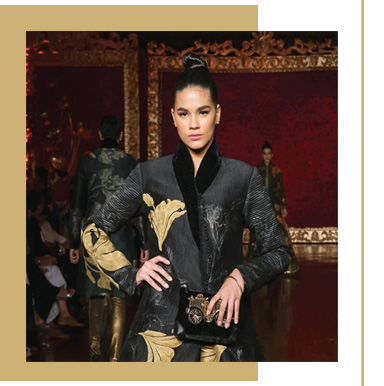
There is more to Brazil than soccer, carnivals, Gisele Bundchen, stunning coastlines and Christ the Redeemer…. meet Radylla, who gave up her white nursing coat for designer tunics and turned into an India lover and intrepid traveller By Asmita Aggarwal She has graced the covers of Swimsuit Illustrated, and is a Victorias secret angel, Brazilian bombshell Lais Ribeiro, is the perfect inspiration for Radylla. From the city of Natal, Rio Grande do Norte, situated in Brazil’s north-eastern tip, it is where Radylla discovered her love for the sun, sea and sand. The seed and fervent wish to travel made her abandon the safe environs and come to India last year. I always had my biggest motivators, my parents. They believed in my dreams and supported me in everything. I remember the day I spent the night in the street, with other girls who were also aspiring models, to participate in a modelling contest that took place in my city. It was heart breaking that I couldnt qualify, says the 23-year-old. This is her first trip as a model outside home and what made the nurse-turned-model give up the white robes was the archlights of the ramp. I was unhappy because my dream was to be a model and the first opportunity I got to change my life I grabbed it. I consider myself very strong— I came to a culturally different country, without knowing how to speak English and I learnt to live alone. I am very happy to be here, and I am not going back, India is my home, she laughs. After rejection, she did learn that to be a model, besides being beautiful, you must possess a positive attitude and believe in your potential. I come from a broken home, my parents separated when I was young, so I kept shuttling between the two different homes my parents stayed in. I have only one brother and he is the love of my life. We are very close and we have never stayed so far away; this is one of my biggest regret that I cant see him everyday, explains the first-time model at LMIFW’19. What remains synonymous with India and Brazil, is the simplicity of thought that people share, even though the food is too spicy for her getting around has become easier after a friend taught her a few key words of Hindi. I was spotted by an agent in Brazil and he asked me if I was willing to travel. Initially I was hesitant, but my fears soon faded when I was flooded with work here from catalogues to ramp requests, she admits. Coming from a city known for its vibrant nightlife, beaches that caress the Atlantic coast, clear blue waters, Radylla wants more people to know about what she calls home. I want to open a tourism company after I retire. I identify myself as someone who would like to show the world what the real Brazil is all about. Now that I have lived away from home, I value my city more, I want everyone to see how beautiful it is— a charming island, brimming with beautiful beaches, she concludes.
Silent Spring

Practising Ahimsa, or non-violence Eri silk became the leitmotif for a Telugu from Hyderabad, Jyoti Reddy, who travelled to the North-East and revived the lost art of caring By Asmita Aggarwal The chances of meeting a Reddy in Assam are more than bleak, but Jyoti not only climbed the hills, literally and metaphorically, but also elevated the living standards of the indigenous tribes there, employing almost 250 languishing artisans. Ereena by Jyoti is a five-year-old brand and works with only sustainable eri silk, which is made through a non-violent process. Here the silkworm is not killed, as the cocoons are open-ended. Almost 17 years ago Jyotis quest for an intelligent fabric took her to Assam, where she met a textile technologist, who told her that we dont need to create one, as Eri silk already exists. What lacks is the awareness. Few know that Eri possesses the softness of cotton, warmth of wool and the sheen of silk. It is also isothermal (warm in winter and cool in summer) and it is this versatility that Jyoti hoped to celebrate. A post-graduate in business studies from Cincinnati, US, she converted a cottage industry making Eri silk, 50 km off Guwahati, into a factory that today employs almost 250 artisans, primarily women, who earlier had looms at home and were not being able to make ends meet. The locals there consider Eri sacred, as it is pure, made with no chemicals thats why Buddhist monks in Nepal and Bhutan wore this, says Jyoti. The designer wanted innovation to be a part of the making of Eri, so where earlier only 5 metres of fabric was attained out of 1 kg of yarn, now 25 metres is produced, organically. Jyoti has worked on different concepts and surface textures —- tie and dye, printing, Bagru, block prints and natural dyes, Ikkat as well as Jamdani. The story behind the name Eri comes from the fact that the silkworm eats castor plant. In the local language Eri is called Eranda or Endi, so probably the name is a derivative from a Sanskrit word, she adds. The idea was not just to make silk, but create a lasting social impact, by training families in the North-East and building an industry. It was almost 30 years ago that I got interested in textiles, but marriage took me to the US, and I had two babies to look after, so it became impossible to work. My interest in art and textiles grew so I would visit trade shows, and there I met a technologist in Frankfurt, who told me the world today doesnt need any fabric, but a thinking one, so my quest began, she smiles. She did find what she was looking for and till today carries samples in her bag as she confesses that all what she learnt in three decades, is through back breaking field work. Dilip Baruah, my partner invited me to look at Eri and then as they proverbially say, there was no looking back 17 years ago, she admits. What Jyoti had done is added value to the yarn, by introducing 64 shades in natural dyes of Eri silk and combining various techniques (Ikkat and Jamdani). Sustainability doesnt need to be dowdy and boring as well as predictable, it can be glamorous and fashion-forward too, she says, adding, My aim is to get young people thinking about the idea of constant consumption and how it is damaging the environment. Having said this I dont think the world can be fully sustainable, but we can urge millennials to make socially responsible choices. The economics major, who grew up in Mumbai, Jyoti admits that her grandson is her inspiration for the latest natural dyes collection. Sustainable is anything that is recycled, reusable and you dont waste raw materials; the goal should be not to create anymore waste. Young people want to wear new things to be popular on social media, it is a race to the finish line. But I tell them be creative and learn how to effectively mix and match rather than buy endlessly, she explains. It is this need to be responsible that won her an invitation to show at the Salvatore Ferragamo museum in Florence, her natural dye Eri silk collection, will be a part of a curation from all over the world. The sad part is that internationally I have got more recognition, but my Eri ikat silk saris have made quite a splash domestically that I sell through the Crafts Council. And I dont get tired of explaining why my saris are expensive when buyers quiz me. I have understood that it is part of the job, she laughs.