
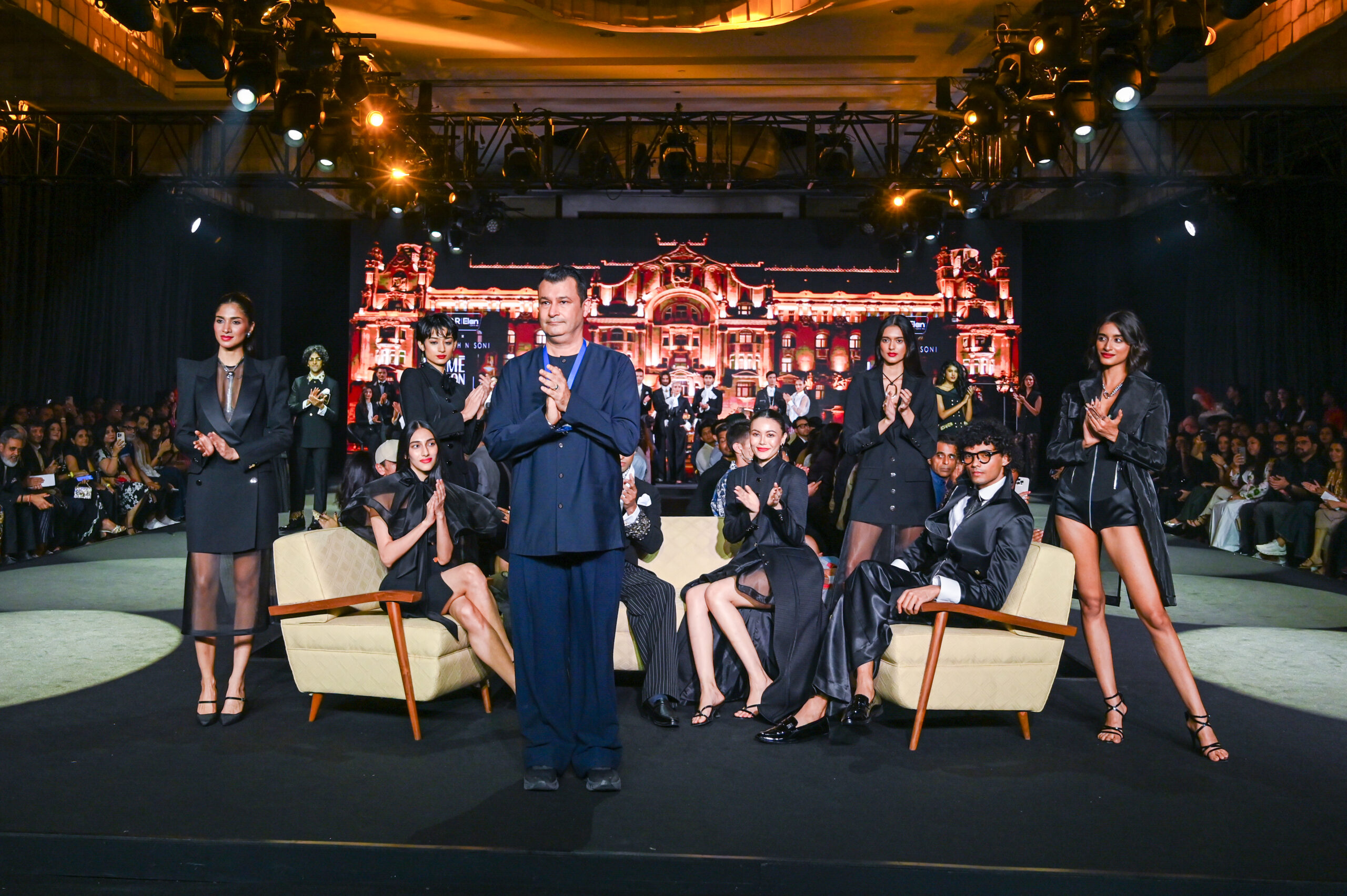
From trying to market the crisp, white tailored shirt in the 90s, to working with revered stylists like Deep Kailey, to now an entire collection with just black, Ashish is going back to his roots.
By Asmita Aggarwal
It was the year 2000, when India Fashion Week began at the Taj Palace hotel, IMG used to manage it, Ashish Soni was one of the few who was part of that exclusive community. This was 25 years ago, today tastes have been sharply refined, understanding is better. He may not remember his first collection’s name but he does recall he used denims, felt, and was told to follow the international calendar which works a season ahead. “There were only a handful of us, we had done trade shows, that’s all. Our exposure to fashion was going to Khan Market and buying American Vogue, as there was no real time coverage or social media chaos,” he adds, saying he could never make Indian clothes.
The struggle was teaching the Indian audience that a crisp white shirt for Rs 5,000 can also be luxury, you do not need to wait eight days for an embroidered sari. “Newspapers and fashion weeks were instrumental in fueling growth,” he admits. Pushing the shirt, he added button hole details, cutting armholes innovatively unlike ready-made shirts, it was more of educating customers back in early 2000.
His most memorable show was “Sounds of Silence” in 2004, he credits FDCI for the success, it put him on the path to fame, got invited to London and New York fashion week post that. “It changed my life, using Indian fabrics I crafted a global language. Borrowed from Kutch, Gujarat, a tribal blouse, he developed a woman’s jacket,” he remembers, and it sold almost 1,500 pieces becoming a bestseller.
Learning from the most distinguished stylists Deep Kailey, who in 2008 was directing covers for Harper’s Bazaar and Vogue was an eye opener. His sales agent was Florence Duchamp who launched Comme Des Garcon and introduced Rei Kawakubo, “she told me the Indian wooden hand made button is too polished, stitch it on the wrong side; such detailing really opened my metaphoric third eye,” he admits.
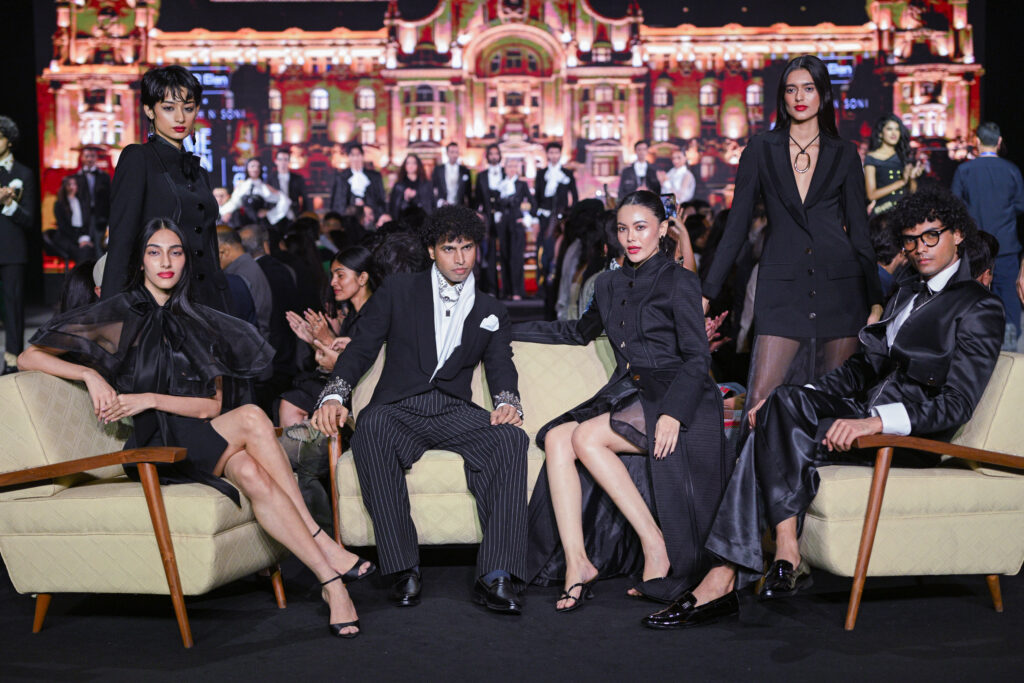
Just when he was planning to settle in the US the markets crashed, but he did live in London for two years managing a South African brand Vanessa G. He then decided the focus had to be India, and till today Ashish has archived all his key pieces effectively. He has a women’s vest framed, his first foray working with fake crystals (Swarovski hadn’t come in) and mesh that sold enormously well.
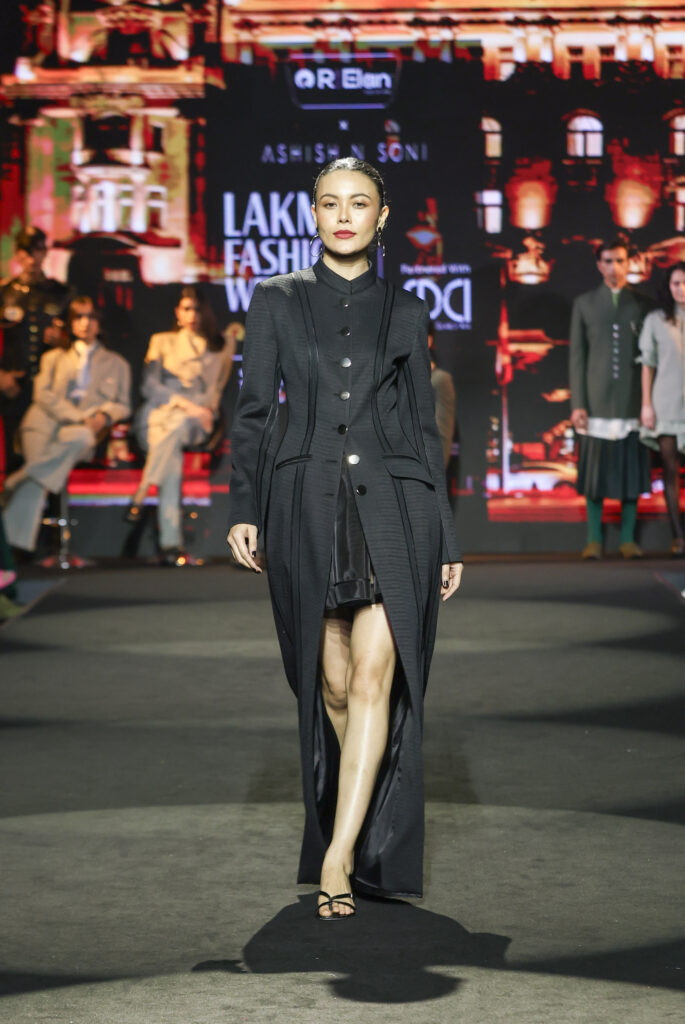
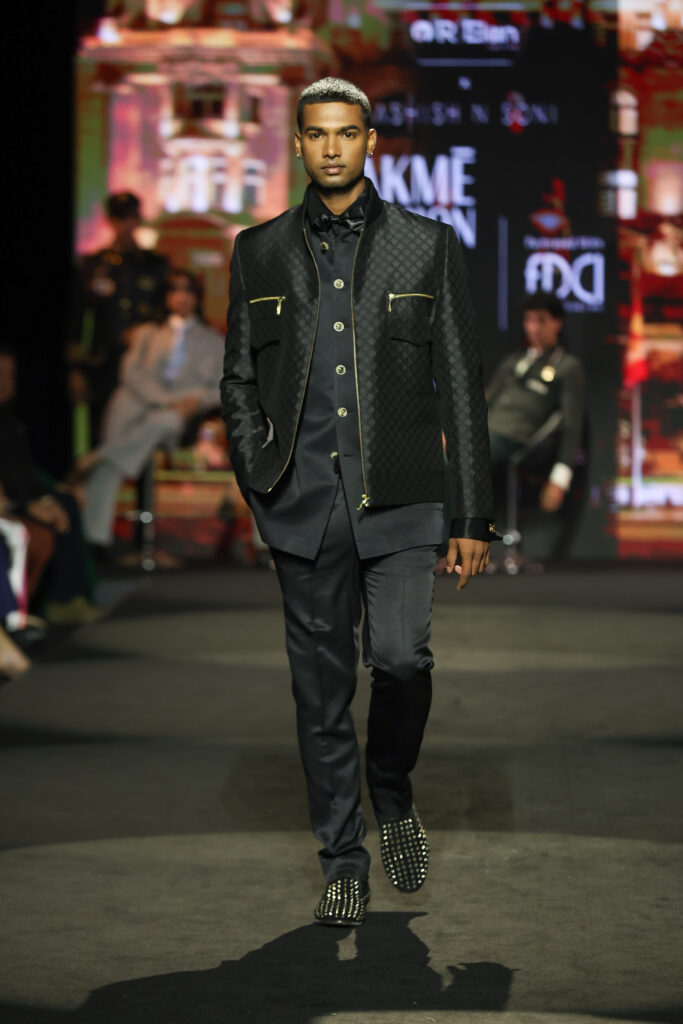
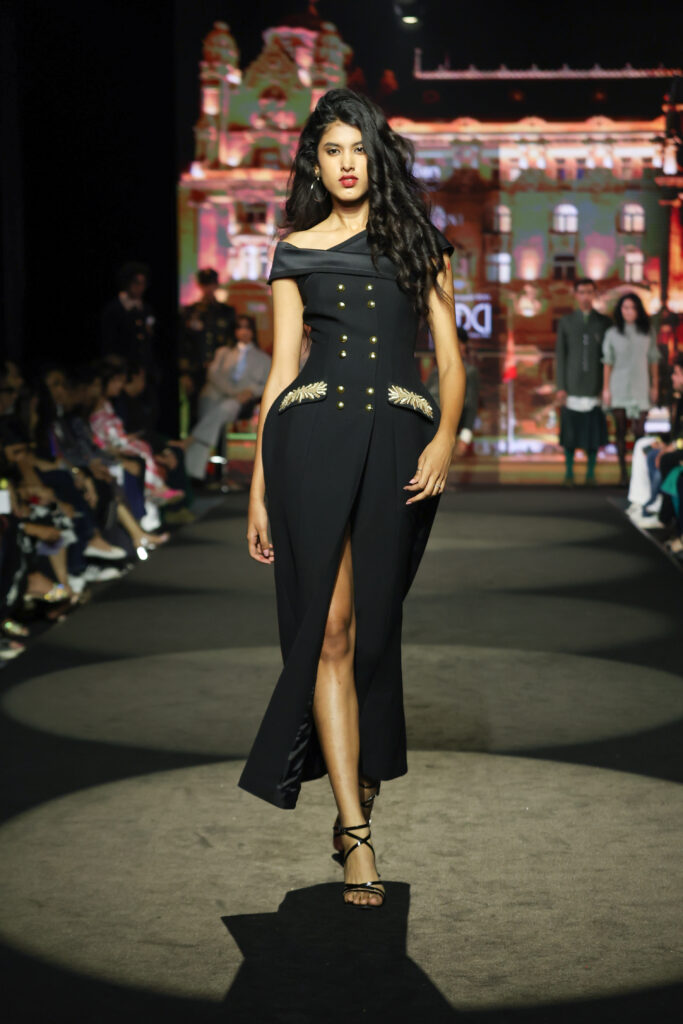
This year with RRelan, he showed his finest—sculpted tailoring, pattern cutting, using sustainable man-made fabrics, wool blends, polyester viscose to poly linens that do not crush. The cool-tex he has worked with is super light, loosely woven crepes, super fine shirting, textured knits creating women’s jackets and pants.
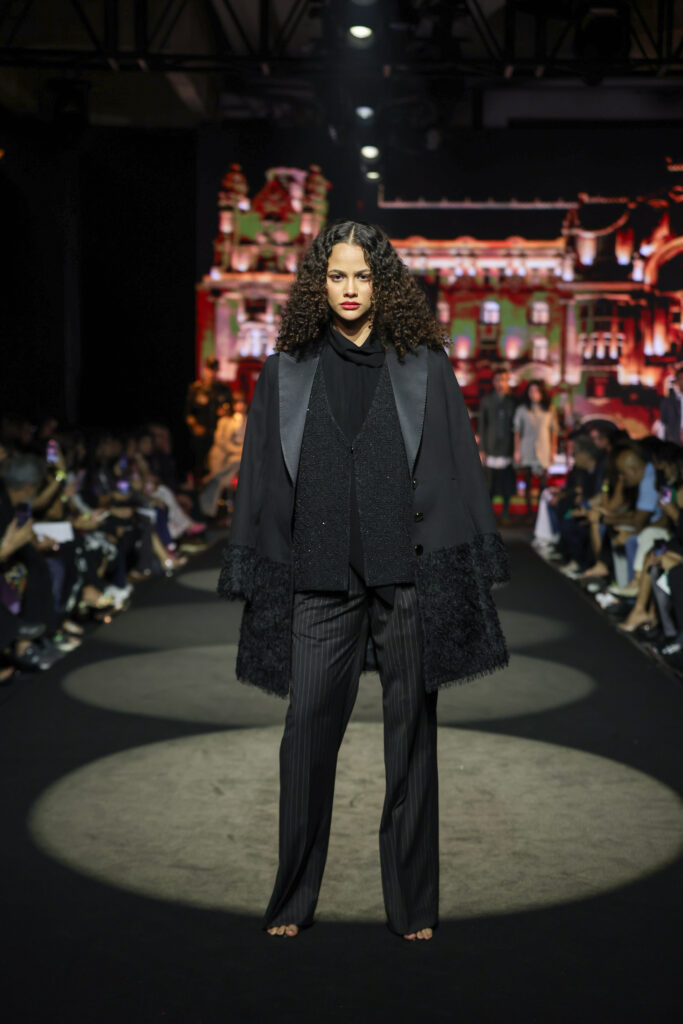
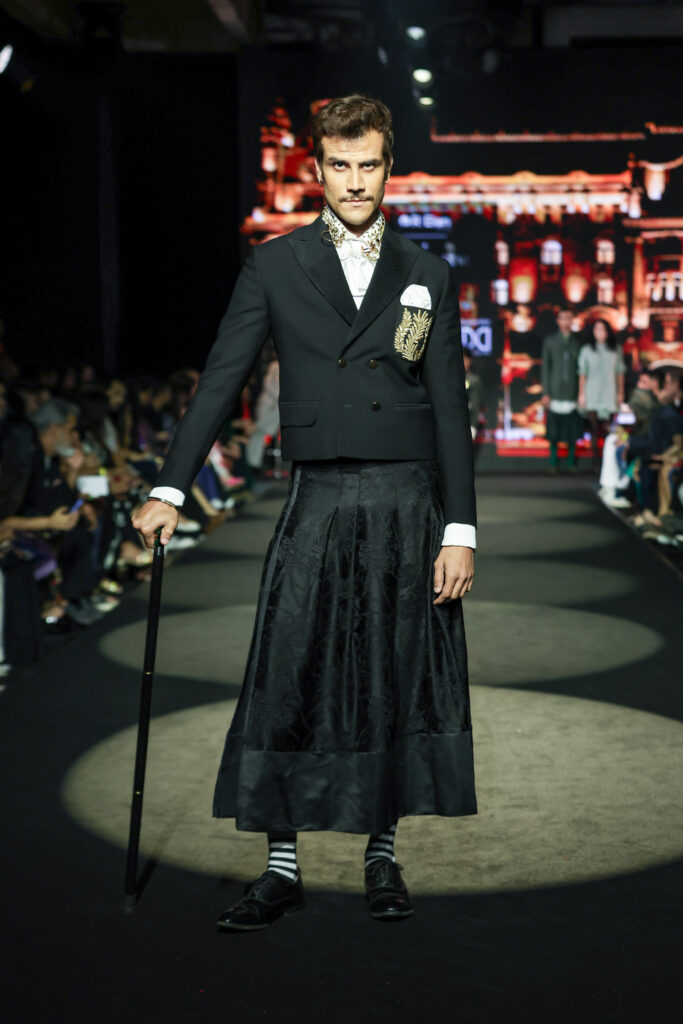
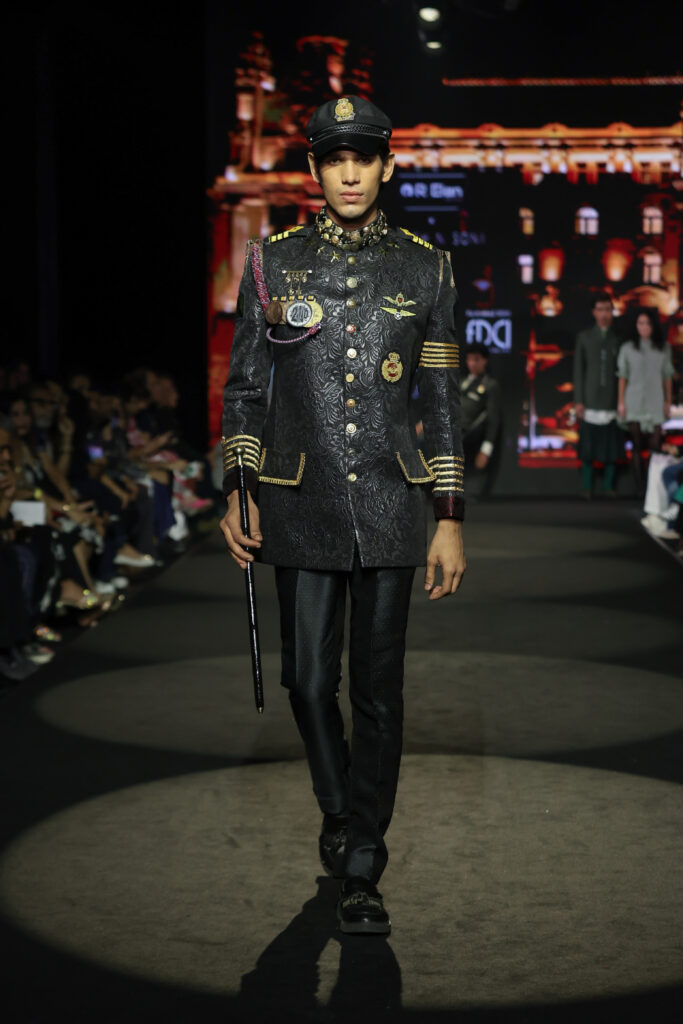
“We have done Indian embroidery using belt hooks recycled that came in the wrong size, vendor refused to take it back, so we embroidered them. A sculpted bandhgala and a sheer skirt, sheer kurta with a sculpted sherwani that’s what I feel works well,” he explains, this along with his quintessential tuxedos for women a la YSL style.
“The spirit is very Diane Keaton, I know as a designer I must make myself relevant, so I went back to my roots. In the 90s when everything was maximalist I decided to stick to minimalism. Less for me is always more,” he says, adding, “This year the show was entirely black but 30 variations of it, adding both texture and character.”