
Ikkat, Brocade, Ladakh is more than Boks
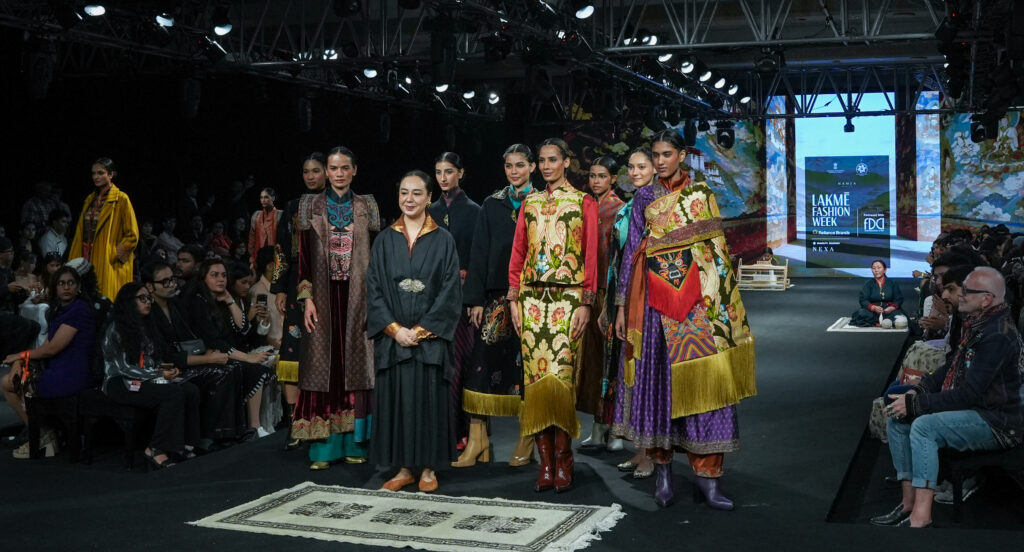
Padma Yanchan’s label Namza revives traditional motifs of ancient monasteries, Kimkhab, and Gyaser, to Ikkat that came from China via Silk Route at LFW. By Asmita Aggarwal Ladakh is not just about the beautiful landscapes but also the finest pashmina which most people think is from Kashmir. The historic treaty Treaty of Tingmosgang, signed in 1684, had pashmina from Tibet through Ladakh to Kashmir, after the Tibet–Ladakh–Mughal War. What is most fascinating is the Padma Yangchan label Namza, which translates to clothing in Ladakhi, even though Padma studied psychology in LSR. After a fashion designing course from JD institute of design, she went to London School of trends in 2013. “Growing up in Ladakh heritage and crafts were part of our everyday life subconsciously, wool, pashmina, nomadic life, monasteries shaped me,” she says. Her father was in the Army and mom worked with PWD, she applied to JNU, didn’t qualify, wanted to become a teacher, gave up NIFT Chennai, to conduct thorough research on Ladakhi textiles. She discovered Ladakh was part of the Silk Route, so it carries in its belly richness and culture, how even though they never made silk, it is omnipresent in monasteries as it came from Tibet. “When trade stopped, Marwaris in Banaras started weaving silks with sacred motifs Kimkhab, and Gyaser. Now it is a hub, and is exported all over the world. If you see it has Chinese motifs-dragons, phoenix, mythical creatures. Animals have rankings in Ladakh-dragons are a fav of royal families. We have Takchuri (tak is mountains and chu water, ri is cloud),” inspired by the landscape,” she adds. Interestingly, she always saw only two colours in Ladakh-maroon and black, and wanted to change that perception. Working with a nomadic community that weaves pashmina, even the dyeing was done traditionally fully chemical free from herbs collected from mountains. “We use nettle, rhubarb, madder, onion peels, walnut husks to marigolds,” she explains. First time showcasing at the FDCI LFW, they also use indigo which is not from Ladakh, but the beauty is whatever they eat is later used for dyeing, channeling a green philosophy. “We launch a collection only once a year, and won the national award for weaving Pashmina too, reviving various textiles of Ladakh. I wanted to also document the food, as it wasn’t ever done, so I travelled to remote villages to see how they live, eat, survive,” she adds. What remains concerning is the green cover in Ladakh that is fast diminishing, as she is a part of the Ladakh Pashmina Board, believing it will hamper the production. Narendra Modi, today approved the project on Green Energy Corridor (GEC) Phase-II – Inter-State Transmission System (ISTS) for 13 GW Renewable Energy Project in Ladakh. The project is targeted to be set up by FY 2029-30 at a cost of Rs.20,773.70 cr. The project requires roughly 48,000 acres of vital seasonal grazing land used by the Changpa community. Nomadic herders will destroy pastures for thousands of Pashmina-producing goats. Four per cent of the total pashmina production of the world is from Ladakh, but nomads have no hospitals or schools for their children, they are quickly migrating to Leh where they are getting facilities. “In winters the entire region gets blocked due to snow, these nomads have to use horses to navigate the place. With migration, there will be no rearing, herding and they have no facilities for survival,” she adds. A month ago the government gave 8 crore subsidies to Ladakh to preserve the green cover, Changthang Plateau and the border village of Thang, is where you get the best pashmina due to the high altitude, the ones from Kargil are not as fine. “We have sheep, yak and camel wool, with medicinal properties. The insulation is so good that it can tolerate the harshest climate, yak wool is good for joints, you can convert it into a tent, and pashmina gives warmth. Kashmiris never focused on the medicinal aspect of the wool,” she affirms. The beauty of the weaving is it is done on Pashmina mattresses at home, as a community exercise, they don’t know the value of the wool, as they are tribals,” she says. The blanket or chaati, is what they wear at home, using Sukdan (carpet) made of it,” she adds. She has her own set of weavers in Banaras who are making fine silk, replicating ancient sacred textiles with similar motifs almost 100 years old. “I visit many monasteries to scour old textiles, colours and inspirations. My brand partner Jigmet Disket, is from the royal family and I saw how her grandfather’s robe was made out of golden threads woven. There is even historical evidence of ikkat coming to Ladakh as I saw in the robe from the Chinese Xinjiang Uyghur Autonomous Region (XUAR),” she explains. The ikkat is from Kashgar, “Ikat” is from Indonesian word mengikat, meaning “to tie.” While Kashgar is famous for its striking, vibrant Atlas Ikat, so people wear these dresses in Ladakh, Xuar ikkat has bigger motifs. “My clothes tell the story of Ladakh. It is more than Bok (clothing), Mogos (women) or Phogos (men attire). When Sonam Kapoor wore it for Ambani’s wedding with a brocade shawl, it put the spotlight on our traditions,” she concludes.
Piece of Nomadic Life
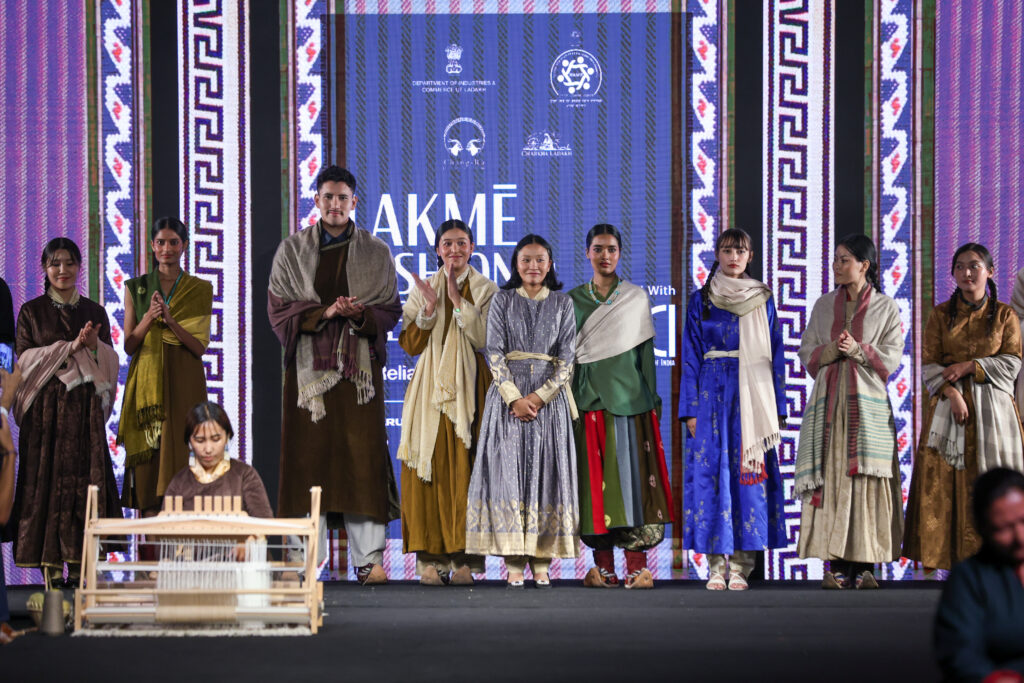
Disket Angmo brings Thikma, traditional Ladakhi resist dyeing technique, where you tie apricot seeds in cloth, dip in colour! By Asmita Aggarwal Disket Angmo is from the nomadic tribe that lives 14,600 feet above sea level in the Changthang region, Ladakh. “Chang’ in native language means Eastern part, wherein the nomads reside, and ‘Ra’ is goat,” explains Disket who for the first time is bringing her authentic pashmina to LFW X FDCI under her brand Changra Ladakh. From the Liktsey village, Disket pursued graduation from Delhi University, then MBA from Punjab Technical University, as well as a short hotel management course, but her heart stayed in Ladakh. “My family are traditionally Pashmina weavers, I decided this is where my future lies. I began small- training 100 artisans in carpet weaving. We use natural dyes, I grew up on a farm, where there are marigold, walnuts and onion, three ingredients ideal for natural dyes.” Disket is the first in the village who went to college, youngest in pashmina weaving. Nomadic life is extremely challenging-snowfall for six months in a year blocks roads, nomads are forced to stock up. Combing of sheep begins in June-July, it is almost minus 40, inhospitable,” she explains. Interestingly, here you find the finest Pashmina, the higher the altitude the better the fibres, despite government help, nomads are moving to cities looking for jobs. Two big concerns remain –education to hospitals. “Each family has 200 sheep in my village, but many are worried about solar panels going to be set up, where the goats will graze? Sunrise they are up on the hills and down before sunset,” she explains, adding, “most locals are looking for a secure future with government jobs, traditional artistry is depleting.” Covid taught her to start with pashmina weaving, especially in winter when life is mostly indoors, an art she learnt from her grandmother, though she also perfected embroidery, tie and dye techniques under her tutelage. This LFW X FDCI, she is reviving the art of Thikma, traditional Ladakhi resist dyeing techniques, where you tie apricot seeds in the cloth, dip in colour. “Ladakhi word thitoo meaning dot, resist dyeing technique, done in our cold desert. It is used on narrow woollen belts, Skeraks, people tie on their waist. Historically royalty in the 12th- to 13th-century wore it, as murals at the Sumstek Temple and monasteries show these dotted textiles,” she explains. Interestingly the pashmina is kept austere-beige, grey and off white, natural hues, but what Disket is attempting to do is give the people of Ladakh a second chance at reviving conventional, age-old hand work.
Zanskar wool gets new avatar
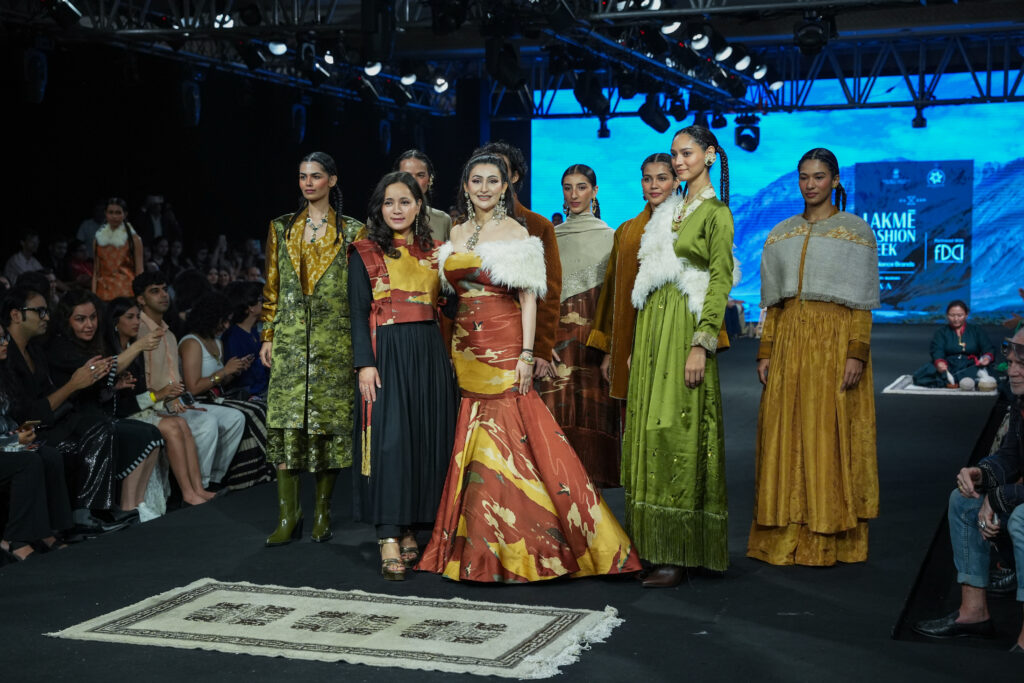
The sights and sounds of Ladakh’s nomadic community immortalized by Stanzin Palmo on sassy jackets, this LFW. By Asmita Aggarwal Even though Stanzin Palmo, who launched her brand Zilzom stayed in Ladakh only till she was 9 years old, moved to boarding school after that, the sights and sounds of the place she grew up in were always alive in her memory. She knew she would go back one day. After NIFT Delhi where she studied leather design, she worked on skill development with 60 Ladakhi artisans, who weave wool. “I wanted to give Pashmina a Ladakhi identity, to also educate end customers about the beauty, time tested techniques. Clear some misconceptions too- that the finest pashmina doesn’t need to pass through a ring to be authentic,” she adds. Ladakh is a community-based region, the whole family comes together to make a tent out of Yak hair and wool (known as Sitpa and Khullu), “Rebo”, takes three months to craft and is now going extinct. The natural oils in the yak hair make the tent naturally water-resistant. “When I met Mr Modi he told me Sulma (Made from warm wool, brocade, velvet, silk, or local twill-weave wool, nambu), Ladakhi clothing is so unique it must be exported all over the world,” she adds, saying her line is much more than Pashmina jackets and blazers. This year, she has worked with lesser-known Zanskar wool, fully handmade, pure luxury, artisans wash, sort, and card the sheep wool by hand over several days before spinning and weaving the yarn, it offers extreme warmth. Its dense, multi-layered fibers provide heavy insulation suited for harsh high-altitude winters. “Spuruks are made out of this, it is sheep wool, resembles fur, and I have made accessories out of it. It is expensive as it is handcrafted and takes months to make a bag,” says Stanzin. Her brand she believes is an ode to the nomadic community, which is fast vanishing from Ladakh, moving to cities to work as labourers—she has immortalised them in prints. “The inspiration is “Riyul”, “Ri” for mountains, and “Yul” or place on Ladakhi. All the labour-intensive techniques are fast vanishing from the region,” she explains. With the solar panels being planned by the government, goats will not graze under them, they need the clear skies and environment that has been their lifeline for centuries is now being destroyed due to commercialisation. “The black crane is a very special bird which is now rarely sighted. Also I travelled to Karnak village where earlier 100 families were weaving now only 10 remain, rest have migrated,” she worries. On Sonam Wangchuk, no comment, “I don’t want to make any political statements, but he has contributed to make Ladakh important globally,” she adds. Schools and hospitals are two things that nomads lack, the fight is for survival, a lot of backlashes in Ladakh due to the Arogya Mandirs, 321 operational across the Union Territory of Ladakh. “I care about weavers, and local artisans who suffer as they are ready to move to cities and give up traditional techniques which made Ladakh’s Pashmina the most sought after,” she concludes.
“I’m queer, found my tribe, thus Line Tribe”
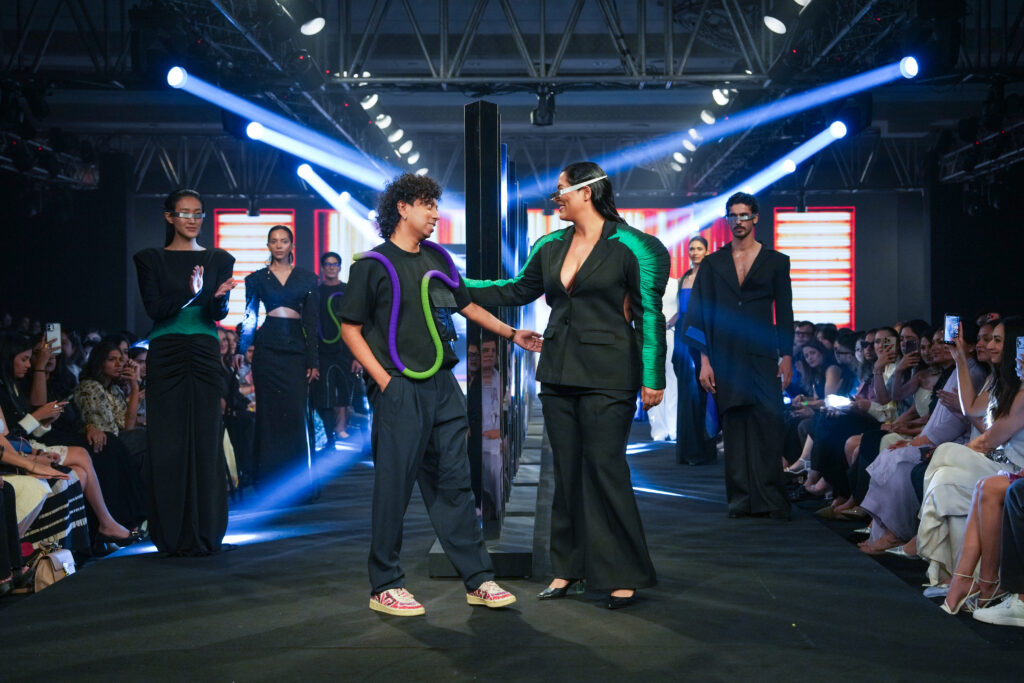
Engineered panels, ombre dyed, rouched, Gaurav Jagtiani decides to channel simple Chevrons, hand quilting and interplay of stripes. By Asmita Aggarwal Gaurav Jagitiani is a designer who’s unafraid to start again, experiment with new ideas, change according to what the market demands, reinvent himself. Could we attribute this to his Bengali mother and Sindhi father, maybe he won a genetic lottery? He aced the Nexa competition for his label Line Tribe, as the platform is geared towards creative expression, designers with a vision. Over the last 20 years Gaurav has had many stints, Line Tribe began six years ago, offering natty gender fluid clothing with a distinctive sense of newness, peppered with androgyny. “Everyone wants to be a better version of themselves; I look at experimentation, as Indians we were slow to start, have a strong desire to fit in,” he says. The brief in the 90s when he started was to “look rich”, get a logo-soaked designer bag, Europe holiday, spin around in a BMW or Phantom, but social media has democratized fashion. “In our country there are many diktats—dusky skin colour ‘don’t wear this’, hips large ‘won’t look good on you’. Now you can dress in what you like and get 2000 thumbs up on IG, your husband may be rich, but wives have their unique personality,” he adds. It may not be Tarun Tahiliani or Abu Sandeep Khosla, but the affluent now want to wear a pant-suit to dinner which no one ever dreamed of. Humor is what makes Gaurav unique, some of his one-liners are priceless. “44-inch kurti we call it a dress, put a little embroidery on it and husband won’t have anything bad to say, now all ages are wearing a dress,” he laughs, adding it is no longer that you are skinny, so only you can wear a halter. The fear of looking different has vanished! He wanted to start a line that doesn’t have his name, separate from his identity, “it leads to too much complication, trademark, IP issues. I believe a brand must have an independent identity,” he smiles. He is queer, felt alone, many times, it was an isolating experience, you have to solve your own riddles, find your community, your tribe. “There are so many hopes, questions, the tribe helps you survive, you have a chosen family, shared lived experience,” he explains. Line Tribe is not a mainstream brand, they don’t do any paid promotion, never done influencer marketing, but Masoom Minawala wore him in Davos, Sakshi Sindhwani at Harvard talk, GQ had Ishaan Khattar and Yami Gautam in Femina. “Now there is no value of a magazine feature, everything is paid, I won’t play, I will do it my way, channel integrity. Does it matter if you write glowing articles when I’ve paid for it?” he laughs. “I don’t need friends, I need clients, if your product is good, you will do well,” he adds. Painting, reading are his past- times, so for LFW it is about intersectionality, identity, self-expression, politics, keeping house codes intact. “Ukraine war, economic showdown, inflation affects him, there is despair, grief in the world, but we are resilient, Saudi is suffering, so we relooked our offerings,” he says. Who cares about a pretty dress when people are dying? “I don’t live in a bubble, in an AC room holding champagne, talk about exports. We don’t need to talk about zardosi, this isn’t fashion, is it? But I choose to be positive, empowered, I’m questioning my role as a clothes maker, and my inspiration isn’t my last holiday in Mykonos, when reefs are dying,” he admits. This ability to debate, reason and use logic comes from his parents, both avid readers, bohemian, with roots in Kolkata. Gaurav lived in a largely feminist home, he may have a Sindhi last name, but he is Bengali in his value system. For him it isn’t about your pin code, but how gracefully you live your life. “We don’t use polyester, indulge in hand quilting, powerful shapes, I can’t do corsetry in khadi. You will see engineered panels, ombre dyed, also rouched. I don’t do prints, play is simple, Chevrons, multiple stripes and suiting materials. You can feel happy in my clothes,” he concludes.
“Buyer is conscious, wants to reuse”
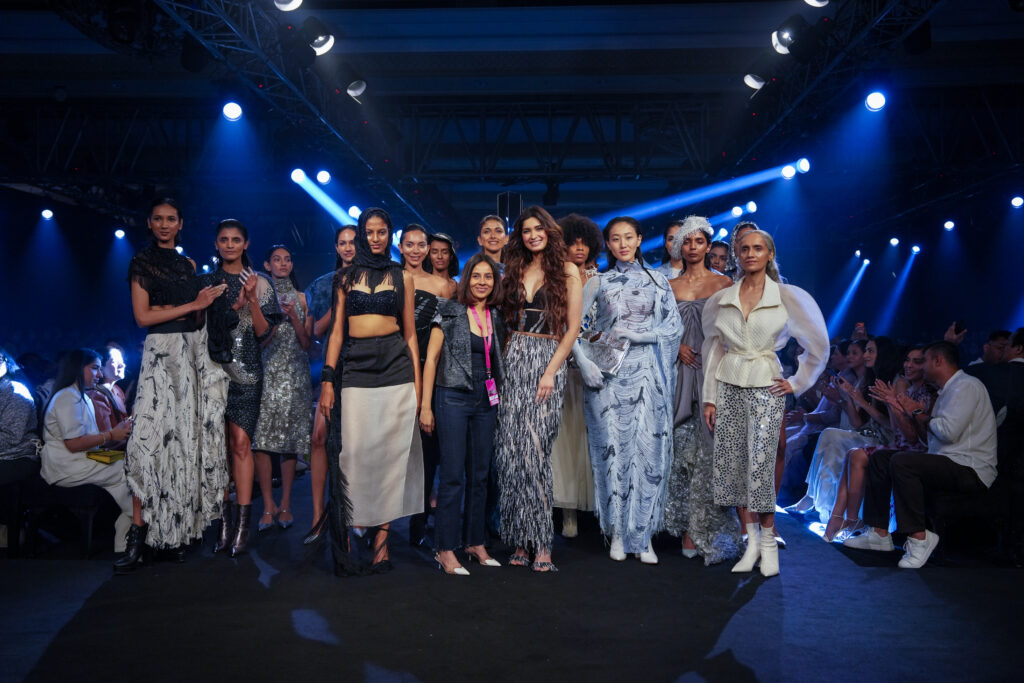
CFA-turned-designer Richa Khemka tells us you can wear a draped blazer-pants to a cocktail….we believe her. As she serenades hand painting with metallic foil and celestial textures this LFW. By Asmita Aggarwal Would you ever imagine a CFA working in Citibank, earning top dollar, deciding to quit and design clothes? Strange things happen in fashion, and Richa Khemka did just that! Self-taught, she is this year’s Nexa spotlight winner! Admits after marriage she didn’t want to do a corporate job, so the J.D. Birla Institute (JDBI), Kolkata affiliated with Jadavpur University, MSC finance, as well as international chartered financial analyst, Richa took the road less travelled. She grew up in artisanal Kolkata, had seen her mom make saris, apply borders, get it dyed in vivacious hues, and supplied to stores. She grew more interested, studying finance helped her balance profit-loss, a skill many Indian designers grapple with. “Even though I don’t like numbers, I’m good at accounting,” she grins. In 2015, she began with one tailor, continued with one exhibition, gained confidence after a few years, felt it could be considered as a serious profession, and soon began supplying to stores organically. “I felt clothing was either too Indian or too Western, so fusion wear became my calling, if there is a world like that. You can wear it to a wedding and cocktail, they are transitional and fluid,” she explains. Her draped blazer is worn with pants that are crafted in materials sourced from China, organza, lace, textured fabrics, nets, metallics, and crushing for effect. “Focus has been on the lightness of a fabric and draping,” she confirms. Buyers want to reuse, they are conscious of their purchases, but they also want to be noticed as soon as they enter! “We do very well in tier 2 and 3 cities, they are exposed to urban fashion. They will wear a blazer and pants to a sangeet in Raipur to Indore even Surat, the exposure and sense of wanting to fit in due to social media is tremendous, they also see how their favourite celeb is dressing,” she explains. Interestingly, what stands out is hand painting with metallic foil, simple in view but heavily embellished, with silver, black, white and blues used to accentuate the ensemble. “What takes centre stage is storytelling, it can be as basic as floor tiles which caught my attention on vacations or travels when I am most relaxed,” she admits. Kolkata is blessed with gifted artisans who can bring alive your story in clothing, karigaars hand work is superlative. Even though her work is not heavily dependent on motifs, it is more geometry, play of tassels, creating constellation effects, a bit celestial and mystical. If you see closely the dark blues of the cloud has been translated with ease onto her trans-seasonal garments. “I want to experiment more with threadwork and hand work, pushing the boundaries further,” she adds.
Rock band Queen manager’s son comes to LFW
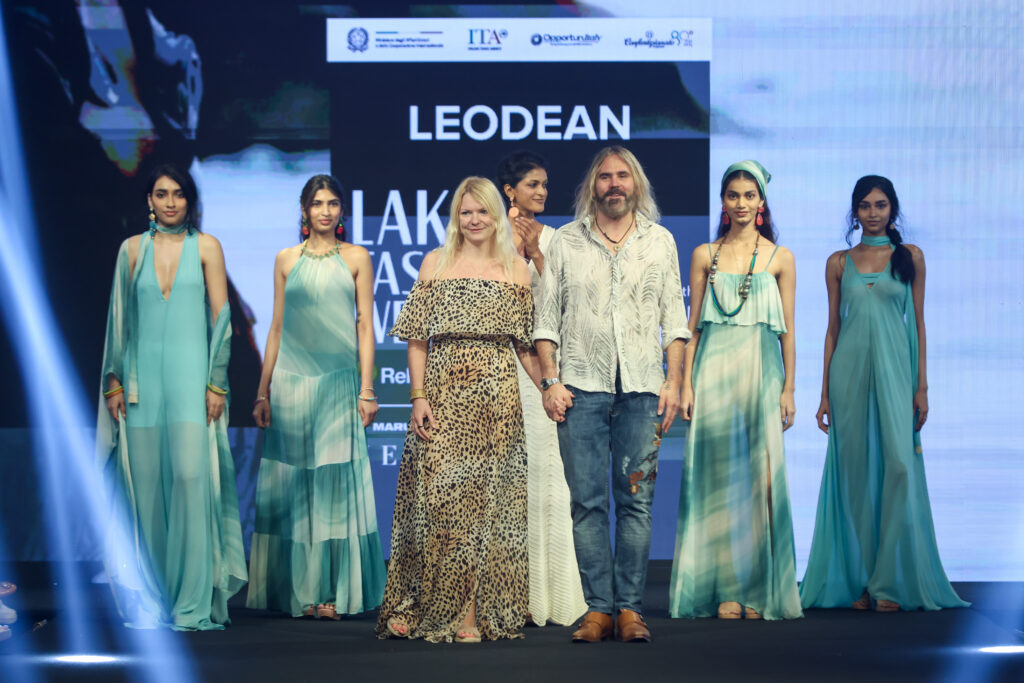
He fell in love with a girl in Karnataka, who studied Shakespeare in the jungle, launched Leo Dean his sailing brand, but the musician Oliver is more than just his legendary father Jim Beach’s son, he is a visionary. By Asmita Aggarwal Oliver Beach is the son of believe it or not of the man who handled Queen band, Jim Beach, by our very own Parsi Freddie Mercury. “My father toured with them for 40 years, and Queen has had an enormous effect on my life, even when I met Freddie as a young impressionable boy. I was one of the few who got to see things as an insider,” says Oliver. He was the frontman for the British indie pop/rock band Yellowire, he formed the band in 2010, after being the keyboardist for Wire Daisies. There are so many Queen songs that are memorable for him, choosing one is tough, but “Another one bites to dust” makes his heart dance. Being a professional musician he understands it better. “Roger Meddows Taylor, drummer for Queen, I saw him performing in England recently, trust me everyone’s hands were in the air,” he laughs. Leo Dean was started by him and wife, who studied at London College of Fashion, it is more her world than his, but “life takes many funny turns,” he says. “Music and fashion are interlinked, isn’t it? We both naively started the brand, loved old Italian Riviera style, also sailing something that I inherited from my family,” says Oliver. He admits he started Leo Dean without thinking about it, but the one thing that made extremely free is sailing on the Mediterranean. “We decided things must be ethically and sustainably done, give everyone a fair deal, so we moved to Italy,” he says. Having grown up in Switzerland and the UK respectively, lake sailing was a big part of his life, even though he stayed in Portugal for 15 years, Italy remains a special place. “I feel lucky to be accepted here and welcomed by the community,” he says. Though what brought him to India was his girlfriend who was studying Shakespeare in the jungles of Karnataka, many years ago, he travelled to Goa and Nepal. Now he wants to bring his daughter “to smell the spices of India” he adds. Leo Dean is inspired by a friend’s grandfather, it represents the chic of generations before, “he was a wonderful man, we thought it was an apt title,” he affirms. They craft using silks and viscose, launching the label five years ago, slowly developing it. “Most of our womenswear is flowing, feminine, luminary, shapes that accentuate the female form, offering floaty clothing, as we bring 50 pieces to LFW,” he says. With Leo Dean he admits you can go to the beach, then city for lunch and maybe even dancing at night, feeling fabulous! “I’m trying to watch Bollywood films with my wife, maybe get a glimpse of Indian life,” he concludes.
Indomitable Spirit
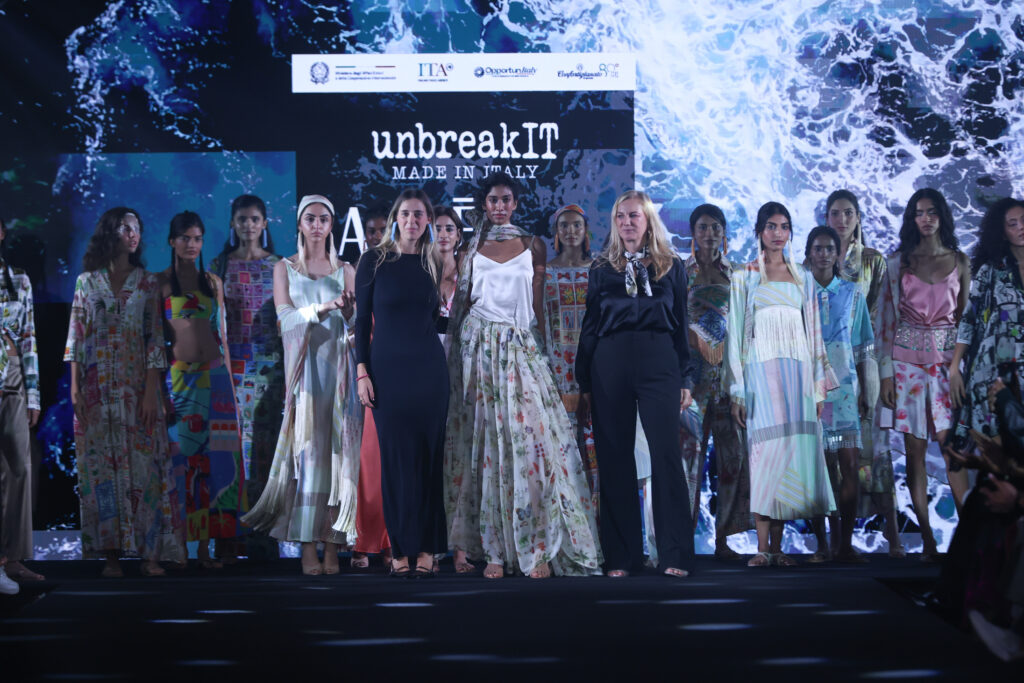
Giorgia Both brings patchwork, vintage aesthetic and cinema posters, with their Italian label Unbreak.It. By Asmita Aggarwal Thirty years ago, Giorgia Both came to India, she was in her 20s, and wanted to understand spirituality, Banaras ghats, the cycle of life and death, a philosophy of Karma that makes India so special, final journey within. “I travelled with my boyfriend, North to South, even Mumbai, sometimes took local buses, backpacked, it was incredible, a dream come true,” she says. She is part of Italian label Unbreak.It, launched 2007 in the heart of Milan, Italy, began as a creative vision of artist Silvano Negri. Giorgia, along with her two daughters, Lara and Mila, now carries forward this legacy, channelling the ideology, “Every piece is unique—like you.” Artist Silvano Negri was born in Monza in 1964, known for the legendary 5.793 km racetrack, the “Temple of Speed”, which hosts the annual Formula 1 Italian Grand Prix. Silvano was creative and commercial director at Vans, Atlantis Snowboard (snowboard brand from the 1990s), and Volcom (skateboarding), then product manager and creator of the Pacha shop, but with Unbreak.It he wanted to explore art, patchwork, and prints. Negri was a friend, we worked together even in Germany, after he passed away, I took over the brand,” says Both. The philosophy is quite simple-bringing vintage back, printing it a certain way, digitally that each piece looks like an artwork. “City Prints, Kaleidoscope patterns, French cinema posters, rock zines, and vintage postcards—are printed on silk and jersey. Our printing style is unique, it is done per metre, on both sides, so detailing is intense,” says Both. Both grew up around fashion, her mother ran a boutique in Italy, children’s clothing, she knew what it was like to interact with customers. Their offerings are classic, as the prints are extremely vivacious, for LFW they add fringes, tassels, pearls, on dresses, tunics, and nifty trousers, though they started with scarves only. “This season we have done 30 prints, our speciality is patchwork, inspired by vintage paintings. My daughter is an artist, though we also work with various artists from Munich,” she concludes.
Dressing Kanye West, Neymar, Italian style
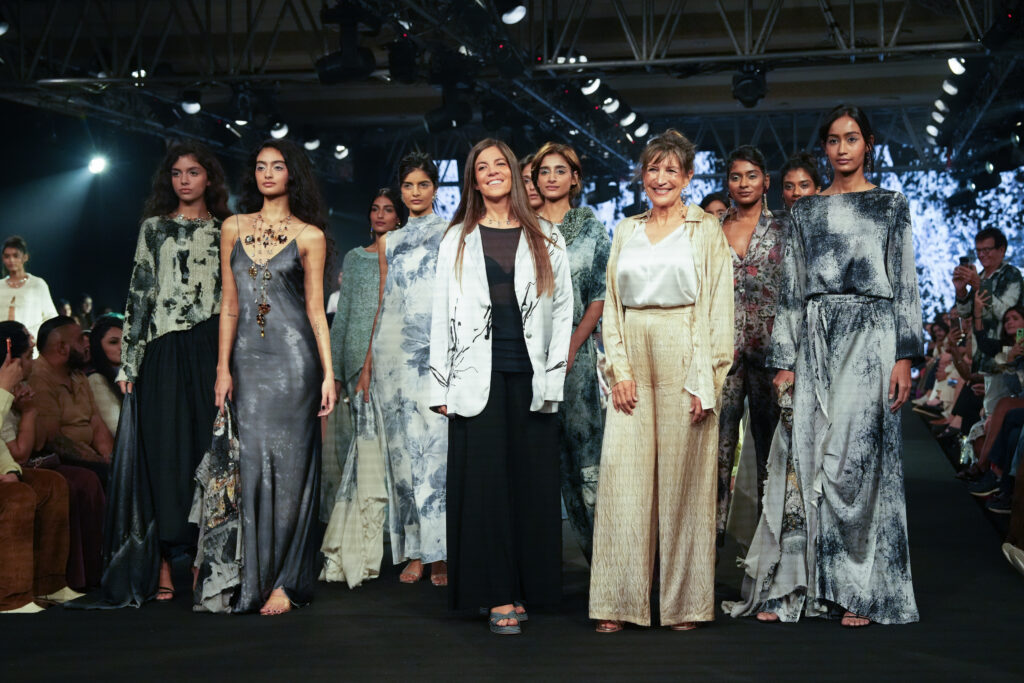
Imagine, wiping your paint-soaked hands-on finest cashmere, that’s just what Mirko Ghignone does with Avanti Toi, pure Italian luxury. By Asmita Aggarwal The first image that Giulia Marini has of India is her trip in 2017 to Rajasthan Agra, Delhi, as she loves cooking, she took a class to understand our flavours and spices. “I admired the stunning beadwork, embroideries and textiles, we have one from Rajasthan hanging in my room,” she smiles. Her adventurous spirit took trekking to Ladakh, climbing 4950 meters. “I had breathing difficulty, but it was a sight to remember,” she laughs. Though her hi-end cashmere label has dressed from Kanye West, Brazilian footballer Neymar when he won the Golden Ball to Rolling Stones guitarist Keith Richards who wore her printed butterfly’s shirt. Avanti Toi is a French word that means “ahead of you” and they are fashion-forward. The Italians are known for their mastery over hand skills, attention to details, a bit like our artisans, however, at their first showcasing at the LFW X FDCI, Avanti Toi, brings what many may be apprehensive of working with-cashmere. The third-generation Giulia, of matriarch Lia Gambetta who began the brand in 1955, with knitwear, gave it a new spin by signing up with artist Mirko Ghignone. Within the historic Liapull cashmere group in Genoa, Italy, they gave it an artistic touch, even though cashmere is considered extremely precious, Mirko made it disruptive. Avant Toi is different from the knitwear company born in the 1950s that worked with mohair and wool, later cashmere and silk. “Mirko began destroying and distressing cashmere, beginning as a blank canvas, using natural fibres. Though the story of the label is historic, when it began many locals were leaving the city, my grandma decided to hire and train them. Everything is made by hand, laborious but irreplaceable. We live by the sea and are 100 pc Italian by DNA,” says Guilia. Mirko, through technical experimentation, uses dyeing, air-brush coloring, blending and spray-painting to give cashmere a discerning touch. “He uses natural paints, pressure and heat to fix the designs, so they remain new even after years. He innovates constantly in terms of shades and tonality each season. We bring to India, the latest technique-camouflage, where he dips his hands in paint and cleans it on cashmere. You would be surprised why he would do that? Beauty of it is that he used to wipe his hands on paper, at the end, he saw the paper and found naturally made abstractions unique. He decided to try it on cashmere and silk,” he adds. Gulia didn’t study fashion, but international luxury management, she admits 20 p c of their cashmere offerings stay in Italy, almost 80 pc exported, even though Italian consumers are quality and design conscious. At LFW they are showcasing a line titled “Traces of Memory”, inspired by the border her city shares with France, it is the sixth-largest city in Italy and the capital of Liguria region on the northwestern Italian Riviera. She has used landscape they see around them, blue waters to flamingo. It was a historic maritime trading hub and starting point for Le Vie del Sale (Salt Roads), ancient mountain mule tracks that carried “white gold” (sea salt) from the Ligurian coast across the Apennines into Northern Italy. “I love the cloudy skies, flowers from neighbouring Provence,” she smiles. You would never think about repeated dye baths, deconstruction of edges, intentional pilling, painting, and aggressive washes, to create “Art to Wear”, as their tagline goes, but nothing has ever stopped the Italians, isn’t it?
My client in Bhubaneshwar wanted bodysuit: Namrata
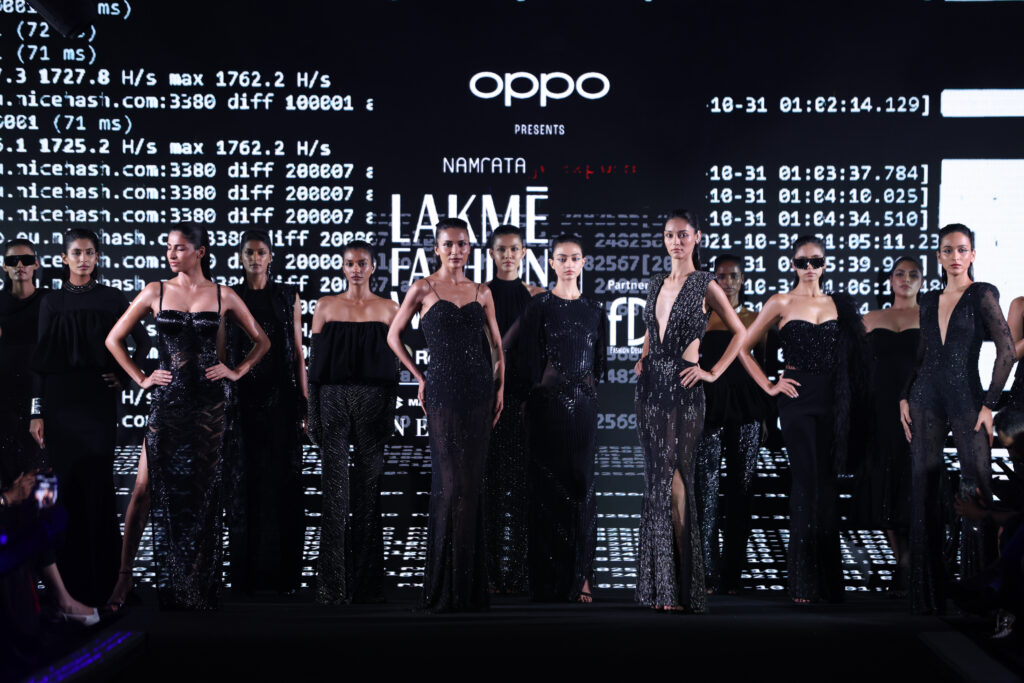
From jumpsuits, pre-draped saris, bodysuits, threadwork in sporty aesthetic, Namrata Joshipura tells us real clients are now in tier 2 and 3 cities who love to try bodycon embracing their bodies wholeheartedly. By Asmita Aggarwal When there is a fashion show at every event, what is the relevance of fashion weeks? Are they necessary? Namrata Joshipura who began 24 years ago, after NIFT Delhi (1994 batch), believes they are, “it is important to keep showing” maybe that’s why she offers something that cuts across all age groups. Her signature is the NJ jumpsuit – sporty, contemporary and can be worn by intrepid women from 20 to 50s. “It got associated with me by default. When I design something, I offer a complete look, never targeting a specific client base,” says Namrata. Her first ever line titled “Nocturnal” there is still a poster of it in her factory, the year her daughter Ananya was born. Her first LFW was in 2004, serendipitously she showcased with Sabyasachi Mukherjee. “Sabya was fantastic, it was his first vintage inspired line in a two-designer show at LFW. Suneet Varma, where I worked with after I graduated, showed me the ropes for two years. I still admire his embroideries. My vision was luxe pret, unfortunately no one understood it back then,” she says. In a market flooded by salwar-kameez, in the 90s, Namrata did tops tunics, shirt dresses, separates, a concept alien to most buyers. Even when she does a festive line, it is minimalistic with Chintz to tie and dye traditional in soul, but armed with a distinctive modern vibe. “In Mumbai almost two years ago I did a show with bodysuits and pre draped saris, it did well. Though in 2004, we retailed from Carma, the multi designer store, fashion was aspirational for a select few, now you have clients from Bhubaneshwar, Moradabad, Gorakhpur. With increase in disposable income, they want to express themselves with natty clothes. Fashion is far more democratized now,” she explains. Interestingly B towns are more aggressively chasing designer clothing, travel is easier, social media has made things more accessible, Raipur, Indore Bhopal are huge markets. “Tier 2 cities have house parties, where they wear the finest designer clothing, don’t come to shop in Delhi, they get it online,” she adds. Sometimes they want it couriered to the nearest town from where they collect it, such is the craze,” she adds. In a conversation where Indian textiles are now being adopted, Namrata believes it doesn’t go with her aesthetic. Hand done threadwork has been her language, “I don’t want to do it to tick a box, I must feel it, Art Deco has been a consistent inspiration. My look doesn’t change with seasons, one season organic, next one sexy,” she adds. Drape, micro satins, sheer, extensive use of jersey comes from her love for sports, she is a marathon runner, the two can’t be separated, “it is like osmosis, it is absorbed,” she laughs. “I’m still figuring out why I am so drawn to the bodysuit, which Sunidhi Chauhan wore to her trip in Australia. Can you imagine an Indian woman in a bodysuit, even tier and 3 cities want it; I see a definitive shift, embracing their bodies,” she adds. Even though she would never wear a gown, there is an increased body acceptance, the world has opened up now they won’t wear a sari, but a gown on their 25 th marriage anniversary in Roorkee to Etawah. “Indo-Western is a tacky world, but they want to wear dresses maybe not with a deep neckline, at kitty parties, lunches, it’s an anthropological observation,” she adds. Namrata and bridal can’t be said in the same sentence, she would never dabble in it, what bothers her the most today is fashion’s growing dependence on “prompts”, with AI takeover. “Authenticity is under threat, it is a travesty,” she concludes.
Beauty annoys me, I damaged it: Pranav
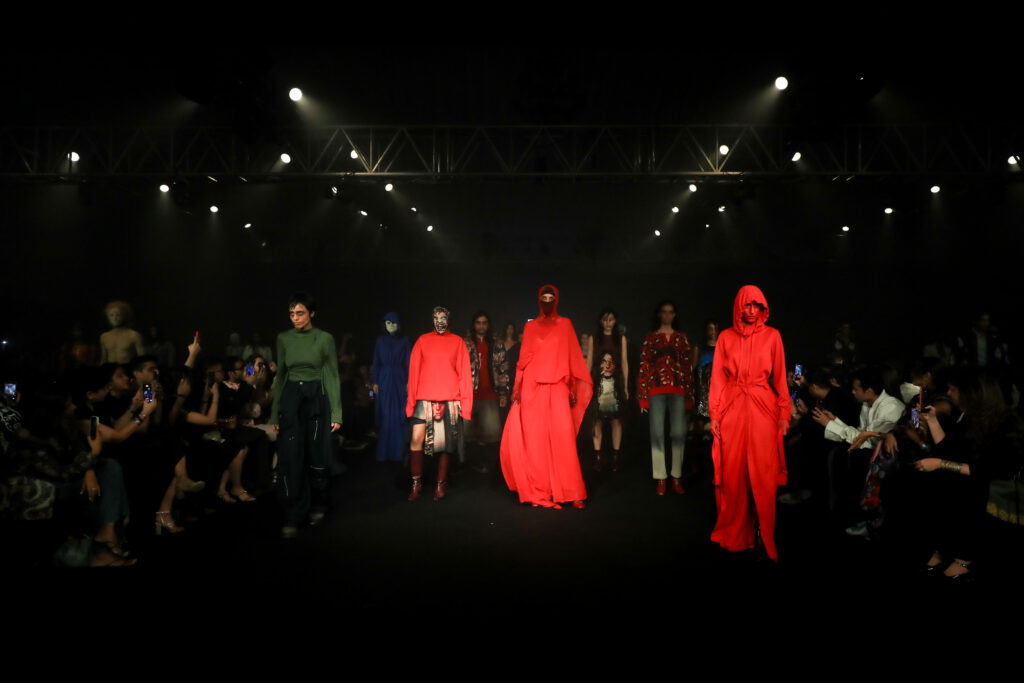
He is unable to think about rainbows, flowers, butterflies, this LFW he brings synthetic hair to break taboo around it, along with sequin sheeting. By Asmita Aggarwal Rajesh Pratap Singh in an ad for a fellow designer? Mostly it is unheard of in Indian fashion, but Pranav Misra the accidental designer from Lucknow, poet by heart managed to convince the reticent guru of minimalism, to star in his campaign Misraa. The new brand offers kurtas, a staple from the city of nawabs and Galouti kebabs, in various engaging forms. Interestingly, it is far away from what Huemn does, you wouldn’t even imagine it is by the same person, Pranav Misra– quiet, astute observer. Poet doing horns on coats? Sounds strange! His brand has never shied away from debating through the medium of clothes, issues which are often hushed—Kashmir conflict, landfills, fake news, recycling denim waste, casting non-binary models to “love like it’s your last time”. His brand partner Shyama Shetty, like him is from NIFT Bangalore, in 2012, they started the label, it is largely known for if you can call it “provocative campaigns”. Their double pallu Hybrid saris are being loved just like their Chikankari-two ends of a spectrum. “Pratap is a natural, so a perfect fit. My father was a poet, wore only kurtas, Misraa my label was born out of paying homage to my roots, it was for me imperative, born with a cause. The timing felt right. It will be developed into a lifestyle brand-home to accessories in the future, maybe bags too,” he admits. The pandemic changed him, he was doing B2B in Paris and Florence, post-covid he built a retail network in his own country. “I’m an outsider, I don’t belong to the already established style networks. Lucknow gave me a unique lens, in some ways not being part of the swish crowd is liberating. There is no burden of performance, you can be rebellious. That is what our brand reverberates with—no set formula,” he says. He has recently turned 42, discovered various earlier hidden facets of his personality, he is now secure. “I feel comfortable taking risks not wanting to please anyone.” On another note, there is an ease in spending money online, especially in tier 2 and 3 cities. “You will be surprised to know we get ‘experimental’ clients from Raipur, they can’t buy off the rack, so they click to spend. They look up to their heroes for inspiration, they access e-shops, e-commerce. Good returns and exchange policies are also a driving force,” he admits. Being politically charged, the LSR protests have affected Pranav, he says, we aren’t overtly political, but as creative professionals, we participate in meaningful dialogues. “I am not a journalist, I can use the tools I know to convey my feeling,” he affirms. His environment seeps in his clothing, his father’s death resulted in his mimicking “blood splattered’ offering, grieving for him. This LFW, surfaces have been re-reimagined. “Beauty annoys me, so we slashed and damaged it, I didn’t want it to be perfect. Even if critics don’t like my rendering, I am fine with it,” he says. His first collection in NIFT was with a cluster in Hampi, Karnataka, today craft feels very forced for him. “The story matters more to me more than the textile,” he says. He is working with human hair, as there is such a taboo around it, he did the mud look, redefining “dirty” in 2025. “Look at the mess around, I can’t think of butterflies, flowers, rainbows, when I am living in a politically volatile place like Delhi,” he says. “I change according to what I feel, when people bracket me as edgy, I surprise them,” he says. LFW’s Huemn brings with it beads, sequins, mix media, threadwork, he offers a dressier line, with sequin sheeting, French knots, of course synthetic hair. “Misraa, my label’s name, translates to one line to make a couplet, as well as numerologically and astrologically easily defined. But for me in the end the wearer is most important,” he concludes.