
From the earth for the Universe
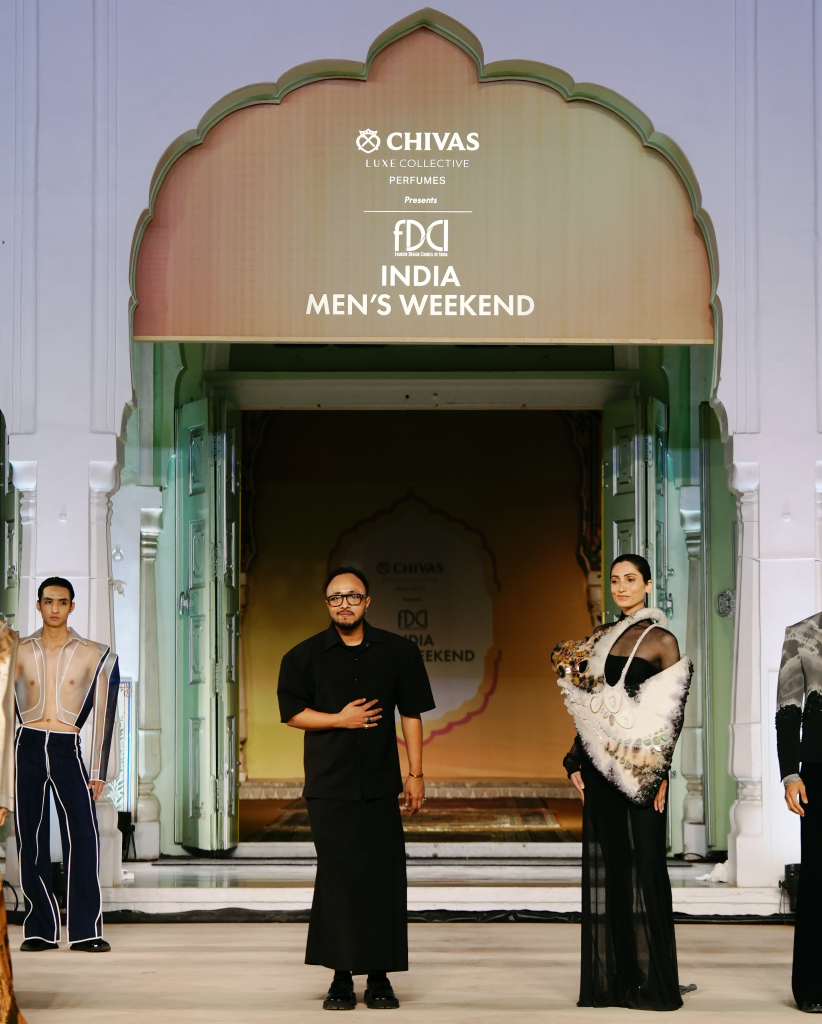
From healing crystals, to dressing body types and not genders, raw wool to unconventional shapes, Akshat Bansal is thinking out-of-the-box! By Asmita Aggarwal Small town boys have this innate desire to succeed, quite different from Metro cities, maybe it has to do with fewer opportunities, and exposure back home. Akshat Bansal of the label Bloni is interesting, from Hisar, went to Central Saint Martins, decided not to do bridal lehengas, but took the rather tough path of understanding science in fashion. Think reflective materials, colour sensitive fabrics, hemp, econyl regenerated, nylon flooring, industrial waste, and fabric scraps to craft ensembles. In 2022, he made his Paris Fashion Week debut, engagingly mixing rubber with tie and dye to crochet, hues which change along with body heat. In his line, the jacket can sometimes become a leotard, then a jumpsuit too, but here the dichotomy is lines like ‘Seher’ beautifully shot capturing small-town aesthetics and its austere life. He attempts to build a bridge between the past and future, and his experiments with felt are ingenious, so is his usage of 100 percent wool, raw in its form (heavily non-processed). ‘Passages’ his line for the Chivas X FDCI is where different dimensions align, fully couture, in its appeal. He uses gemstones, crystals, deconstruction of what earth holds, digging for that era gone by. “From the earth for the universe”, where you have no mechanisms, natural dyes used, mostly tie and dye, vegan rubber, futuristic in its look. “Crystals when they are not polished, but left as they were found, is what we use, it’s a different perception of beauty that many may find ‘dirty’. Just like hemp, it has in-built anti-bacterial properties, found in abundance,” says Akshat. This co-exists with manmade stainless steel, he believes it is impossible to go zero plastic, as there will always be silicon, plus Woolmark does merge Merino wool with polyester for elasticity. His denims are hand woven, by artisans, “I’m wearing CK jeans but I’m missing the comfort of my own creations,” he smiles. His fervent desire to take the road less travelled got him an invitation from Nature Morte gallery, where Peter Nagy termed his creations more “art than fashion”—you can buy it, wear it, or simply display it. A bit like what Natasha Poonawalla wore—a teardrop, it can be a lamp or just a pot too. 3D modelling, traditional hand hammering was employed from Moradabad artisans, to add to this chrome electroplating finish! Another such is a piece Sudha Murthy wore ‘Breathing Cocoon’ biomorphic wearable piece made of metal, wool, agate, and gemstones, which Akshat thinks could also be an artefact placed in a drawing room, breaking rules of what is traditionally considered art. “Why do we always talk of preserving art, but it is living, you can evolve it, isn’t it?” he asks. Crystals, he believes have healing powers, calming effects, remembering amethyst trees back home, protection from negative energy! “I did a Ted talk where I spoke about innovation over decoration, why did we wear jewellery? In history if you see silver releases electromagnetic waves, it isn’t about beauty but energy,” he explains. Cotton is the same wavelength as humans, linen more spiritual he believes, there is a hidden meaning to everything, he calls himself future friendly, not futuristic, but the quest is to find true purpose. His Paris experience was interesting, as looking at his offerings he was often asked, “where did you grow up”? Instead it should be where were you born? His lines are always fluid, and gender for him is nothing but ‘body’. “So many clients who do not fit into womenswear prefer the pieces I make for men. I think it is a body type not a gender we dress. I wonder who set those boundaries? Named these pieces? Why this segregation?” The search is to make a classic, which is named by him-as he asks why can’t pants have a train channelising a non-conformist approach to what is conventionally considered silhouettes, as he completes seven years in business, turned a wise 34 years!
From Haldwani to Race track
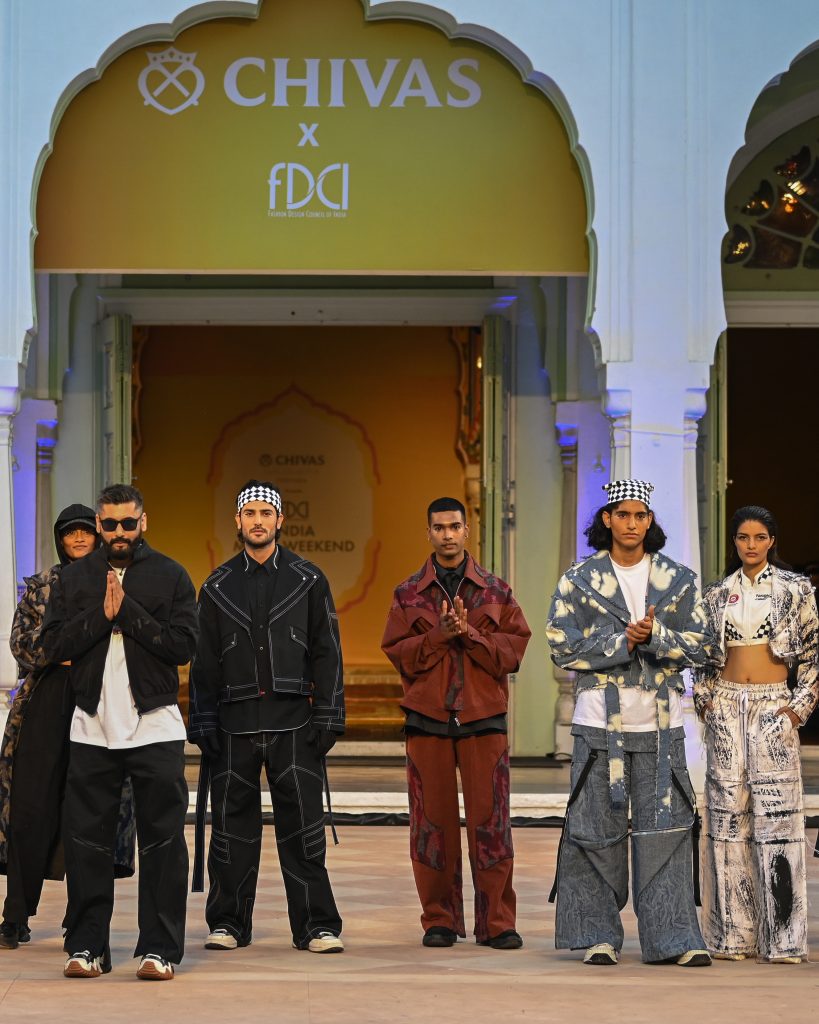
Growing up in Uttarakhand, Abhishek Paatni’s love for Formula 1 and Motor GP brought him to fashion, this time, he has expressed his need for the thrill of speed in his ‘racy’ menswear line. By Asmita Aggarwal You would never expect an electronic communications engineer, and MBA to switch sides, turn designer, but what can one say – Abhishek Paatni of the label Nought One is a man full of surprises. Growing up in a nondescript village of Uttarakhand (dad is from Haldwani, mom, Pithoragarh farther up in the Himalayas), his first stint was as a shopkeeper for a fashion brand. He counts it as one of the best experiences, which grounded him, taught him the ropes — how to run retail, package your product, keep the cash registers ringing. “I am from the mountains, growing up I wasn’t good at communication skills, due to little exposure to the ‘real’ world. Fashion helped develop my personality, better express myself,” says Paatni, who funnily confirms, in engineering they teach you things, which are not required in a job. His most fervent memory is of mom dressing him in winter jackets, a warm pair of pants-utilitarian clothing, for the snowfall, he had no formal introduction to fashion. “Now when I style, I follow mom’s basic, but handy principles,” he laughs, adding, his dad was posted around military personnel, all over the country thus, he developed a liking for parkas, olive green and cargo pants (all the three you can see explicitly in his various collections over the last nine years). “The mammoth amount you learn working in fashion whether it is about sexuality, expression, identity, questioning norms, breaking conventions, to channeling inclusivity, mentally one grow by leaps and bounds,” he asserts. Oversized, frayed denim, zippers, folds, check bandanas, dirty camouflage, red seems to be a man’s favourite now. Paatni’s offering had an unstitched, raw kind of appeal with engaging stitching details. “The block prints were made to create tyre skid marks and then hand done on garments,” he explains. His line for Chivas Luxe Collective Perfumes presents FDCI India Men’s Weekend 2025 is a passion project, “bikes and cars” his first two loves, can’t choose which he adores more; add to this mix sci-fi films and astrophysics. “I am a big fan of the Buddh circuit, have seen many MotoGP races, F 1, I wanted to introduce this heavy gear to civilians in a much-watered down version for sports fans,” he explains. What racers don, is meant to save your life, it’s like a leather armor, Paatni has attempted to give the thrill of speed in his denims, wool and parachute material which you can wear on your first date or even a café! “We have added graphics, oversized fits, T-shirts with logos of MotoGP, not an uncomfortable onesie you wear while real racing,” he adds, confirming the looks are tailored and the signature Nought One logo remains his favorite. As men have started investing in themselves, his overcoats (like the one content creator Ankush Bahuguna wore for Paris Fashion Week double lapel, faux fur) have found favour-puffers in parachute material, with plastic waste fill, are crafted in such a way that you are warm yet stylish. “Growing up I used to love jersey numbers on sports stars; when I launched a brand, and didn’t have money to hire an agency, I chose to design my own logo. That’s how the idea of zero one came about, it is copyrighted now, an integral part of our identity,” he concludes.
Mani is not a SNOB
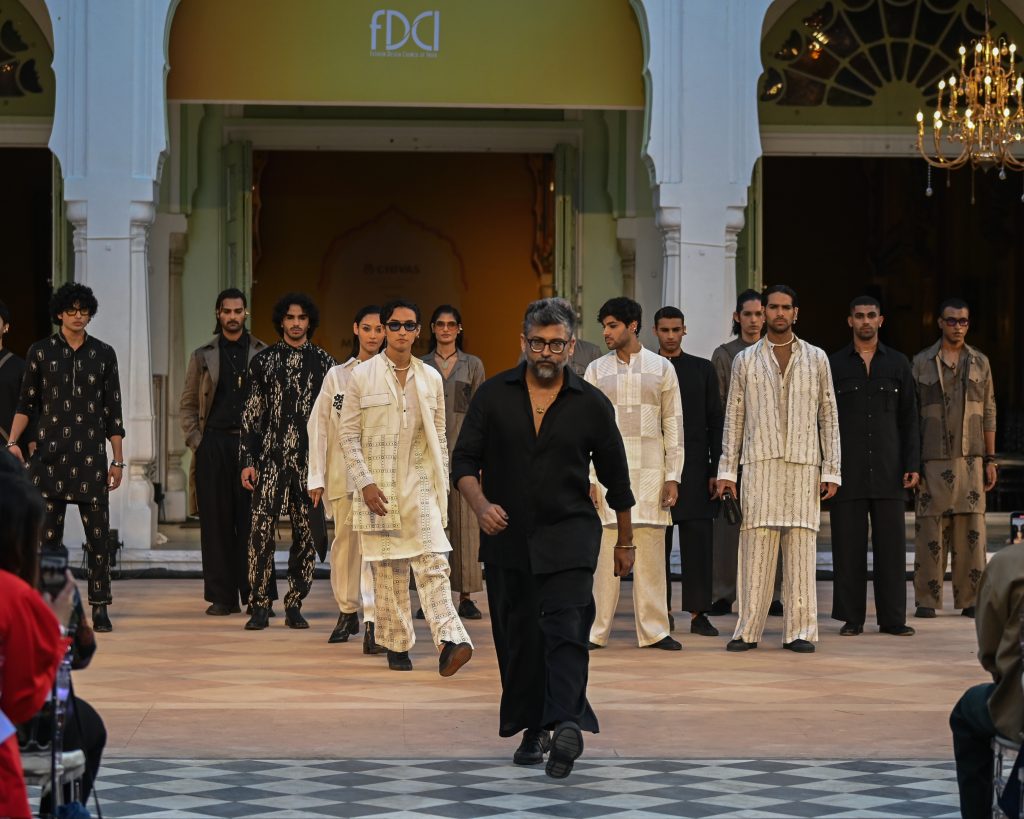
His label serenades linens, he gives them a hip feel, with zips, tassels and hints of embroidery, for a new age man, who wants to experiment, but not go overboard. By Asmita Aggarwal He comes from a well-read Bihari family, father is a professor of English and mom botany, at Patna University; his sister is a doctor in the US. He studied at Doon School, worked in the corporate sector for 14 years (creative director Myntra and then Madhura Garments), saved up to launch his own label SNOB (Son of a Noble). Thus, his approach to fashion is unique — it must be commercial, he has not lost his way, as clothes are not art, they need to be simple and functional, he believes. Men’s fashion has become a lot younger, seamless, to this engaging mix there are streetwear elements and grunge. Mani Shankar Singh believes, dressing is more hybrid, like a mash up of everything, and even though he is known for his linens, within that space, he offers an undeniable, interesting variety. “It is easy, breathable, perfect for our country’s weather,” says Mani Shankar Singh at the Chivas Luxe Collective Perfumes presents FDCI India Men’s Weekend 2025 at Diggi Palace, Jaipur with Chivas. Though he has taken linen out of its stiffness and formality, added fun elements to it—sports vibe, grunge, fabric manipulations avoiding hectic embroidery, making it less old school, hipper and newer. “I wanted a 20-year-old to wear it, not just using it for boring kurtas, in a way our approach is futuristic. This collection we have added a little touch of embroidery,” he adds, confirming that most adhere to the minimal aesthetic. “We make ensembles for father (structured) and the son (easy, sometimes wicked),” says the Patna boy, now settled in Bangalore, after studying in NIFT where he did FDIT (fashion design and infotech) in 2003. Gaining international exposure from ‘Who’s Next?’ Paris and Ounass Middle-East, he believes austerity is the name of the game — black, white, and green remain his palette, playing sometimes with blushing neutrals. SNOB offers from kurtas, to shackets, trench, an ideology where you can wear a kurta, but a Cowboy version, with zips and tassels. “Kurta is essentially a long shirt, I have given it a global approach,” he smiles, adding his life partner Ritu Jain has launched a womenswear label. For men’s fashion week he has done bundis, a staple now in every man’s wardrobe, but with a twist—metal buttons to rivets. Denim added as well as kantha, sometimes they come with inverted box pleats. “Minimal detailing, but lots of textures, and since 2015 I have stuck to what and enjoy and do best—which is dressing men, asking them to cross the Rubicon and try a shot of edgy classics,” he concludes.
VK finds his ‘Idam’
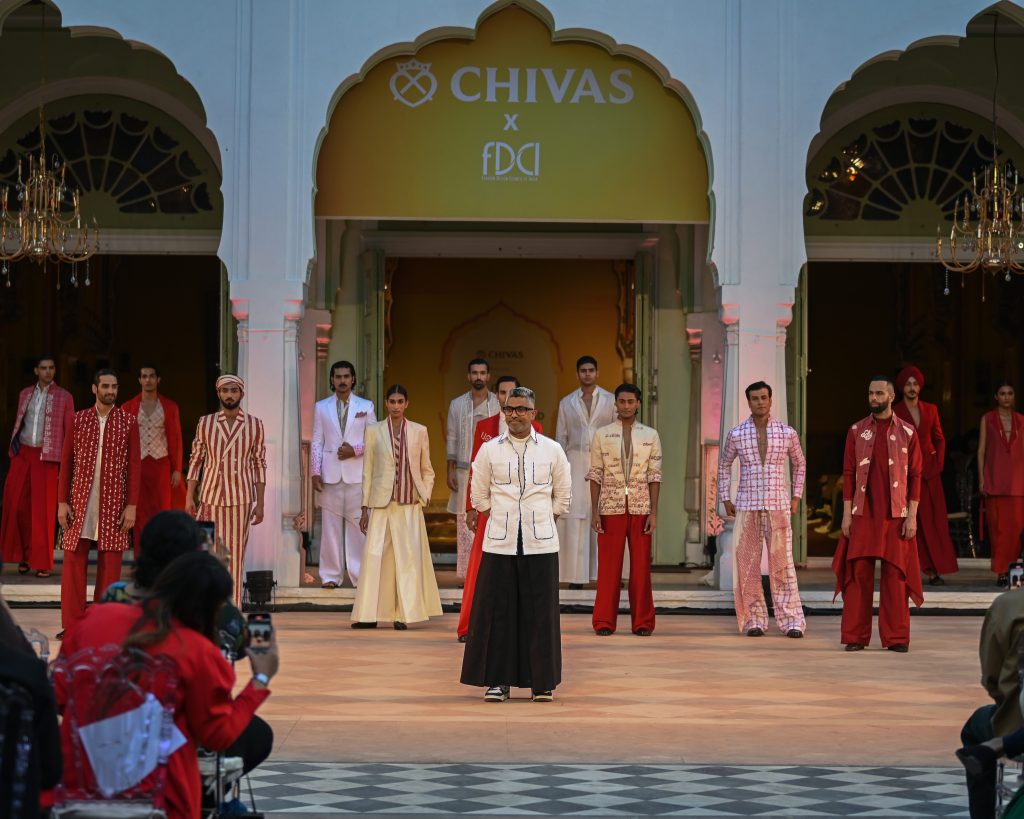
From recreating the Madras checks, to paying homage to his Tamil roots through spiritual texts “Thirukkural”, Vivek Karunakaran has come full circle at the FDCI India Men’s Weekend at Diggi Palace, Jaipur. By Asmita Aggarwal His earliest memory of fashion is an eight-year-old sitting on his mom’s feet, pleating her South silk saris, he would hand iron to smoothen the crease. He credits his innate sense of creativity to her. What changed the course of his life was Aishwarya Rai (Ms World) and Sushmita Sen (Ms Universe) winning coveted crowns in the dawn of fashion-year 1994. His father was an engineer in the Indian Space Research Organization (ISRO), he remembers, his parents waking up at 6 am, getting ready to leave for work, making his food for the entire day, how much they worked hard! His journey began in 1999, when from Thiruvananthapuram, he decided to move to Chennai, to study fashion design from NIFT. His label Vivek Karunakaran is now almost 18 years old. It was a challenge coming from a middle-class family, his parents wanted him to be an engineer, but he calls his life’s trek, “extremely humbling”. As providence would have it, when he was set to leave for his masters in Milan, he got selected for India Fashion Week, two weeks before for the GenNext showcasing in 2007. Coming from a bootstrapped business, having no business acumen, taking wrong turns all the time but learning crucial lessons from them, has been the “biggest gift” for Vivek who changed his brand name from Viaa to VK. He counts the seven-and-a-half years he spent at an export house Cammacaria, which worked with European labels like Armani to Diesel and Kenzo, as that’s where he learnt “deep experimentation. How design is not a piece of art, but retail,” he adds, learning the intricacies of menswear despite his line for NIFT being innately womenswear. Post-Covid he shifted gears and decided to focus on dressing men, “operationally better” he confirms. His USP would be fit, detailing and finish–what can look demure on a rack, can come alive when you know how to wear/style it. “I today feel rooted to where I belong, whether it is fabrics or heritage,” he adds. Having worked with Kancheepuram silks to Balrampur cotton, this year he has used Tamil script in various ingenious ways in garments. His inspiration is Tirukkural (Tamil language text on morality consisting of 1,330 short couplets, or kurals, of seven words each. It is divided into three books with spiritual teachings on virtue, wealth, love, humility). He converted it into a running script for his collection showcased at Diggi Palace, Jaipur at the FDCIXChivas India Men’s Weekend. From checks, shackets, embroidery on elbow sleeves of bombers, the whole approach is to break free from the cookie cutter method. Layering to pleated palazzos, wrap pants, chanderi kurtas with bombers give his line “Edum” or “space from where you belong”, a third dimension, also in some ways it is a tribute to Chennai. This teamed up with jasmine flowers, heritage elements, silk taffeta to Egyptian cotton, textures used innovatively, is what he believes is a change from what men wear. Tucking, block prints, Madras checks are not bought and used literally (buy and sew) but created using textures, by weaving, silk tussars, also window pane checks. Vivek has had many firsts, his project “Flawsome”, that channelled the ideology of one product at one time, unisex, anyone could wear it, simple shirt in Egyptian cotton and jersey sleeves did extremely well. “Bundi is passe, a shacket (you can wear with anything—slim pants to capris and even palazzos) is cool, especially our play of prints is interesting,” he affirms. Chennai, he says shaped the person he is today, it is the “silent force” that helped him reach this far, the unknown faces, people, who came into his life, and his wife Shreya’s gave him the impetus he required. “Shreya and I always believe we came from nowhere but found home here-in Chennai,” he concludes.
To Mom with Love
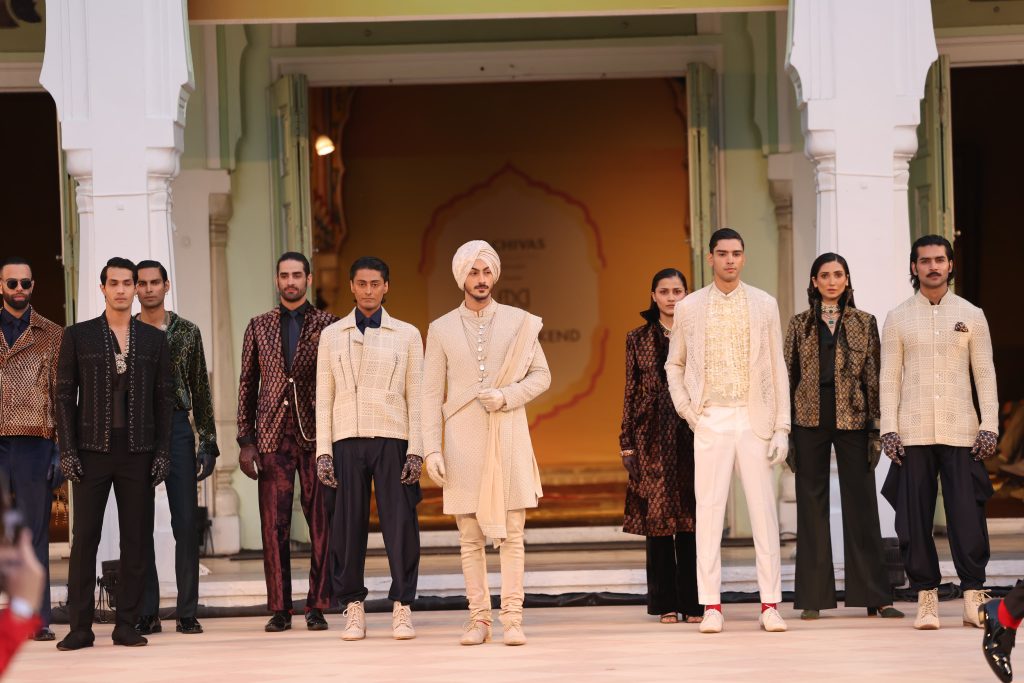
Arjan Dugal’s line ‘Vintage 2030’ combines modern design engineering with traditional Japanese motifs, as zardosi and florals become the hero at Chivas Luxe Collective Perfumes presents FDCI India Men’s Weekend 2025 at Diggi Palace, Jaipur. By Asmita Aggarwal He kind of worked both sides of the fashion spectrum — his father’s export house, his mother’s love for textiles and indigenous crafts. Maybe that’s what makes Arjan Dugal so confident about his menswear line he launched ten years ago. Son of the country’s leading supermodel of the 90s Simar Dugal, who died battling cancer, Arjan was just 28. After studying economics and finance in Dallas, US, and a remote fashion course from Parson’s School of Fashion, he decided to foray into this unpredictable world. His father’s work made him adept at stitching, pattern cutting with the best ateliers in Spain and Italy. He designed for Tommy Hilfiger, Ted Baker, Pepe Jeans, Pedro to Claudia Strater. The imposing frescos painted sunshine yellow, the chandeliers almost 200 years old once maybe lit with candles in 1860 when it was built. The stained glass windows, Persian carpets, bevy of boys, with golden hair clips and bulging biceps (not beer biceps thankfully), came in skirts, as the maharaja of yesteryear’s black and white portrait hung above watching the show unfold. Arjan’s love music and pops of red playing peek a boo from ankle length pants, were cool. So were the brocade breeches! He was trying to tell us through his charming reds — you can wear all white and yet add fun, and make it light. For a reality check, he worked as a store keeper for his mom, checking colour fastness to sizing in her Indian wear line. October 2014, he took a giant leap of faith, went solo, this year he completed 10 years in the business. The beauty of the Arjan Dugal label is his ability to combine design engineering with subtle crafts. His mom’s love for Jamavar, Baghs, Kalamkaris to Phulkaris, as she was a collector, he places along with sequins, and his beloved dori embroidery. Add to this mix a smattering of Persian influences, including zardozi. His father who earlier headed Apollo Leather, before he began the export house, taught him how to work with horse tail hair, silicon tapes, dextrously employ embroidery on leather, as well as foiling, and with this he always makes textiles the showstoppers. Being an avid golfer, Argan, felt dressing well became his idiom, thus his first line was from Ajrakhpur, combined with Mashru, a capsule collection. Kind of a bridge between luxe designer wear and FabIndia — that was his ideology. His experiments with Chintz, linen, Chanderi and silks on menswear helped him understand that new-age men like experimentation, but in pieces, not as a whole. “I felt as I am a millennial no one in my generation really appreciates the beauty of textiles, I wanted to give them an interesting mix—ajrakh with leather in a tailored look. Not the usual red pocket square, bandhgala and breeches,” he smiles. As women are more aware, spoilt for choice, they want their husbands to follow suit, as they can’t be ‘mismatched’. India is a country of festivals and celebrations — from Durga pooja to Chhaat and Karwa Chauth, shopping is always festive. “I follow the 80 X 20 principle, while crafting an ensemble – first will be an austere self-on-self and the rest a striking contrast,” he says. Printed lining is his USP, plus built in pocket squares, which you can see in his couture line for men at the Chivas Luxe Collective Perfumes presents FDCI India Men’s Weekend 2025 at Diggi Palace, Jaipur. “Kora work on organza, brocade underlay, hand stitched seams, insides and piping give each ensemble a unique look. We work a lot with organza, emblazoned with Dori embroidery,” he adds, saying his mother’s memory is of him being more of a sibling less of a child. As she was just 23 when she had him, he would accompany her to various fashion shows. Of course, this equation changed, when they diagnosed her with the illness, in her last three years, he became the caretaker. “I realised I must cope with the pair of cards that life deals you, can’t choose or plus and minus. I found my soulmate in a lawyer, who stood by me in my toughest days,” he admits. ‘Vintage 2030’ is his line, where zardozi and florals play with Japanese motifs on organza. “I have taken elements from the past, given them an entirely new treatment. Our logo is the gramophone, as it resonated with me. I have a sleek designed one at home, where I play my vinyl records, plug it in and you get the same vivacity of sound as the 50s one,” he confirms. Curiosity made him seek crafts from other cultures whether it was Shibori or Uzbeki ikat which was fascinating as it is woven from silk velvet threads. “My mom said to me ‘Arjan you are my legacy’, those words still ring in my heart,” he concludes.
Fervent Tribute to Bal

FDCI and Blenders Pride pay a befitting homage to Gudda, with 100 showstoppers, friends, family and in this beautiful story, an emotional Sonam Kapoor. By Asmita Aggarwal What happens when you have more than 100 showstoppers paying tribute to the man, and the myth, who left behind an unparalleled legacy? Rohit Bal when he was alive and when he passed on to the next world, always had a full house! Blenders Pride with the Fashion Design Council of India, presented an homage, a show curated by Chairman Sunil Sethi, with people whose life Gudda irrevocably touched, not just with his sense of style, but warmth and candour. Known for his abundant-skirts, crinkled, extravagant pieces resembling the vibrant life he lived, Bal’s friends, and family turned up in droves, to relive his magic in fashion, through his blooming roses on voluminous monochromes. Designer Ashish Soni dressed in a pleated, butter-coloured Bal, reminding us of classic whirling dervishes’ aesthetics, smiled, “I knew him since he was 15, it’s a huge void he has left in fashion.” The ramp was decorated with chinar leaves, a memory that Bal often recounted growing up in Kashmir, his motherland, till he was 17, moving to the capital to find his way in a world that was still nascent; as the first NIFT has just opened, serendipitously timed with his foray. He studied at the prestigious St Stephen’s College, through his velvet boleros with Kashmiri embroidery, crinkled kurtas, he courted an India, which was ready to consume fashion-post liberalisation. It was the Circa 1992, foreign brands still could not enter our country, FDI in retail hadn’t been approved, which in a way was great, as it nurtured homegrown labels. At Le Meridien hotel, with over 600 guests, the night was a sea of black, with of course a robust bloom…the eponymous poppy, pleasing chrysanthemums roses, lotus (on the painted stage), they kept making fleeting appearances on his delightful tunics. Designer Raghavendra Rathore, remembers how Gudda was his “extended family”. When he came to Delhi he was guided by where to buy German shoulder pads, the Palika Bazar in the early 90s, how they all cut patterns for common fashion friends on the floor. “Gudda was exceptionally unique, most focused, and gave me direction. My earliest memory of him was helping me during my first show in Jodhpur, 1994—he negotiated fittings and models. It was all new for me, Gudda took it on himself to be there, more importantly help—twirls he asked the girls to do were phenomenal. He had a generous way to offload wisdom, he was most unique. I just stood afar and watched the whole thing,” adds Raghavendra. Bal was forward thinking, and understood, it doesn’t matter which royal family you belong to, as long as you have talent—fashion then was the purest community, everyone wanted to help each other—in the 90s. His iconic show in 1994, was historic, he used muslin (cheese cloth, which had then no relevance to the luxury segment) inspired by the Taj Mahal, held at Hauz Khas. It was the dawn of Indian fashion, where he created kurtas for men; he had the power to push unique thoughts. Femina, First City magazines of that era lusciously picked it up and made it an anthem. Soon one saw Katra market churning out his flower motifs, he was the original leader of the pack! His references from the Calico Museum, you can see in his heritage silhouettes, how much he picked up on old patterns, elevated and recognised them. Khadi too—seriously, he was brought back into the “It world” way back in 2000. Signs of being ahead of the game were always omnipresent—he knew recognising the future was daunting, and required a big change. At the Saturday showcasing in Delhi, Kashmiri live songs, complete with traditional musical instruments set the rhythm. Rezon’s Kalyani Chawla opened in a crinkled tangerine dress, closely followed by model-turned lenswoman Sheetal Malhar. The roses were bold and bright in the starry night, and models wore desi gulab, another one of Bal’s favourites, that hung from their nimble wrists, as embroidered parrots danced on sleek branches, revving up sherwanis. From choreographer Prasad Bidapa, in a necklace, lithe shawl to Vidyun Singh and Asha Kochhar, as graceful as ever in white sari, to Varun Bahl in an embroidered floral tunic, it was all heart. Some decided to just dance, as filmmaker Madhur Bhandarkar known to have modelled many characters from the style world in his blockbuster “Fashion” couldn’t keep away. Bal’s proteges, Pankaj-Nidhi, who trained under him and got married, to Jenjum Gadi and Sahil Kochhar, Dhruv Vaish, Anjali Kalia, to Countrymade’s Sushant Abrol, made sure they paid their respects. The “Page 3” world came in full throttle –Priya Sachdev in pink and gotta, filmmaker Mozes Singh certainly knows how to preen, to Laxmi Rana and Sonalika who made sure Bal’s love for volume was celebrated. The coup was getting 80s supermodel Shymolie Varma, she had walked for Pierre Cardin, moved to Paris, to work with Yves Saint Laurent, Chanel, Karl Lagerfeld, Max Mara, the half-Bengali, Punjabi and English model danced. Interestingly, Bal’s driver, his clothes man Rajinder, and best sales person Akriti at his boutique were included in the homage on the runway. Former model Inder Bajwa to actor Muzzamil Ibraham and boxer Vijendra Singh wowed in Singh is King glittering dress, complete with an eagle motif. The entire Bal family was well represented along with the former Chief Minister of Meghalaya Mukul Sagma, and leading Indian cardiologist and Chairman of Interventional Cardiology at Medanta Medicity, Dr Pravin Chandra. Model and actor Rahul Dev and his partner Mugdha Godse have many engaging stories about the legend. Rahul first met him at the most happening nightclub in Delhi, Ghungroo at Maurya Sheraton. Bal was accompanied by the frontrunner of style, Rohit Khosla. “I met him with my late wife Rina—his long, flowing golden locks caught my attention,” says Rahul. Vimal ads were huge in the 80s and 90s—(big
In Fine Print
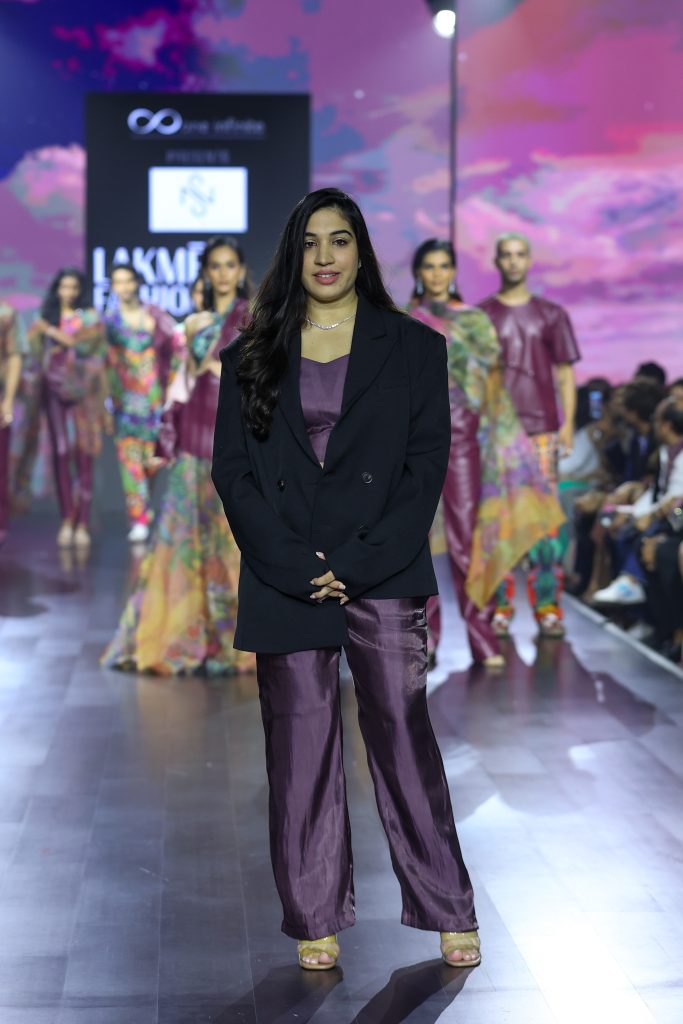
From Picasso, to Banksy and Mr Brainwash, Salita Nanda reinterprets art pieces through her unique rendering of hand illustrated prints in satiny draped dresses. By Asmita Aggarwal Born and raised in London, Salita Nanda studied at the London College of Fashion, University of the Arts, and then further honed her skills at Domus Academy in pattern making. The Indian community in the UK was vibrant, she decided to launch her brand in 2014, later moved to Mumbai after she met her investment banker husband. Known for 3 D printing, and selective laser centering a technique which accentuates conceptual prints, Nanda combined this with hand painting and illustrating original artworks, in the ready-to-wear line. “Growing up, I observed my mother loving all types of fabrics. She understood how to convert them into stylish clothing herself. We would go to different suppliers with her, that’s when I knew clothes would be something that I would do in the future, of course, in my own interesting way,” she smiles. Even though Nanda belongs to a family which is into construction from Pune, her father took the road less travelled and started the food exports industry in the UK. There was a void in the UK, in custom-made occasion wear, she teamed up with her mother, winning a clientele from Mumbai to Dubai and UK. “Prints are our signature, colorful and fun, most of the time they are inspired by artists,” she says. Some years ago, it was Picasso and his painting Les Demoiselles d’Avignon (The Young Ladies of Avignon, originally titled The Brothel of Avignon) from 1907 by the Spanish artist now part of the Museum of Modern Art, New York. “The angular, unusual body shapes, some Egyptian, African, and Asian styles were converted into paintings. Each of the five women were represented with symbols we handmade and broke down the colour ways, adding gradations,” she says. Art has been a recurring leitmotif in her collections as she was fascinated by graffiti street artist Bansky known for his political statements and also his protégé Mr Brainwash or Thierry Guetta, a French-born Los Angeles–based street artist. He reworks popular imagery as well as some from Jeff Koon’s steel balloon animals and Banksy’s ‘Throwing Man’, in a playful manner. “Mr Brainwash has designed album covers for Madonna’s Celebration, and Red-Hot Chili Peppers I’m With You, among others,” she adds. She is searching for an Indian artist she can immortalise with her artworks reinterpreting them uniquely. Satins, organza, crepes, on flowy silhouettes, and drapes gives each piece unmatched fluidity. “There is a song that has been playing in my head. It is about the sky. It is a 60s song, vintage but represented through the hues of what we see when we look above,” she says. It is not your typical blue—but yellows, pinks, and flaming orange, to depict changing seasons and ties of the day. “This year we have spray painted and also used watercolours mixing it with hand illustrations,” she explains.
“Embroidery is our DNA,” says Ashdeen
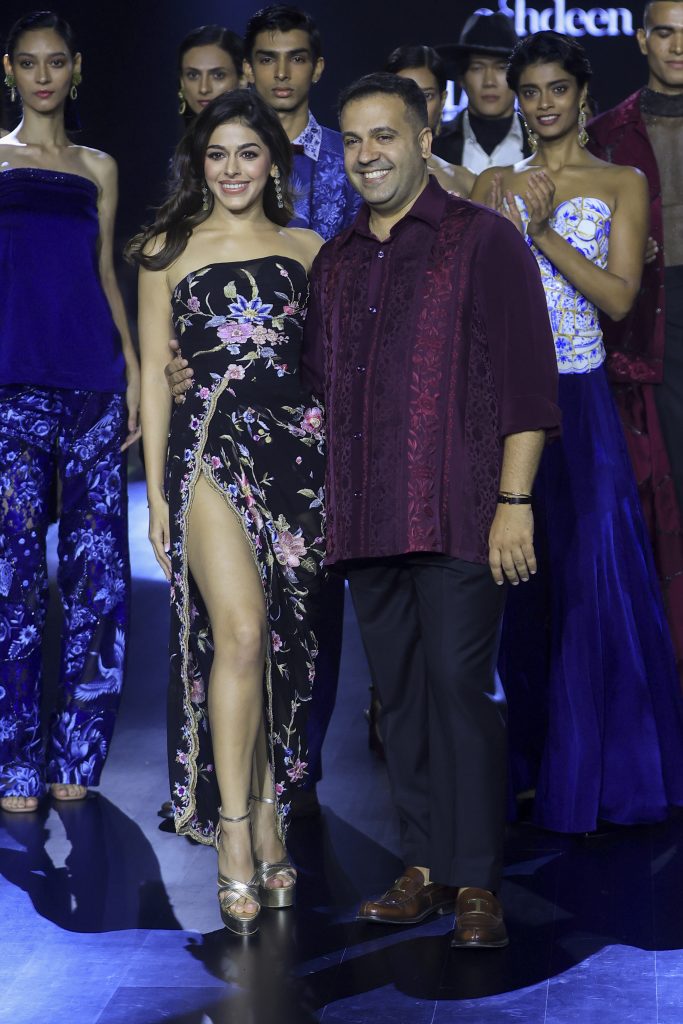
Dutch artist Patrick Bergsma and his broken ceramic pottery where bonsai grows is where Ashdeen found his stimuli, though his simple shapes complement the complex needlework techniques he uses to offer modern jackets. By Asmita Aggarwal Ashdeen Z. Lilaowala is a trained textile designer from the National Institute of Design, Ahmedabad (2002), with almost 22 years in this space, he decided to embark on a journey to really understand embroidery—2012 was when he decided to anchor the ship, launched his label. For a country which can’t get enough of embroidery, in any form, Ashdeen seems to have made the right choice, the only differentiator is, he doesn’t go where everyone has been, he uses these delicate age-old techniques on shapes and styles to serenade a younger audience, like his competition Patine. Growing up in Mumbai to a Parsi, working class parents, he was encouraged seeing his older sister study fashion design, and decided to follow her footsteps, at 17, he joined NID. Worked with NGOs, export houses, wrote extensively for magazines, his label was a result of providence, not premeditated. Ashdeen was working with a company in Los Angeles, used to import embroideries to America, till one day he made a Parsi gara for a friend, there was no looking back, he had found his market, from word-of-mouth. His experience was in-depth, working in the backend, he understood processes, techniques, markets, finance, how to run a business, and grew faster even though he started “late”. “I did my own shoots styling, wrote my press notes, it was a 360-degree learning, to know every aspect of the business,” he says. Twelve years in the business, with three stores (Mumbai, Delhi, and Hyderabad), Ashdeen believes embroidery is no longer a cultural aspect, it is all encompassing—you can wear a brocade jumpsuit, Parsi gara jacket or Kanjeevaram skirt. “Embroidery is part of our DNA, there is a new appreciation for it, consumers are ready to pay the price for the effort/labour intensive techniques. Honestly, 80 percent of my clientele is not Parsi, even though we have a dwindling population in India,” he admits. Parsis began trading with China in the early 17 century and saw these heavily embroidered pieces, they decided to bring it to India, Mumbai became a thriving centre. “Embroidery attained a new identity, it was Oriental, they adapted it for themselves—the jabla, wearing it, grew within the community. Trade blossomed, women kept the pieces, to be passed down to the next generation,” he explains. This year —birds, cranes, flora and fauna, chrysanthemums, peonies, roses will bloom on the LFW X FDCI Ashdeen line, almost looking like you are “painting with a needle”, inspired by the works of a Belgian artist, who creates magic with broken ceramic, letting a plant grow inside, almost giving you an image of an imposing floral arrangement. “Raised in a family of antique dealers, Patrick Bergsma was surrounded by art – using bonsai trees and using them in broken vessels, the visuals struck me,” says Ashdeen. It seemed as if fragments of time had been pieced together, almost like kintsugi, which he has attempted to portray in patchwork, without the Bollywood glam, simple shapes. Social media has put in so much pressure, how do you show classic ensembles, each piece is a labour of love, craftsmanship, so much consumption on Insta, how do we slow down? It is the question that plagues him. “It takes almost six weeks to make one piece,” he says, adding, “it is heavy on research, then polishing and finishing takes time. But I do feel this is where I find my creative stimuli. If I didn’t design, I would be a travel researcher and photographer,” he grins.
Builder’s daughter Monisha Jaising constructs ‘bling’
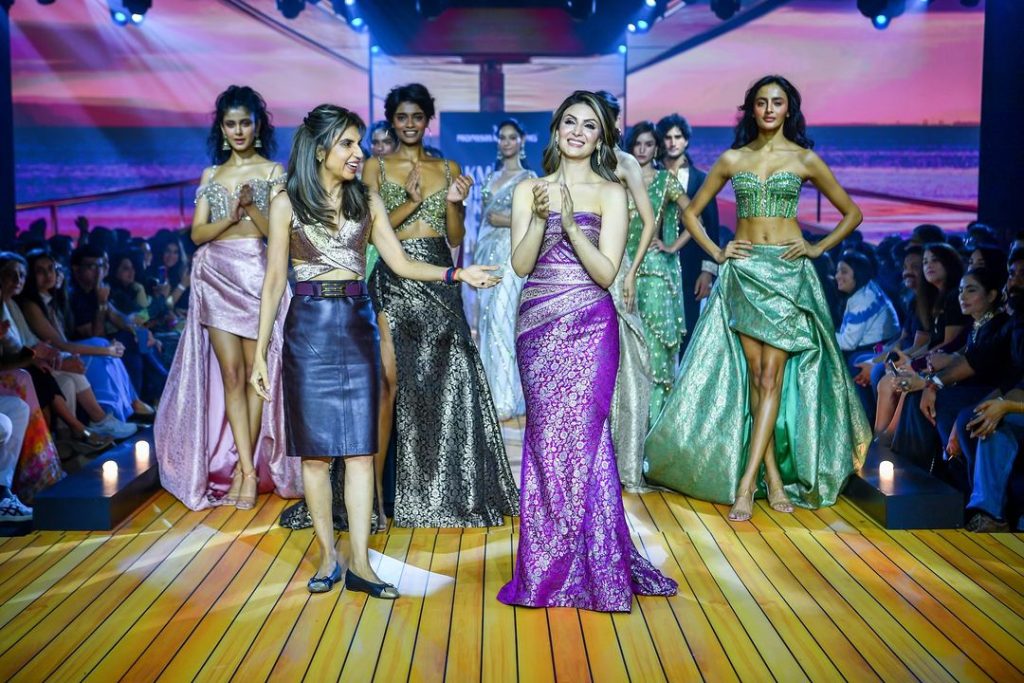
35 years in style business, the doyen believes, her biggest contribution has been keeping alive classic Indian ethos. By Asmita Aggarwal Her father was one of the biggest builders in Mumbai, specially the Bandra area, though he taught at the London School of Economics for many years too. Narain Bhojwani and Monisha Jaising share a common love for architecture, and interiors, even though fashion was her ultimate choice. The inventor of the ubiquitous kurti, (like the LBD) a multipurpose garment 35 years ago, Monisha felt it was Indian yet global-you could team it with jeans, skirt, dhoti, palazzos. It was kind of channeling Boho chic, a mix of what she learnt at the Royal College of Art, UK and her Indian heritage. She admits there have been more high points, than low ones in her career, her collaboration with star daughter —Shweta Bachchan, making jerseys for Mumbai Indians, “creativity gives me happiness”. Even though she faced recession, commercially sometimes things don’t do well, she believes “it happens in all businesses you can’t lose your bounce”. Her biggest contribution to fashion over three decades has been the modern woman, even the youth to live and like classic clothing, keeping Indian spirit alive! Some years ago, she paired her laser cut lehenga with a plain white knotted T-shirt, telling us you don’t need a bustier or a choli, this can work too! “Don’t think about building a brand, even if you don’t have your own, start working, gain experience. Look at Maria Grazia Chiuri, Nicolas Ghesquiere or even Sara Burton, they all worked for huge luxury labels,” she adds. There is a world of difference from the time she began, to now, no one understood why “fashion” when she began. There had to be education and awareness, “we had to convince and educate people, it was tough to get jobs, easier to open our own labels,” she explains. “Retail is booming in India, we had to tell customers, we are selling ‘fashion’, not ‘ready-made clothing’ there is a fine distinction between both,” she laughs. Social media has altered the psyche of buying, it has its pros and cons—you can either leave your brains on the table, or indulge in serious marketing tactics. Earlier we would spend a lot on marketing, editorials, and TV ads, “Instagram has finished all that—you can put out what you want in your own voice,” she says, “it has democratized the business—a fresh graduate has the same tools as me to expand her business.” Monisha over the years, hasn’t lost her sense of humour and giggles, “A young woman today will wear whatever her mother will tell her not to, she definitely wants innovation as she is able to see the world with a tap on her phone. How people dress –Pondicherry to Turkey,” she adds. Now is the era of mix and match—top from Zara, trousers from Fashion Street, you can put it together ingeniously, you look affluent. “I live in Bandra, I see young college going girls every day, who may not be as widely travelled, the way they swish their sunglasses, hipster jeans looks like they know it all, this is due to the information tornado on social media,” she admits. After almost four years, Monisha is back in Delhi for LFW X FDCI, she confesses laidback styles and her love for bling is eternal, MJ’s clothes can be worn anywhere. “Fashion degree always helps, you can be a designer even if you don’t have one, but learning is faster,” she adds. Co-Ord sets, blazers and of course the kurti have been her defining offerings to the Indian style-scape, “I love shine, but I use it judiciously, control it,” she admits. Besides, fashion, her love for spaces comes from her father, diversification does not interest her, but if given an opportunity she would have started a design college. “Fashion is ever evolving, I loved how glamour was edgy in Oscar de la Renta’s rendition of luxury, stylists have really upped the ante,” she adds. Sometimes they help sell, to customers who trust their judgement more, “homegrown labels may not have the knowledge of how to present that’s where stylists come in and change the entire perspective.”
80% feeling, 20% aesthetic sells a garment: Dhruv Kapoor
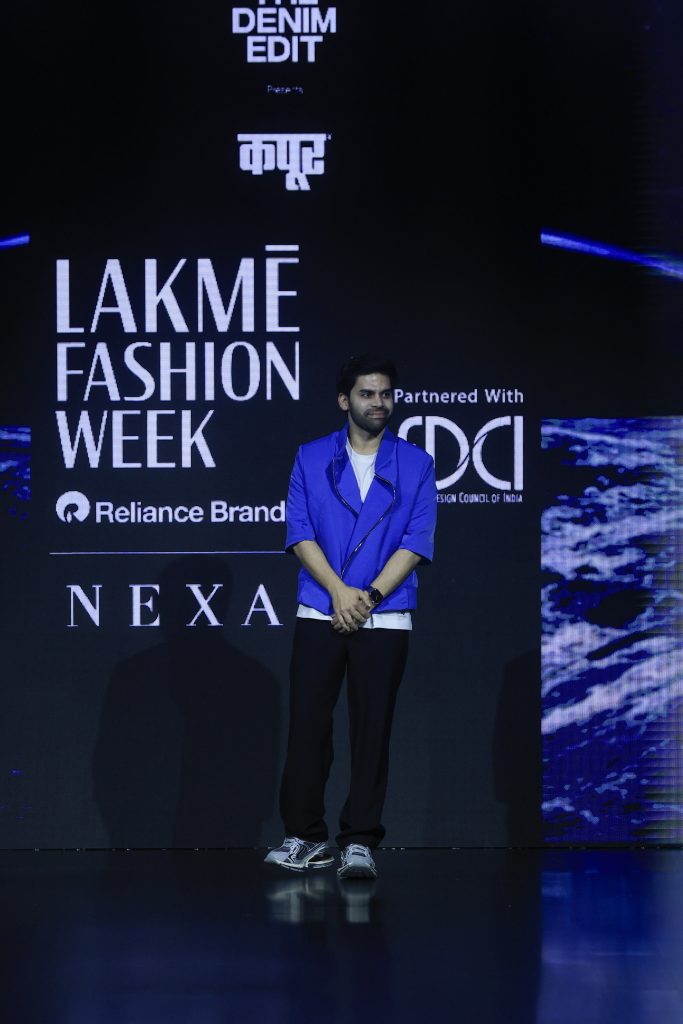
Dhruv Kapoor brings his PSS (print, surface and silhouette) tastes to the Denim Edit by FDCI, at LFW as he handpaints, laminates, embroiders the versatile fabric. By Asmita Aggarwal He is a regular at Milan Fashion Week, and his 10-year-old brand, was nominated earlier for the International Woolmark Prize, but Dhruv Kapoor is undoubtedly a favourite among the swish set. His hybrid blazers, balloon vests, Indian Devanagari bold type phases for branding, t shirts that announce “I dreamt we spoke again” or “We were lovers in the past life”, he also handcrafts leather, mixes it with crochet to create totes. Kapoor denim sometimes comes with little teddies embroidered sitting quietly probably waiting to be picked up, or his interstellar shirts, cargo jeans, stamped hoodies, the whole perspective is young and almost irreverent. While in Milan he worked with Etro, where the family-owned business of the Italian label Gerolamo Etro introduced the paisley pattern—various forms and hues and their variations, it is the house’s signature design. Maybe from here he found his love for Gilets—though Kapoor does them in his own ways—sometimes in denims with a lot of zippers included for a futuristic feel. His forte remains denim, handcrafted, and if you look closely there is toy flower jackets, hand beaded, 3 D detailing and this also won him the Vogue India Fashion Fund in 2015. The Istituto Marangoni and NIFT Delhi educated designer, says, “Denim has been one of the brand staples since the beginning. We enjoy exploring diverse options that would help us enhance or uplift its appearance or natural properties. Denim seamlessly fits in every season,” he says. If you go through his e-commerce site it has three categories—man, woman and unisex and most photoshoots are done with models wearing oversized glasses— he seems to have a kind of obsession for them! And interestingly the bags are named “Seeker” almost Rs 50,000 seems tough to be sought! Participating at the FDCI Denim Edit, for the FDCIX LFW he has fused multiple formats in diverse configurations — raw, laminated, washed, embroidered, or painted. Interestingly each version performs differently. His aim is always to minimize waste and adopt circular practices. The design process would ideally meld old and discarded with new and innovative. “We annually release an upcycled collection that is built from leftover scrap and discarded items across multiple categories,” he admits. Kapoor signature has been printing, silhouette and surface, over the last decade, he has mastered the approach and perfected the details inside and out. However, it is essential to keep evolving season after season by learning from the previous seasons. “We are always exploring, adopting new technologies and techniques to update our process,” he explains. “What I read and the mix of cultures that I grew up in- always influences our design process. Literature addresses ancient legends or science from the Vedas, even some protopian fantasies. It is always a combination of diverse cultures through a blend of information coming from multiple eras blended to make them more relatable to the current system,” he explains about his love for books. With designers making a foray into the international markets through Paris and Milan fashion weeks, Dhruv believes the latter has been an exciting part of both the brand and his personal journey. He admits one always learns from the environment that surrounds us, Milan boasts a healthy and forward one, especially in the field of fashion, design and lifestyle. “From my understanding- the consumer is the same globally. It is 80% of the feeling and emotion a garment would generate and 20% of the aesthetic. We give in to how it would make us feel over simply how it looks. The only thing that changes is the climate and cultural impact of that region on the consumer choices- which are easy to implement and modify one product into multiple versions. But overall, they are all the same- they want the same things and all they want is to feel good,” he confesses. Denim remains such an enduring staple in every one’s wardrobe, Dhruv attributes this to its versatility that helps you blend two polar worlds of formality and everyday wear. Anything denim would always last long and work round the year. “I personally enjoy all versions of denim, my favourite a total denim looks in a sober enzyme wash,” he adds. There are no weaknesses or challenges but all learnings, in life. “My biggest learning personally and professionally is being patient- especially between two seasons and to let the creative process pass through the creative blocks peacefully, by diverting our attention into fine tuning the process during that time rather than getting frustrated. My strength is my team- their commitment, loyalty, and the countless hours they put into the brand is something I am very grateful for,” he concludes.