
Blue blooded fit by Countrymade
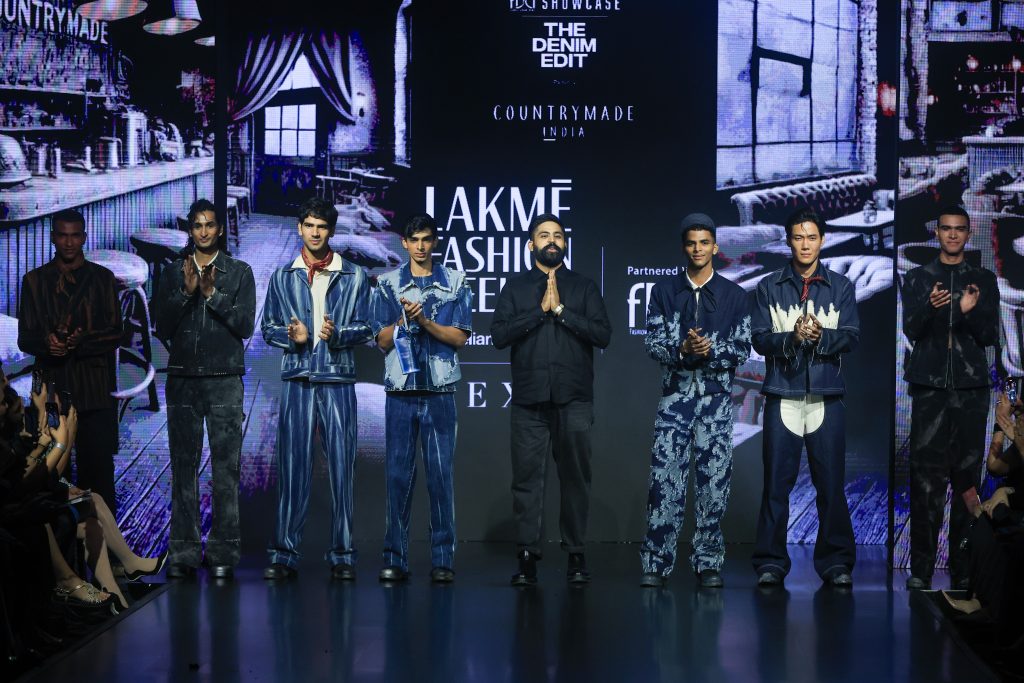
Every setback in life kind of teaches us, for Sushant it was his brother’s sudden demise, he used the pain to pay homage to his memory keeping it alive each year. At the FDCI Denim Edit he gives the resilience of denim an interesting twist with hand painted leather. By Asmita Aggarwal It was a happy surprise to be part of the FDCI Denim Edit for Sushant Abrol, Countrymade, and a perfect fit as 50 per cent of his collection for a recent Paris trade show was crafted out of this sturdy material. “Trail Dust” conjures images of a dust cloud you leave behind, while driving on rugged terrain, it seemed to be in sync with what Abrol has been doing for the last five years-a sort of continuation. Thus, the dust cloud is an analogy of the essence of our journey, a bit like how with our travels we bring back memories. Denim for the show has been captured in its rawness, as it exudes resilience, much like the sole of shoes we wear, which get worn out, or our jeans which wrinkle over time, the fabric folds, crumples, these are the effects given by Abrol to show the veracity of time. “We don’t embroider tigers or leopards, or sequin birds, thus crumpling is our embroidery,” he smiles, adding, “lines play a very crucial role in denim—cracked, folds, we have worked with selvage denim, 100 percent cotton, we do not use stretch. Denim is inherently strong, and can play with many techniques, experiment, unlike something like Chanderi which may tear if put under pressure-as it’s delicate.” The label started as an homage to his older brother who passed away in 2019- Squadron Leader Samir Abrol died during a training sortie in a fighter jet crash. Abrol studied from NIFT, Mohali, in 2010, he wanted to join the armed forces passed the entrance for the Service Selection Board (SSB) but was not selected after the group discussion. His brother wanted him to start his own label, he was a class topper, but his life was cut short. The label never forgets him—somewhere Abrol keeps his aura alive. Though he is not showcasing it, he has a line of denim ecru, unwashed, with patchwork, camouflaging, applique, his signature looks along with frayed denim, in tandem with his military inspirations, a signature. The fraying for him depicts the journey of the “aged soldier” coming back from war brimming with experiences—the hues rang from black, indigo, and navy, screen prints of dust particles, splattered, bullion knots stitched unevenly-it was a show that brought out the concept together beautifully. “In menswear structure gives confidence, we add artisanal techniques, to make it interesting, but denim is no longer casual. We have constructed blazers, almost making it semi-formal, you can wear it for an intimate evening out,” he confirms. This season he has Safari suits, vests with leather accents, hand painted leather, which has already been picked up by stores in the Netherlands and Beverly Hills, US. The beauty of a Countrymade show is its music—which is written by Abrol himself, this time inspired by an Irish pub song, titled “Rocky Road to Dublin” by the High Kings. It became an anthem for workers who after a hard day’s work unwind singing about their day. Writing poetry, he has added all his collections names till now, almost ten, (Homecoming, Band of Brothers, No Man’s Land et al) in the song and composed it in the Irish lyrical style. “The idea is to enjoy the moment, also celebrating the perseverance of not giving up, to come up every six months with collections,” he concludes.
“I wanted to dress like my father,” Pranav Mishra
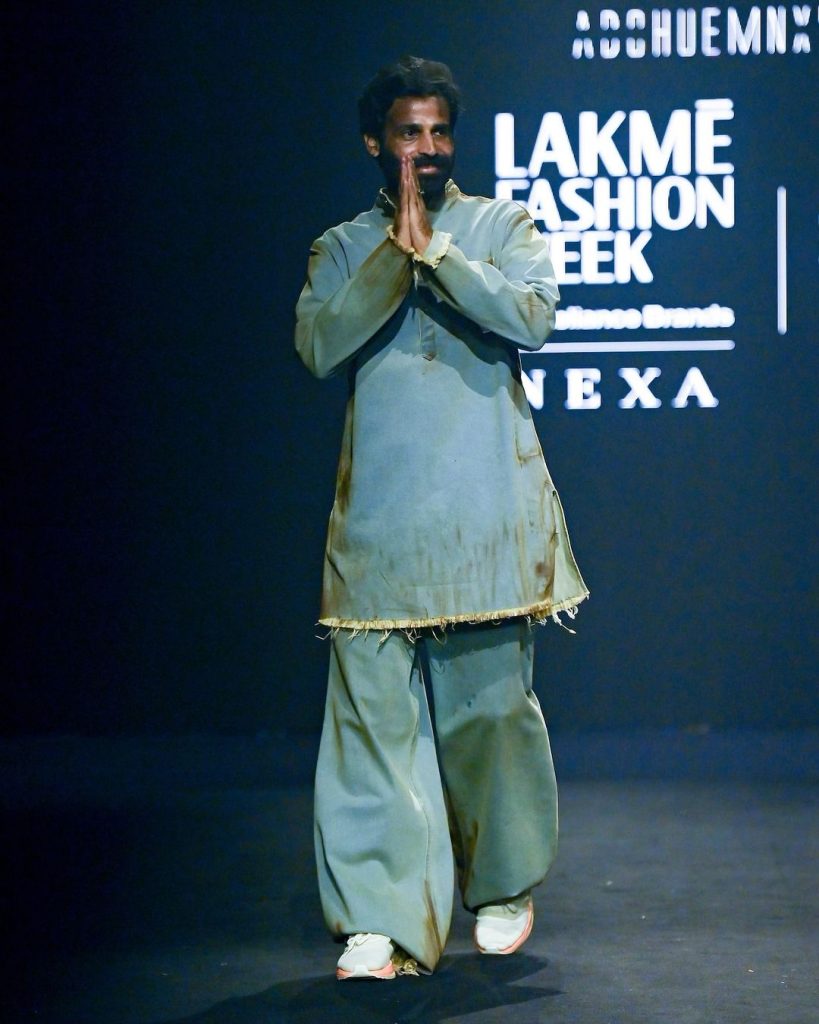
Huemn may be his alter ego, but the designer behind it calls himself a storyteller, who loves the possibilities of what denim can do; this season, he takes on a new journey by recycling creating invigorating landscapes in his anti-fit everything. By Asmita Aggarwal There is a huge conundrum between Pranav Mishra, the poet, and fashion designer of the rebellious brand Huemn, even though he says rather vociferously, he doesn’t identify with the latter. He has, in every interview, been repeatedly saying that creation is an “accidental process”, he only mirrors what he sees around him. Any poem, film or even collection, a creative entity comes alive when like a “child you let it go”, he doesn’t fit his oeuvre into a box of mood boards or theme, leaves it free-flowing. “It is a spontaneous process, just like I write phrases,” says Pranav. It is 12 years of the label, he started with Shyama Shetty, NIFT graduates, who now has taken over a different role—of a mother, wife though the Thailand-basen designer remains a stakeholder as well as advisor to Huemn. Pranav is not fazed by her absence, in fact he believes she is “omnipresent”. Fashion has changed though, “earlier there were many ‘gatekeepers’, Covid has altered the fabric, internet rules, and passion helps,” he explains. Diversification is the key, he admits Huemn was one of the first few to show sneakers on the catwalk way back in 2013, “we didn’t see our clothes being paired with uncomfortable shoes.” Lays was his most recent collaboration (they also tied up with Balenciaga last year), then Royal Enfield and Pepsi (which earlier associated with Alexander Wang). “It was interesting to work with corporates, understand how they think, as well as design something other than clothing,” he confesses. The result is you get more disciplined with any partnership, also it’s an opportunity to reach out to a newer audience. The only difference he sees when he works in fashion is the pace, which gets accelerated, as you are building something, “it’s a two-way street, someone is going to buy your product, I feel a sense of urgency to create a market,” he smiles. But when he is writing poetry, no sale is involved. No filter, just him and words, it’s free, the audience can like or discard it, it doesn’t matter even if he is trolled. He has loved literature, especially mid-19th century writers, but Rainer Maria Rilke, Austrian poet has been most impactful in his life. “Can’t be friends with them, would have liked to, they are gone, but the only way to establish a relationship is to bond through their writings. It is like talking to my friends, four out of five will engage, one will just observe,” he laughs, adding, “Rilke mentally stimulates me, just like Charles Bukowski was a German-American poet.” He “shook” Pranav, the more he read, the more desperate he got to learn, and his design is an amalgamation of what he personally encountered in life. “I can’t say my collections are inspired by butterflies or Turkey, we don’t interpret, we allow the audience to deduce and feel,” he admits. This year for LFWX FDC, he has tied up with RRelan, sustainable, recycled fabrics were used, also in some ways limiting him, even though the brand is popular for its avant-garde denim, especially the hand made one launched in 2022, with a seven-step wash, to give textures, leaving you to wonder if it is a print? He doesn’t believe in machine-made, thus his blood-plasma textures look alive, surfaces excite him, landscapes are a favourite, which he also did in his Kashmir line, a few years ago. Endless scrolling on the internet has created a bigger appetite for fashion, design now, he says is a part of our lifestyle, everyday life is now an “occasion”. If you want to watch a film, you want to look good, it’s not just about dressing up for a friend’s wedding. “You won’t wear a lehenga for a concert, you will try a denim, nicely cut, we fill that vacuum,” he says. He agrees rather candidly, “he had to work on himself”. The entrepreneurial journey humbled him, “we can’t do things alone, team is important, there is no hand holding, each one contributes and is a stakeholder, I have lost my arrogance,” he confides. “I’m a storyteller, not a fashion designer, objective till today is not to create clothes. Only when we have something to say we show at LFW, after two years we are back on the catwalk,” he says. His first encounter with fashion was watching his late father, a published poet, dressed in crisp, white kurtas in the city of nawabs-Lucknow, “I wanted to be as sophisticated as him, soft spoken, funny and magnetic, I often debated how I should drape my shawl like him,” he concludes.
Luck doesn’t help, focus does: Payal
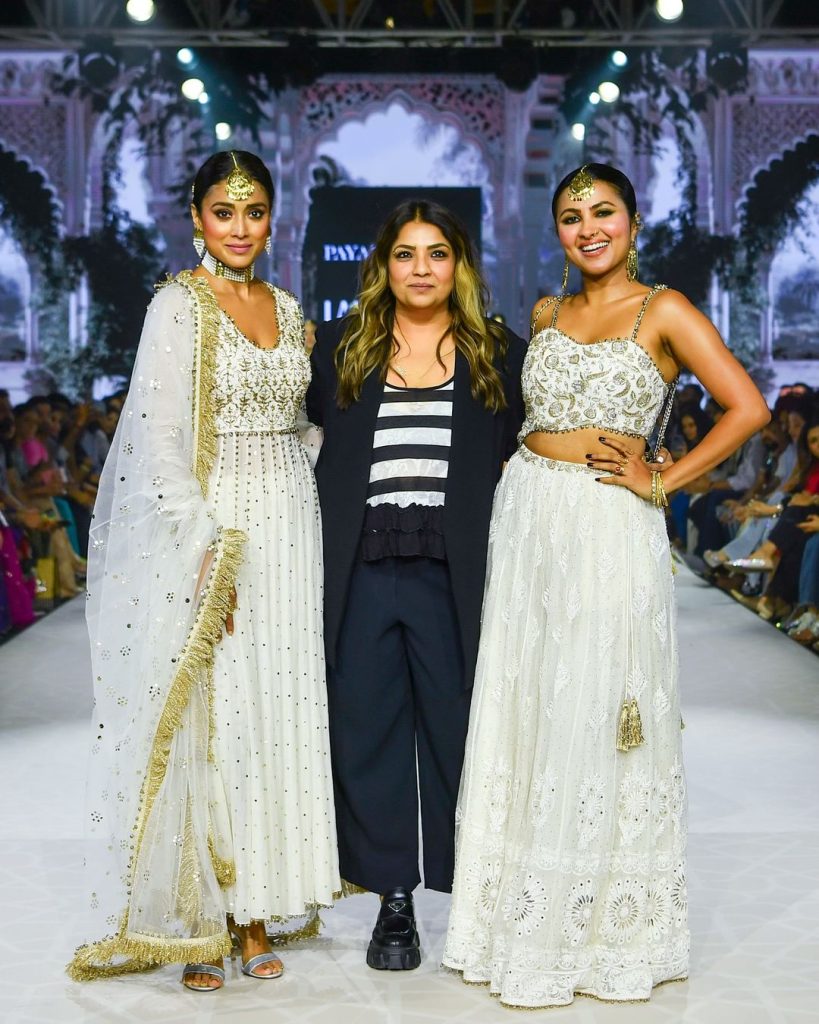
From her backless cholis to Aishwarya Rai wearing her award-winning Anarkali, Payal Singhal in 25 years of business has been consistent leaving theatrics to greenhorns, adopting practicality for survival. By Asmita Aggarwal Payal Singhal completes 25 years in the business of fashion, and if there is one designer who truly understands finances, it is the Mumbai-based guru of the “backless choli”. Her latest collaboration has been with the American sneaker company End State, that unfortunately could not be launched in India (due to laws changing) but is being sold in the US for $250. Designing the kicks with Stephanie Howard, ex-Nike designer, Payal says technology is the future as this one comes armed with a 3-chip futuristic approach. It is NFC based, interestingly they reached out to her, seeing her fan following (earlier they have collaborated with artists and musicians). “The shoe was a crossover between the East and West, June it was launched in the US, now sold online,” says Payal adding, it was inspired by Adivasi tattoos and she added her signature mukaish work, trying not to make it too Indian but global. You add brushed gold to this and you have a unisex sneaker. That’s not all. She has associated with Coach, also Namrata Lodha for hats inspired by the wheat farmers in Madhya Pradesh, she makes a line of kids wear, home, jewellery, resort wear as well as menswear, her portfolio is large and impressive. When she looks back, it is only resilience that helped stay afloat, keeping her head down and working, admitting “my career is not based on the luck factor” but a gradual graph upwards. She has survived covid, demonetisation, GST, and bad markets only to learn from those upheavals. “Innovation is the core of my brand; you cannot stick to a formula and make it work. I get bored easily, I need to be creative with my craft,” she adds. Twenty-five years is a long time to survive in the industry, when she started making Indo-Western with backless kurtas, to add sensuality, clients asked her “where is the back?” From 20-year-olds her customers, who spend more money than brides, Payal each season looks for excitement and freshness abandoning the complacency that comes with success. This year like always, there will be hallmark pieces—prints, fusion of art and architecture, shapes deconstructed and you cannot term her prints quirky or pretty. The backless choli remains her clients go to, and thus has been copied extensively too, the tasselling work added a new dimension to it several years ago when she started. “Luckily, I didn’t make any big errors, went slow, and sustained even during covid. We are self-funded, but tangibility and freedom helped us,” she adds. Payal has been a conservative businesswoman, never wanted to show off, flew under the radar, didn’t plan on opening a 10,000 feet store, when you visit her stores, “it is like having a chat with friends, not imposing or intimidating”. In 2005, she had a store in New York, which she shut down, even though she is the queen of collabs, she hasn’t ventured into the already crowded beauty segment, but came close to doing it. At 47, there is clarity of vision, every piece she wants to channel functionality and comfort. “Clothes should not be fussy, but easy, and clean, so repeatable. I always tell myself keep your eye on the prize, focus always works, and do not be in a hurry,” she adds. The LFW XFDCI line is a subtle nod to the 25 years, the first outfit showcased was the one she made, and won, for being the youngest designer in a Shopper’s Stop competition she took part in. “I was 15 years old, it was a national contest, the katarva cotton weave with a shadow effect won me the honour. Aishwarya Rai Bachchan has worn the winning Anarkali, I remember,” she laughs. There is nostalgia in the show, subtle panels of zardozi in gold, silver, and black, Mughal motifs. “My dad was an exporter and the biggest lesson he gave me was practicality,” she adds. Though Payal has no appetite for theatrics, “storytelling is important but I have done it without it,” she grins. The line is just in time for the festive season — extensive gotta-patti, creamy whites, tone on tone, ghungroos for embellishment!
“Armani taught me to be me,” says Ankur of Til
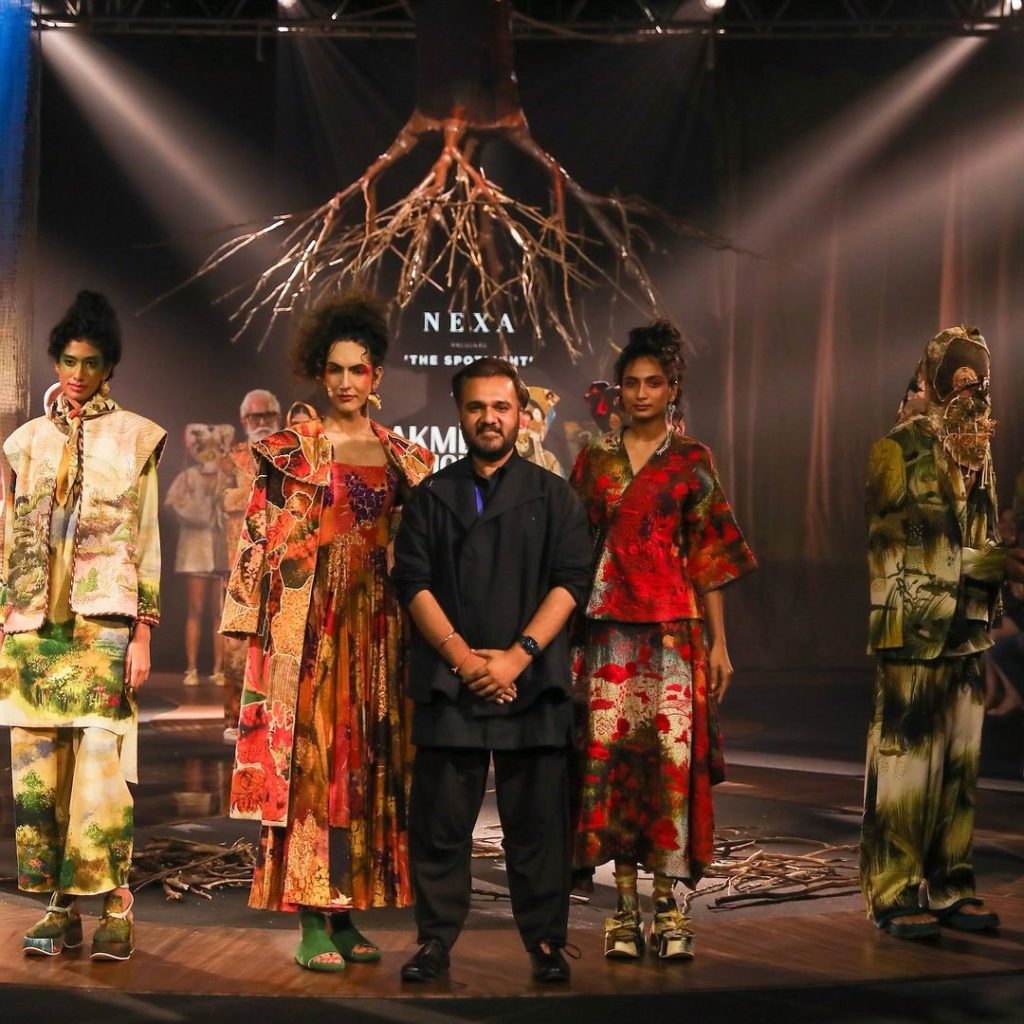
Whether it was working with Armani or Bottega Veneta, even Sabyasachi, Ankur believes good design is instinctive, that’s why his latest line for LFWX FDCI is experimental, comfortable and inclusive. By Asmita Aggarwal He lost his grandmother, whom he was closest to in the family during Covid, she would always tell Ankur Verma, who grew up in Chandini Chowk, that of you have a til (mole) on your hand, you will always have money, this stayed with him, thus the name of his label. It is also the moniker for Till We Meet Again (TIL). Ankur was creative, doodling, decided to study leather design at NIFT Kolkata, then Domus Academy, Milan, Masters in Fashion & Accessories, as well as fashion management from London College of Fashion, though his focus has been body textures—freckles, wrinkles to folds, which he reinterprets through prints. The highlight of his journey was working with Armani, in Italy, though what changed his life was winning an opportunity to learn from Bottega Veneta, the only Asian to have cracked the competition in collaboration with Università Iuav di Venezia (IUAV University), Venice. It was the year 2017, the six months he spent at the headquarters of the famed luxury brand in Montebello, Vicenza, understanding simplicity of the intrecciato (braiding) technique, honesty of approach, were principles he still applies to his design process. “I had worked with Sabyasachi Mukherjee who is a maximalist, at Bottega I learnt how to cut it all down, making things austere but effective,” he laughs. Ankur confesses growing up in the narrow bylanes of Chandini Chowk, he was a “very filmi boy” used to paint, indulge in clay sculptures, very inquisitive, decided when he was a tween, he wanted international experience. It was the year “Band, Baja, Baraat” a show was aired, on TV, only two designers are known in Kolkata-Anamika Khanna and Sabya. He pursued Sabya, went unannounced to an Aza event, the designer seeing his enthusiasm invited him to his office the next day, and hired him, noticing his undiluted passion without asking for his portfolio. Sabya taught him artisanal strengths, embroideries, dyeing techniques, worked on the Buckingham Palace, London project with him, designed 1,000 hairbands, embroidered niftily, bangles, mostly accessories, in 2012, upcycling along the way. His first encounter with fashion was watching Ram Leela in Chandini Chowk, where he fell in love with how actress Raveena Tandon dressed in diaphanous saris, (he watched her sway in “Tip Tip Barsa Paani” from the film Mohra) he realised, “It is not about clothes, it is how you carry them—the sari magically transformed her,” he smiles. This year for LFWXFDCI, the show has real people on the catwalk, inclusive, experimental but always comfortable shapes, play of textures, thread work to zardozi, patchwork to upcycle waste. He had added Chanderis, hand spun cottons, and indulged in layering, offering separates, making each ensemble versatile and individualistic. The vibe is green, blues, olives, and earthy tones, “as young designers we restrict ourselves always looking for a winning formula, we try to be commercial, fearful of experimentation,” he admits, saying he launched his brand three years ago, took a big risk decided not to do any motifs. His constant admiration comes from the Skin Museum in Amsterdam, by Gunther von Hagens’ titled “Body Worlds”, it chronicles how happiness impacts our minds and then body. It is a kind of Surrealist approach, which he mirrors in his line, showcasing palms, and body hair through textures. But this theatricality comes from his participating in plays, at the National School of Drama, performing with greats like Naseer-ud-din Shah, Ashish Vidyarthi at the kamani Auditorium. He even got admission into the College of Art, but left it to pursue design. Ankur is a keen learner and says every nook and corner of his life, he has been like a sponge, he still remembers what he learnt at Armani, when he worked on a line of shirts in 2016, “was to be ‘me’, they kept me grounded and taught me to tell my story, be original,” he concludes.
A & T celebrate inconsistencies
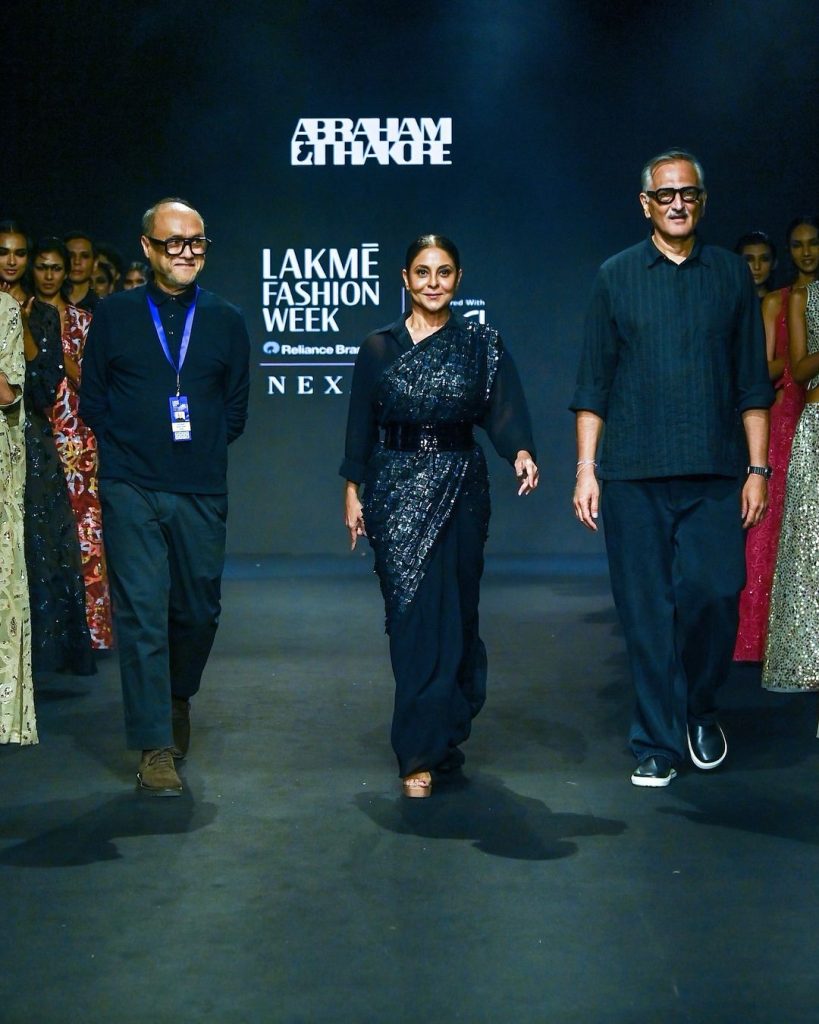
Discarded cassette tapes, toffee wrappers, bin bags are now RTW and make for new-age embellishment, as the trio Thakore, Abraham and Nigli tell us “What we buy and how we buy” is of brevity at their LFWXFDCI show. By Asmita Aggarwal Shefali Shah is a thinking actress, chooses her roles, is known for plain-speak and this authenticity of thought has won her a legion of followers. Just like A and T she is a natural, thus a perfect show stopper at the LFWxFDCI showcasing on Day 2. Three seems to be the lucky number for David Abraham, Rakesh Thakore and Kevin Nigli even though the third member is often a silent partner. The NID, Ahmedabad educated designers have seen the trials and tribulations of an industry from its infancy, maybe that makes them more resolute to doing what they do. Their leitmotif began with pursuing textile and has this season moved on to celebrating discarded materials—very Japanese in their thinking—using broken, damaged pieces to create something brand new. “The idea of using traditional craft, techniques or reinventing materials in new and unexpected ways that are both modern and now has been the concept this year,” says Thakore. Unspooled cassette tapes are woven into organza, chip wrappers are now knee-length dresses with laser-cut sequins which you will never know is from X-rays and believe it or not cement sacks are refashioned as evening gowns. That’s not all gunny bags, toffee wrappers, bin bags, kitchen foil and rice sacks can now be worn for your next lunch date! While working with discarded materials key is employing innovative techniques to give them a new avatar, but it can be limiting as the raw material is not chosen but procured. “We have used various found materials from cement sacks, X-rays, old cassette tapes and plastic shopping bags. The challenge was getting them cut into shapes that could be used for embroidery or to embroider onto fabric,” says Abraham. David Abraham as creative director decides the general theme for the season, Rakesh Thakore works on colour palettes and woven fabric. Kevin Nigli oversees merchandising and production. “While we generally agree on most things, if there is a difference in opinion then popular vote counts! It has been 30 years almost so it has worked with each one finding their spaces,” smiles Nigli. After three decades in the business of fashion has it changed for the better? They believe it has grown enormously from a single boutique like Ensemble to many multi brand outlets today. “From a handful of designers to a vast fashion community, from traditional bridal wear to a huge choice of ready-to-wear… and from a miniscule market share to a large consumer segment that is aware and wants to consume fashion,” says Thakore. Sustainability is today an “abused” word and do consumers really understand it, even though there is rampant greenwashing. They agree, “sustainability is over used, the very concept of fashion is not sustainable in the fact, it demands constant change every season.” What is important, they say is to consume mindfully, “what we buy and how we buy. If we want to be sustainable then we need to invest in clothes with a longer shelf life, be willing to pay more or things that have value, can last,” adds Abraham. Often called the masters of minimalism, more lovers of everything natural, ingrained in our culture and ideology, they believe in minimalism in that less is more, “that you can speak without having to shout, that the extra sequin may not be that necessary.” They love anything done by hand, especially block printing and Ikat, their signature. “We have explored that over the years and constantly try to push the boundaries on these. In a world of mass consumerism, true luxury is small quantities done with the power of the human hand. It celebrates its inconsistencies as something beautiful rather than a fault,” says Thakore. Their biggest weakness they confide, they did not also learn business management, which is a whole different thing to the purely creative process, ultimately no matter how beautiful something is it must be marketed and sold eventually. “The fleeting trend buyer, hopefully he will grow up and become a customer eventually,” they say in unison.
Greenwashing is rampant in fashion: Drishti
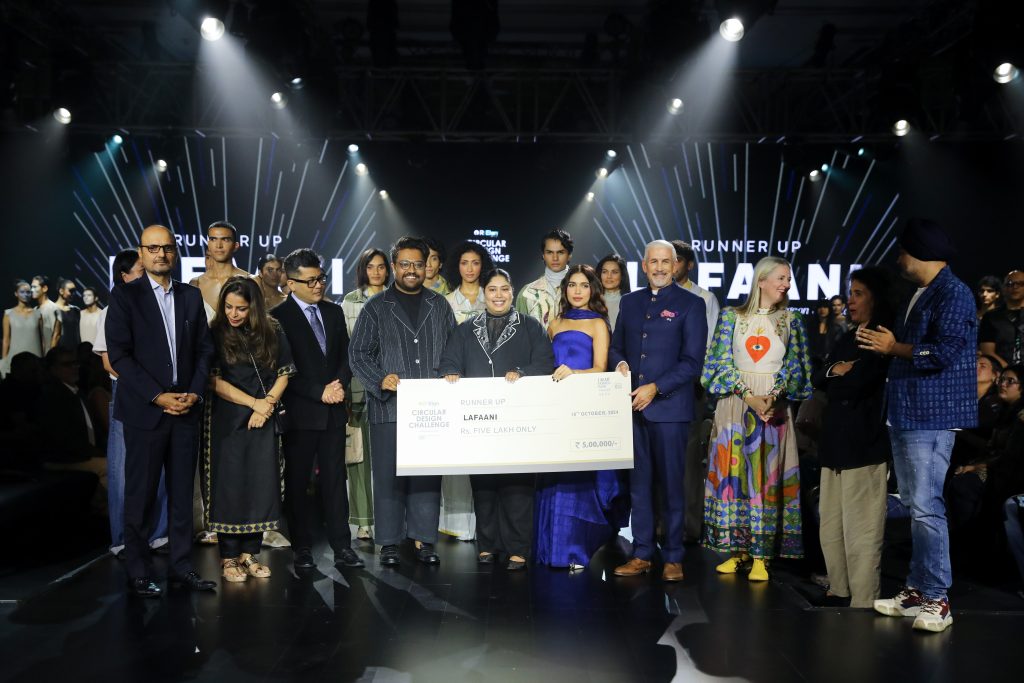
Drishti Modi and Rashmick Bose of Lafaani, CDC runner ups, bring circularity through unrestricted shapes, kala cotton and their love for repurposing. By Asmita Aggarwal She is a big movie buff, so the brand name is a result of binge-watching cinema, although alternate, thus Lafaani, was picked from the dialogue of Vishal Bharadwaj’s Haider, starring Shahid Kapoor, (the dialogue goes, “Rooh Lafaani”). “Lafaani is an Urdu word which means immortality—immortalizing artisans and making a product last a lifetime, transcending trends is what we hope to achieve through our brand,” says Drishti Modi. They won Rs 5 lakh as award money at the Circular Design Challenge in association with United Nations, as runner’s up. Modi is well-educated, maybe not in design, but at Teri School of Advanced Studies, she completed masters in environmental studies and resource management, though she did a short certificate course from NIFT later in business of fashion. Drishti met her brand partner, Rashmick Bose in Teri and they both decided to launch the label in 2021. Growing up in North India, the initiation to sustainable fashion was from childhood when she saw her mother and grandmother being judicious. “I grew up in Pune, Delhi, and Mumbai, I was always fascinated with craft and textiles. My size fluctuated, and I would often not get clothes that fit me well. I had to choose from one rack, I decided I must design clothes for women like me,” she smiles. Drishti, started by repurposing her mother’s saris, she married her academic training with her passion. Working with craft communities, cotton farmers she understood what she really wanted to do in life during Covid. “Bose joined me, he comes from Bengal which is a treasure trove of crafts, we try to bring what sustainability means in a global context,” she adds. His first exposure to craft was a baby blanket that was made by his grandmother in Kantha, they realized they had synergy in aesthetics. “I have no connection to fashion, don’t come from a design background, I had to build an eco-system—it was challenging,” she admits. Her mentor has been her father, who used to work with monster.com earlier, left to work in the social impact space. “He has been an angel investor and mentor for me,” she says. For LFW X FDCI she has worked with kala cotton, hand crafted embroidery, and reached out to a company in Mumbai which recycles flowers waste from Haji Ali and Siddhivinayak temple. They combined this with eco-printing, and hand painting on ensembles which are layered, minimal everyday pieces, multifunctional and adaptable. “Reversibility gives you freedom to wear it two ways. Our aim is to fight greenwashing by many labels that persist in the fashion space, a consumer is unaware about it. Buyers do not really understand sustainability, like kala cotton does not have certification, it is important to prove it, bring value to things,” she confesses. The move forward is strengthening their story, she says circularity is in her DNA, it’s deeply embedded, she hopes more consumers watch what they buy and are curious about who is making it and how it is made.
Bill Clinton told us to be at MOMA: Gautam Malik
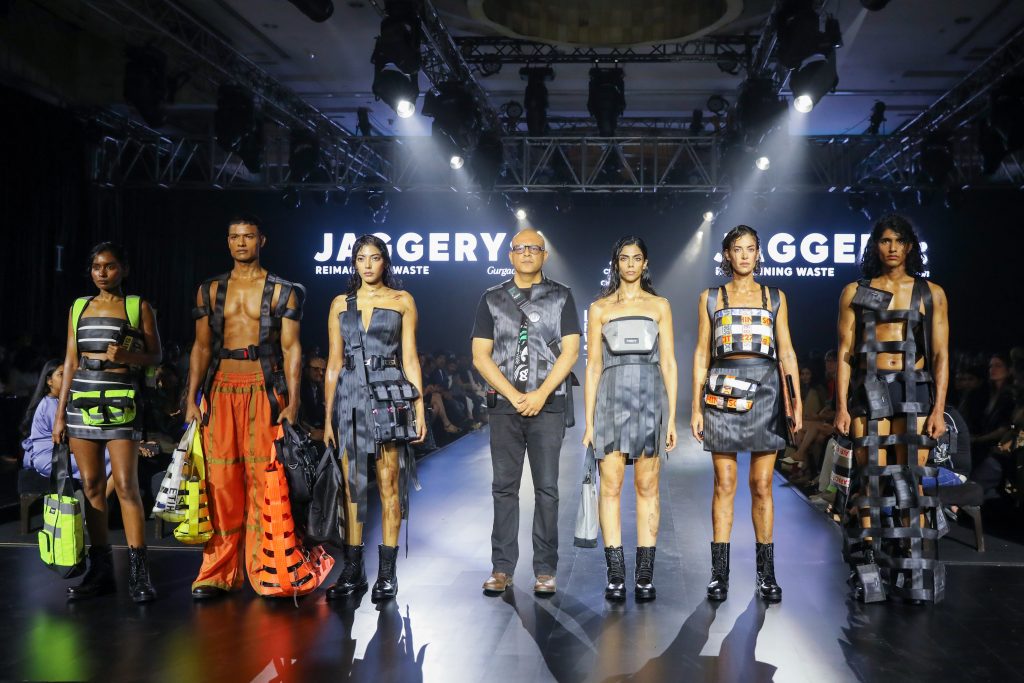
Making bags out of discarded seat belts, the JNU kid, who grew up with a father who taught quantum physics is today building a sustainable community one gilet at a time with his brand Jaggery. If Apple can sell electronics, why can’t jaggery sell bags? By Asmita Aggarwal Former US President Bill Clinton met him at the New York Fashion Week, recently concluded, and told Gautam Malik of the label sustainable Jaggery, that one day he hopes to see his products at Museum of Art (MOMA), New York, the store invites purpose-driven makers. So, the passionate entrepreneur went unannounced to MOMA and pitched his sustainable bags and ensembles, even though onboarding is online. Meet the social innovator, Gautam Malik part of the Circular Design Challenge in partnership with United Nations. You would never imagine a Jawaharlal Nehru University kid delving into fashion—it is not impossible but it is unprecedented. Malik’s parents are both professors—his dad taught quantum physics in JNU and mom super conductivity in Delhi University. It was surprising he chose to study fine arts and media studies from University at Buffalo University, and then Memphis University where he studied communication design. He says, whatever he learnt, he is applying to what he is doing today—whether it is documentary filmmaking, storytelling to making bags out of waste at Jaggery–Reimagining Waste, a women-led social enterprise. They upcycle discarded car seat belts, decommissioned cargo belts and ex-army canvas into sustainable products. “Since 2018, we have been able to divert 2400+ tons of waste from the landfills of Delhi, impacting the lives of 25,000 people,” he adds. His childhood sweetheart Bhawana Dandona, (University of Pennsylvania M.Sc in historic preservation) who worked in conservation of old buildings, found a meeting point in ideas. “We discussed structuralism, cultural heritage, and I loved jamming with her. When I returned from the US in 2010, I worked in the corporate sector in UA/UX design in India after ten years of living in America,” says Gautam. His experience is vast—Time Turner to Jabong, e-commerce designer, the creative head also launched a fashion magazine, but he calls himself a “social innovator”, someone who wants to impact society. In the year 2000, he got a chance to intern at Auroville, Pondicherry, where people from different nationalities have renounced their citizenship, are living as a community, he then decided he wanted to build one too, thus Jaggery. They work in Haryana to Jharkhand mostly with “aspirational districts”, most importantly with Nuh, known for its political tensions. “How do you decide who to work with?” he asks. “Jaggery” or “repurpose” the toss-up was there for the name of the brand, the former fitted in—-as while making jaggery nothing goes to waste; it is produced in small batches, the process is thus humanised, it leaves behind a witty flavour. If Apple can sell electronics why can’t jaggery sell bags?” he laughs. Growing up simply he went to Modern School, found a huge inequality in terms of social status, he would get Rs 25 weekly allowance, he learnt to live in that, JNU is in his DNA. “I had to come back from the US, as I saw India was the hot bed of startups, also living in the US you never feel part of it,” he admits. For LFWXFDCI he is donning a fashion designer’s hat creating bags and garments from repurposed car and airplane seat belts (cars which are 15 years old must be scrapped, according to government policy). This creates enormous waste—they use the rubber, roof lining, seat belts, residue, and have come up with a system wherein many NGOs (also Mayapuri car scrappers) are helping them source it. “We tie up with RWAS like we did in Gurgaon where we are based to start donation drives—you can give your old denims and corduroys and we will spin them into a new designer ensemble,” he admits. He believes in co-creating and partnerships, with Volvo Jaggery does corporate gifting, Tata any car scrapped they can utilise, they ask them to replace cardboard box boxes for Diwali sweets with recyclable bags, their new work is with EVs. “Earlier vendors would fleece us asking for money for things that are waste, they would just throw. They thought we are using it for profit, now they understand many years later what we are doing,” he adds. He faced many challenges, even how workers they would hire, when he would inform they are working with discarded materials, “why can’t we work with new ones? They would say. The bags he makes are sold at Embassy fairs like the US and Austrian as well as Dastkar though he knows the sword is always dangling for this bootstrapped company. “We never know when we will fold, we want to partner people who understand what work we do, it is a dual impact model. Waste is recycled, it is circular, creates jobs, we create a value chain. It’s an ethos-based brand,” he adds. You can get a wallet for Rs 750, and a duffel bag for Rs 7,000. “Also on offer are bespoke products, cargo belts come in different colours, we customise you can choose British, Qatar or Singapore Airlines, play around with the sequence. I started with just one employee Shahid bhai, now we are nine in total,” he says. FDCIXLFW line of garments are risqué-jackets, gilets, reinterpreting the Nehru jacket, corsets, and asymmetrical skirts. The philosophy is gender agnostic pieces, like the caged maxi dress it’s avant-garde but with an industrial vibe. “Society cages us, this is breaking free for me,” he concludes.
Batik has unique monotones: Madhumita
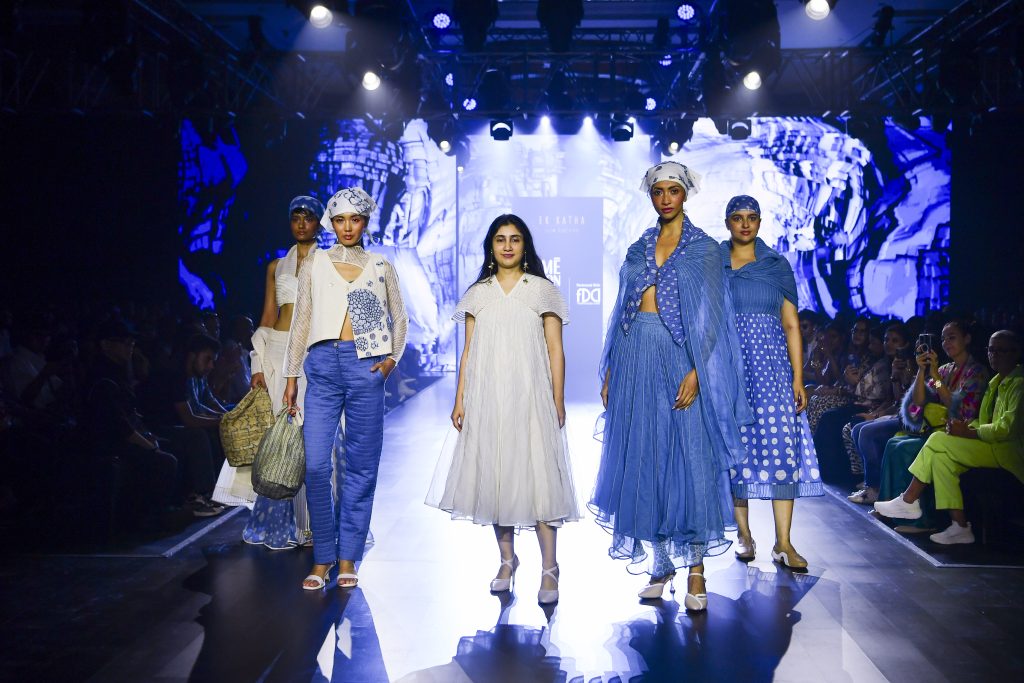
Working with Batik master craftsman Shakil Khatri for the last ten years in Gujarat, to revive the 1000-year-old tradition using vegetable dyes, Madhumita Nath of Ek Katha hopes to serenade a young audience with reimagined crafts. By Asmita Aggarwal She studied textiles at NIFT Mumbai and JJ School of Art, the Mumbai-raised, Nagpur-born Madhumita Nath of the label Ek Katha took time to launch her label. She came from a renowned family of science mavericks, with her grandfather Prof. M. C. Nath, moving from Dhaka to India, setting up the Biochemistry institute, in 1946, Nagpur. Most family members are Ph.Ds, so when she decided to study textiles, it was met with “surprise.” 2016, was the year when she decided she would like to concentrate on Kutch weavers, she sought advice from mentor Kudeep Gadwi, who took her to meet artisans exposing her to lesser-known jewels like Batik from Mundra, Gujarat. The “khakan” is made locally, earlier they used oil of a seed, not paraffin wax to dye, but now only four families are left out of hundreds who have abandoned this process, six in the adjoining village— digital printing killed traditional art. “You can make digitals in Rs 15 to Rs 30 per meter, which ends up in Dadar market, it is quick. Ancient techniques, 1,000 years old, have a subtle layering, the beauty of it has been erased due to bulk digital prints. Batik used vegetable dyes, chemical- free, laborious, painstaking but excellent,” says Madhumita. Master craftsman Shakil Khatri’s family has been batik block printing for six generations, using oil of the pilu tree (Salvadora persica), locally known as kakhan, as a resist. As it is thick and sensitive to heat—the oil can only be used in the morning. Kutch batik left natural dyes shifted to naphthol-based ones, but Shakil sticks to sustainable processes, he makes 12 shades of natural colours from indigo, rust iron, turmeric, pomegranate skin, madder and onion after he was trained at the Kala Raksha, in innovative ways. He gave life to Batik with new designs, artisans in Batik Kutch are Khatris, Kutchi-speaking Muslims. “Khatri didn’t give up block making, his gradations due to the layering is unmatched,” says Nath, who in 2018, made a line for the Sustainable fashion day in Spain with The Circular Project. “I am not a businesswoman, when Covid struck, I shut shop for two years,” she says. Providence gave her an amazing opportunity to learn from an incubator program for women entrepreneurs, NSRCEL, started by the Indian Institute of Management, Bangalore, in 2023. IIM (Bangalore) has partnered with Goldman Sachs, Capgemini and Maruti also. “I received helpful inputs on the financial aspects of running a business, for six months through the management institute. It was a learning to see where I belong, how to survive when you do slow fashion, meet investors, pitch in front of them,” she adds. Apparel Export Promotion Council (AEPC) membership helped her figure out how small batches of hand-made can be exported to the US and the Middle-East. “I wanted to do something craft-based, but I am not a sustainability warrior,” she admits, as she worked with kala cotton, reducing carbon footprints with hand-made techniques. “I love crafts, bazaars, haats, seeing lots of stuff stacked up, and the beauty of Batik is that it is monotone, unique in so many wonderful ways,” she adds. Generally, she admits, Gujarat is often associated with colourful embroidery. “I did start with Ajrakh, but soon shifted to Batik, Kala cotton is not glamorous, but I know North Indians will be hesitant, but the Japanese will buy it at any price, as they know its value. When you can get a heavily embroidered piece for Rs 10,000 anywhere, why would anyone but pure, natural, plain fabrics? Many don’t realise the artistry,” she confesses. For LFWXFDCI, Nath has combined Batik with fabric cording, using khadi and kala cotton from Bengal, also paying homage to Kota Doria, adding delicate, subtle textures to create flowy shapes. Her love for patchwork, cutwork and quilting used in abundance can be seen, without serenading waist defining silhouettes, yet the line is young in appeal. “I would like to do B2B exports in the future —I know I have to build my capacity first,” she concludes.
CDC winner’s clothes with a conscience
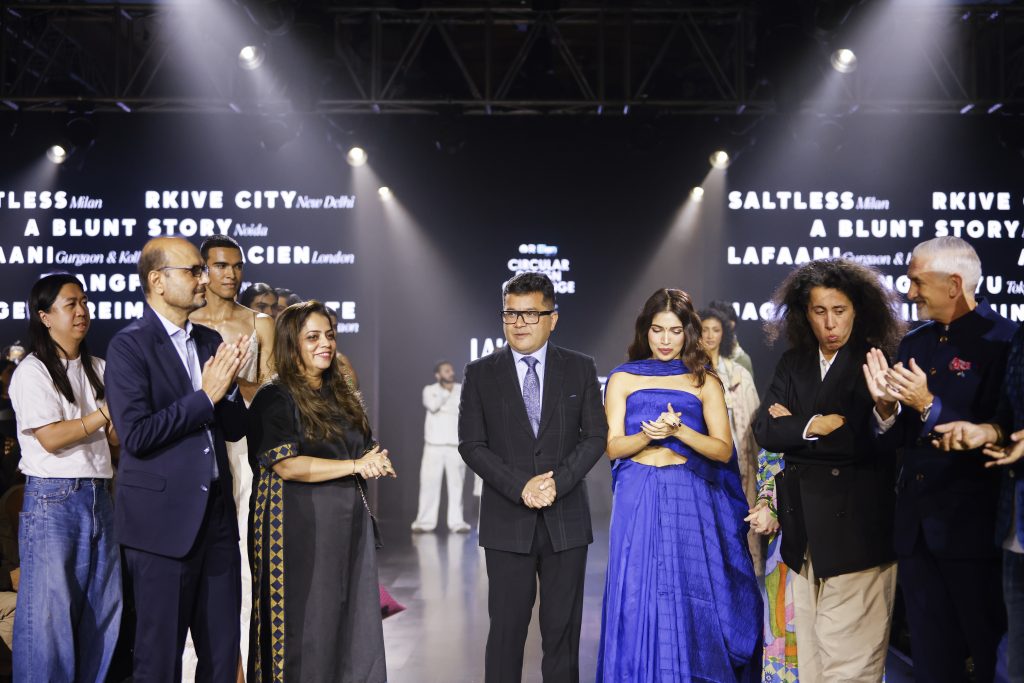
Life took a turn for the better from seeing his grandfather’s dyeing unit polluting, to now only dealing with second hand garments, reconstructing them into new shapes, Ritwik Khanna, 25, of Rkive City is a force to reckon with. By Asmita Aggarwal This generation is something else—they really know what they want to do, and one thing is certain, they want to work for themselves. Thus, talking to the Amritsar-born Ritwik Khanna of Rkive City, only 25, was refreshing. He won the Circular Design Challenge in partnership with the United Nations and Rs 15 lakhs fund at the LFW x FDCI show His grandfather had a textile mill, the dyeing house, he noticed, no one ever really cared about the environment, the water was contaminated due to the chemicals dumped in it. At that time, he was not aware of its toxicity, it was not treated. The business shut down, his parents began weaving cashmere scarves, his earliest memory is of sitting on the shop floor packaging, as there were not enough employees for an SOS order. His mom used to run a children’s boutique, often dressed Ritwik in boys’ and girls’ clothes to show customers how it would look on their kids, his trips to Sadar Bazar to buy material were a lesson. As serendipity would have it —life took a 360 degree turn when he left to study fashion business management at FIT, New York. Though Mayo School, had exposed him to seven different types of uniforms he would change in a day to keep up with the strict regimen —in a way it was universalizing design. “Whatever I had grown up seeing, New York was different. I remember having a conversation with my roomie about fashion, when he suddenly stopped, and started talking to a random stranger on the road about his Supreme t-shirt. He knew the price, which year it was launched, graphics, its entire history. This took me by surprise, it was not my culture,” he laughs. He giggles and reveals his fashion was “USPA chinos”. At FIT everyone looked “cool”, they really dressed the part, and trying to keep up, all Khanna could afford was second-hand designer jeans. “In India we don’t like wearing ‘worn before’ stuff, in America it’s a classic trend. I saw the quality was good and began running a small business,” he shares. He would flip Comme des Garcons, Rick Owens second-hand stuff he would buy for almost nothing, and make a 300 percent profit selling it on eBay. He began rolling in moolah, accidently, he did not need the business degree he was already adept at. But he did come back, without completing his course. Covid hit, and education through a computer did not make sense, spending US $25,000. On his return, he visited second hand clothes collection centres in Panipat and Kandla Gujarat, and wondered what happens to torn, damaged clothes, discarded clothes—they are shipped to India. Panipat is known as the world’s “cast off capital”, tonnes of clothes come from UK, US, and other countries, from the port town of Kandla, Gujarat they are popularly known as “mutilated” clothing. Ritwik was alarmed at the kind of “stink that emerges from the factories”. “Only ten per cent of this is recycled, I decided to work with discarded waste, consumer textile, we were able to use old garments, and create something brand new,” he says. Though he does admit unlike in fashion where you get to choose the finest silks and dupions here you work with limitations, as there is no roll of fabric, or colours or any frills–just your imagination. He is happy in the last 22 months he has managed to make a small impact on the environment. His label questions existing supply chains, he is remanufacturing garments, he sorts out the garments at his factory—white shirts, camouflage, old jeans, then the processes begin—sanitising, reconstructing, it is an end-to-end solution, as a brand. “The hardest thing in garment upcycling is consistency, each piece is different, now two pieces are alike,” he says, adding, he elevates the androgynous ensembles with touches of hand embroidery, patchwork, applique, his power lies in the way he crafts them; they do not seem upcycled– he lets the natural fading persist. His brother, 21, has joined his business, he is the operations manager, a “Genius”, he calls him, both sons now don’t work with family business, and they hope to progress, even though they are bootstrapped. He says one day his dad will be proud of the work he is doing. “I know my North star, I know who I want to be,” he smiles, adding he is not a sustainability activist, and neither is he interested in putting anyone else down, to show what “good work is” but he is certainly in a league of his own. Why Rkive City because he will one day have a city that understands how important upcycling and recycling is, also why RKive as it is archival fashion that he is serenading—perfect moniker!
Ujjawal’s 10th with homage to “self”
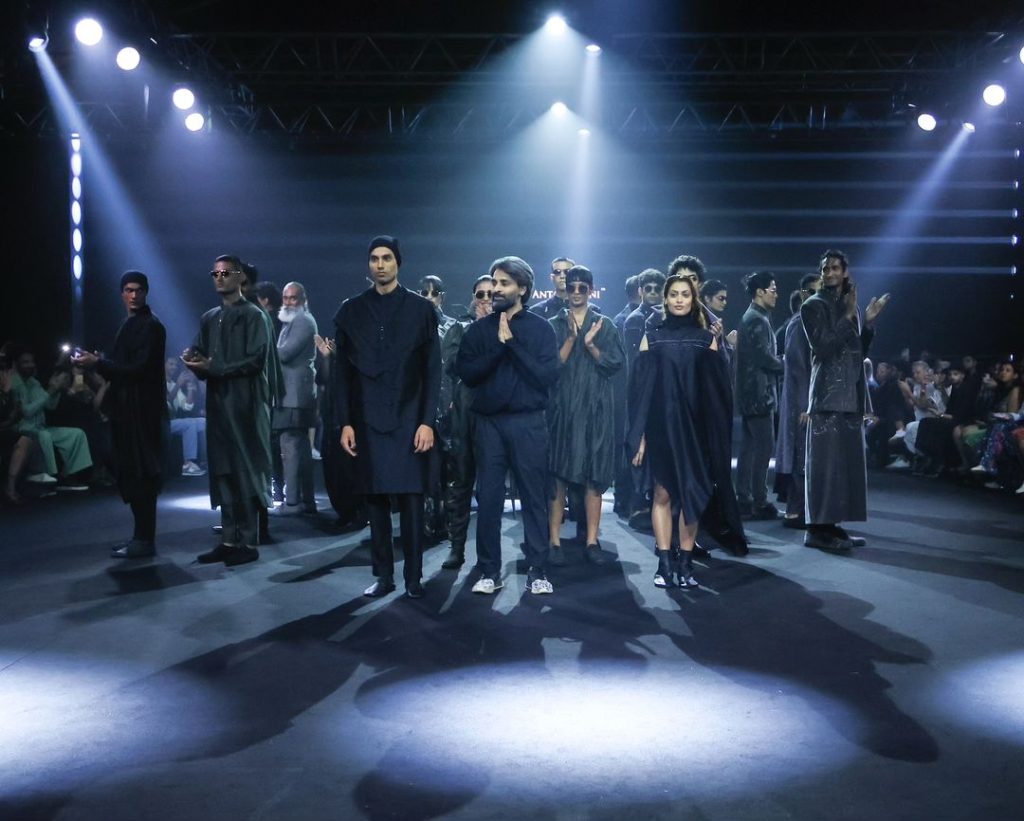
Antar-Agni as the name suggests is a journey within—thus his unisex label is a lot more than just layering, drapes and lapels, it is an exploration of the meaning of luxury, and why its connotations change to cater to an individualistic mind. By Asmita Aggarwal Some things in life are meant to happen, it is called serendipity—that’s why when a doctor’s son went to a small shop in Gorakhpur to get NIFT entrance form for his older brother, he could never imagine, he would one day be a textile graduate from the famed institute in Kolkata. Ujjawal Dubey’s Antar-Agni today completes 10 years, for an underconfident, somewhat hesitant boy from a small town, who had no exposure to fashion, to building an empire, winning a spot on the Forbes Under 30 list, it is no mean feat. Dubey’s questions about life and its vagaries have often led him to the right path, whenever he felt despondent and out Bhagvad Gita came to rescue. During covid too, when businesses were shutting down at the speed of lightning—one quote kind of saved the day –”Only those who are calm in success and failure can win the battle of life.” He loves literature, never attempting to deep dive into it, rather his motto has been spirituality, understanding human nature, and its fallacies as well as the desire to protect one’s image. Image is everything now, thus he came up with the exploration of duality in it—you pray but in business don’t think twice before cheating someone for money. “Two-faced” seems an appropriate name for his LFW 2024 line in collaboration with FDCI, a collection divided into three parts—Gyana, Vairagya, Bhakti. If you observe his journey closely, women buy his unisex ensembles—baggy, bigger shoulders, draped, layered—those who are “cooler in terms of styling and self.” He is unabashed when he says the biggest take away from this decade-long sojourn has been the “strength of common sense and truthfulness towards your inner being”. Architecture has always moved him, and so has geometry, thus when he was looking at temple-carved pillars made thousands of years ago, he was fascinated by 3-D imprints. It was the genesis of abstract prints/embroideries. The question this year is “Are we really righteous or is it a pretense for the world?” As a child Ujjawal wanted to be an orator admired the skills of Amitabh Bachchan, he believes, all languages matter not just the ones related to the body. Only if we didn’t live in such a structured world, creativity would be everywhere. Gyaan in his line is represented through Western cuts, structure, lapels, 3-piece suits, and jacket lengths. While Vairagya is depicted through layering, and Bhakti is where you devote yourself completely, thus exaggeration, blacks, deep purples, and greys, as well as forest greens. You can see suspenders, detailing with faux leather, belts, hats, all constructed with his vision. Human mind is searching for security, fear drives us to look for eternity, longevity, but covid gave him “liberation” as he thought “how much worse can it get?” When he started, in 2014, there wasn’t even one rack in big showrooms for menswear, he never had a template he could follow, he thought of how he would survive. And in six months, he realized what an uphill task this is— “How do we sell?” He admits he is getting better at handling stress, and thanks to spending time in nature at his Noida office, where he has let in a piece of sunshine, greenery into his living space. “I was listening to a Youtube video by Andre Taylor, giant in luxury entrepreneurship, he said something that gave me perspective. How do you define luxe? It starts within you, it is the tiny things that give you joy, how you look at yourself, luxe is not a bag, that’s too narrow a definition,” says Ujjawal. Not a big fan of embroidery, as it “speaks too much” he uses it in moderation, like zari this year, cutwork, appliques, and jacquards he developed in Banaras, or his handlooms in Meerut that were woven by carpet weavers. If you ask him why he loves everything natural, it comes from watching his maternal grandfather dress only in Khadi. He used to be a Gandhian, so the Nehru cap, dhoti (even in winters), and waistcoat was his uniform, his friends dressed the same way too. “It was in mélange grey, everything was monotone, even the socks, but looked extremely interesting,” he smiles. His family gave him complete freedom to do what he wants, and even though he says he is “ambitionless”, he has achieved by just moving on without a road map. “Dressing is a mood, everyday it changes, clothing is just one part of it,” he concludes.