
Fervent Tribute to Bal

FDCI and Blenders Pride pay a befitting homage to Gudda, with 100 showstoppers, friends, family and in this beautiful story, an emotional Sonam Kapoor. By Asmita Aggarwal What happens when you have more than 100 showstoppers paying tribute to the man, and the myth, who left behind an unparalleled legacy? Rohit Bal when he was alive and when he passed on to the next world, always had a full house! Blenders Pride with the Fashion Design Council of India, presented an homage, a show curated by Chairman Sunil Sethi, with people whose life Gudda irrevocably touched, not just with his sense of style, but warmth and candour. Known for his abundant-skirts, crinkled, extravagant pieces resembling the vibrant life he lived, Bal’s friends, and family turned up in droves, to relive his magic in fashion, through his blooming roses on voluminous monochromes. Designer Ashish Soni dressed in a pleated, butter-coloured Bal, reminding us of classic whirling dervishes’ aesthetics, smiled, “I knew him since he was 15, it’s a huge void he has left in fashion.” The ramp was decorated with chinar leaves, a memory that Bal often recounted growing up in Kashmir, his motherland, till he was 17, moving to the capital to find his way in a world that was still nascent; as the first NIFT has just opened, serendipitously timed with his foray. He studied at the prestigious St Stephen’s College, through his velvet boleros with Kashmiri embroidery, crinkled kurtas, he courted an India, which was ready to consume fashion-post liberalisation. It was the Circa 1992, foreign brands still could not enter our country, FDI in retail hadn’t been approved, which in a way was great, as it nurtured homegrown labels. At Le Meridien hotel, with over 600 guests, the night was a sea of black, with of course a robust bloom…the eponymous poppy, pleasing chrysanthemums roses, lotus (on the painted stage), they kept making fleeting appearances on his delightful tunics. Designer Raghavendra Rathore, remembers how Gudda was his “extended family”. When he came to Delhi he was guided by where to buy German shoulder pads, the Palika Bazar in the early 90s, how they all cut patterns for common fashion friends on the floor. “Gudda was exceptionally unique, most focused, and gave me direction. My earliest memory of him was helping me during my first show in Jodhpur, 1994—he negotiated fittings and models. It was all new for me, Gudda took it on himself to be there, more importantly help—twirls he asked the girls to do were phenomenal. He had a generous way to offload wisdom, he was most unique. I just stood afar and watched the whole thing,” adds Raghavendra. Bal was forward thinking, and understood, it doesn’t matter which royal family you belong to, as long as you have talent—fashion then was the purest community, everyone wanted to help each other—in the 90s. His iconic show in 1994, was historic, he used muslin (cheese cloth, which had then no relevance to the luxury segment) inspired by the Taj Mahal, held at Hauz Khas. It was the dawn of Indian fashion, where he created kurtas for men; he had the power to push unique thoughts. Femina, First City magazines of that era lusciously picked it up and made it an anthem. Soon one saw Katra market churning out his flower motifs, he was the original leader of the pack! His references from the Calico Museum, you can see in his heritage silhouettes, how much he picked up on old patterns, elevated and recognised them. Khadi too—seriously, he was brought back into the “It world” way back in 2000. Signs of being ahead of the game were always omnipresent—he knew recognising the future was daunting, and required a big change. At the Saturday showcasing in Delhi, Kashmiri live songs, complete with traditional musical instruments set the rhythm. Rezon’s Kalyani Chawla opened in a crinkled tangerine dress, closely followed by model-turned lenswoman Sheetal Malhar. The roses were bold and bright in the starry night, and models wore desi gulab, another one of Bal’s favourites, that hung from their nimble wrists, as embroidered parrots danced on sleek branches, revving up sherwanis. From choreographer Prasad Bidapa, in a necklace, lithe shawl to Vidyun Singh and Asha Kochhar, as graceful as ever in white sari, to Varun Bahl in an embroidered floral tunic, it was all heart. Some decided to just dance, as filmmaker Madhur Bhandarkar known to have modelled many characters from the style world in his blockbuster “Fashion” couldn’t keep away. Bal’s proteges, Pankaj-Nidhi, who trained under him and got married, to Jenjum Gadi and Sahil Kochhar, Dhruv Vaish, Anjali Kalia, to Countrymade’s Sushant Abrol, made sure they paid their respects. The “Page 3” world came in full throttle –Priya Sachdev in pink and gotta, filmmaker Mozes Singh certainly knows how to preen, to Laxmi Rana and Sonalika who made sure Bal’s love for volume was celebrated. The coup was getting 80s supermodel Shymolie Varma, she had walked for Pierre Cardin, moved to Paris, to work with Yves Saint Laurent, Chanel, Karl Lagerfeld, Max Mara, the half-Bengali, Punjabi and English model danced. Interestingly, Bal’s driver, his clothes man Rajinder, and best sales person Akriti at his boutique were included in the homage on the runway. Former model Inder Bajwa to actor Muzzamil Ibraham and boxer Vijendra Singh wowed in Singh is King glittering dress, complete with an eagle motif. The entire Bal family was well represented along with the former Chief Minister of Meghalaya Mukul Sagma, and leading Indian cardiologist and Chairman of Interventional Cardiology at Medanta Medicity, Dr Pravin Chandra. Model and actor Rahul Dev and his partner Mugdha Godse have many engaging stories about the legend. Rahul first met him at the most happening nightclub in Delhi, Ghungroo at Maurya Sheraton. Bal was accompanied by the frontrunner of style, Rohit Khosla. “I met him with my late wife Rina—his long, flowing golden locks caught my attention,” says Rahul. Vimal ads were huge in the 80s and 90s—(big
In Fine Print
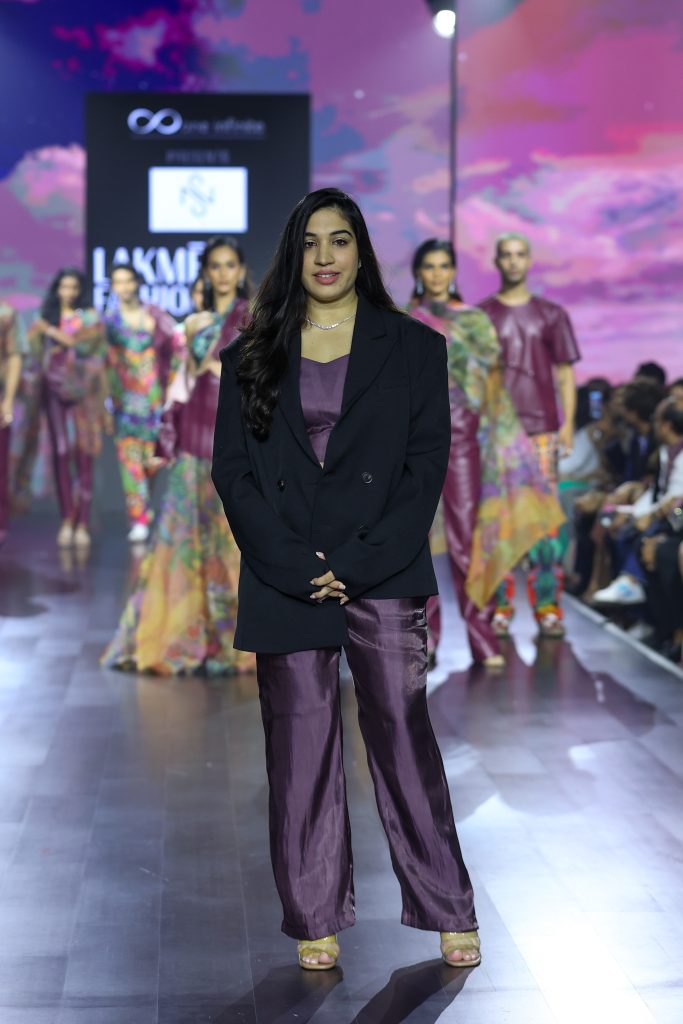
From Picasso, to Banksy and Mr Brainwash, Salita Nanda reinterprets art pieces through her unique rendering of hand illustrated prints in satiny draped dresses. By Asmita Aggarwal Born and raised in London, Salita Nanda studied at the London College of Fashion, University of the Arts, and then further honed her skills at Domus Academy in pattern making. The Indian community in the UK was vibrant, she decided to launch her brand in 2014, later moved to Mumbai after she met her investment banker husband. Known for 3 D printing, and selective laser centering a technique which accentuates conceptual prints, Nanda combined this with hand painting and illustrating original artworks, in the ready-to-wear line. “Growing up, I observed my mother loving all types of fabrics. She understood how to convert them into stylish clothing herself. We would go to different suppliers with her, that’s when I knew clothes would be something that I would do in the future, of course, in my own interesting way,” she smiles. Even though Nanda belongs to a family which is into construction from Pune, her father took the road less travelled and started the food exports industry in the UK. There was a void in the UK, in custom-made occasion wear, she teamed up with her mother, winning a clientele from Mumbai to Dubai and UK. “Prints are our signature, colorful and fun, most of the time they are inspired by artists,” she says. Some years ago, it was Picasso and his painting Les Demoiselles d’Avignon (The Young Ladies of Avignon, originally titled The Brothel of Avignon) from 1907 by the Spanish artist now part of the Museum of Modern Art, New York. “The angular, unusual body shapes, some Egyptian, African, and Asian styles were converted into paintings. Each of the five women were represented with symbols we handmade and broke down the colour ways, adding gradations,” she says. Art has been a recurring leitmotif in her collections as she was fascinated by graffiti street artist Bansky known for his political statements and also his protégé Mr Brainwash or Thierry Guetta, a French-born Los Angeles–based street artist. He reworks popular imagery as well as some from Jeff Koon’s steel balloon animals and Banksy’s ‘Throwing Man’, in a playful manner. “Mr Brainwash has designed album covers for Madonna’s Celebration, and Red-Hot Chili Peppers I’m With You, among others,” she adds. She is searching for an Indian artist she can immortalise with her artworks reinterpreting them uniquely. Satins, organza, crepes, on flowy silhouettes, and drapes gives each piece unmatched fluidity. “There is a song that has been playing in my head. It is about the sky. It is a 60s song, vintage but represented through the hues of what we see when we look above,” she says. It is not your typical blue—but yellows, pinks, and flaming orange, to depict changing seasons and ties of the day. “This year we have spray painted and also used watercolours mixing it with hand illustrations,” she explains.
Builder’s daughter Monisha Jaising constructs ‘bling’
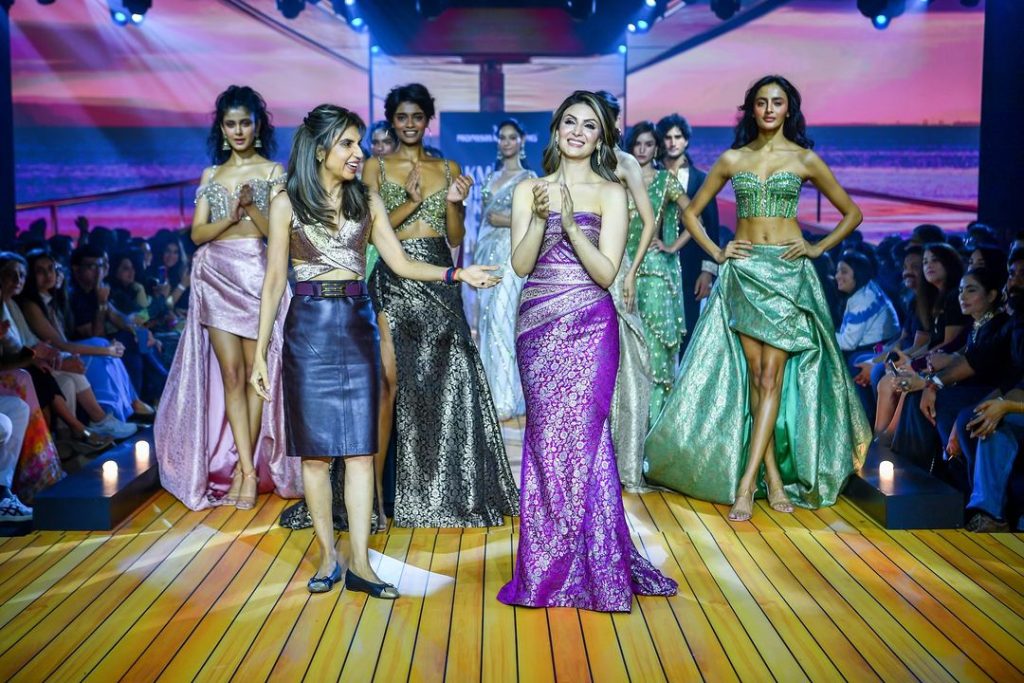
35 years in style business, the doyen believes, her biggest contribution has been keeping alive classic Indian ethos. By Asmita Aggarwal Her father was one of the biggest builders in Mumbai, specially the Bandra area, though he taught at the London School of Economics for many years too. Narain Bhojwani and Monisha Jaising share a common love for architecture, and interiors, even though fashion was her ultimate choice. The inventor of the ubiquitous kurti, (like the LBD) a multipurpose garment 35 years ago, Monisha felt it was Indian yet global-you could team it with jeans, skirt, dhoti, palazzos. It was kind of channeling Boho chic, a mix of what she learnt at the Royal College of Art, UK and her Indian heritage. She admits there have been more high points, than low ones in her career, her collaboration with star daughter —Shweta Bachchan, making jerseys for Mumbai Indians, “creativity gives me happiness”. Even though she faced recession, commercially sometimes things don’t do well, she believes “it happens in all businesses you can’t lose your bounce”. Her biggest contribution to fashion over three decades has been the modern woman, even the youth to live and like classic clothing, keeping Indian spirit alive! Some years ago, she paired her laser cut lehenga with a plain white knotted T-shirt, telling us you don’t need a bustier or a choli, this can work too! “Don’t think about building a brand, even if you don’t have your own, start working, gain experience. Look at Maria Grazia Chiuri, Nicolas Ghesquiere or even Sara Burton, they all worked for huge luxury labels,” she adds. There is a world of difference from the time she began, to now, no one understood why “fashion” when she began. There had to be education and awareness, “we had to convince and educate people, it was tough to get jobs, easier to open our own labels,” she explains. “Retail is booming in India, we had to tell customers, we are selling ‘fashion’, not ‘ready-made clothing’ there is a fine distinction between both,” she laughs. Social media has altered the psyche of buying, it has its pros and cons—you can either leave your brains on the table, or indulge in serious marketing tactics. Earlier we would spend a lot on marketing, editorials, and TV ads, “Instagram has finished all that—you can put out what you want in your own voice,” she says, “it has democratized the business—a fresh graduate has the same tools as me to expand her business.” Monisha over the years, hasn’t lost her sense of humour and giggles, “A young woman today will wear whatever her mother will tell her not to, she definitely wants innovation as she is able to see the world with a tap on her phone. How people dress –Pondicherry to Turkey,” she adds. Now is the era of mix and match—top from Zara, trousers from Fashion Street, you can put it together ingeniously, you look affluent. “I live in Bandra, I see young college going girls every day, who may not be as widely travelled, the way they swish their sunglasses, hipster jeans looks like they know it all, this is due to the information tornado on social media,” she admits. After almost four years, Monisha is back in Delhi for LFW X FDCI, she confesses laidback styles and her love for bling is eternal, MJ’s clothes can be worn anywhere. “Fashion degree always helps, you can be a designer even if you don’t have one, but learning is faster,” she adds. Co-Ord sets, blazers and of course the kurti have been her defining offerings to the Indian style-scape, “I love shine, but I use it judiciously, control it,” she admits. Besides, fashion, her love for spaces comes from her father, diversification does not interest her, but if given an opportunity she would have started a design college. “Fashion is ever evolving, I loved how glamour was edgy in Oscar de la Renta’s rendition of luxury, stylists have really upped the ante,” she adds. Sometimes they help sell, to customers who trust their judgement more, “homegrown labels may not have the knowledge of how to present that’s where stylists come in and change the entire perspective.”
“I wanted to dress like my father,” Pranav Mishra
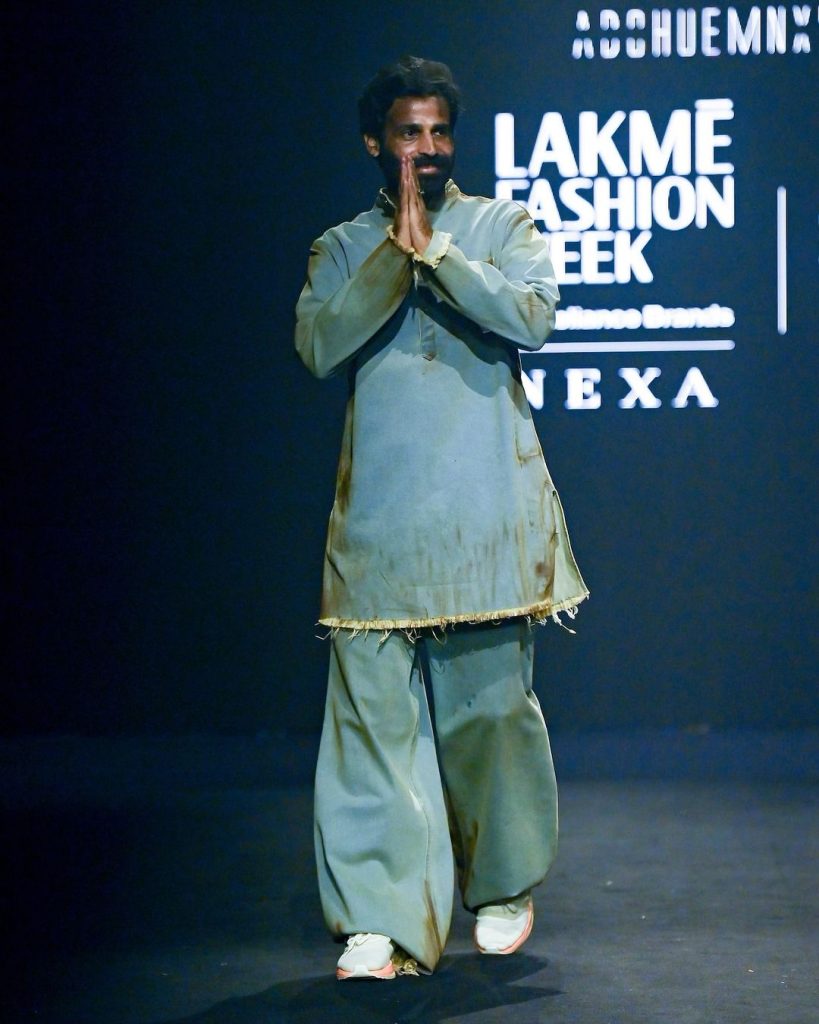
Huemn may be his alter ego, but the designer behind it calls himself a storyteller, who loves the possibilities of what denim can do; this season, he takes on a new journey by recycling creating invigorating landscapes in his anti-fit everything. By Asmita Aggarwal There is a huge conundrum between Pranav Mishra, the poet, and fashion designer of the rebellious brand Huemn, even though he says rather vociferously, he doesn’t identify with the latter. He has, in every interview, been repeatedly saying that creation is an “accidental process”, he only mirrors what he sees around him. Any poem, film or even collection, a creative entity comes alive when like a “child you let it go”, he doesn’t fit his oeuvre into a box of mood boards or theme, leaves it free-flowing. “It is a spontaneous process, just like I write phrases,” says Pranav. It is 12 years of the label, he started with Shyama Shetty, NIFT graduates, who now has taken over a different role—of a mother, wife though the Thailand-basen designer remains a stakeholder as well as advisor to Huemn. Pranav is not fazed by her absence, in fact he believes she is “omnipresent”. Fashion has changed though, “earlier there were many ‘gatekeepers’, Covid has altered the fabric, internet rules, and passion helps,” he explains. Diversification is the key, he admits Huemn was one of the first few to show sneakers on the catwalk way back in 2013, “we didn’t see our clothes being paired with uncomfortable shoes.” Lays was his most recent collaboration (they also tied up with Balenciaga last year), then Royal Enfield and Pepsi (which earlier associated with Alexander Wang). “It was interesting to work with corporates, understand how they think, as well as design something other than clothing,” he confesses. The result is you get more disciplined with any partnership, also it’s an opportunity to reach out to a newer audience. The only difference he sees when he works in fashion is the pace, which gets accelerated, as you are building something, “it’s a two-way street, someone is going to buy your product, I feel a sense of urgency to create a market,” he smiles. But when he is writing poetry, no sale is involved. No filter, just him and words, it’s free, the audience can like or discard it, it doesn’t matter even if he is trolled. He has loved literature, especially mid-19th century writers, but Rainer Maria Rilke, Austrian poet has been most impactful in his life. “Can’t be friends with them, would have liked to, they are gone, but the only way to establish a relationship is to bond through their writings. It is like talking to my friends, four out of five will engage, one will just observe,” he laughs, adding, “Rilke mentally stimulates me, just like Charles Bukowski was a German-American poet.” He “shook” Pranav, the more he read, the more desperate he got to learn, and his design is an amalgamation of what he personally encountered in life. “I can’t say my collections are inspired by butterflies or Turkey, we don’t interpret, we allow the audience to deduce and feel,” he admits. This year for LFWX FDC, he has tied up with RRelan, sustainable, recycled fabrics were used, also in some ways limiting him, even though the brand is popular for its avant-garde denim, especially the hand made one launched in 2022, with a seven-step wash, to give textures, leaving you to wonder if it is a print? He doesn’t believe in machine-made, thus his blood-plasma textures look alive, surfaces excite him, landscapes are a favourite, which he also did in his Kashmir line, a few years ago. Endless scrolling on the internet has created a bigger appetite for fashion, design now, he says is a part of our lifestyle, everyday life is now an “occasion”. If you want to watch a film, you want to look good, it’s not just about dressing up for a friend’s wedding. “You won’t wear a lehenga for a concert, you will try a denim, nicely cut, we fill that vacuum,” he says. He agrees rather candidly, “he had to work on himself”. The entrepreneurial journey humbled him, “we can’t do things alone, team is important, there is no hand holding, each one contributes and is a stakeholder, I have lost my arrogance,” he confides. “I’m a storyteller, not a fashion designer, objective till today is not to create clothes. Only when we have something to say we show at LFW, after two years we are back on the catwalk,” he says. His first encounter with fashion was watching his late father, a published poet, dressed in crisp, white kurtas in the city of nawabs-Lucknow, “I wanted to be as sophisticated as him, soft spoken, funny and magnetic, I often debated how I should drape my shawl like him,” he concludes.
Luck doesn’t help, focus does: Payal
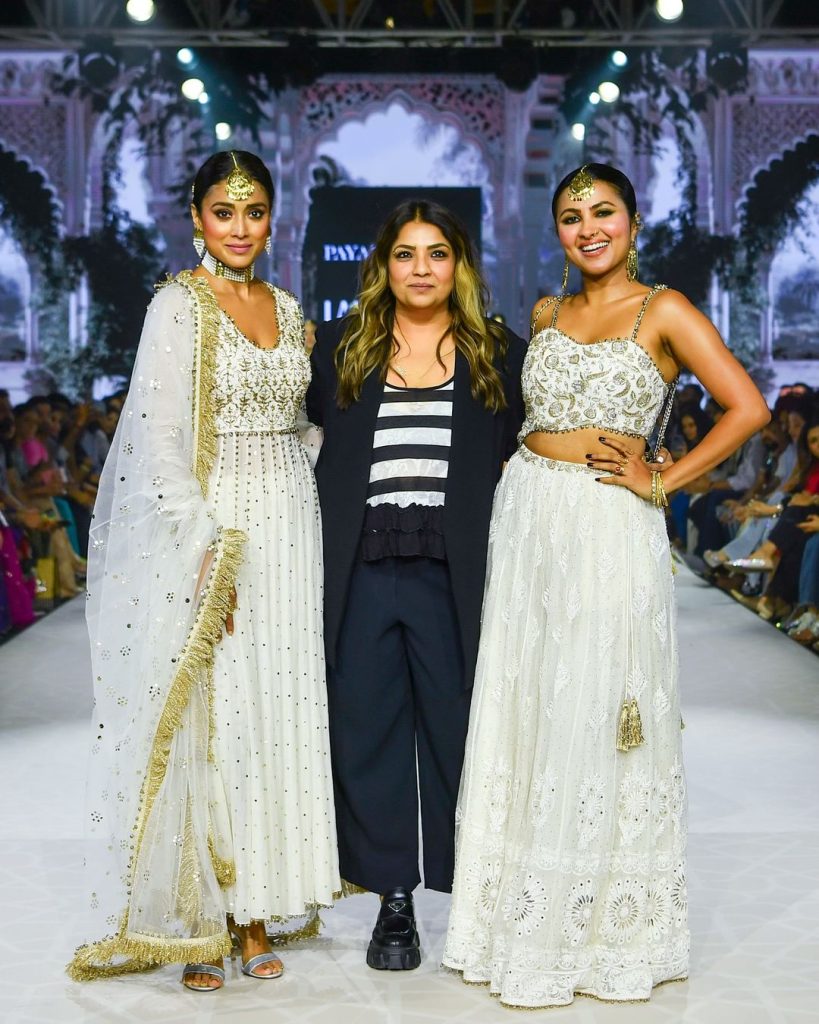
From her backless cholis to Aishwarya Rai wearing her award-winning Anarkali, Payal Singhal in 25 years of business has been consistent leaving theatrics to greenhorns, adopting practicality for survival. By Asmita Aggarwal Payal Singhal completes 25 years in the business of fashion, and if there is one designer who truly understands finances, it is the Mumbai-based guru of the “backless choli”. Her latest collaboration has been with the American sneaker company End State, that unfortunately could not be launched in India (due to laws changing) but is being sold in the US for $250. Designing the kicks with Stephanie Howard, ex-Nike designer, Payal says technology is the future as this one comes armed with a 3-chip futuristic approach. It is NFC based, interestingly they reached out to her, seeing her fan following (earlier they have collaborated with artists and musicians). “The shoe was a crossover between the East and West, June it was launched in the US, now sold online,” says Payal adding, it was inspired by Adivasi tattoos and she added her signature mukaish work, trying not to make it too Indian but global. You add brushed gold to this and you have a unisex sneaker. That’s not all. She has associated with Coach, also Namrata Lodha for hats inspired by the wheat farmers in Madhya Pradesh, she makes a line of kids wear, home, jewellery, resort wear as well as menswear, her portfolio is large and impressive. When she looks back, it is only resilience that helped stay afloat, keeping her head down and working, admitting “my career is not based on the luck factor” but a gradual graph upwards. She has survived covid, demonetisation, GST, and bad markets only to learn from those upheavals. “Innovation is the core of my brand; you cannot stick to a formula and make it work. I get bored easily, I need to be creative with my craft,” she adds. Twenty-five years is a long time to survive in the industry, when she started making Indo-Western with backless kurtas, to add sensuality, clients asked her “where is the back?” From 20-year-olds her customers, who spend more money than brides, Payal each season looks for excitement and freshness abandoning the complacency that comes with success. This year like always, there will be hallmark pieces—prints, fusion of art and architecture, shapes deconstructed and you cannot term her prints quirky or pretty. The backless choli remains her clients go to, and thus has been copied extensively too, the tasselling work added a new dimension to it several years ago when she started. “Luckily, I didn’t make any big errors, went slow, and sustained even during covid. We are self-funded, but tangibility and freedom helped us,” she adds. Payal has been a conservative businesswoman, never wanted to show off, flew under the radar, didn’t plan on opening a 10,000 feet store, when you visit her stores, “it is like having a chat with friends, not imposing or intimidating”. In 2005, she had a store in New York, which she shut down, even though she is the queen of collabs, she hasn’t ventured into the already crowded beauty segment, but came close to doing it. At 47, there is clarity of vision, every piece she wants to channel functionality and comfort. “Clothes should not be fussy, but easy, and clean, so repeatable. I always tell myself keep your eye on the prize, focus always works, and do not be in a hurry,” she adds. The LFW XFDCI line is a subtle nod to the 25 years, the first outfit showcased was the one she made, and won, for being the youngest designer in a Shopper’s Stop competition she took part in. “I was 15 years old, it was a national contest, the katarva cotton weave with a shadow effect won me the honour. Aishwarya Rai Bachchan has worn the winning Anarkali, I remember,” she laughs. There is nostalgia in the show, subtle panels of zardozi in gold, silver, and black, Mughal motifs. “My dad was an exporter and the biggest lesson he gave me was practicality,” she adds. Though Payal has no appetite for theatrics, “storytelling is important but I have done it without it,” she grins. The line is just in time for the festive season — extensive gotta-patti, creamy whites, tone on tone, ghungroos for embellishment!
“Armani taught me to be me,” says Ankur of Til
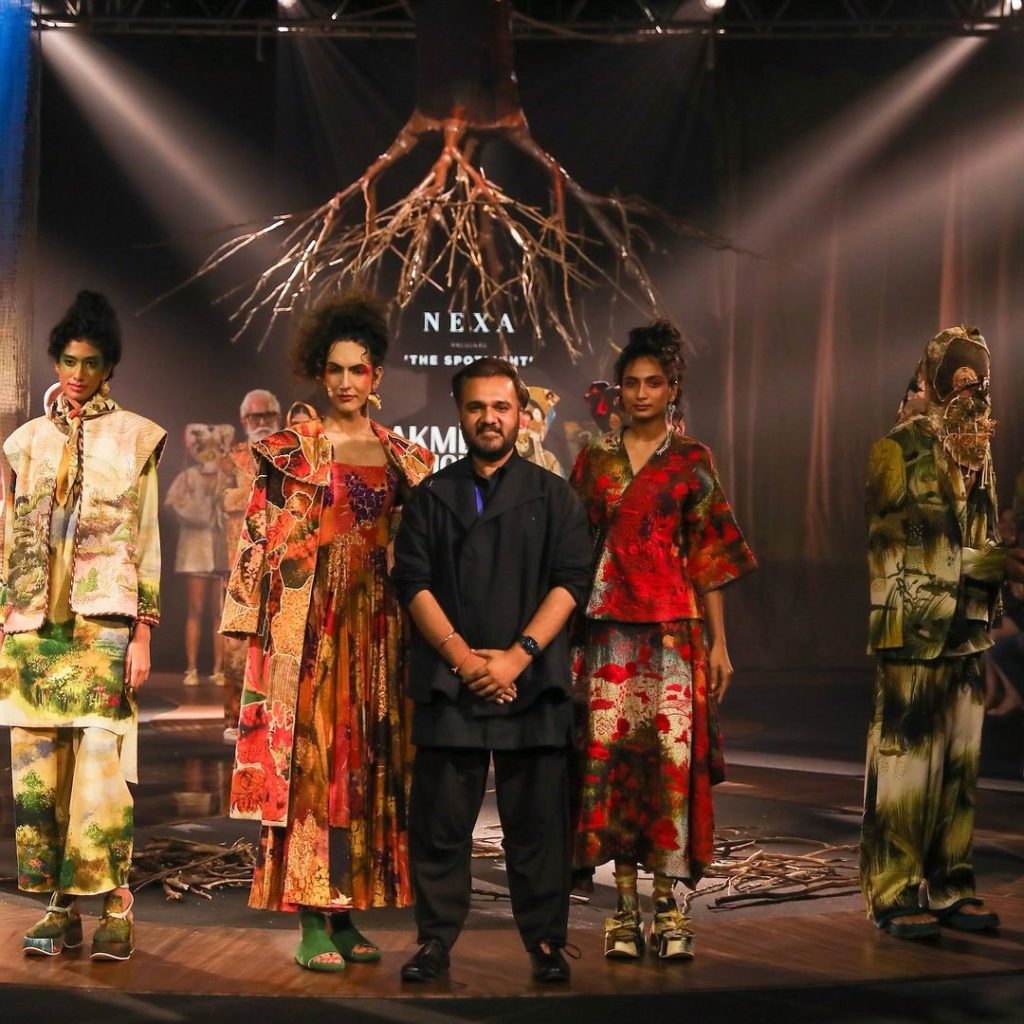
Whether it was working with Armani or Bottega Veneta, even Sabyasachi, Ankur believes good design is instinctive, that’s why his latest line for LFWX FDCI is experimental, comfortable and inclusive. By Asmita Aggarwal He lost his grandmother, whom he was closest to in the family during Covid, she would always tell Ankur Verma, who grew up in Chandini Chowk, that of you have a til (mole) on your hand, you will always have money, this stayed with him, thus the name of his label. It is also the moniker for Till We Meet Again (TIL). Ankur was creative, doodling, decided to study leather design at NIFT Kolkata, then Domus Academy, Milan, Masters in Fashion & Accessories, as well as fashion management from London College of Fashion, though his focus has been body textures—freckles, wrinkles to folds, which he reinterprets through prints. The highlight of his journey was working with Armani, in Italy, though what changed his life was winning an opportunity to learn from Bottega Veneta, the only Asian to have cracked the competition in collaboration with Università Iuav di Venezia (IUAV University), Venice. It was the year 2017, the six months he spent at the headquarters of the famed luxury brand in Montebello, Vicenza, understanding simplicity of the intrecciato (braiding) technique, honesty of approach, were principles he still applies to his design process. “I had worked with Sabyasachi Mukherjee who is a maximalist, at Bottega I learnt how to cut it all down, making things austere but effective,” he laughs. Ankur confesses growing up in the narrow bylanes of Chandini Chowk, he was a “very filmi boy” used to paint, indulge in clay sculptures, very inquisitive, decided when he was a tween, he wanted international experience. It was the year “Band, Baja, Baraat” a show was aired, on TV, only two designers are known in Kolkata-Anamika Khanna and Sabya. He pursued Sabya, went unannounced to an Aza event, the designer seeing his enthusiasm invited him to his office the next day, and hired him, noticing his undiluted passion without asking for his portfolio. Sabya taught him artisanal strengths, embroideries, dyeing techniques, worked on the Buckingham Palace, London project with him, designed 1,000 hairbands, embroidered niftily, bangles, mostly accessories, in 2012, upcycling along the way. His first encounter with fashion was watching Ram Leela in Chandini Chowk, where he fell in love with how actress Raveena Tandon dressed in diaphanous saris, (he watched her sway in “Tip Tip Barsa Paani” from the film Mohra) he realised, “It is not about clothes, it is how you carry them—the sari magically transformed her,” he smiles. This year for LFWXFDCI, the show has real people on the catwalk, inclusive, experimental but always comfortable shapes, play of textures, thread work to zardozi, patchwork to upcycle waste. He had added Chanderis, hand spun cottons, and indulged in layering, offering separates, making each ensemble versatile and individualistic. The vibe is green, blues, olives, and earthy tones, “as young designers we restrict ourselves always looking for a winning formula, we try to be commercial, fearful of experimentation,” he admits, saying he launched his brand three years ago, took a big risk decided not to do any motifs. His constant admiration comes from the Skin Museum in Amsterdam, by Gunther von Hagens’ titled “Body Worlds”, it chronicles how happiness impacts our minds and then body. It is a kind of Surrealist approach, which he mirrors in his line, showcasing palms, and body hair through textures. But this theatricality comes from his participating in plays, at the National School of Drama, performing with greats like Naseer-ud-din Shah, Ashish Vidyarthi at the kamani Auditorium. He even got admission into the College of Art, but left it to pursue design. Ankur is a keen learner and says every nook and corner of his life, he has been like a sponge, he still remembers what he learnt at Armani, when he worked on a line of shirts in 2016, “was to be ‘me’, they kept me grounded and taught me to tell my story, be original,” he concludes.
A & T celebrate inconsistencies
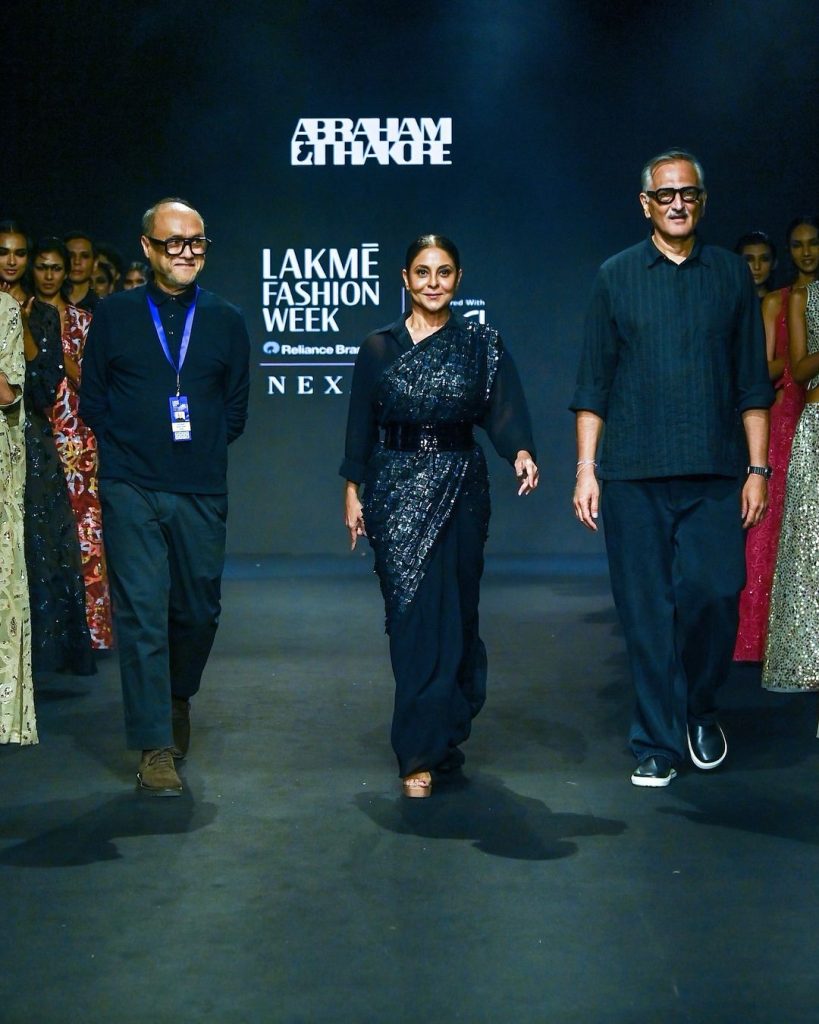
Discarded cassette tapes, toffee wrappers, bin bags are now RTW and make for new-age embellishment, as the trio Thakore, Abraham and Nigli tell us “What we buy and how we buy” is of brevity at their LFWXFDCI show. By Asmita Aggarwal Shefali Shah is a thinking actress, chooses her roles, is known for plain-speak and this authenticity of thought has won her a legion of followers. Just like A and T she is a natural, thus a perfect show stopper at the LFWxFDCI showcasing on Day 2. Three seems to be the lucky number for David Abraham, Rakesh Thakore and Kevin Nigli even though the third member is often a silent partner. The NID, Ahmedabad educated designers have seen the trials and tribulations of an industry from its infancy, maybe that makes them more resolute to doing what they do. Their leitmotif began with pursuing textile and has this season moved on to celebrating discarded materials—very Japanese in their thinking—using broken, damaged pieces to create something brand new. “The idea of using traditional craft, techniques or reinventing materials in new and unexpected ways that are both modern and now has been the concept this year,” says Thakore. Unspooled cassette tapes are woven into organza, chip wrappers are now knee-length dresses with laser-cut sequins which you will never know is from X-rays and believe it or not cement sacks are refashioned as evening gowns. That’s not all gunny bags, toffee wrappers, bin bags, kitchen foil and rice sacks can now be worn for your next lunch date! While working with discarded materials key is employing innovative techniques to give them a new avatar, but it can be limiting as the raw material is not chosen but procured. “We have used various found materials from cement sacks, X-rays, old cassette tapes and plastic shopping bags. The challenge was getting them cut into shapes that could be used for embroidery or to embroider onto fabric,” says Abraham. David Abraham as creative director decides the general theme for the season, Rakesh Thakore works on colour palettes and woven fabric. Kevin Nigli oversees merchandising and production. “While we generally agree on most things, if there is a difference in opinion then popular vote counts! It has been 30 years almost so it has worked with each one finding their spaces,” smiles Nigli. After three decades in the business of fashion has it changed for the better? They believe it has grown enormously from a single boutique like Ensemble to many multi brand outlets today. “From a handful of designers to a vast fashion community, from traditional bridal wear to a huge choice of ready-to-wear… and from a miniscule market share to a large consumer segment that is aware and wants to consume fashion,” says Thakore. Sustainability is today an “abused” word and do consumers really understand it, even though there is rampant greenwashing. They agree, “sustainability is over used, the very concept of fashion is not sustainable in the fact, it demands constant change every season.” What is important, they say is to consume mindfully, “what we buy and how we buy. If we want to be sustainable then we need to invest in clothes with a longer shelf life, be willing to pay more or things that have value, can last,” adds Abraham. Often called the masters of minimalism, more lovers of everything natural, ingrained in our culture and ideology, they believe in minimalism in that less is more, “that you can speak without having to shout, that the extra sequin may not be that necessary.” They love anything done by hand, especially block printing and Ikat, their signature. “We have explored that over the years and constantly try to push the boundaries on these. In a world of mass consumerism, true luxury is small quantities done with the power of the human hand. It celebrates its inconsistencies as something beautiful rather than a fault,” says Thakore. Their biggest weakness they confide, they did not also learn business management, which is a whole different thing to the purely creative process, ultimately no matter how beautiful something is it must be marketed and sold eventually. “The fleeting trend buyer, hopefully he will grow up and become a customer eventually,” they say in unison.
Greenwashing is rampant in fashion: Drishti
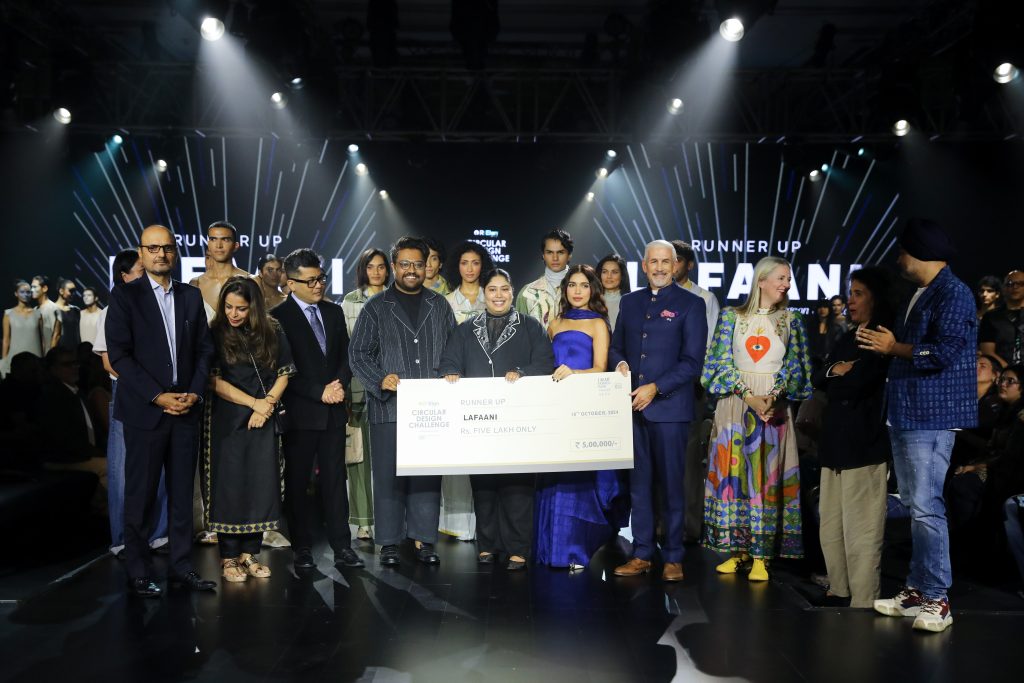
Drishti Modi and Rashmick Bose of Lafaani, CDC runner ups, bring circularity through unrestricted shapes, kala cotton and their love for repurposing. By Asmita Aggarwal She is a big movie buff, so the brand name is a result of binge-watching cinema, although alternate, thus Lafaani, was picked from the dialogue of Vishal Bharadwaj’s Haider, starring Shahid Kapoor, (the dialogue goes, “Rooh Lafaani”). “Lafaani is an Urdu word which means immortality—immortalizing artisans and making a product last a lifetime, transcending trends is what we hope to achieve through our brand,” says Drishti Modi. They won Rs 5 lakh as award money at the Circular Design Challenge in association with United Nations, as runner’s up. Modi is well-educated, maybe not in design, but at Teri School of Advanced Studies, she completed masters in environmental studies and resource management, though she did a short certificate course from NIFT later in business of fashion. Drishti met her brand partner, Rashmick Bose in Teri and they both decided to launch the label in 2021. Growing up in North India, the initiation to sustainable fashion was from childhood when she saw her mother and grandmother being judicious. “I grew up in Pune, Delhi, and Mumbai, I was always fascinated with craft and textiles. My size fluctuated, and I would often not get clothes that fit me well. I had to choose from one rack, I decided I must design clothes for women like me,” she smiles. Drishti, started by repurposing her mother’s saris, she married her academic training with her passion. Working with craft communities, cotton farmers she understood what she really wanted to do in life during Covid. “Bose joined me, he comes from Bengal which is a treasure trove of crafts, we try to bring what sustainability means in a global context,” she adds. His first exposure to craft was a baby blanket that was made by his grandmother in Kantha, they realized they had synergy in aesthetics. “I have no connection to fashion, don’t come from a design background, I had to build an eco-system—it was challenging,” she admits. Her mentor has been her father, who used to work with monster.com earlier, left to work in the social impact space. “He has been an angel investor and mentor for me,” she says. For LFW X FDCI she has worked with kala cotton, hand crafted embroidery, and reached out to a company in Mumbai which recycles flowers waste from Haji Ali and Siddhivinayak temple. They combined this with eco-printing, and hand painting on ensembles which are layered, minimal everyday pieces, multifunctional and adaptable. “Reversibility gives you freedom to wear it two ways. Our aim is to fight greenwashing by many labels that persist in the fashion space, a consumer is unaware about it. Buyers do not really understand sustainability, like kala cotton does not have certification, it is important to prove it, bring value to things,” she confesses. The move forward is strengthening their story, she says circularity is in her DNA, it’s deeply embedded, she hopes more consumers watch what they buy and are curious about who is making it and how it is made.
Khadi Sutra
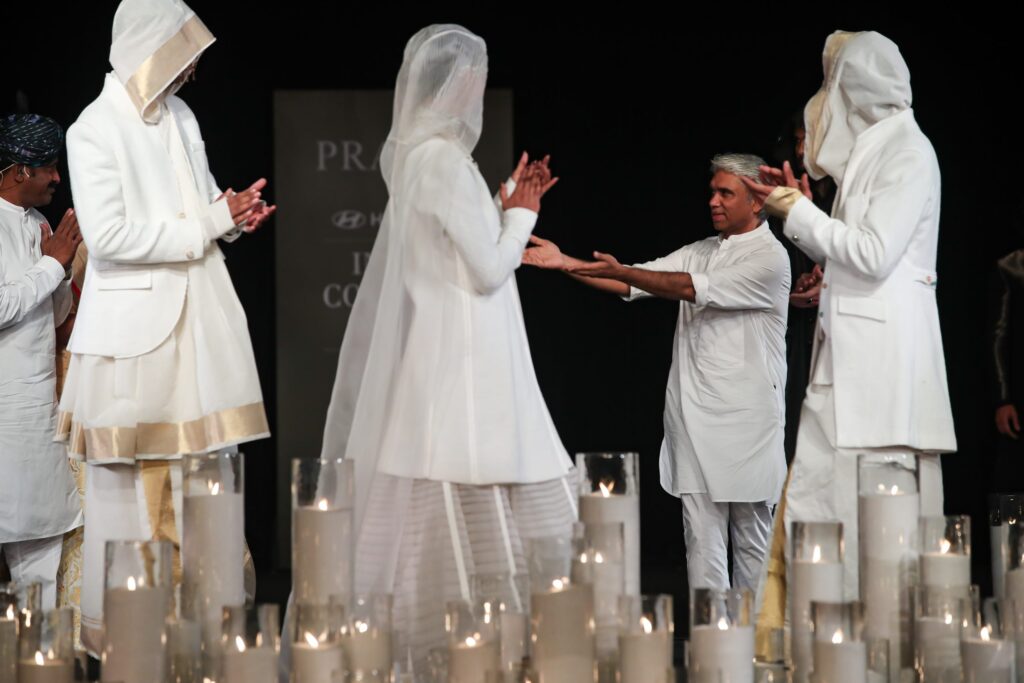
His take on the South Indian Mundu with the woven border kara, pleasing monochromes, delectable stripes, and restrained shine, just like the couturier Rajesh Pratap Singh was befitting at his first outing, redefining luxury at ICW 2023. By Asmita Aggarwal
Pearls of Wisdom
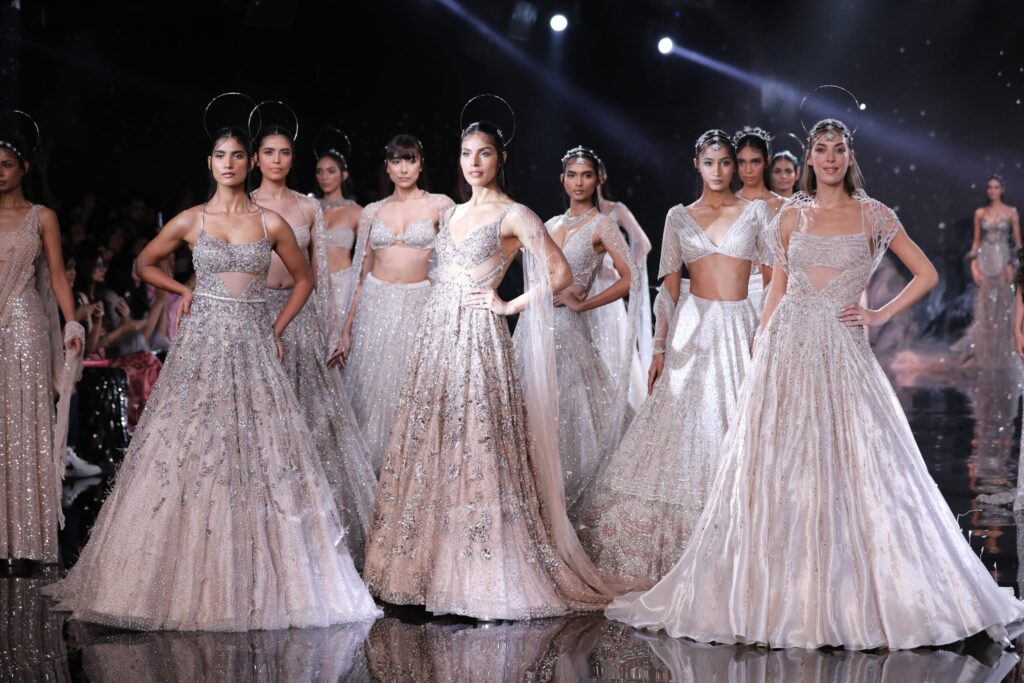
Dolly J uses the radiance of pearls to add glow to her army of gowns, as couture transcends from glitter to subtle. By Asmita Aggarwal