

Imagine a shawl as soft as silk, but made from butchery waste, creating both livelihood for tribal women and circularity. From winning patents for his technology, to making wood free paper, Radhesh is a maverick hoping to create a new landscape of style, as a CDC finalist.
By Asmita Aggarwal
He has won a patent for his revolutionary technology where waste fowl feathers are sanitised and recycled into fibre, using natural ingredients. Radhesh Agrahari started Golden Feathers, his company with 20 women in 2019, today he has 1200 tribal women earning and running their homes. The chicken feathers are light, feels like silk. Growing up in Fatehpur, with zero exposure to fashion, dad was a government officer, he decided to go to NIFT Mohali, then won a gold medal at the Indian Institute of Craft and Design. “I realised there are many more professions than just doctors and engineers,” he laughs.
“I come from a small town known for Bawani Nimli, 52 people were hanged by Britishers in 1858. On one side we have Ganga on the other Yamuna, nothing amazing. We lived a simple life, back then, like a tier 2/3 city,” says Radhesh. His work with Tribes India, as a purchase officer, for nine years exposed him to various craft villages, travelling to Baran, Asnawar, no roads, brick lanes where he discovered the most stunning hand work. “We had to buy artisanal products for 160 showrooms all over India, the exposure was enormous. I worked with the Bheel and Garasia tribe, who were traditionally tendu leaf pluckers, exploited by middlemen, earning Rs 80 per day. They started working with us and at home earned much more, creating a value chain system. The idea is not to make money but offer something sustainable to them,” he adds. Today Google and Morgan-Chase are his clients with 70 per cent exports and 30 per cent sales in India (Rs 6,000 for a stole), creating the best alternative to synthetic fibres.



He has seen the power in looms, they can weave only 56 metres, but in handlooms women can go up to 60 metres. “I got my break on Shark Tank, we were offered Rs 700 crore for our patent, we never took it. We followed the Lajjat papad model, where raw material is given, and you can make things at home; at G 20 we won the top 8 startups award,” he says, adding machines must be semi-automatic, but tribal women must be involved. His tagline is “where style meets sustainability.”
His next big project is wood free paper, and goal is to provide education, livelihood, and circularity to the marginalised. “Food waste like fowl feathers is the third most dangerous thing in the world, feathers create toxicity, and especially when it gets mixed in water. We process it in 27 steps laboriously and craft ultra fine stoles, shawls, mufflers, and can last up to minus 20 degrees. Only his company has a patent for fowl feathers. We have revived Indian crafts, wet spinning, and of course butchery waste which no one was using, lowering carbon emissions. We set up units in Pune, Rajasthan, and Jhalawar,” he adds.
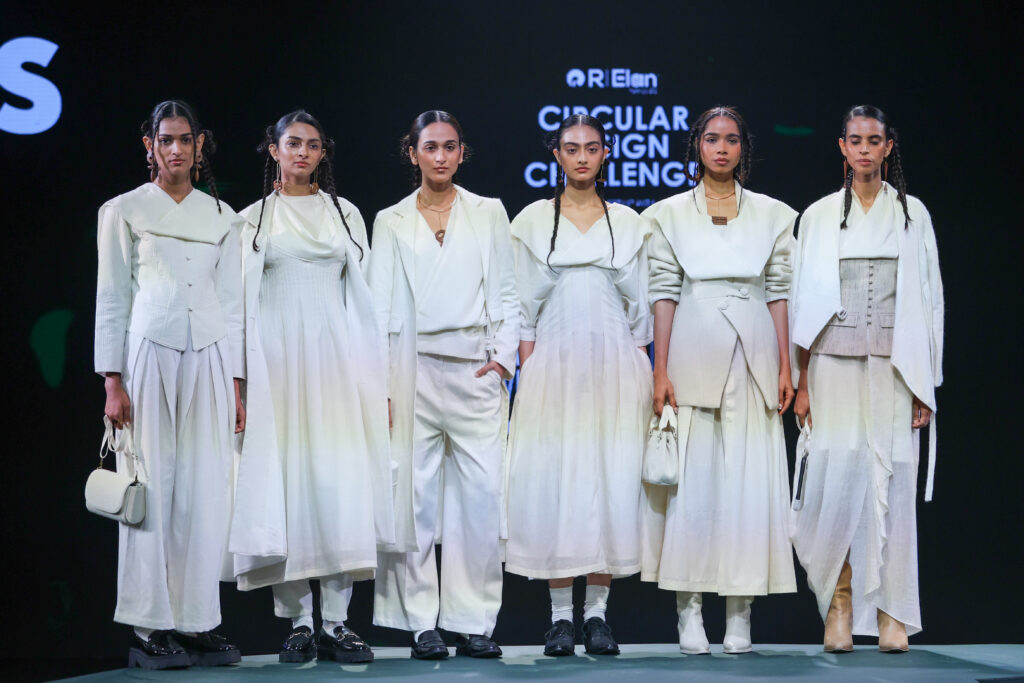
The feather-silk is crafted into fabric, keeps you warm in winters and cool in summers, and does not need to be dyed, as it is naturally off white in colour. “My target is not just India, it is the cold countries where winter is almost 8 months long, and they long for natural fibres. We are exporting to almost 11 countries in the world as well as Europe,” he admits. His journey started with showcasing in Dilli Haat and Dastakar, he made almost 386 products including hand made paper, but still faces several challenges like not allowing pickup of waste feathers, even though it emanates sulphur and methane gases which are extremely harmful for the environment and human beings, he concludes.