
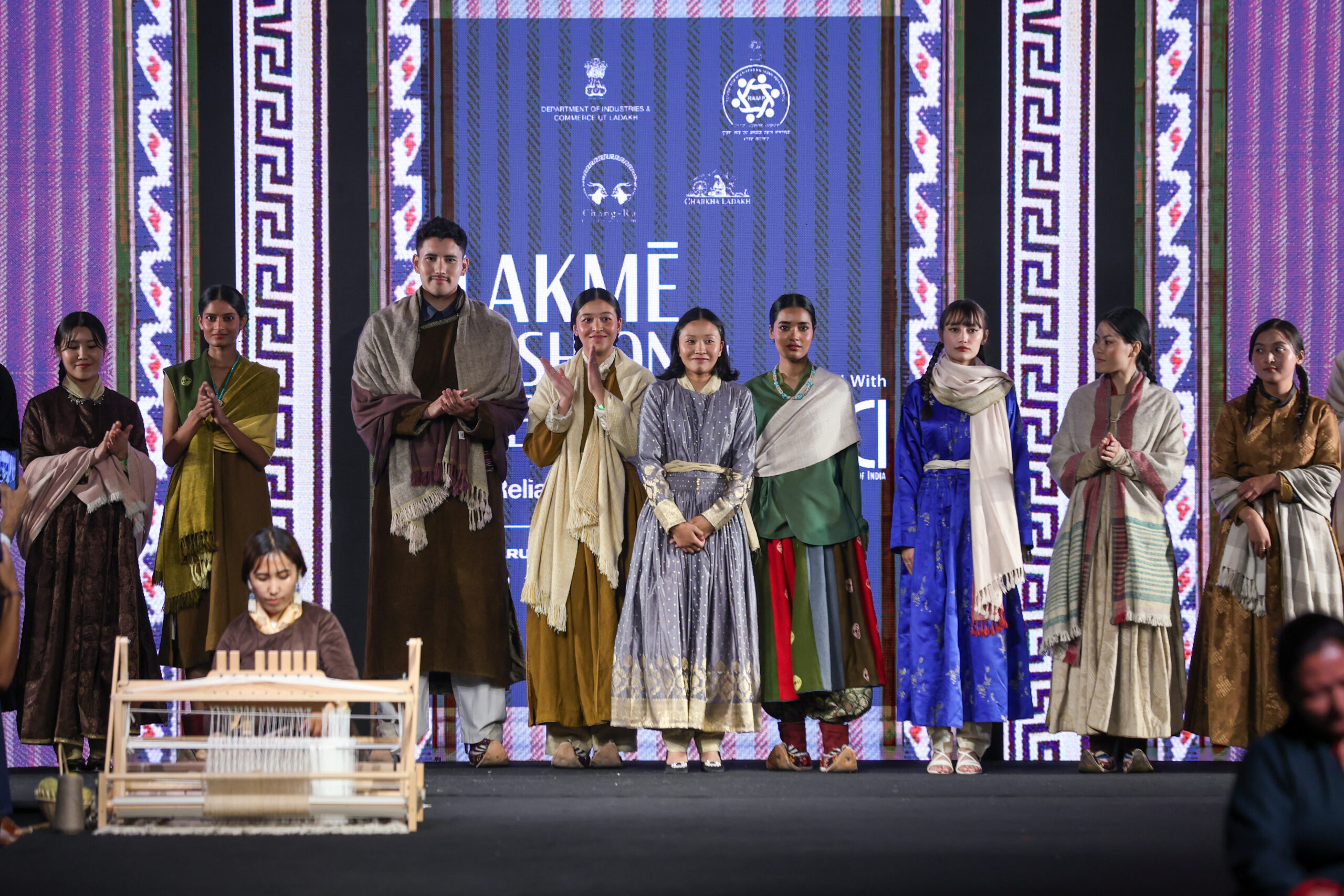
Disket Angmo brings Thikma, traditional Ladakhi resist dyeing technique, where you tie apricot seeds in cloth, dip in colour!
By Asmita Aggarwal
Disket Angmo is from the nomadic tribe that lives 14,600 feet above sea level in the Changthang region, Ladakh. “Chang’ in native language means Eastern part, wherein the nomads reside, and ‘Ra’ is goat,” explains Disket who for the first time is bringing her authentic pashmina to LFW X FDCI under her brand Changra Ladakh.
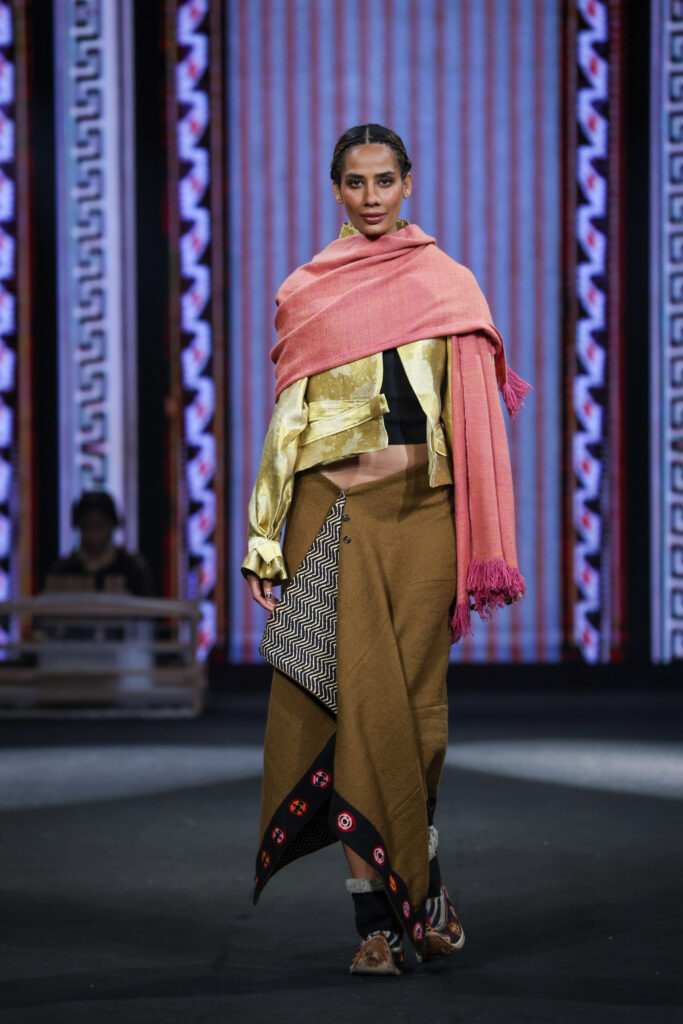

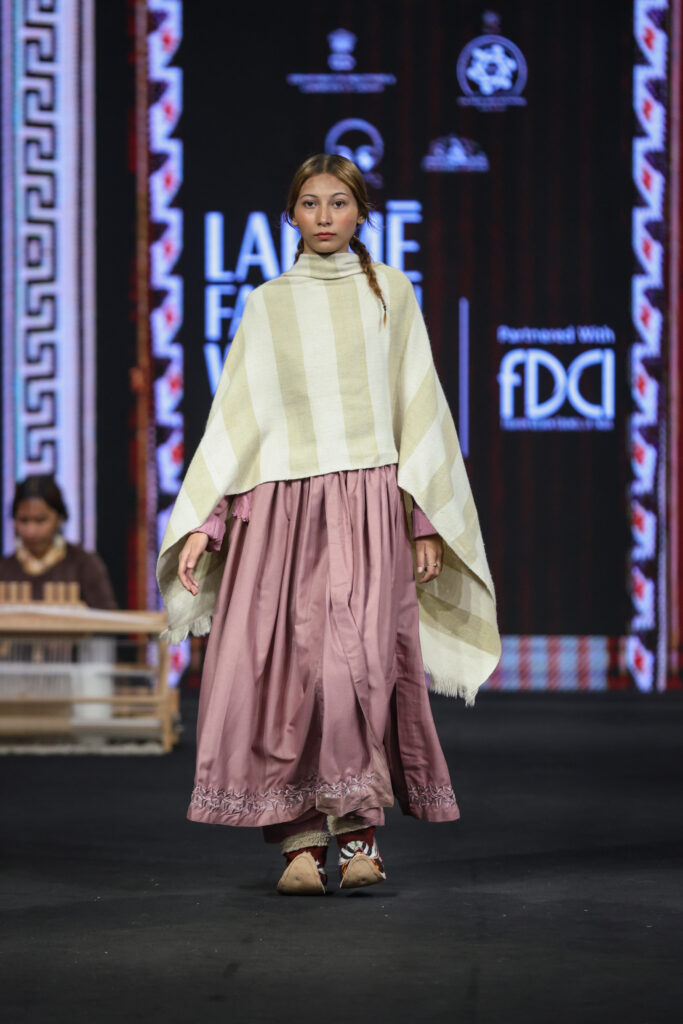
From the Liktsey village, Disket pursued graduation from Delhi University, then MBA from Punjab Technical University, as well as a short hotel management course, but her heart stayed in Ladakh. “My family are traditionally Pashmina weavers, I decided this is where my future lies. I began small- training 100 artisans in carpet weaving. We use natural dyes, I grew up on a farm, where there are marigold, walnuts and onion, three ingredients ideal for natural dyes.”
Disket is the first in the village who went to college, youngest in pashmina weaving. Nomadic life is extremely challenging-snowfall for six months in a year blocks roads, nomads are forced to stock up. Combing of sheep begins in June-July, it is almost minus 40, inhospitable,” she explains.
Interestingly, here you find the finest Pashmina, the higher the altitude the better the fibres, despite government help, nomads are moving to cities looking for jobs. Two big concerns remain –education to hospitals. “Each family has 200 sheep in my village, but many are worried about solar panels going to be set up, where the goats will graze? Sunrise they are up on the hills and down before sunset,” she explains, adding, “most locals are looking for a secure future with government jobs, traditional artistry is depleting.”
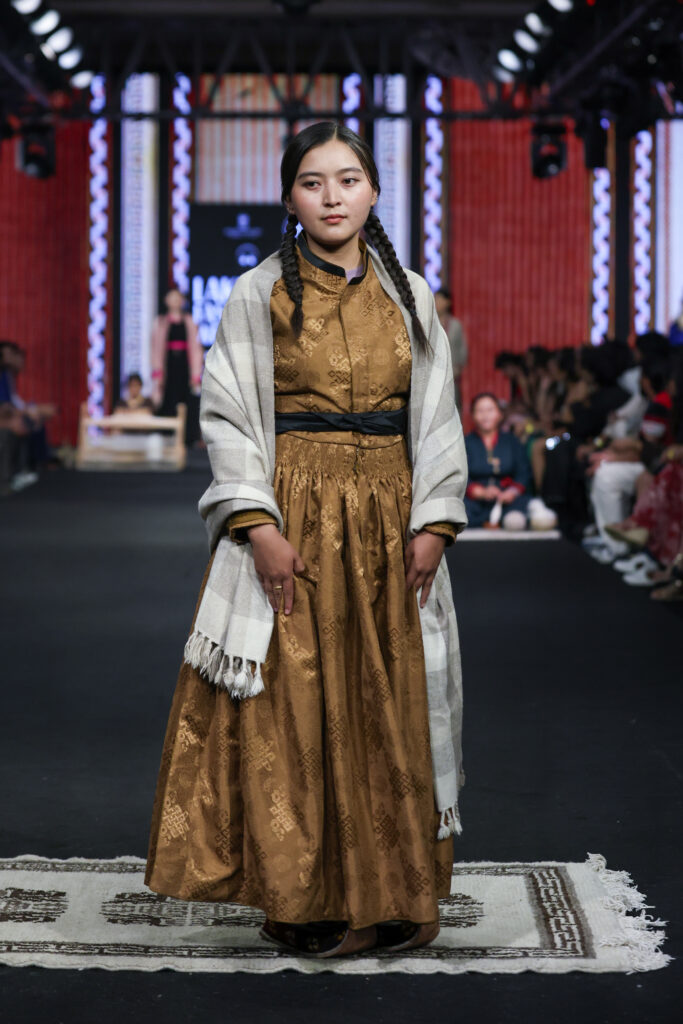
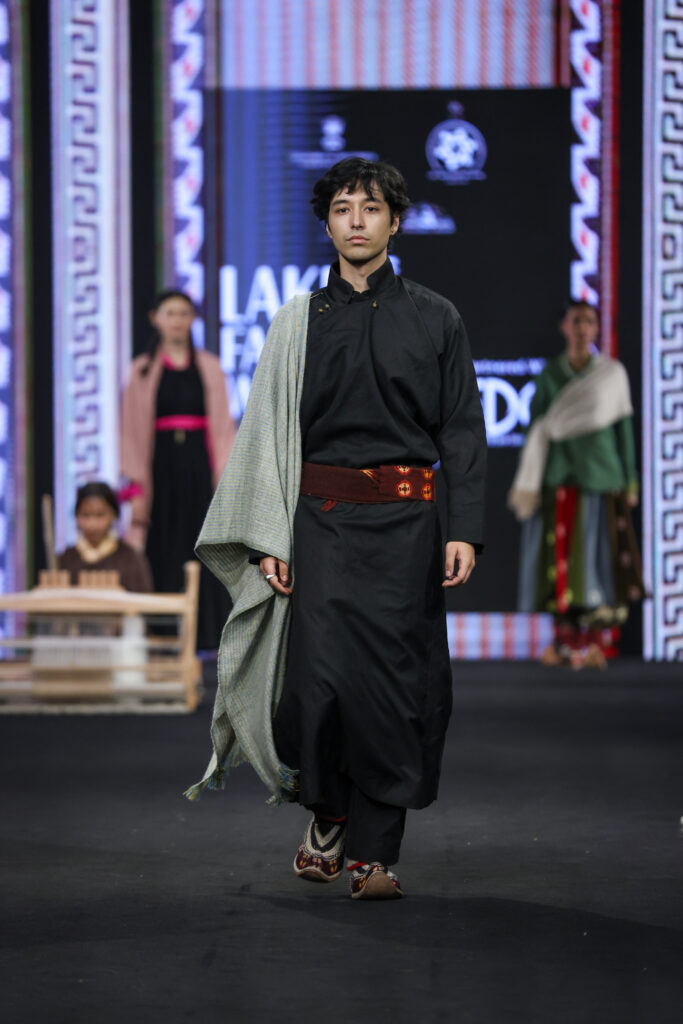
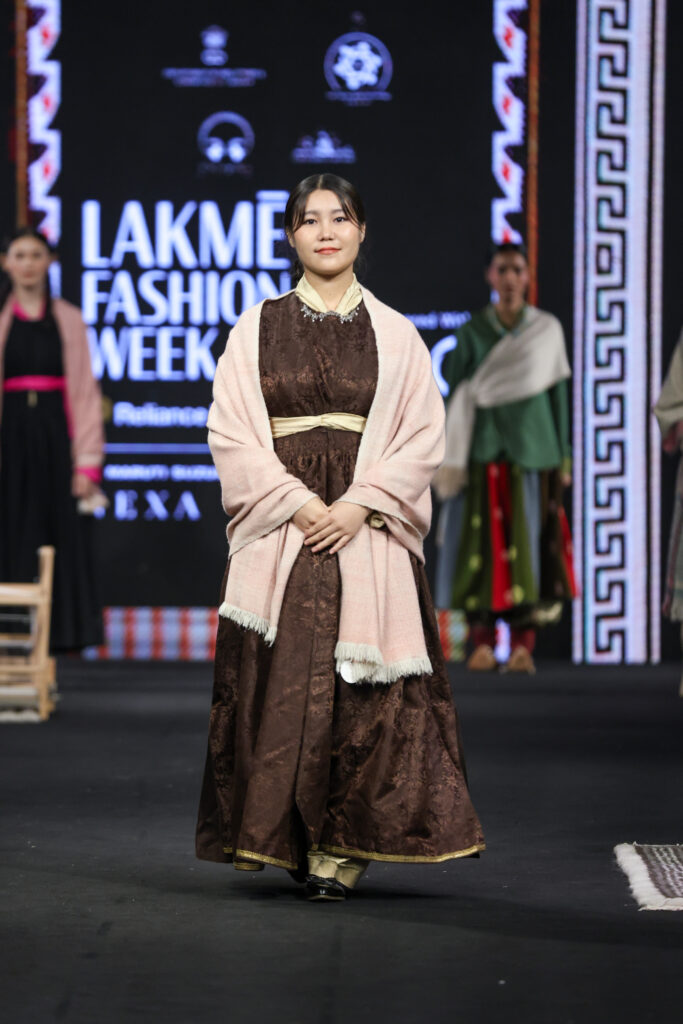
Covid taught her to start with pashmina weaving, especially in winter when life is mostly indoors, an art she learnt from her grandmother, though she also perfected embroidery, tie and dye techniques under her tutelage. This LFW X FDCI, she is reviving the art of Thikma, traditional Ladakhi resist dyeing techniques, where you tie apricot seeds in the cloth, dip in colour. “Ladakhi word thitoo meaning dot, resist dyeing technique, done in our cold desert. It is used on narrow woollen belts, Skeraks, people tie on their waist. Historically royalty in the 12th- to 13th-century wore it, as murals at the Sumstek Temple and monasteries show these dotted textiles,” she explains.
Interestingly the pashmina is kept austere-beige, grey and off white, natural hues, but what Disket is attempting to do is give the people of Ladakh a second chance at reviving conventional, age-old hand work.