
Valaya on wheels
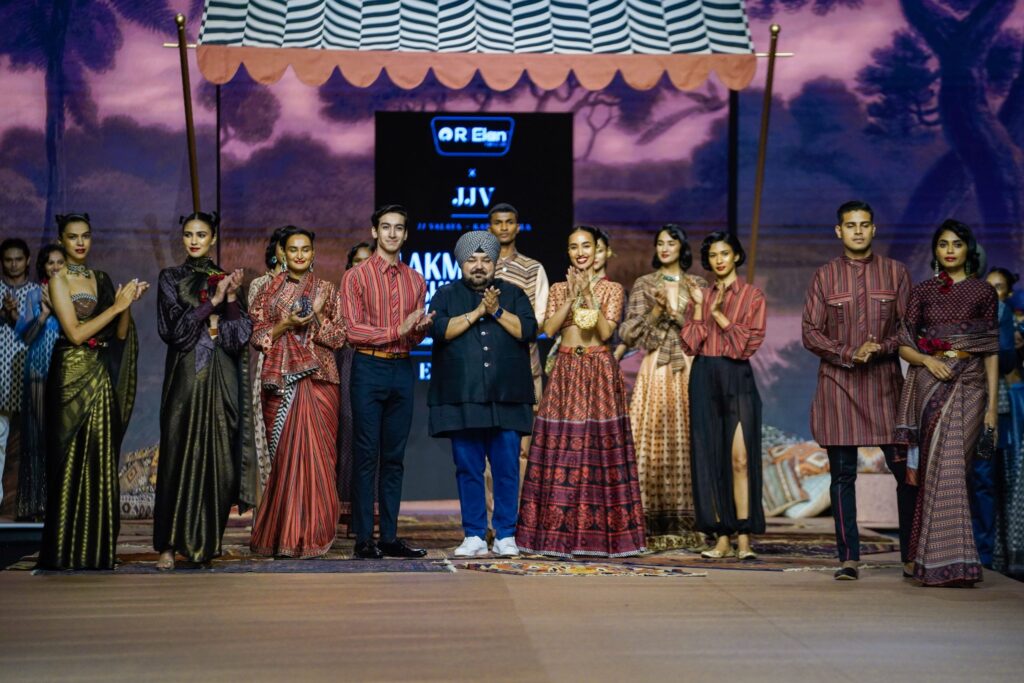
From Chevrons to inclusivity, J J Valaya tells us individualistic women are the most fun to interact with and that his bridge line JJV Kapurthala is only helping you dress quicker and smarter. Asmita Aggarwal The shifting leaf Chevron which is the staple of JJ Valayas fashion house, was created about twelve yearsback though it never began as something he would take down the years, but it ended up becoming highly covetable, a signature of sorts, so now it is a perennial and every season J J does a new line based on this and perhaps, he admits one can expect to see many avatars to this most loved pattern in the seasons to come! Just like what a Missoni does with the zig zag pattern or LV with its signature logo, or Versace with the Medusa! I dont think doing a bridge to luxury or diffusion lines can really put an end to couture, in fact it helps the growth and evolution of a fashion house. I have been a couturier at heart always and have excelled in wedding clothes, but there was always a huge segment of loyalists who were dying to bite into the ethos of the brand. Either they are getting married, or they are already married or they have years to get married, says J J at the launch of JJ V Kapurthala at the LFW x FDCI 2024 showcasing in Mumbai. So, he decided we wanted to create a line that was more accessible which could be worn by many people and could look at making sure that the line would lend itself to a larger audience across the country and that is exactly what has happened with JJV. Haute couture rules and rules supreme, and never has couture to do with the amount of embroidery the garment has. There are so many other facets that go into a well-constructed garment in terms of quality of materials, quality of workmanship, the enduring signature of timelessness, believes JJ. All these things come together along with perhaps the most excellent levels of craftsmanship which kind of define couture in the world and indeed in India as well. Tying up with a jewellery brand Aulerth, is a natural extension for fashion lines and in these be it jewellery, carpets, or Valaya home, he always involves professionals, as he realizes that his skill is in creating and detailing. The technical side of any business and that too a diverse business if you look at the jewellery business and interior business it requires a completely different mindset to see how it technically works with people who are masters of the craft, he says. His biggest achievement till date is remaining relevant as a fashion brand and for that the most important prerequisite is to be excited about what one does. Almost 33 years down the line, he is pleased to say, and happy to acknowledge that his levels of excitement and enthusiasm to sort of keep creating something new and beautiful remains perhaps at an all-time high. I would imagine that keeping a brand going and launching newer things every season have been more fun; putting something brilliant together, says JJ. His personal style is rather basic and he lives his life in short kurtas and Nehru jackets and breeches or jeans and he rarely wears embroidery even though it is one of the mainstays of the House of Valaya. I play a lot with prints and textures, yes obviously my work stems from a belief and personal ethos, but a chef when they make all the brilliant food that others enjoy, they most often end up eating basic at home, he confesses. There is no doubt that as a designer one must go with time, AI and Metaverse there is no escaping it, though one really has to wait and see what happens in the future with these tools. Considering that I started my career at a time when only 22 fashion graduates came out of one design school in the country, there were no newspapers or magazines covering fashion, there were no TV channels, no internet, no fashion weeks, from there to now I have seen a huge change. And I am looking forward to what happens in the future as well, he exclaims. Sure, AI will play a role, but he does not think there will ever be a complete switch, rather it will make way for a beautiful balance between technology and craft and that is something that will keep fashion going, in full gusto. Rather than AI changing the world, he feels women have! Every designer is dealing with an evolved woman today and there are no barriers of any kind, no disparity, it has been shunted out. Inclusivity is the buzzword. There is no shame in body types or skin tones or just about anything is fully accepted. That is beautiful in a way, as everyone is happy and content in their own skin. They are not afraid to flaunt it and therefore, if we look at the evolution that has happened from then to now, we are dealing with stronger and more confident women. They are very sure of what they want and absolutely in awe of who they are, so that is a great state to be in, he says. His target audience is anyone between a 23 to a 50-year-old, and he is catering to a diverse section of women and men, and not shouting from the rooftops that Valaya is only for the young. It is fair to say that over the past three decades and more we have dealt with the most stylish women and from all age groups. We have never differentiated between women who have a panache for fine dressing and that remains the case even now, he says. Though what he noticed in terms of dressing the 20s and dressing to 40s, is that lots of barriers have broken down, and now everybody wants
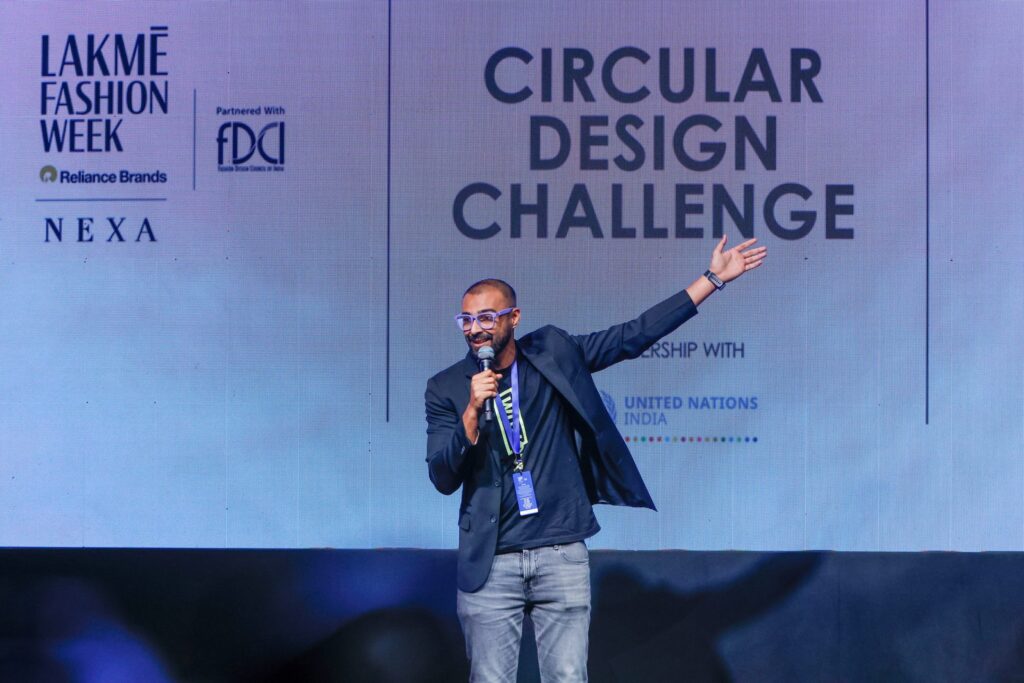
Anish Malpani CDC winner tells us his journey from being a finance honcho in the US to recycling chip wrappers into chic eyewear, as he hopes to build a waste-free world where you wear his Without sunnies sans any guilt. Asmita Aggarwal Both his parents are doctors and till the age of 9, Anish Malpani lived in Aurangabad, before the family moved to Dubai and thats where he stayed till he was 18 years old. Under graduation took him to the US, years later he left his boring finance job to come back to India. He admits he had everything—good money, no debts, youngest director of a US firm, but he did not want to make the rich richer. I felt really down and wanted to address real social and environmental issues, and my goal was to solve them, says Anish, who won the Circular Design Challenge 2023 and shiwcased his line at the LFW X FDCI 2024. When Anish came to India he wanted to learn, as he had stayed in New York most of his life, and spent time in Nairobi and Guatemala to understand recycling problems. I wanted to research the impact of waste management, after all there are 1.5 million rag pickers in our country and not even half of the waste we produce is recycled as we dont realise, the material has value, says Anish, who adds that you can create high quality products by recycling. He decided to foray into eyewear by recycling chip wrappers, to make it both fashionable and cool above all sustainable, but he confesses fashion happened unintentionally. We are using the market to maximise the impact and to empower waste pickers, he says. The challenge with recycling this kind of plastic is that it is multilayered, with a combination of various types of materials in it which makes it hard to recycle as it is not uniform (aluminium to paper et al). And only one per cent of this wrapper waste is recycled globally. You have many different types of plastic and the most recycled is bottles, almost 90 per cent, explains Anish. The chip wrappers are a bigger problem, and he operates on a small scale from Pune, right now. Many laughed and mocked him when he started, saying things like You won’t be able to make this a business and why are you doing this? But he stuck to his gut feeling that and continued this uphill task winning a spot even on Shark Tank India. He chose to recycle wrappers after checking almost 400 products, and came down to 70 parameters, after thorough searches, eyewear scored high and he wanted to show the mechanical qualities of the material when recycling. I wanted to replace virgin plastic, and Ashaya or purpose, the company hopes to achieve that, he adds. Though the eyewear is sold under the label Without meaning without fear, anxiety, and guilt of using plastic and destroying the environment. Our eyewear is 100 percent recycled and I feel proud I could achieve this, build a world without waste, he adds, saying the eyewear is priced between Rs 1,000 to Rs 2,500. All the designing is done in-house by young students and even though no one studied chemical engineering, yet they manage to recycle the wrappers and create products that are appreciated more outside India, even though domestically there is a segment which is conscious about what and where their products are coming from. We have made a conceptual brand and it is new-age. The focus will now be also on jewellery and maybe footwear in the future, he concludes.
Simple Weaves
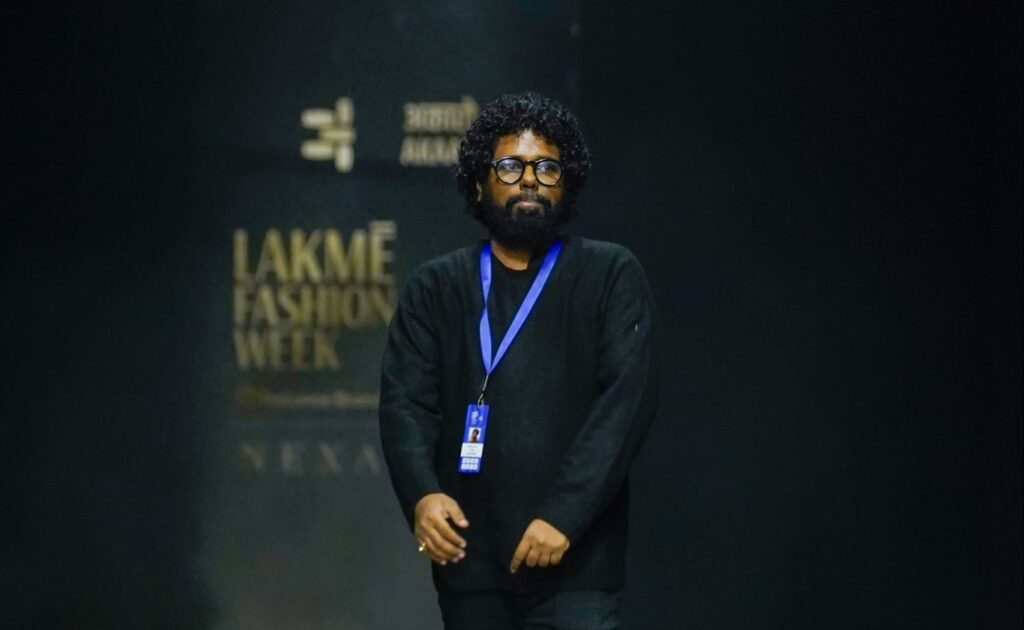
Gaurav Jai Gupta takes you on a journey to watch a Wes Anderson film through his ingenious weaving techniques, blazing ochres and endearing kinji saris in ‘Moonrise’. Asmita Aggarwal When you must fight for everything you get, you take nothing for granted, and sometimes that story of struggle becomes a lighthouse for others. The fashion industry is an isolated space, where some are unable to hustle, but when you choose to create on your own terms without diluting your brand ethos succumbing to market demands or financial constraints you are a winner of sorts. I am not a gimmicky designer where I am telling stories through Insta videos to capture the fancy of GenZ. My story telling is restricted to my shows, and in art the story lies in the abstraction, says Gaurav Jai Gupta founder Akaaro. His work is layered, and he believes as he is not an activist and neither into hectic advertising, the brand sticks to what it knows best—-dressing intense, powerful women with a mind of their own. If you look at art, the products tell the story and you connect with it instantly, he explains. Textiles, quality, and tailoring has been Akaaros mainstay not settling for mediocrity to serenade a fleeting audience, his training in textiles and weaving has helped him hold his own. Textiles are my DNA and I do not know anything else, what I did in college is what I have continued till today and in some ways, couture is continuity isnt it? he asks. His LFW 2024 line is about innovation in textile, with heavier cottons, to muslin, hoping to craft ensembles which are both functional and urbane. His classic kinji or stretch one of the brands archival fabrics which he has been working with for the last 15 years, with pleating is perfect for this seasons exaggerated sleeves, volume, detailing and big shoulders. The conversation has been how to market handlooms in a modern way to a younger more unpredictable audience, so there are denim finishes on handlooms, chambray used as denim, khadi as denim, with detailed stitch lines and oversized clothing. This time I would say there is a bit more fashion in my clothing, he smiles. To add to this mix is ruching and metallics, puffer jackets, skirts, tops with a global vibe where luxury meets craft. Gaurav has used threadwork, surface texturing only when he needs to, but till today he is known for his metallic saris, where even now there is a waiting, along with his outerwear—tailored trench coats and nifty capes. The pandemic had taken its toll on designers, many were forced to shut down or downsize, rethink their brand identity, and despite not being a bridal label Akaaro was able to sustain the storm. I look at fashion as a maker, what is my potential, there is a need to always elevate creative processes. Unfortunately, India does not recognize pure talent, it has a Capitalist way of looking at success, totally dependent on your balance sheets, he admits adding that dressing Bollywood stars or red carpet has never been his end game. Frankly, we are confused as a society, and have let stars decide our future, he adds. What makes him happy today is the evolution of women in this space, their astute understanding of textiles, their experimental attitude, buying power, exposure, and clarity of thought. As Gaurav is a master of bespoke tailoring, he has been working on his version of a bridal line of saris, keeping his brand language in mind—a bit of kinji palla saris, stretch which is built in the weave. These are different from his linen, metallic blends, that have a loyal fan following. LFW X FDCI 2024 story resembles a Wes Anderson palette that he had taken to a New York trade show recently. The yarn that was wasted, the warp was reused to create checks —-ochre, muddy reds, blues, pinks, and ivory, along with colour blocking, thats why the LFW collection 2024 is titled Moonrise. It was fascinating how yarn wastage can be converted into a full collection and the theme of capturing the moon through its 16 stages has its own perceptions. Ignition point of any line is curiosity and as my brands tagline has always been look within, seek within, he confesses. Working at his own pace, and not succumbing to the pressures of feeding the social media monster, he feels technology has to be used sparingly, and the fundamental question for those with massive followers is how can 3 crore people like everything you do? The ball is up in the air on this one.
One size fits all
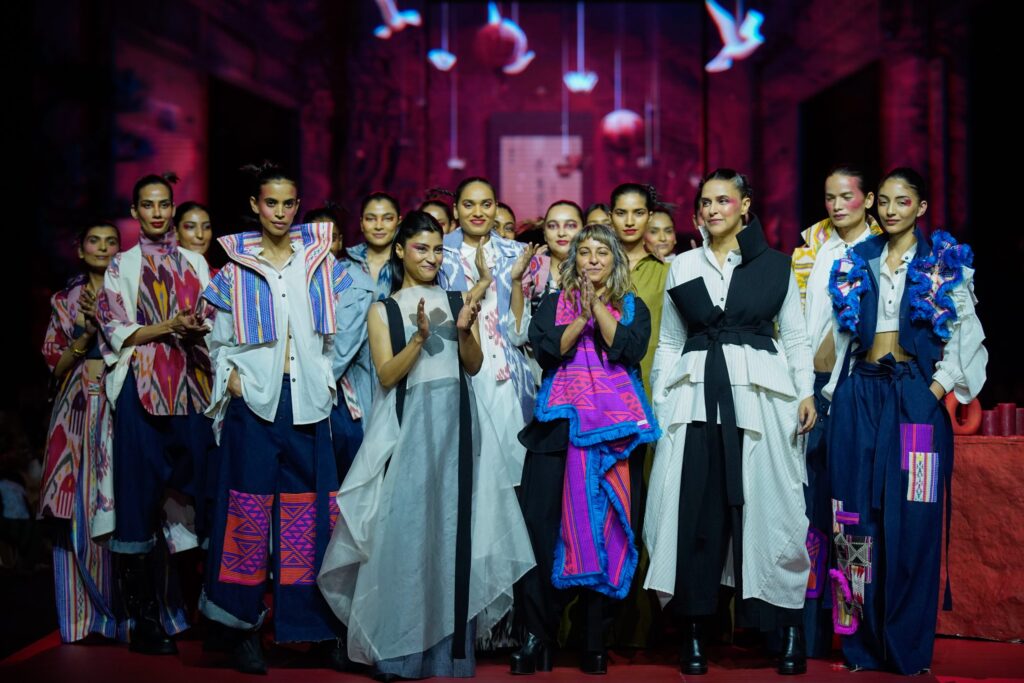
Chola by Sohaya Misra is back after five years to tell us clothes must be alive, have movement and adjustable, defying conventional norms of dressing according to your size and body type. Asmita Aggarwal Little did she know that the name she kept for herself as a toddler, Chola would one day become the moniker of her fashion label, after all stylist-turned-fashion designer Sohaya Misra, a psychology major credits her love for free-flowing garments as a starting point of this six-year-old journey into the world of fashion. The alacrity of Sohayas clothing is that it is ageless, genderless and retail spaces which sell as small, medium, extra large, Chola offers you ingenious strings and buttons to adjust it the way you feel comfortable in every outfit you buy from her. I dont embellish and neither do I embroider, it is not my vocabulary, says Sohaya, but she does believe her clothes as a version of art and thats why she was excited to collaborate a few years ago with her cousin, an artist Renuka Jalan. Moving to Goa five years ago and a conscious decision to slow down, raising her son on the sandy beaches, Sohaya, is a woman who believes in collaborations. As her clothes are super easy and allow freedom of movement without any constriction, she dressed dancers working with Peeya Rai Chowdhary of Omaggio Performing company. The desire to make clothing without boundaries, came from the fact that Sohaya felt not being a conventional body type in India comes with hassles to find the right fit where you can adjust if you put on or lose weight. Clothes dont have to be boxy, thats why I love the Japanese designers. They break rules through minimalism and black. The anti-fits, the love for austerity is what I learnt from them, as I am a self-taught designer who never went to a fashion school, she explains. Sohaya is adamant in sourcing locally, with a small five-member team, she only makes as much as it can be consumed. I feel many times women shop with a set mindsetsilk and formal, but now all that is slowly changing. Women are conscious and intelligent. The embroidery fascination has ended, they want to wear and rewear their clothes, she adds, saying that she tries to add elements that wont bore the buyers after a few wears. Unlike others, who first sketch then buy fabrics, she works backwards, so this year she is back with a bright, coloured denim plus patchwork (made from recycled deadstock) as well as linen. Add layering, print-on-print, handwoven ikat to craft structured jackets as well as frills and you get Sohaya Misras carefree offering.
Sari is the Chanel of luxury
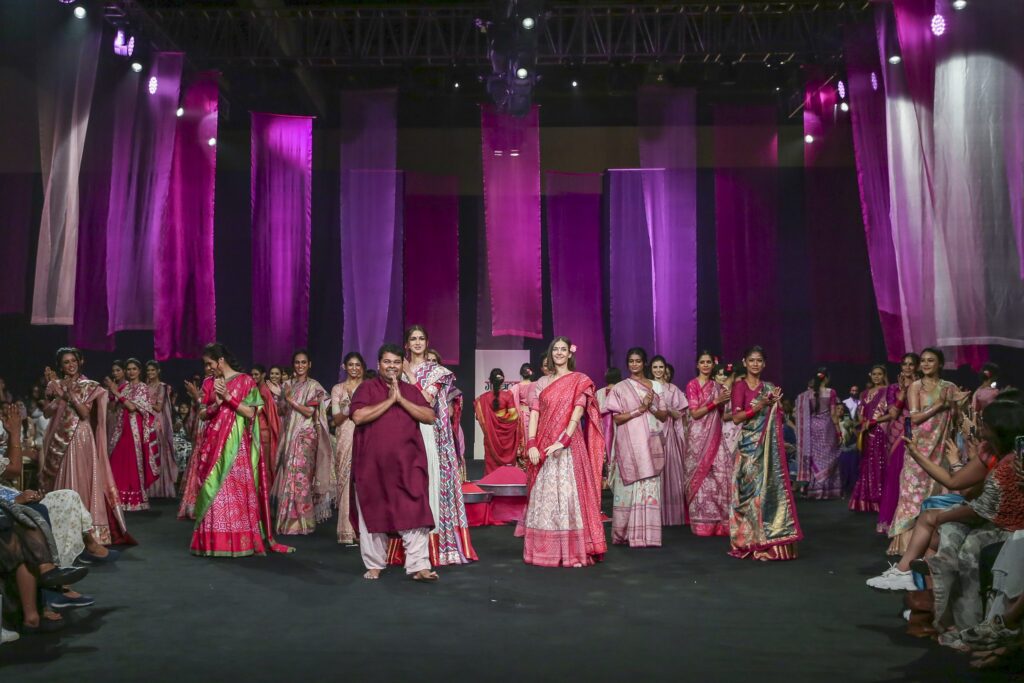
Hand woven and timeless Gaurang Shah for LFW X FDCI 2024 is back with an ode to spring with Gulal, with hand painted charkha woven khadi saris. Asmita Aggarwal Designer Gaurang Shah, won the National Film Award for Best Costume Designer in the Telugu film Mahanati, directed by Nag Ashwin, the film starring Keerthy Suresh is a biopic on legendary yesteryear actress Savitri. This isnt the only feat that Shah is overwhelmed by, as he believes his real achievement is when he started showcasing at LFW in 2012, he was the only one who came armed with hand woven saris. In 2001, he recalls, handlooms were finished, their popularity was dimming, this was primarily due to the lack of design intervention, no direction given to weavers, they were unable to fill the gap between modern needs of a well-travelled woman and traditionality. The consumer and weaver needs to be aligned and this is where Gaurang jumped in. He worked on the yarn design, made sari sustainable, added innovative ideas and he explains, in India the sari is its innate identity. The sari is a six-metre-long canvas for the weaver, if you look at his experiments with the Jamdani, every inch he elevated with fresh hues and discerning motifs. His belief in the Hindu calendar and how to dress according to seasons, is the reason his LFW X FDCI line is titled Gulal, paying tribute to Holi, the festival that ushers in Spring. In 2022, he had launched Sindoori for the festive season, and he confides it takes two years for the weaving process and thats why he took a break to be back this year. Each state has been represented through pink in this collection, whether it is Kashmir to Andhra and Madhya Pradesh. We have added indigenous weaves, plus hand painting. But this creative process is time consuming —you begin with drawings on paper, then the yarn is dyed and put on looms, families then weave the entire day by hand, we dont use power looms. Sometimes it takes two years for just one sari, it is a slow process, explains Gaurang. 2024, the motifs are refined in Shahs collection, with a use of matka silks, hand charkha khadi, Jamdani, jacquards, to even gara, French Knots, chikankari and the exclusive petit point needlework done by the nuns in Kerala. We give older techniques a contemporary flavour and the challenge this year was to display shades of pink there is no other colour used, he explains. Sari industry is more than Rs 288 billion in India, and it is still the most bought garment in the country till today, though Gaurang also has a range of Anarkalis, lehengas to ghagras and the beauty of his offerings is he uses only natural fibres used, the material only gets smoother and softer with each wash. We work with more than 2,000 plus looms all over the country, and thankfully over the years, we have built a reliable, sophisticated clientele, which values each weave and hopes to make it an heirloom, he confesses. The sari is the Chanel of luxury, he laughs and says it truly transcends time, much like his Patan Patolas, which take almost two-three years to weave, an investment for a lifetime. We work only with real zari, which never goes out of style, woven for generations of weavers in Surat. It is not just looms, sari weaving is an emotion, they put their stories in the fabric. Unlike sequins and heavy embroidery which has a shelf life, our saris are timeless, says Gaurang as he explains each motif is region specific. The kanjeevarams have wall sculptures inspired by South Temples, but they have innovated by adding ornamental designs and sometimes floral jaals.
Dressing Big B
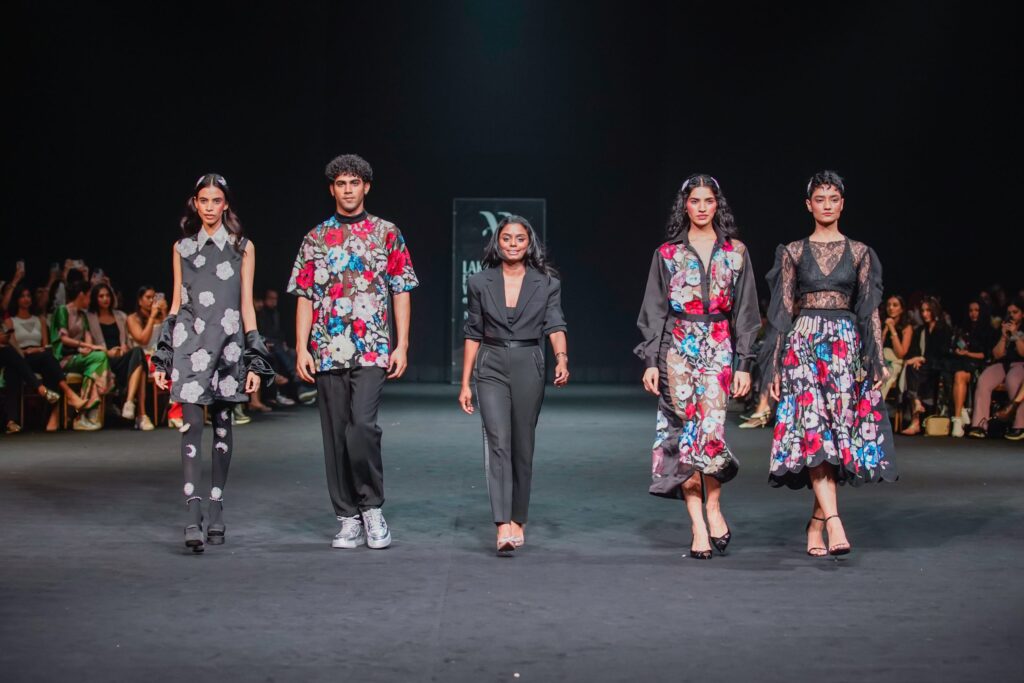
The Sun and Moon two stars have fascinated Archana Rao thus the moniker for her LFW X FDCI 2024 line, but she is excited to have done costumes for Amitabh Bachchan, Deepika Padukone and Kamal Haasan in Kalki 2898 AD, creating futuristic character sketches! By Asmita Aggarwal Hyderabad-based Archana Rao is celebrating ten years of her eponymous label, but there is a lot more to be happy aboutand that is her foray into South films. She won the National Award for the best costume designer for Mahanati, an Ashwin Nag biopic on Savitri, and she admits movies come easily to her, just like designing. Costumes for films and designing for a real character seemed real for me, says Archana, as she shuttles between films and running a successful brand. In Kalki 2898 AD, starring Amitabh Bachchan, Deepika Padukone and Kamal Haasan among others, she admits designing for Big B in this futuristic film was a learning curve. It has taken us three years to finally come this close to the release date of the film. Big B is the easiest star to work with, as he does not look at his comfort, rather he prioritizes the character. Deepikas biggest strength is her collaborative personality, she is open to ideas and we worked with her stylist Shaleena Nathani for Kalki, explains Rao. Rao had to begin from the scratch, for this film, as there was no reference that she could dip into, while designing for a futuristic film, but admits, she had used innovative materials for Amitjis character and created new textiles. Unlike Mahanati where we could look at Savitris vintage photos to craft a character on 70 mm, with Kalki the challenge was different, she explains adding finally it is a team effort —from the director to the cinematographer and numerous other technicians in between. Back at LFW X FDCI 2024, Rao a NIFT graduate, who honed her skills at Parsons School of Design, started her career working with a menswear label. Winning the Vogue Fashion Fund in 2013, when she began, she knew she was doing something right. I always design separates, and I do not dictate looks. Even if two people are wearing my clothes, they are styling it differently, personalizing it, she explains. She loves designing surface textures, in silk organzas, where sheer fabrics dominate, and on them she adds embroideries. The 2024 line is titled Sun and Moon, she liked the contradictions in the two, even though they are different, they share a secret harmony. This gave birth to two robust huesbright whites merging with midnight blues. This year, less is more for Rao, as she focuses on impactful design, adding minimal shapes, very straight forward with the play of only one key element in the silhouettes. I have tried bling this year, with 3-D flowers, peek-a-boo with sheer and strong fabrics for our tailored looks, she confessed. When she started out, Rao admits her offerings were in some ways too girlie and ultra feminine, fast forward to now she has turned to hassle-free clothing, which is versatile. You can wear her pant-suit that comes with a bustier later on with a sari, you already possess. Or buy a new sari from her that comes armed with power shoulders. My strength I have to say is my embroidery, Hyderabad is currently thriving with design talent, but everybody here has their own distinct language, she confides. In the future, I do want to do many more trade shows and of course films, which always make me happy, she concludes.
The War Within
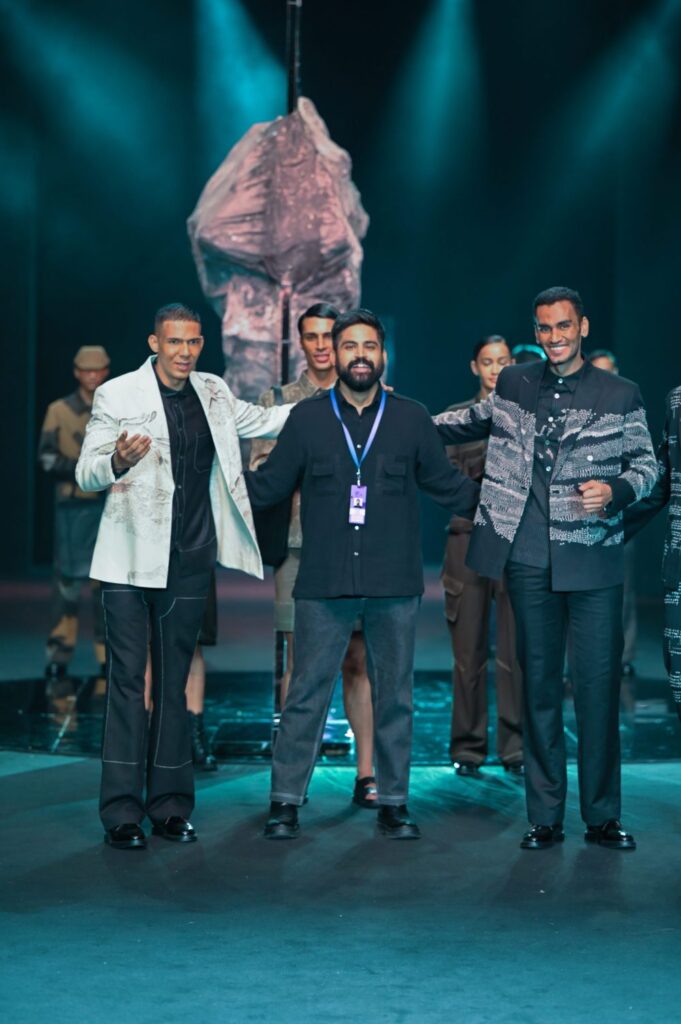
Bomb blasts, barren land, soldier writings on walls and stones, how war destroys the fabric of mankind and its futility has been beautifully mirrored through deft stitches by Sushant Abrols label Countrymade. By Asmita Aggarwal From writing poetry, to working with 8-10 needlework techniques, using imagery of his late Air Force pilot brothers life-from plane fuselage to the Morse code, Sushant Abrols label Countrymade, launched in 2019 is an homage to ingenious thinking. At 33, Abrol has won the Nexa Spotlight, without ever giving up hope, even after he faced several rejections, this is thanks to his upbringing, where challenge is part of daily life. He is delighted to get a solo show, a task many veterans have been unable to achieve, complete with 30 looks, after all he is just four years old in the industry. He was clear, he will launch unconventional menswear, but not slide into the comfort zone of ethnic offerings, even though this space is till evolving. Menswear doesnt work like womens wear, the former like to touch and feel, desire right fits, and to get a repeat clientele, you need to understand and customise, says Abrol. A believer in slow growth charts, building on a strong foundation, albeit consistently, is his motto. Without spending on PR and marketing, he refuses to overexpose the brand, neither has he tested the choppy waters of influencer marketing. I havent evolved with the insta-creator economy, it has been a personal choice, he smiles, adding he wants to still stay relevant even when social media craze wanes. This is even though naysayers advise him against his decision, stating he is losing out on opportunities, but his buyers are matureartists, musicians, and architects, who come to him for elevated basics, so you do not need a Uniqlo in your life. From a distance you can tell its Abrols clothing, and it is nothing like the designers he was trained under from Rohit Bal to Jyotika Jhalani of Janavi. Though his mentor, has always been the inimitable Shahab Durazi, whom he was curious about, often called as the Armani of India. I travelled to Mumbai, met him and since then he has guided me, I always share my progress with him, says Abrol. Just like he read Vanguard, a book written on the architect of Indian fashion Rohit Khosla, by his sister Rohini. The core of this brand rests on stark neutrals, hand done embroidery, he mastered neatness, modernised khankas, refused to do animals or flowers motifs, the inspiration is intangible, like poetry which turns into art forms. Using off white threads for his embroideries, chanderis and pure silks, matkas, katyas, as well as linen, prints over embellishments is his lexicon. Men want to repeat clothing, but I see some reluctance when it comes to embroideries even though we do a lot. They are only now exposed to the beauty of woven and knitted offerings, earlier it was only checks and stripes, he says. The feeling is if it is worked on, it is feminine. Everything Abrol indulges in, comes from a personal space, even if you look at the name Countrymade, it conjures up images of hooch, liquor, or arms, but that is not what he believes. It refers to things made slowly, by hand, a labour of love, a small cottage industry, where there are no industrialised processes. In 2015, he applied for a scholarship to study at London College of fashion, but didnt bag it, little did he know that it would be a blessing in disguise as his label today is for a discerning few who value his craft. His brother remains the central character in all his collections, even the latest, titled No Mans Land. This is based on the letters he received which have been preserved till today by his mom, and when he sat down to read them again, he felt a profound sense of loss—-revisiting the pain. The letters would come with a tagline Confidential meant to be opened only by Sushant, this was today playing in the background when he saw the Russia-Ukraine war on TV. The questions that emerged were What are we fighting for? capturing the odyssey of a soldier reflecting a personal battle ensuing within. I believe in dialogue, as humans we must find a common ground, how soldiers feel after war, when he views the destruction, is my inspiration, he confirms. The line presents this dichotomy and internal confusion through clothing specially Gond art, where the stitches reflect the tyranny of barbed wires and train tracks. The extensive R and D was done viewing thousands of war imagery, from barren land, scribbles on stones and walls by soldiers wanting to vent seeing the inhospitable surroundings, that saw kantha stitches coming into play. On stamps that come on inland letters were used to show the communication, Abrol embroidered them, the detailing of thought by Countrymade is quite engaging. He created artistic impressions of trees, rivers, and mountains in no mans land, indulged in line drawing, gave a birds eye view of farmland through embroidery, the line is replete with symbolism. Bomb blasts are also shown through stitches, even capturing how stones fly with impact, I think the idea was to depict the futility of war, I hope I have conveyed that effectively, he concludes.
Moon Power
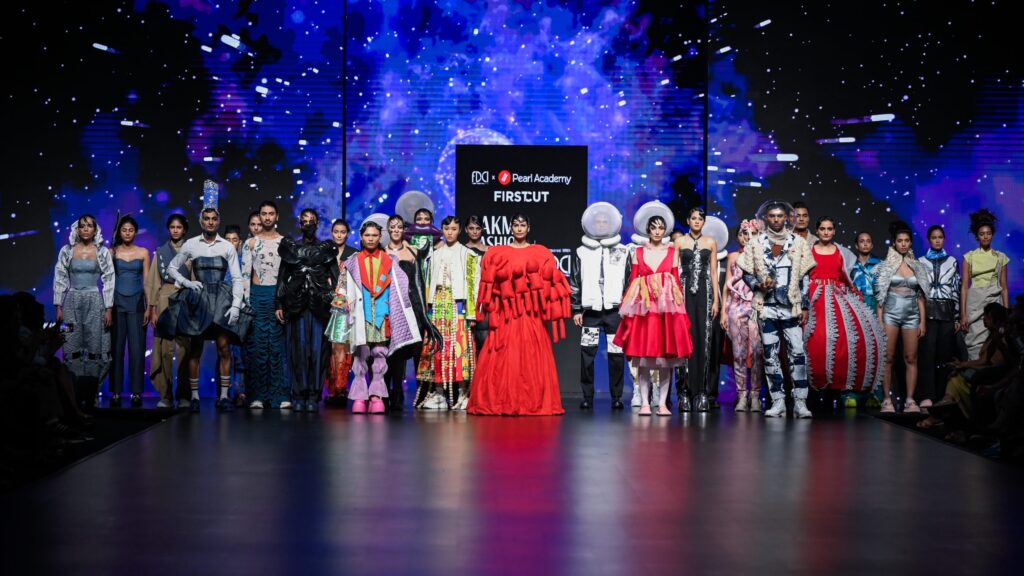
Paying homage to the moon landing and Indias homegrown space programme Pearl Academy students delve into the future to showcase how it could be the next vacation destination through metallics, anti-gravity hair and hybrid ensembles. By Asmita Aggarwal The Chandrayaan-3 mission, was a homegrown one, as the country reached the lunar south polar region, India is on the moon, Sreedhara Panicker Somanath, the chair of the Indian Space Research Organisation exclaimed. Chandrayaan-3 spacecrafts Vikram lander touched down, putting us in the league of extraordinary space power biggies. This is a victory cry of a new India, said the prime minister, Narendra Modi, as Chandrayaan-3 was launched from Sriharikota, in southern India. It is this moon odyssey that turned into a heady leitmotif for Pearl Academy fashion design and image styling students with their show titled “The Moons Echo. The twist here is, it is a journey which began with exploration in the 70s, now has Elon Musks company SpaceX, in full Space Exploration Technologies Corporation, which offers commercial space flight, based in California. With Falcon 1 rocket, it can send small satellites into orbit and with these innovations, turning it into a place where explorations and maybe in the future turn into a holiday destination. This historic win has been the theme for the graduating batch at Pearl, celebrating moon landing through puffer jackets, and grey lunar luxe. There are hints of comedy toowhere the dark side of the moon is depicted in the form of a crater. Here what is envisioned is finding water and making it a beach vacation, as guests carry their fishing rods, inflatable parachutes, backpacks, and foldable chairs. Of course, drones serve as butlers, carrying bags and hovering above. The final sequence is a celebration of sorts, vibrant characters, carrying rare earth objects, dressed like they are part of a secret society ball, a display of an avant-garde aesthetic– hoping to mimic all that the earths grandeur has to offer. The theme is inspired by the recent Indian moon landing, and depicts the seamless blending of the realms of fashion and futuristic exploration. What truly stood out were the imaginative designs that seemed to capture the essence of the concept. The show served as a reminder of one very important milestone in the history of the country, and we wanted to celebrate how India is leading the world, said Antonio Maurizio Grioli Dean School of Fashion, Pearl Academy. There are many interesting aspects of the show—from the vacuum hair resembling zero gravity and glittered up eyes. The Moons Echo presented 38 looks, and each section has been carefully divided. The moon landing is displayed through stark, grey, colourless outfits, interspersed with metallics, it was a challenge in creating the future, while building each character, with new-age construction. Sleeping bag inspired gear, texturing, layering to leather and printing, playing with volume, each element is carefully processed, says Megha Khanna, creative director of the show. Along with this there has been a deft focus on corsetry, the artistic expressions have been conveyed through 3 D printing, structures emerging are experimental, laser cutting and material manipulation. The accessories play with form and materials, add depth to the clothing, from metal to punk, dresses get converted into jackets becoming shape shifters, sometimes two garments are amalgamated to make one, she explains. Interestingly, the headgears have been crafted out of household equipmentoxygen pipes, neck pillows, to give circular patterns and harnesses have been added for strength. The creativity and passion of Pearl Academy students was visible as the show ended with an overwhelming celebration of vivacity through colour and picture-perfect moments.
Sari Stories
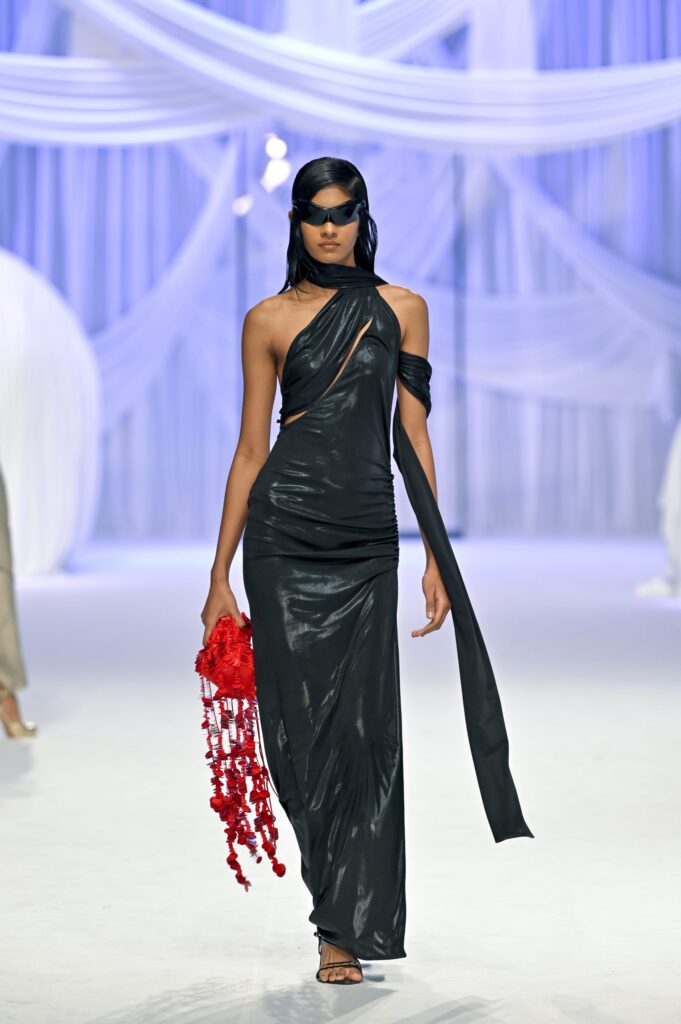
From jersey to satin Shweta Kapoors saris tell us you can walk the talk with this slithering drape, as she adds an 80s touch to it, this season. By Asmita Aggarwal
Brand by Hand
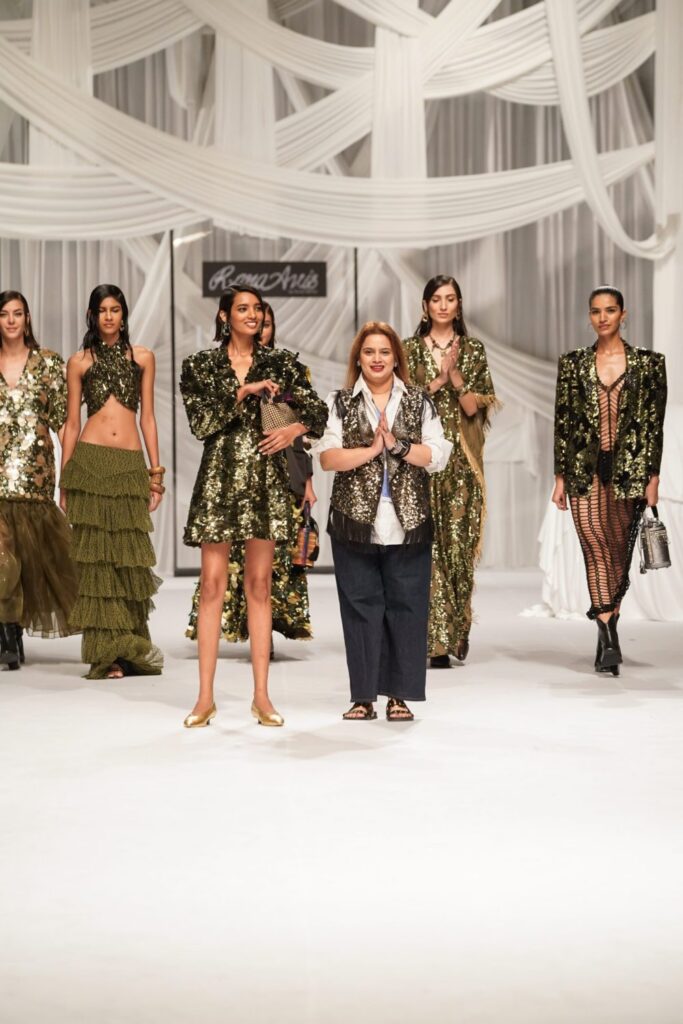
Giving leather longevity through contemporary design, Sonal Varma of Rara Avis, offers versatile shapes for a global traveller. By Asmita Aggarwal