
Arundhati Roy, Mira Nair, Kiran Rao and me share common artistic goals: Aneeth Arora
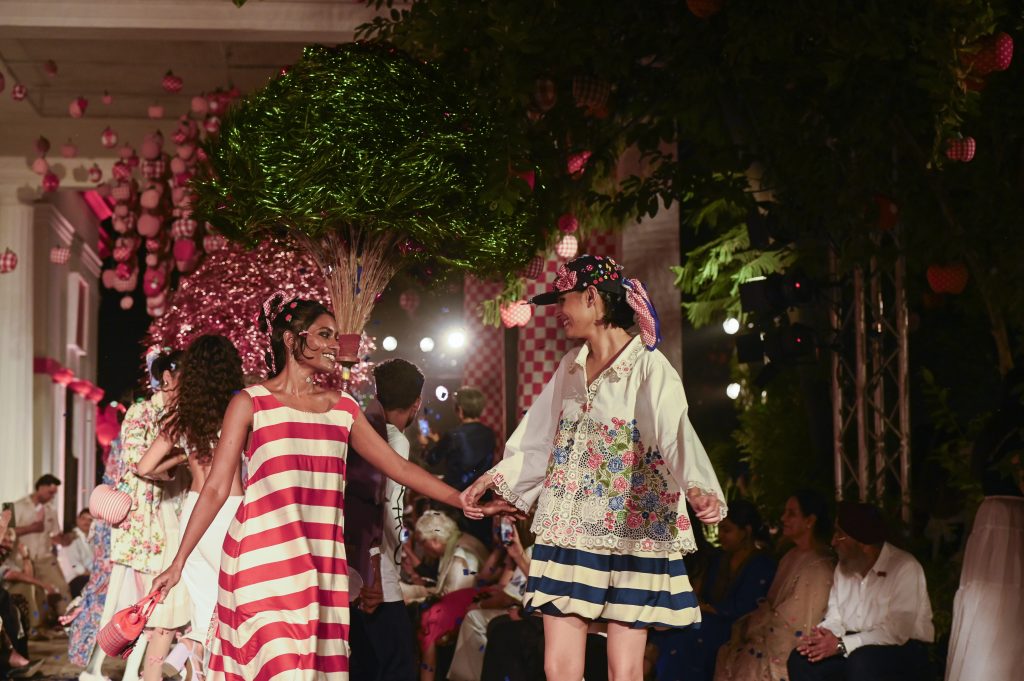
From little hearts floating on smocked dresses, Hello Kitty nostalgia, to intensive embroidery details, as well as design interventions on textiles, Aneeth Arora celebrates 15 years of Pero with a FDCI show at LFW. It has been a long road from Udaipur to creating a million-dollar business for this craft crusader. By Asmita Aggarwal Udaipur is a quiet town, very underexposed, living in a microcosm, but Aneeth Arora’s mom wore Garden saris, and Babita (the erstwhile Bollywood actress, better known as Kareena Kapoor’s mom) inspired kurtas and churidar sets, she loved fashion. She stitched clothes for a young Aneeth, from leftover fabrics from her grandfather’s kurtas—replete with cartoons, laces, patches, and flowers. “I do not know how she had children’s catalogues, Korean looking kids in them. In my friend’s circle when I went down to play in a middle-class housing society, in the evening, my dresses were admired. ‘The girls would say ‘look what Aneeth is wearing today’. My mom was quick too so every week I had a new one on,” says Aneeth, who opened the LFWXFDCI 2024 at 13 Barakhamba Road, in the capital. Entire building resembled a child’s birthday party! Thus, “nostalgia” plays a huge role in all her collections, this year is special, she celebrates 15 years of her brand, it is the core of her ideology. “There is a seriousness when we work with textiles, I thought there must be a lightness when we present it to the world,” she smiles. When her sojourn began, very few buyers understood textiles, there was no dearth of craft, but it did need refinement. Either they would starch the Jamdani too much or the wool was too coarse making the wearer extremely uncomfortable. Intervention must be from the yarn stage, is what she learnt at NID, Ahmedabad, also garments must feel good against the skin—like her Kullu Pattus, soft merino wool, refined, and it has been wholeheartedly embraced, the dyes used to bleed now they do not. When you see a Pero outfit, you will always notice little hearts floating around, somewhere there is romance, even though when she started, she was not sure if the buyer would like it, she would hide them in folds. It was her way of giving love to them through embroidered hearts, later this became one of her many intimate signatures. After two years Pero’s show is back, it is much anticipated, as she works with handloom, she wants nothing to be rushed—woven textures take time to execute. Pero shows whether it is a pajama party, or “Cuckoo and Co.”, with mad hatters or “Alice in Wonderland” are a treat for the audience, and what she is successfully able to do, is present textiles minus the rigidity, rather than being academic about techniques she makes it fun. “I learnt this from my mom, she would teach me through stories, she would sing ‘State and capital’ to me and I know it till today. I could never mug up or memorise, but storytelling always worked,” she grins, maybe that’s why you see models dancing, as confetti burst on the runway, it is part of her expression of style, transporting you into the world of a child, where she creates her own universe. In her press kits there is always a piece of Pero, once a year she shares her joy of crafting a collection, and like Coco Chanel she loves the flower Camellia, maybe because it represents resilience unlike other delicate ones, it can withstand harsh winters. “I like it, as it is underrated, the rose is considered the king, but I call camellia a modest rose,” she adds, even though Aneeth can never be seen donning florals, she is more of a Baby Breath or Forget-Me-Nots, the little blue flowers, kind of person. Unlike Rahul Mishra, or even Gaurav Gupta who in their own ways are marketing crafts to a global audience through Paris Fashion Week, Aneeth does trade shows, if given an opportunity she would love to. “Globally they don’t know our story, only our product,” she admits, Pero is available in 350 stores worldwide in 35 countries. Few know her fans extend beyond the swish set—she has ace photographer Dayanita Singh who comes and shares her latest projects, Booker prize winner Arundhati Roy works in her Patparganj studio known for the bright red letterbox standing outside like a modern-day mural, Mira Nair the famed filmmaker is a diehard Pero fan. “I am not much of a reader but I love pictures, I am a book collector and I have everything from art to architecture, we have always attracted alternate artists, like-minded individuals, filmmaker Kiran Rao whose film Laapataa Ladies is India’s entry for the Oscars. There is an honest relationship with them, pure appreciation from both sides,” she adds. Even as the world is corporatizing and fashion brands have been taken over by ABFRL and Reliance brands, Aneeth like Yohji Yamamoto or Issey Miyake does not want to sell her business—she wants to be small but impactful. She never invested in a huge retail space. “I do believe there is a right time for things to happen, the universe is a big planner, I want to create a space where I can tell my own story,” she admits. This LFW she is paying homage to the culture of DIY, GenZ loves making their own clothes. She has indulged in old textiles cutting them up and making new ones -patchwork—maybe it is grandma core but she has elevated it with French knots and crochet. There are beautiful Calcutta bedsheets in white poplin with red embroidery that have been converted into easy dresses. It also resembles Hungarian table cloth Aneeth saw, and loved the austere lines. Her constants have been Mashru and Patan checks, Chanderi and Maheshwar done in a DIY way, she mixed fabric together. But what about those who cannot afford a Rs 50,000 Pero dress? Some years back she had a capsule line titled “Lazy Pero” where embroideries were less,
FSP’s brides court shine
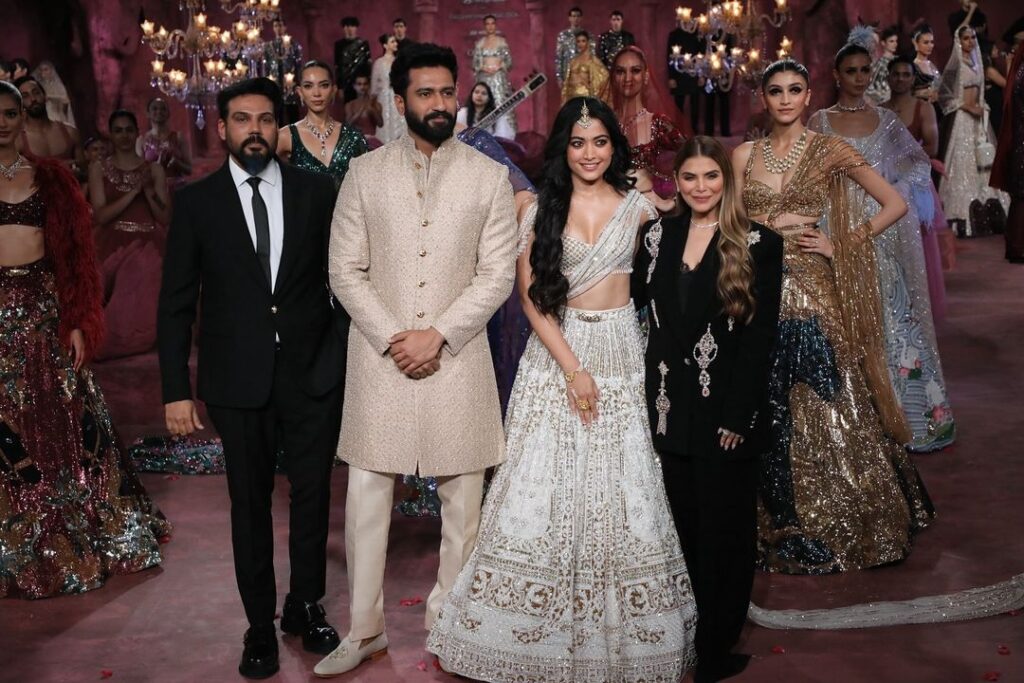
What lights up a dull, dark rainy day? Heartthrob Vicky Kaushal, for sure, as Falguni and Shane Peacock didnt shy away as usual from shine, all kinds of it, as well as clashing colours, but added Banarasis to celebrate two decades of making brides sparkle, presenting “Rang Mahal” at the Hyundai India Couture Week 2024. By Asmita Aggarwal As Delhi almost got submerged in rains, a brave few ventured out for the Hyundai India Couture Week 2024. Many felt watching Bollywood heartthrob Vicky Kaushal dressed as a groom for Falguni and Shane Peacock was worth battling the deluge. Though some things only Vicky can do, shake the bands lead singer’s hand, which really held the show together with their renditions of A R Rahman to Bollywood numbers, help his fellow show stopper Rashmika Mandana on the stairs as she wore a heavily embellished white lehenga. Shook hands with journalists he knew and asked them if his catwalk was appropriate. My first car was a Hyundai and I also banged it several times, laughed Vicky. He is a gentleman. We were showered with rose petals, after all it was the grand finale and frankly, we smelt and felt fabulous. The ornate set created, had swans on the ramp and a pool with rose petals, vintage chandeliers hung from the ceiling, the theme was an ode to the magnificence of legendary palaces, the people behind who created these –artisans. Few would have heard, Only fools fall in love by Elvis Presly, being strummed live on a sitar by the musician who was sitting in between opening petals! Freestyle dancing, artistes wearing salmon pink ruffled skirts gave the silver and white lehengas that Falguni-Shane introduced, a heady beginning. The Rang Mahal collection, had for the first time Banarasi brocade lehengas, Chikankari, lace and of course a tornado of sequins, there were mild tremors felt with golden and copper, lehengas, brimming with motifs — swans swimming with abandon, diyas, to banyan trees to peepal leaves. FSP added an extra dupatta to saris, the Banerasis came in pink with pure gold borders, former cricketer Mohammed Azharuddin, seemed to enjoy the unabashed ode to crystals, as the saris came with a shimmering cape. The live band crooned, Yeh jo desh hai Mera, by A R Rahman, FSP decided to replace their semi-precious stone bustiers with silk blouses sans any embroidery, maybe as an option to team it later with a pair of denims. This is their 20th year in fashion, and they are known for not shying away from any kind of glitter, or colour in the rainbow, also combining myriad hues in one fish tail gowns from stark blues to cold silvers. The transparent churidar came in black, and the Spanish influences on wrap shawls, in velvet with tessellation were nifty. Mirror work this year has been everyones favourite, only FSP used larger ones, and created Mughal motifs, resembling the arches of the Taj Mahal. The longest trails like a princess, and French lace complemented zardosi. Pink is another hue that is being celebrated in couture, and it is true, the Peacocks can never execute a line without faux feathers, it is called the Peacock effect. Reliance Industries, will now be venturing into handicrafts, with Swadesh their brand, a bit like Cottage Emporium stores, FSP tied up with them to create a special woven ensemble. The showstoppers Vicky and Rashmika are part of ‘Chhava’, a period drama, where Chhatrapati Sambhaji Maharaj, and his wife, Yesubai Bhonsale form the storyline.
Hardware to Soft Wear
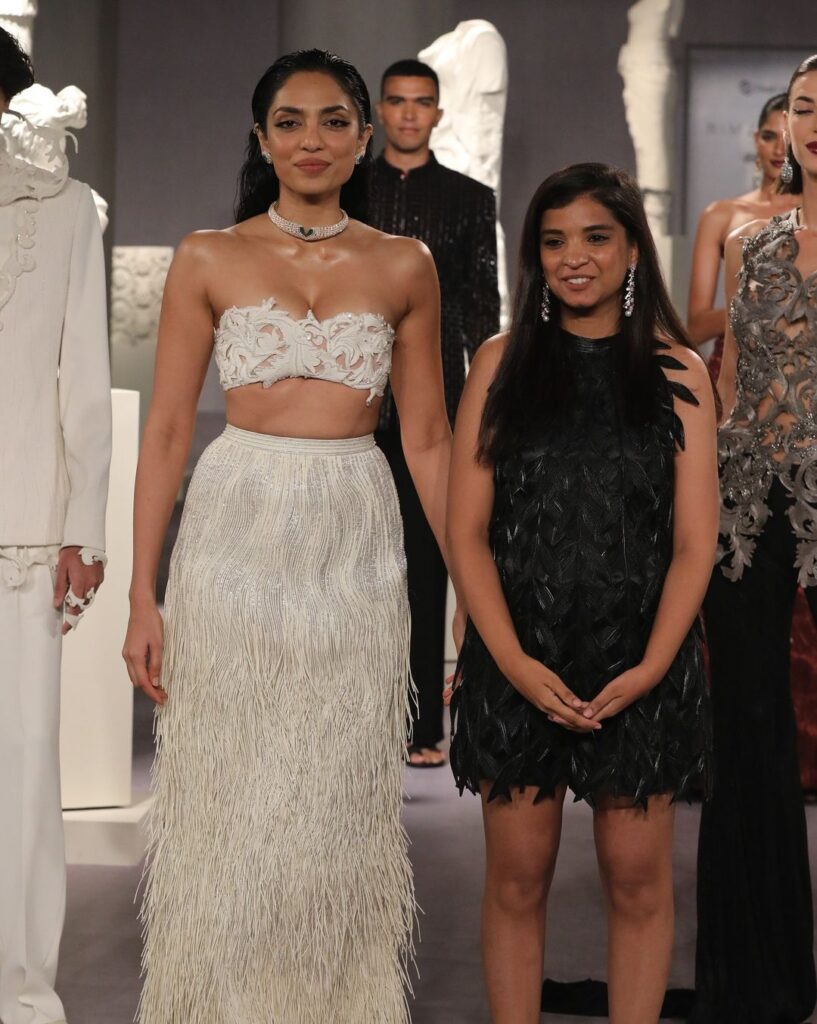
Rimzim Dadu shifts gears and adds motifs, inspired by Baroque, Western classical music, and architecture, to give intrepid women a flavour of innovative material manipulations. By Asmita Aggarwal Engineered gowns, signature metal saris, couture has a different meaning for Rimzim Dadu, it is more of a play of textures, and thats why Bollywoods svelte Sobhita Dhulipala in a white seemed to be the perfect muse. The dhoti is having its moment, its unisex, equally loved by both so are her corsets, as we all marvelled at the way she folds, moulds, tough metal into flowers, petals, beating them into submission. Sequins were placed ingeniously to create pixelated embroidery, I also liked how she took the steam out of couture and told us it could be worn with flats. The interesting aspect about interviewing Rimzim, is she confesses, her husband tells her, he can talk better about the brand than she can, she giggles and tells me. The designer known for her heady experimentations with acrylic, leather, steel, metal, mostly hardware, which she smoothly converts into soft wear, is a quiet samurai. She launched her menswear label, opened a store in Delhi, says, inclusion and sustainability are much abused words”; she launched a line called Disco, which is very unlike her personalityreticent. I wanted to offer men something cool, edgy, and fun. I felt there was a gap, she admits. She confesses, most throw around difficult words, without practicing it —just because you add one plus-size, or dark-skinned model, it doesnt make it cool, rather it seems like a marketing tool. I dont believe in trends; I want to create something which is relevant 30 years down the linea classic. Neither do I study the market, as bridal wear is a very tricky zone. Brides so far like to be safe, but in the last few years have seen a seismic shift, they want to push the proverbial envelope, and abandon herd mentality, she explains. It was uphill mentally to see brides embracing outfits made of steel for their D-day. When Dadu began, the belief was to be an antithesis of fashion, offer clothing that breaks away from the norm or any set restrictions, and this year for ICW 2024, it is no different. She developed or rather delved into a unique visual language inspired by the Baroque style of architecture. There is Western classical music that held me in awe, also architecture which I interpreted through my own vocabulary of cording, twisting, surface texturing. The only change is we have attempted to create motifs, which we never did before, she explains. When she began, almost 15 years ago, Dadu confesses, she was before her time, the market was not ready, she was embarking on a new direction. When you run a business, you have to gauge the audience, it must be a sweet balance between innovation, and marketability, she admits. To achieve a Baroque look-she created a POP (plaster of Paris) type of appeal, thus the line is titled Stucco. Besides new surfaces, they have traditional themes, zardozi, the first time it has been executed, a new one for Dadu. Working with hardware comes with unpredictability, but 15 years of experience has taught her how to make materials malleable, how to stitch a steel sari, even though it came with no rule book. There was R and D that saved us, trial, and error, we also understood how to protect, and finish our pieces. How to tame materials, initially it was challenging, even now we face roadblocks, she admits adding, artisans whom she trained in the processes have been with her from the beginning. Making samples is one thing, but how a garment will sit on a body is another ball game, she adds. Dadu launched couture three years ago, she enjoys meeting brides, she is learning every day, and says she is still in the honeymoon period of crafting couture, it does not seem like a chore or monotonous. Over the years, she has chosen various faces that match her brand identityAnanya Pandey — she is a Gen Z style chameleon; Vijay Varma for taking the road less travelled, as he enjoys dressing. If you ask Dadu whom she admires in the couture space it would be Schiaparelli, and what Daniel Roseberry has done with the Italian label. India is changing rapidly, there is effortlessness in couture, which is my favorite part, she concludes.
Gaurav Gupta’s ode to Indology
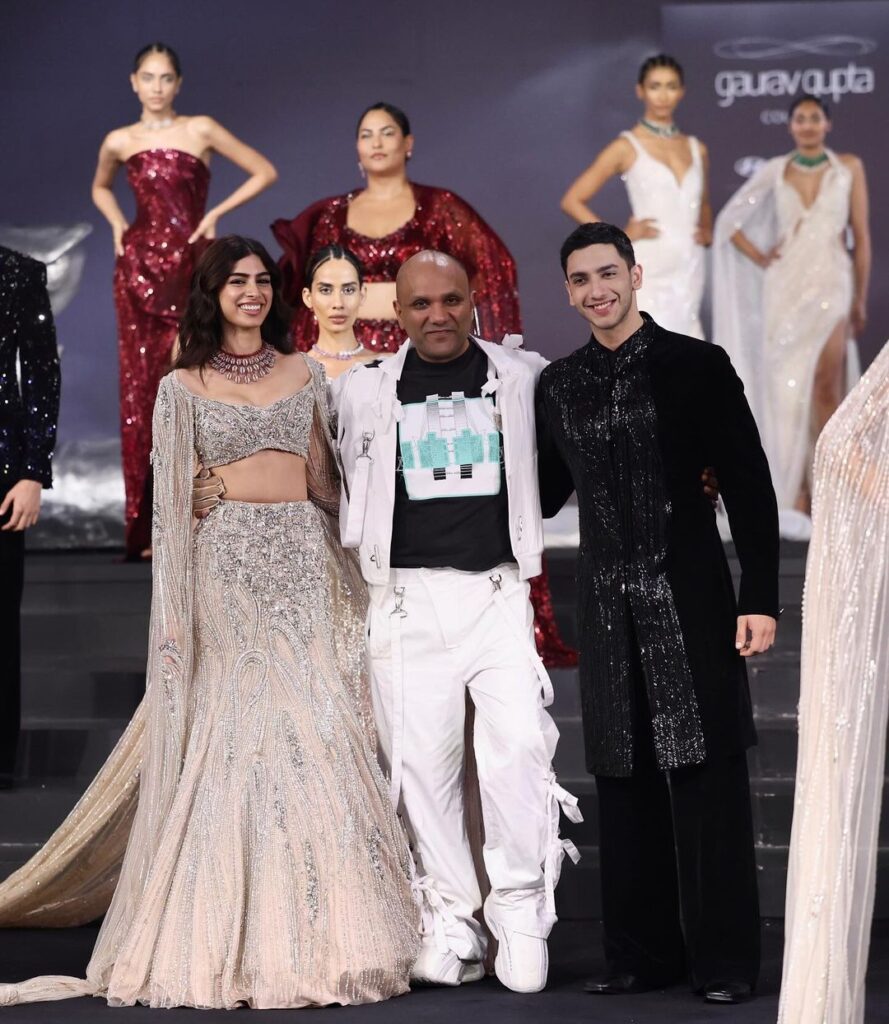
Gaurav Gupta is a man who vacillates between the ancient past and the ultra-modernfrom Shunya to Kundalini to now Arunodaya, or dawn, for India Couture Week 2024, he is in awe of scriptures. He has not forgotten the power of AI in the past, when he teamed up with tech to design a gown with IBM. Today, life has taught him to live in the moment! By Asmita Aggarwal Think Gyan mudra, with a snake coiling on the ramp, add star daughter Khushi Kapoor and Vedang Raina, and you get a Gaurav Gupta showcasing at the Hyundai India Couture Week 2024. Bustiers, breast plates, everything was fitted at the top and flowy, including sheer draped dresses with sequinned bodices. He channelled exaggerated shoulders, sleeves and the drip pattern seemed to be a favourite, a bit like molten wax scattered on buff shoulders of mens jackets. Architectural elements in gowns can be clearly seen, as smoke emanated on the stairs leading to the top of the ramp, probably in sync with his serpentine bodices that wrap the body. Gaurav Gupta knows how to serenade women —in a country of shalwar-kameez he has got them to try his gowns glittering in the daytime. To add to this is his prestigious foray at the Paris Couture Week, three times. He may have dressed Beyonce, Cardi B, Mindy Kaling, but there is a lot he is internally fighting for— damages of Rs 2 crore from copycats, and an accident that left him injured, and his partner in the ICU. A graduate of Londons Central Saint Martins, Gupta retails from Neiman Marcus, Bergdorf Goodman, Moda Operandi among others, he makes his presence felt globally. A recent accident reinforced lifes unpredictability and deepened my appreciation for the present moment. Embracing uncertainty, I have channeled this into my work, creating designs that reflect lifes fragility and resilience. With the support of my team and external partners, I am recovering and excited to return to creating magic. I am looking forward to India Couture Week to feel that magic once again, he exclaimed. There is a certain innate sexiness to his offerings, one shoulder is slipping off, a toned thigh exposed daintily, burnt maroons playing with ivories in his line for Paris Haute Couture Week, the Autumn Winter 2024, titled Jyotirgamaya (darkness to light). The way he drapes, pleats, and manipulates fabric, with 3D elements, has won him a devoted clientele. He understands gowns are a play of proportions, and like a master mixer he often gets them right. He launched a line of jewellery, in silver/gold with the sculptural shapes, he is known for, a brand extension of sorts. He believes, global acclaim brings with it a responsibility to maintain the essence of our cultural heritage, it also necessitates embracing futuristic elements, and noble practices. The industry should focus on creating heirloom pieces that are timeless, and can be handed down through generations, he adds. He adds, I think bridal wear today is about individual expression and personal stories. When brides come to us, they seek pieces that go beyond traditional definitions, blending cultural heritage, with contemporary aesthetics, he admits. This season, he is ushering in a new era of high-end couture, offering embellished lehengas, saree gowns, and draped sarees that reflect both uniqueness and versatility. Our collection, Arunodaya is crafted to celebrate each brides personal style while ensuring she feels both graceful and empowered, he confessed. He dressed Bhumi Pednekar in a custom sari in black with three pallus, the saris ran along her curved lines, ensuring the sari remained in a womans wardrobe but with a twist. This year, age-old techniques meet contemporary elements, from intricate floral embroidery revived with Indian zardozi techniques, to cage embroidery in sequins. We’ve also incorporated futuristic elements — metallic breastplates paired with conventional forms, says Gaurav. The pattern cutting fosters sculptural and fluid appeal. The ethos behind this collection is to celebrate renewal and transformation, embodying the spirit of dawn, he adds. If you look closely, most of the titles of his collection are based on an aspect of Hindu mythology, Aarohanam, Arunodaya to Jyotirgamaya and Kundalini —he seems to be a reader of scriptures, is in awe. I find immense inspiration in mythology and ancient scriptures. The Vedas, with their profound spiritual and philosophical insights, have always held me in awe. They offer a rich tapestry of stories and concepts that transcend time, providing endless inspiration for my designs. The idea of transformation, inner light, and the journey from darkness to light, as depicted in these texts, deeply resonates with me, and is often reflected in my collections, he explains. Lizzo, Janelle Monae, Jenna Ortega, Jeremy Pope, and Fan Bing Bing, have been seen attending his Paris Couture Week shows, his first line in the mecca of fashion was named Shunya the Sanskrit word for zero, but he has proved the power of zero. If you place it against any number, it only multiplies, like Gaurav has. He keeps in mind the measured application of crystals, silver metallic embroidery, badla, and zardozi to allow the wearer to take a slice of India with her. This he updates with nose rings, exaggerated shararas, ear cuffs, and a play of light and shadow with ivories and charcoals. Since he began in 2004, almost 20 years now, he believes, translating a vision into a collection is a journey filled with experimentation, failure, and eventually success. It starts with a concept, in my case often inspired by cosmic, mythology, or personal experiences. This is followed by extensive research and sketching. Fabric selection and testing are crucial, as they bring the designs to life. There are times when the initial ideas don’t work out as planned, requiring us to rethink and adapt. However, each failure is a learning experience that refines the outcome. The process is iterative and collaborative, involving countless hours of craftsmanship and innovation to ensure the final collection resonates with the envisioned theme, he concludes.
Nizams Reloaded
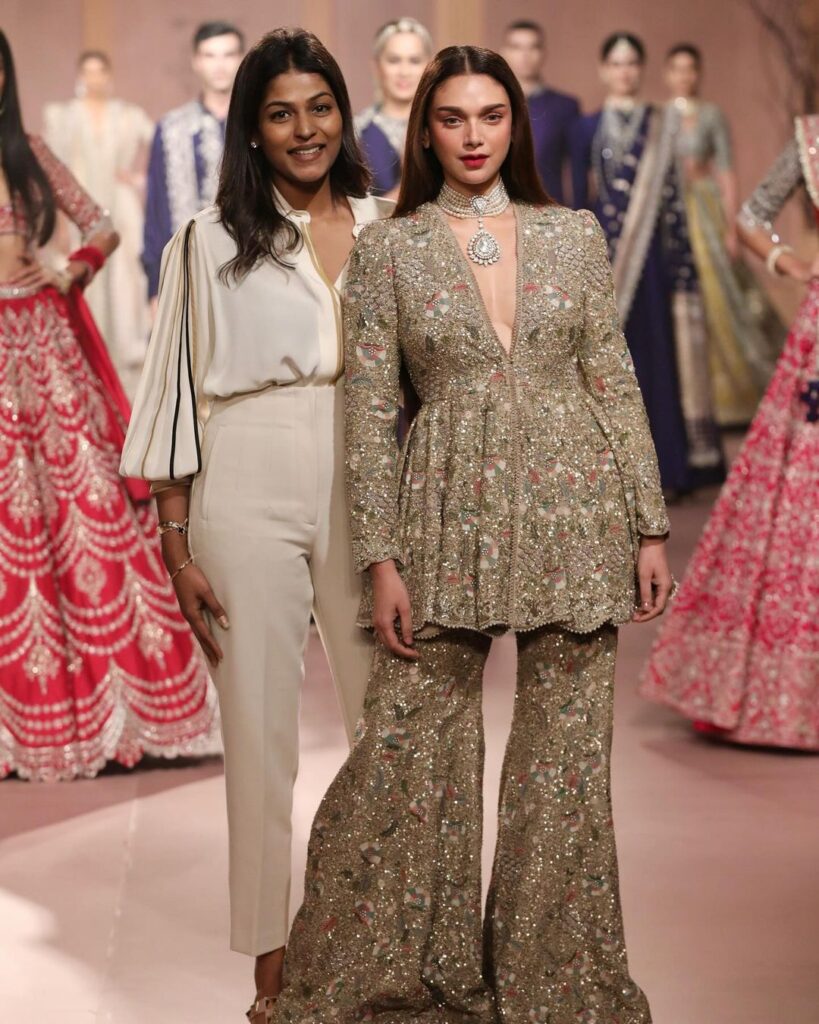
Basra pearls, Banarasis, Khada duppattas with ultra-modern corsets, Jayanti Reddy, a business graduate, self-taught designer, offers brides a potent mix of traditional with now at the Hyundai India Couture Week 2024. The highlight has been her collaboration with Italian jewellery powerhouse-Bvlgari. By Asmita Aggarwal One thing is clear Jayanti Reddy loves colour, she comes from the city of Nizams, Hyderabad, and being a first timer at the Hyundai India Couture Week 2024, she announced the arrival of fuchsias and bright reds even as pastels had taken over the runway. Colour washed the ramp, as asymmetrical kaftans, some came with one shoulder, made way for every hue of the red family, and even its closest cousins. Newly married beauty from the city of Nizams, Aditi Rao Hydari told us wearing a roomy sharara, with tone-on-tone embroidery and a jacket was the right choice. Veteran model, Carol Gracias’ opened the show, Reddy, introduced corsets with lehengas, simpler capes constructed to go with heavy lehengas without forgetting tradition—a range of Banarasis and brocades. When you are a debutant, you are unaware of market forces, you tread carefully, internally you are happy you got this fabulous opportunity—Jayanti Reddy, must be thinking as she shines on the India Couture Week 2024 runway. Reddy, from Hyderabad is growing with one store in Kala Ghoda, and one ready to open in Delhi at DLF Emporio, soon, but the business administration and marketing graduate from Case Western Reserve University, Ohio, USA, is a self-taught designer. Couture is about heavier pieces, I have been doing lighter ones for sangeet, mehndi, cocktails to bachelorette parties. I love bling, shimmer, my brand caters to myriad buyers from 21 to 65 years, she adds. Reddy has been an ardent admirer of everything au natural, even Kanchipurams. Experimentation is the key to success, jewel tones work best, pastels are a perennial favourite, and coming from the city of Nizams, she incorporated zardozi and zari, but makes sure it doesnt hurt the wearer. I have also used extensive threadwork and beads; you can wear my choli with another less ornate skirt, or the lehenga with a plain shirt, or the blazer that comes with the sari can be teamed with jeans, she adds, hoping her couture pieces will not stay locked up in a trunk. Reddy wanted a part of the over-the-top royalty to reflect in the linethus Basra pearls, detailing became the focus. Earlier flares worked, now everything has become sleeker, even though it remains a challenge to think of a theme every year, sometimes twice a year, Jayanti believes, the extravagant Nizami culture forms a potent inspiration. The way they manipulated gold, combined it with pearls, is what I attempted to showcase this season, she exclaims. The vintage Khada dupattas worn even over saris, add a touch of regality, and of course drama, it is the traditional costume of Muslim brides. Reddy has always worked with Banarasis, even creating jumpsuits in brocade, or corsets to be worn with saris. Women entrepreneurs must be respected especially when you dont belong to a fashion background and dont follow trends, start with one tailor. In fact, not following the set template helped her, and her business training in running a team of 250. When I started, in 2012, I wanted to dress a woman who was working and wanted something to wear that accentuated her status. Now, Im dressing brides, which I never thought I would, she adds. Whether its the bride or her extended family, there is something for everyoneeven the Ajrak dyed kurtas are an all-time favorite. Celeb dressing always helps, if its natural brand extension, I look at it as a form of support to the designer, as a lot of people like to emulate their style, she adds and hopes she too can soon do a film with Sanjay Leela Bhansali, or a period drama like Heeramandi. Despite doing bridal, Reddy believes recycling is part of her brands DNA, no fabric is allowed to go waste, they make either bags or tassels. I also advise brides to reuse their lehengas, we pull out the can-can, upcycle the old ones, make Anarkalis out of full skirts, she confesses, as she is back after a hiatus, the last show she did was in 2019. The most interesting collaboration for Reddy has been one that came organically—with the Italian jewellery powerhouse, Bulgari. They told me my clothes fit best into design ideology, as they wanted to market their uber luxe Serpenti watches and jewelled pieces. We shot a campaign in Bangkok, with my saris with blazers, and there is another to happen, it is in the pipeline, she admits, adding working with a luxury brand has been thrilling.
Rahul Mishra’s Valley of Daffodils
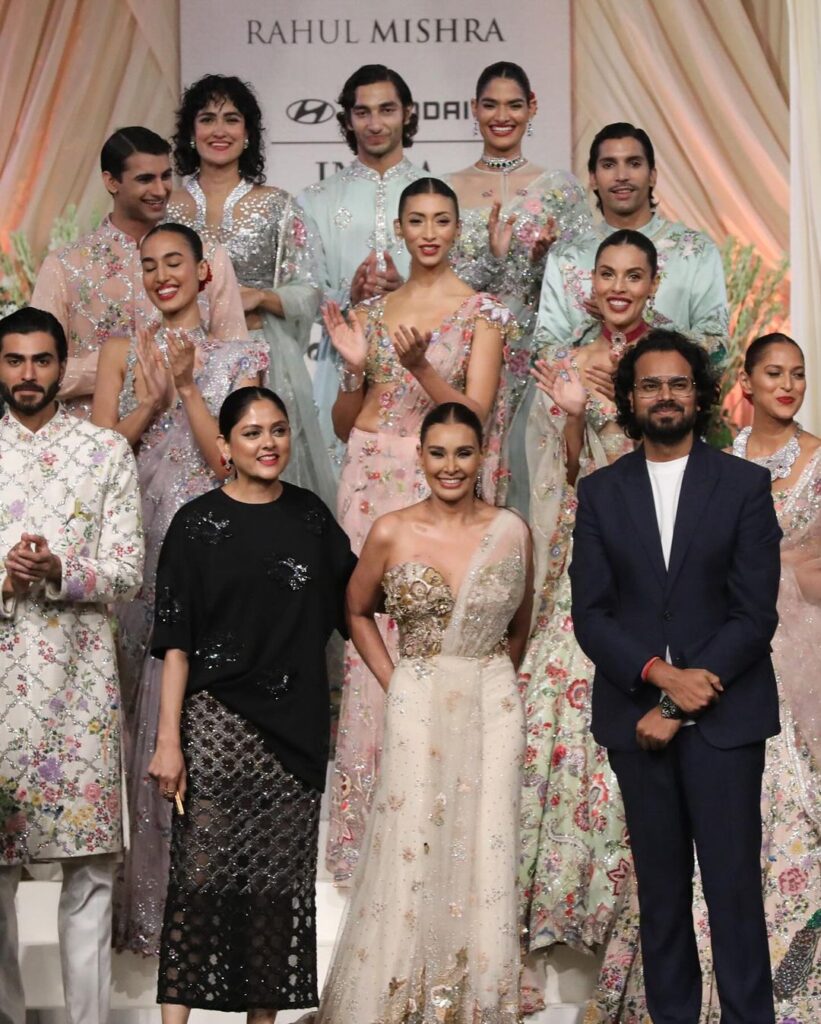
Flower power never loses its prowess, and Rahul Mishra at Hyundai ICW 2024, made sure the embroidered dupattas were unisex, the pants-suit is now out of the boardroom and frolicking at a cocktail party in a line titled, Nargis. By Asmita Aggarwal Nargis or daffodil is a lively yellow flower, it could also be the yesteryears actress, Nargis Dutt, I am guessing Rahul Mishra stuck to the floral variety, naming it for his line seeped in intricate thread work, at his Hyundai India Couture Week 2024 showcasing! His roots are in Malhausi, a non-descript village near Kanpur, which have gone far into the ground, as he has become the star of Paris, and its super competitive Couture Week, only selecting an exclusive few If his latest workplace is anything to go by 5,000 square feet, inNOIDA or the way that his wife Divya controls the office and directs the workforce, they are a team and thats what makes them so successful. At his showcasing there was live music, which seems to be the mood of Couture Week, and the Sufi master, Nusrat Fateh Ali Khans chart topper Afreen began with cancer survivor and model, Lisa Ray, 51, mom to twins, author of the book, Close to the Bone, take the catwalk in gossamer white, emboldened with roses in her hair. Rahul is a man of collaborations, recently, it was with the Singapore Tourism Board (STB), titled Beginnings. Made In Singapore, with actress Tamannaah Bhatia as the muse. His inspirations have been many—from his daughter Arnas Jungle book, underwater creatures, insects to Hindu mythology (Lord Brahma), old dilapidated havelis and most recently it was Aura at PCW. He began his journey in 2006, and at his presentation, explored various hues—structured jackets with placement embroideries, glow in the dark gowns glittering, bare backs with silvers of dupattas hanging from nimble shoulders, as Sufi Kalams, Chandni raatein played in the background taking us back to the 90s when this number was sung first by artiste Shamsa Kanwal. The ubiquitous sharara has come in various forms, embroidered and sheer, the cape and lehengas are now a No. 1 match, and a must-have in a new-age brides trousseau. Interestingly, the dupatta is interchangeable, it is unisex, it can be worn with a sherwani and lehenga. White, has emerged as a hue of marriages, lighter, softer, and is considered ceremonial. The pants suit was meant for corporate meetings, but Mishra has made it cocktail worthy, glistening with crystals, pearls, and glass beads. The flowers got bigger and bolder in off shoulder gowns, wedding wear today is a game of intricate embroidery techniques and surprising placements. The surface texture was so intricate on gowns that fabric disappeared; power shouldered capes, dripped with tassels, Rahul seemed to love lime green. Musicians really carry the show on their shoulders, A R Rahmans numbers are always a hit, no better way to end the show than that!
Game of Time
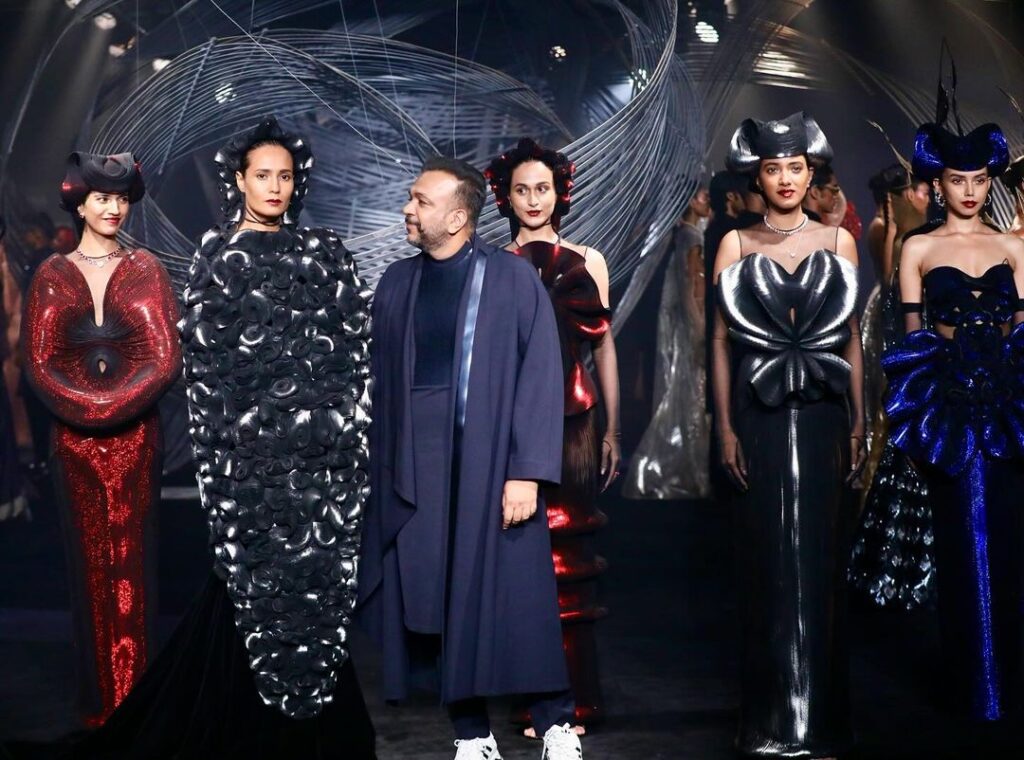
Amit Aggarwal serenades the impossibility, linearity, unpredictability of time and maybe tide, through his show as the past (cotton) meets the present (nylon), through his newly created fabric this season for Hyundai India Couture Week 2024. By Asmita Aggarwal When I watched the Amit Aggarwal show at the India Couture Week 2024, I felt a sense of connectionas if it was inspired by the film Matrix only it was reloaded this time! Remember Keanu Reeves and his cartwheels in the air? His battle against time, the film was inspired by Gita, and time travel? Well, Amits show was a bit like that! What I also liked was the fact that he got his admirers not for the catwalk but in the audience like the delicious looking Abhay Doel, a rarity on the ramp and in any fashion space, Dangal star Sana Fatima Shaikh, as well as Kritika Kamra. The set for me resembled a strand of human DNA, considering Amits love for science, I also admired the fact that he has a distinct and growing clientele loving his manipulations on fabric, in an embroidery and embellishment obsessed country. The garments moved with the body, almost in sync despite fervent hugging, it felt it was more of an artistic expression, and truly couture as he pushed the envelope. Amit ingeniously cut moulded fabric, the jackets for men with splatter of candle wax inspired embroidery were interesting. The older model is coming of age, a must for international shows of Dries Van Noten to Issey Miyake, age is now not definable, it is not a barometer of judging your ramp walk worthiness. The advent of reds and velvets for men further added to the spectacle. Amits Instagram is flooded with videos showing his journey to the Kabutar bazar, adjoining Chor Bazar, where he is scouting second-hand denim, sourcing fabrics that can be toughened, reused for his couture line. At the risk of exposing a slice of his personal life, Amit Aggarwal, admits going to bazaars has been a passion since his college days— a Sunday treat. It is entirely true that pegs of inspiration, untold stories lead to creation, among the many treasures that Amit finds, there is a particular jacket that has brought him joy, he is recycling it. This is besides the pre-owned Banarasi saris, he picked up to create updated versions adding his labour-intensive techniques cording to give it a fresh form. Remember the Patola upcycling he did for his brand Am-it, or how he dressed Priyanka Chopra Jonas in the Banarasi Navrangi saris, upcycled. Technology and science have been a part of his thinking since he began, more than ten years back, even a bit of biology and physics. Through the iCloud line that told us how much waste we store in our minds. It is imperative for me to try something new, or I will never know where the loopholes are. I am ready for that 15 minute of scrutiny at ICW, at least I tried, he smiles. There is always an emotion his clothes strike within the wearer, it comes with a wealth of material explorations, has a distinct brand language, making one-of-a-kind clothing, cant be replicated. His experiments this season, is creating a new-age fabric by mixing organic cotton, and nylon, on the hand loom. It offers fluidity, drapes, has a glass-like texture, but when it caresses your skin, it feels like cotton. In bridal, storytelling is the inception of thoughthe hopes to strike a balance by collaborating with faces who have engaging narratives. Never should there be an overkill, each piece must have a mystery, says Amit. A rose even when the petals fall off, remains one so couture should expose a sheer behind a layer, and as a couturier you must know how much is too much. Bridal for Amit is that one moment when you share bigger dreams with someone else, it is not just about wearing an embroidered lehenga, “it is a celebration of commonality. Thus, the show is moody, it transports you to a different space, explores recesses of your memory, through clothing which captures an experience. Showstoppers, a potent part of a couture week show, Amit believes some collections need a spokesperson and some dont, I dont believe in face value, he laughs. The ICW 2024 line is based on the concept of time which is represented through —science, religion, cosmology, and philosophy. Time has been looked at from a variety of angles, life is a game of time, he admits. Banarasi emulates the eternity of time, life after death; beading is about living in the now, little glimmers in our journey; how the beauty of a star is represented through the supernova, since its inception. The craft and new materials explorations represent the linearity of time, when today meets tomorrow, he explains. Time is a bit of a sorcerer, if you go by Einsteins Theory of Relativity, and quantum physics. The last concept is how time also sets an equilibrium, and it ties into the existence we know, he adds. It was in 1998 during the DD days when B R Chopra had everyone glued to their TV sets with his retelling of the epic Mahabharat, and there was one line that stayed with everyone, Main Samay hun the whole story was told by time.
Valaya’s Flying Carpets
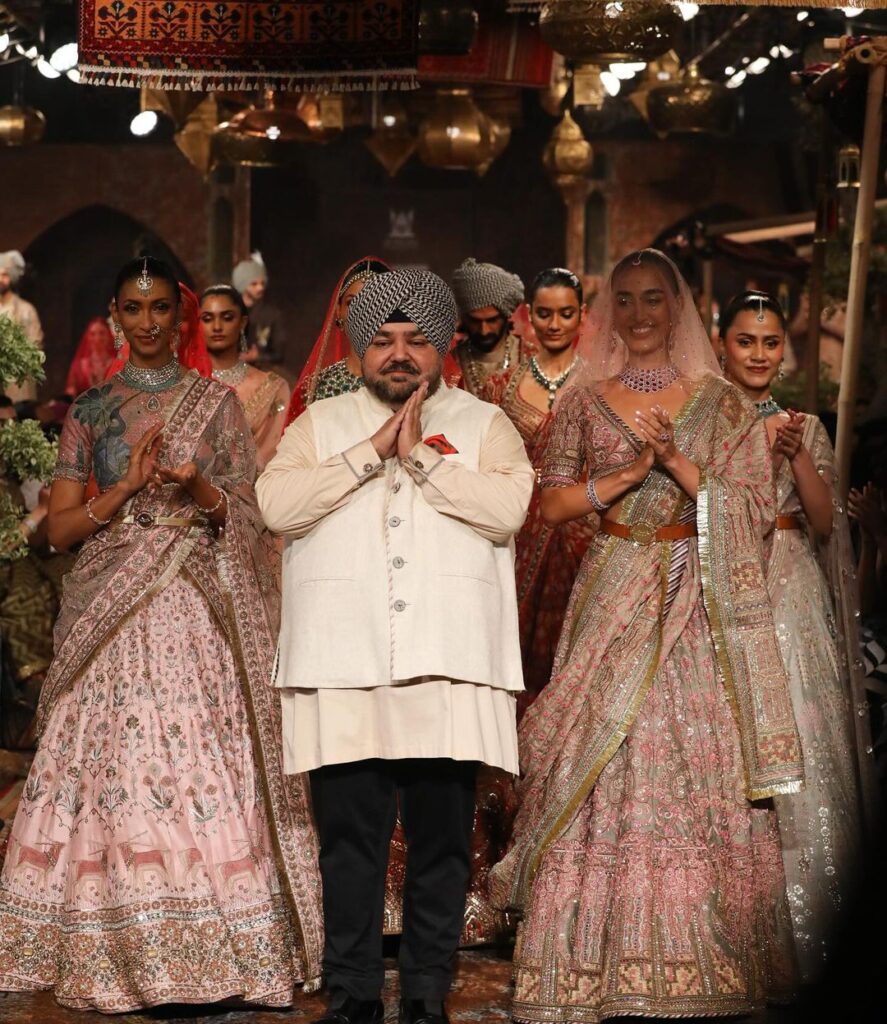
From embroideries inspired by Mughal miniature paintings, big, broad embroidered belts cinching Sherwanis to reinventing the humble shalwar, cherry red lehengas to lighter chevron palazzos, J J Valaya redefined bridal wear. By Asmita Aggarwal It was the music directed, produced by Sahil Vasudeva, at the J J Valaya ICW 2024 show that accentuated the embellished capes and chevrons. Music can make or break a show, this one featuring Mahima Dayal (vocals), Kartikeya Vashist (flute), Tariq Vasudeva (spoken word), Suhel Saeed Khan (sitar), and Makrand Sanon (percussion) revved up the line titled, Muraqqa, an Arabic word for meditation. We sat in a pitched tent, surrounded by vintage carpets, with the sound of the desert instrument Oud playing, couture is really a mood. Sahil, played the piano live, even though he studied maths and economics like a good Indian kid, in Ohio, music was his calling and the show was a tribute to his father who passed away a few months ago —a person who always supported his dreams, got him private tuitions in classical piano, sent him to Delhi School of Music. You could see the prints on JJs lehengas inspired by Persian carpets, that spread like paintings on the runway, looking like you have entered a Turkish market, on a rainy Delhi evening. The aged metal embroideries seemed to be in tune with the desert theme, a Bedouin tribe, though Valaya, also gave us options of lighter printed palazzos with cholis. Saris came with capes shimmering with zardozi, on Rumis verses. Supermodel and model trainer, Laxmi Rana opened in a nose ring, and Valayas signature– a leather belted sari. The chevron safas, Mughal motifs, didnt channel softness, rather everything was extravagant. Valaya heralded the return of the salwar— updated, printed and narrower. The idea was to take us on a journeyPersia, Turkey to India; thus, the tribal music. Sahil used an African song and wrote Khusrows lyrics on it. The show was punctuated with a waterfall, thunder, and desert storm, they created a Devdas style character, who is pontificating on life, high on spirituality. He leads you to India, thus the show ends with Chaap, Tilak says Sahil. The Oud is a string instrument, the mothership is from where the sitar originated, Sahil did the composition in just five days, and improvised six minutes of a show to time it with the catwalk. In a live show you have to sometimes play catch up, and make up music on the spot, he says. Valayas big, broad fabric, embroidered belts cinched sherwanis, lehengas interestingly came with capes. Deer danced on lehengas, the entire forest frolicked on them too, the embroidery looked as if it walked out of a miniature painting. Handkerchief-shaped sherwanis were engaging, there were Patiala salwars for men and of course, the ceremonial red lehenga.
Dolly J’s Midas Touch
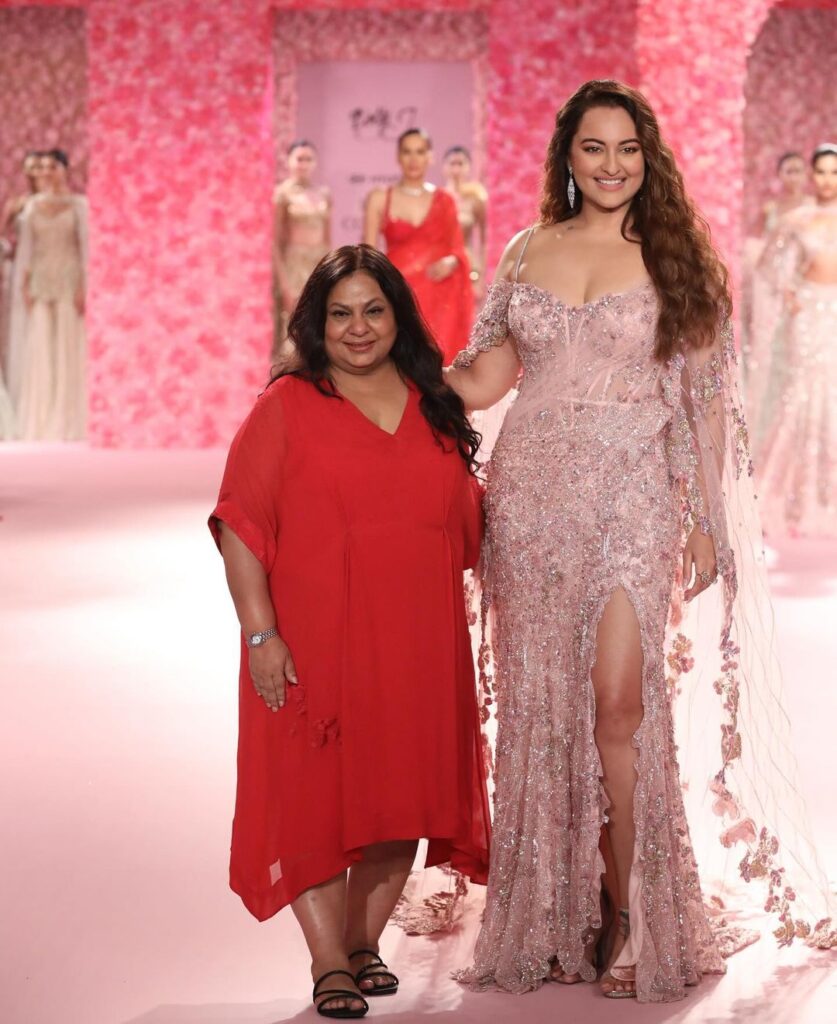
Body positivity, 3D motifs and inventing a new fabric, which rustles like paper but is organza, made Dolly Js ICW 2024 show, feel like a bouquet of roses. By Asmita Aggarwal Actor-turned-politician Shatrughan Sinhas wife Poonam, came to support her newly married daughter Sonakshi, in a woven sari. The set was a set brimming with roses —arches lined like a maze. Body positivity has always been important for me, and this collection is for young brides like Sonakshi, she is my muse. For me, it was a happy collection, says designer Dolly Jhunjhunwala, who introduced teals, mauves, and lavender in keeping with the mood of easier hues, at the ICW 2024 in a show titled La Vie En Rose or life in happy hues. The just married Sonakshi exclaimed, Any girl would love this — it is feminine, divine, and glam. The live music by singer Rachel, I was groovin to her beats. Im not a pink person, but it takes vision to put me in something like this. Today, it is my colour. Though I love red, white, pastels, yellows, and my all-time classic is cream. Sonakshi, dressed in a curvaceous pink gown, is not one to mince words, and admitted at her wedding, trendy is what I wore— a red woven sari, simplicity will never be out of fashion. What Dolly gave me is comfy, I can breathe, move around. It took me exactly five minutes to choose my wedding outfits. I wore my mothers sari and wedding jewellery for the court signing. Me and Zaheer are not fussy people, she laughed. She adds, she would like to wear something that makes her feel good from the inside. Flowy and feminine. Though for my bachelorette party, with the Sona Mandi theme I wore an Anarkali, the outfit spoke for itself, she added. Lilac gowns with leg show, burnt maroons with embroidered bodices, Sonakshi sang Love me by Justin Bieber, along with the live crooner Rachel, next to the piano, on stage, and said, Today, I am pretty in pink. Everything had a Midas touch -gold, boas, cutwork blouses, Dolly admits her signature remains gold/silver, plus, the love for colours, has been quite vividthis year the theme looks like Cinderella reloaded, more like once upon a time, whimsical for the India Couture Week 2024. Florals remain a constant, easy light shimmer makes movement less restrictive, India is incomplete without bling, she admits with a smile. This season, the innovations range from developing a fabric, which has the feel of paper, but is organza blended. Clothes I design are not very Indian in their shapes, says the self-taught designer. The motifs are 3 D just as she likes them, only bigger and bolder, with peacock feathers, incorporated in the iconography. Mostly, cholis have gone risqué, but this time, Dolly has wooed the ones, who like to keep it traditional, fish cuts work well as well, as gowns and fitted skirts. Brides have stopped hoarding clothes they want to wear and use, but the buying is timed, according to the occasion and season. There are fitter bodies, so they desire sculpted clothes, she adds. Her repertoire has faux feathers for glamour, bustiers knotted at the back, sheer as well as gowns with pockets, not forgetting functionality. Pink has been a bestseller and this time, Dolly tried a bit of teal, even though that was not her design vocabulary, though she hasnt bid adieu to hot red! Dolly Jhunjhunwala, has earlier paid a tribute to pearls in her line Basra, won over Sachin Tendulkars daughter Sara with an embellished draped sari, emboldened with thread work in gold as well as sequins.
Kunal pursues Patolas
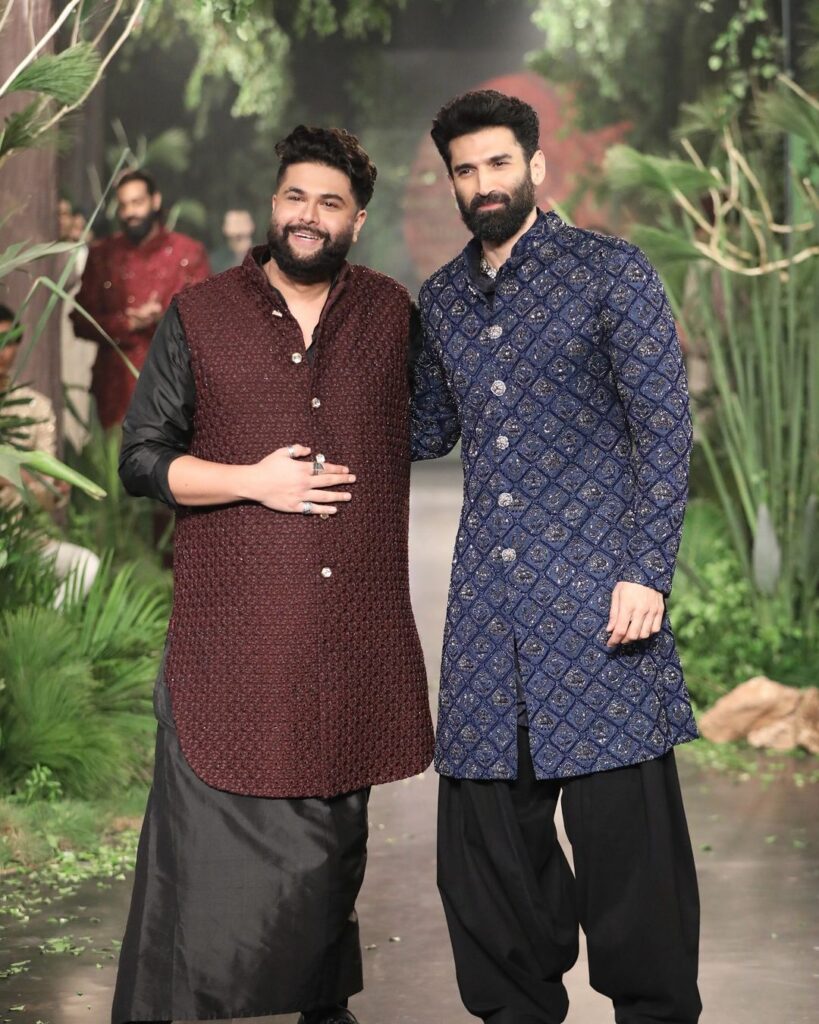
Kunal Rawal introduces Patola-inspired weave for grooms, turning tables on traditionality; he serenades us with denim dhotis, and comfort, to make sure reusability, and functionality co-exist at ICW 2024. By Asmita Aggarwal Remember Ranbir Kapoors hybrid dhoti, well, Kunal Rawal is the one to take risks. Even though he is young in couture, he believes he has found his feet, and often says, India is 14 countries in one the craft is diverse, and so is the market. We are a country of celebrations where marriages are auspicious, and grand, so why shouldnt couture be personalized, to suit the psyche more than the body type? Star Arjun Kapoor may not have the abs like the rest of the Bollywood toned gang, but he does have a winning attitude, whether it was giving up his seat for a lady during the show, or posing freely with his fans, he has no starry airs. Well, Aditya Roy Kapoor, is a different ball game he is suave, unshackled and seems to have fun in whatever he does, he was the ideal showstopper for Rawal. Kunal gave us mogras, the sweet smell wafted through the hall, and cushions to sit on, creating an oasis, with birds chirping and greenery. In his unique style, the show began with Gurmukhi, and then it was raining men —bearded, wearing earrings, kundals, ponytails, turbans to delicious curls. As Kala Doria played with IP Singh and Akshay Raheja, women walked in sherwanis armed with silver-edged swords. The turning of tables wasnt restricted to just shapes, Kunal convinced Aparna Bahl, the choreographer to take the cue and walk the ramp. Kunal got older, bulkier models in dhotis, he does know how to add drama, music played a big role in the presentation which had everyone foot-tapping. Culturally couture is the richest, and GenZ demand a hand-crafted product, which has a fresh thought, can be reused, has real value, comfort, of course, is king, says Kunal, adding, couture is mostly looked at for women, men were never in the game, only for the last few years, there has been a shift. Menswear, he believes, is a specialists job, thats why he admires Rick Owens for his ingenious concepts, and what Alessandro Michele did for Gucci, almost giving it a new identity. Men have clarity, are strong minded, they are loyalists, now unlike earlier, they take a keen interest in what they want to wear, he admits. For ICW 2024, the overall theme revolves around union of two minds thus, the title Sehera, the science behind auspicious dates intrigued Kunal. You want to make sure, a marriage has positivity, good energy, and favorable omen, he says. Thus, his motifs are inspired from this sentiment — betel leaves, evil eye, coconuts, wedding are soaked in a robust layer of culture, they have a distinct spiritual side. To fructify his thinking, he has come armed with a treasure trove of textileshis most potent armour is the Patola-inspired, hand woven, weave, traditionally women have loved. He has delved into Chikankari for the first time, brocades, and Bandhini are all time favourites, he created unique block prints, used silks and Ajraks to craft safas to stoles. For me, a line is successful only if it is comfortable, he adds. You can see how effortlessly his deconstructed sherwani works, or Patiala, breeches, pants are done in stretch, linings are sweat absorbent, fabrics weights are lighter, and come with an exquisite fall. The paneling in the bandhgala, is cut closer to the body, making way for exciting shapes. There is no cookie cutter method we follow, it is all about pattern play, he admits. He works on technicalities, jersey sleeves add ease in movement, he urges grooms not to go in for a mannequin look, but customize it. Taking it a step further, there is personalized lining on offer, cusping used to join pieces together, ensuring smoothness in wear. When I started, I felt there was a uniformity in menswear for weddings, the product was boring, men were dictated how they need to look. Now there has been an evolution, he explains. Personally, he admires drapes, but has only attempted a few, this time he has dhotis, even though flares are in trend, Kunal has not worked with them. He introduced nifty dropped crotches, six types of Aligarh shalwars, in modern iterations. Everything comes with lots of pockets, he reiterates. After design, music is his love, this year for the ICW 2024 show, he created five new tracks, he believes storytelling in the format of weddings excites him tremendously. Aesthetically groom wear is altering; hand crafted products are being appreciated. As a designer, I feel fortunate to be able to access varied textiles, seeped in history, he concludes.