
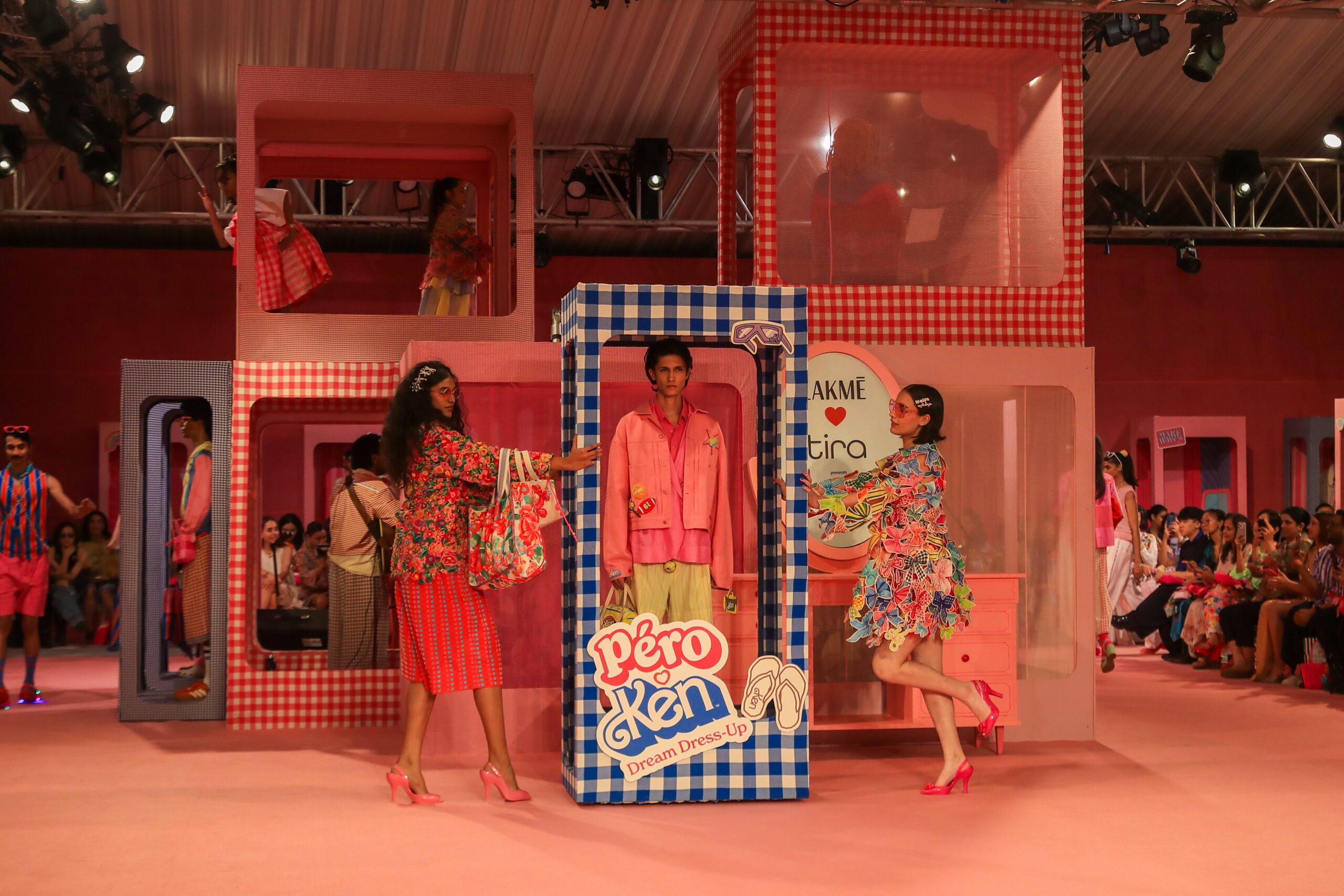
Aneeth Arora’s Barbie comes armed with the most crucial accessory, intellect, she dresses like Arundhati Roy and Meera Nair in Banarasi brocades and hand spun cotton, not in bodycon and her signature monochromatic swimsuit! Get ready for Barbie 2, Pero style.
By Asmita Aggarwal
You would never imagine Barbie and Aneeth Arora, two ends of the spectrum, one likes pink, the other banks on intellectual prowess! Interestingly, Arora is a risk taker, like collaborating with Hello Kitty and making it her own, Barbie for her is a versatile brand with unique storytelling. “Constraints help me think I feel challenged,” laughs Aneeth, showcasing at LFW X FDCI
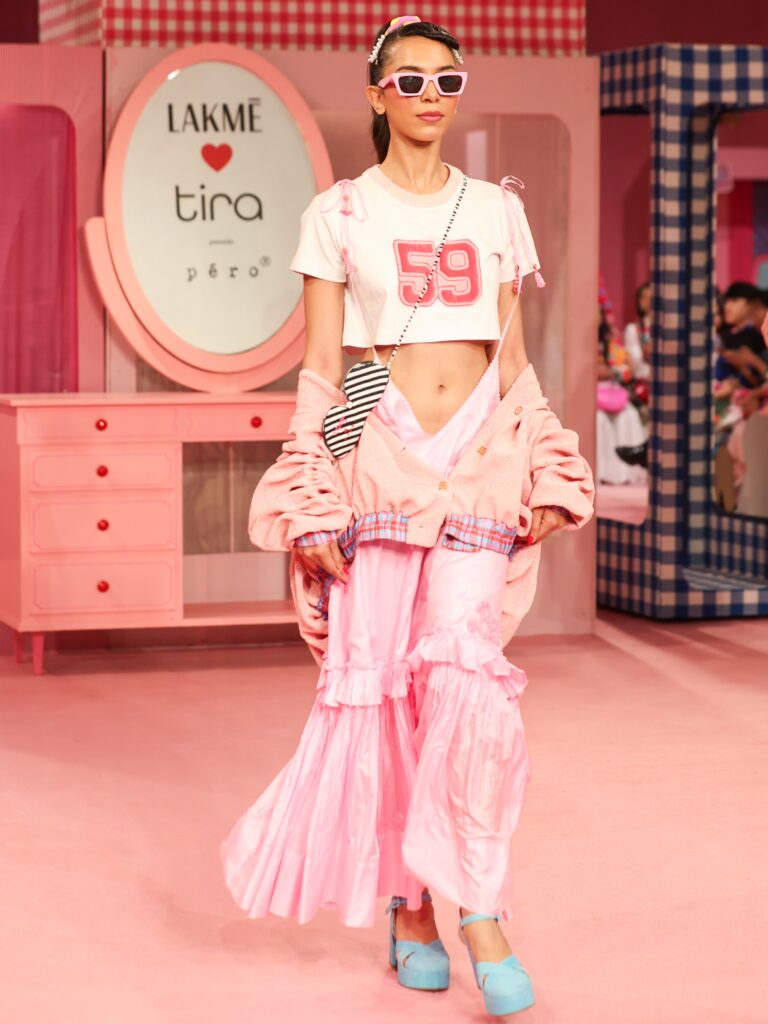
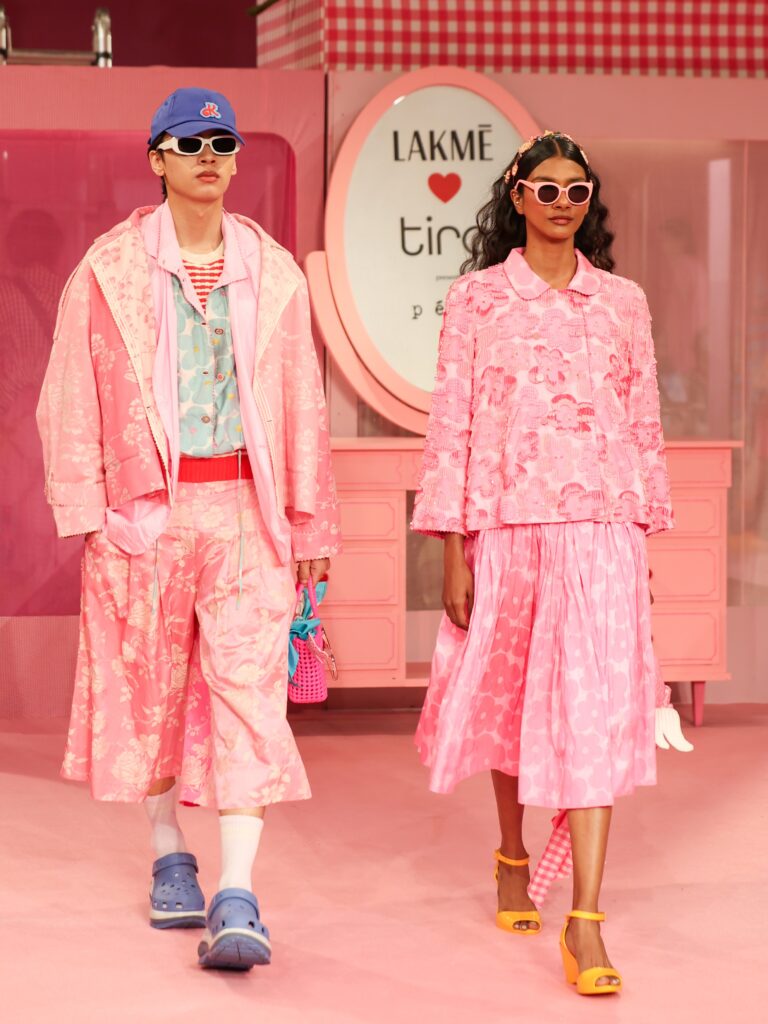
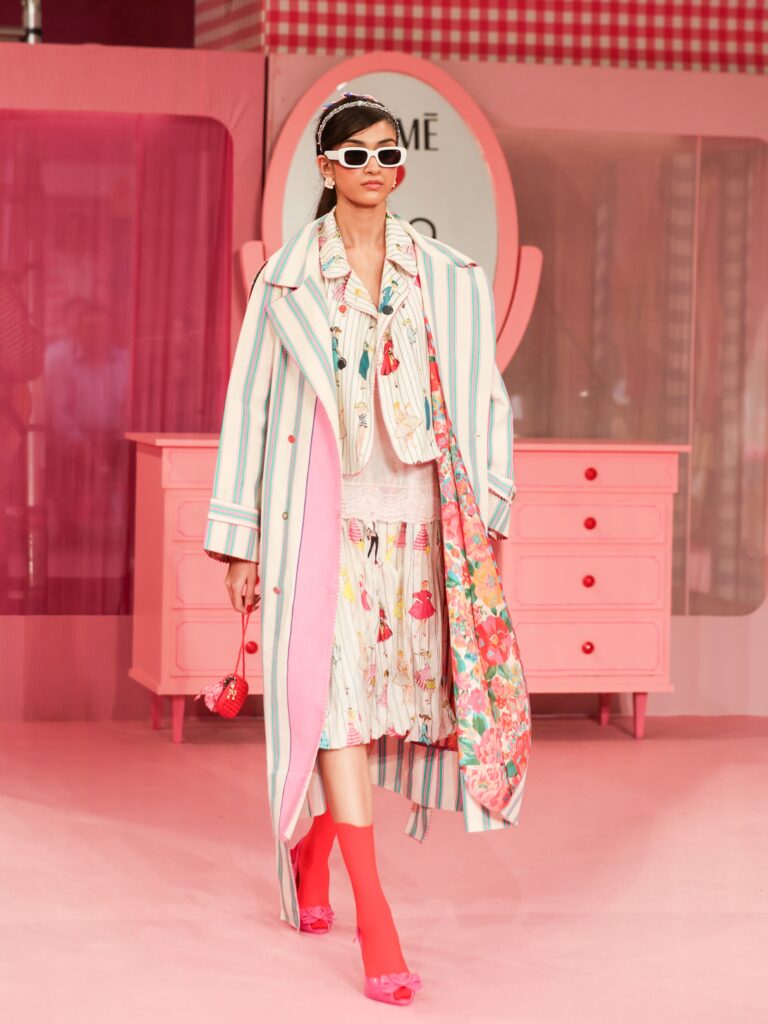
Barbie was created by Ruth Handler, debuted on March 9, 1959, at the American International Toy Fair, New York City, she was inspired during a European trip, 1956 when she saw the German Bild Lilli doll. Though Barbie’s body has been controversial since a 1958 Mattel-sponsored market study before the doll’s release, moms weren’t happy about having it “too much of a figure.”
This 11-inch Barbie for Aneeth is not a doll, it is a journey, earlier children would play with paper dolls, but you had Barbies of all body types, colours, and professions when it started way back in 1959. You could dress her up any way you want. “Barbie loves dolling up, that’s where Pero comes in,” says Aneeth.
She undertook deep R and D and believes Barbie can’t be put in a box; she had a pretty sporty and sexy wardrobe-vintage one dressed up in lace. Doll’s history is engaging, it started with Cabbage dolls created in the 70s, for girls to play. “My first Barbie was bought when I secured a good rank in school, so was the second, third one gifted. I am looking at Barbie not in the same way the world views her,” she says. Greta Gerwig’s Barbie movie starring Margot Robbie and Ryan Gosling, grossed over $1.4 billion globally.
This theme fits in with Aneeth’s larger love for nostalgia, with a child-like, innocent approach to fashion; fantasy world that kids create while playing is what she has serenaded her.
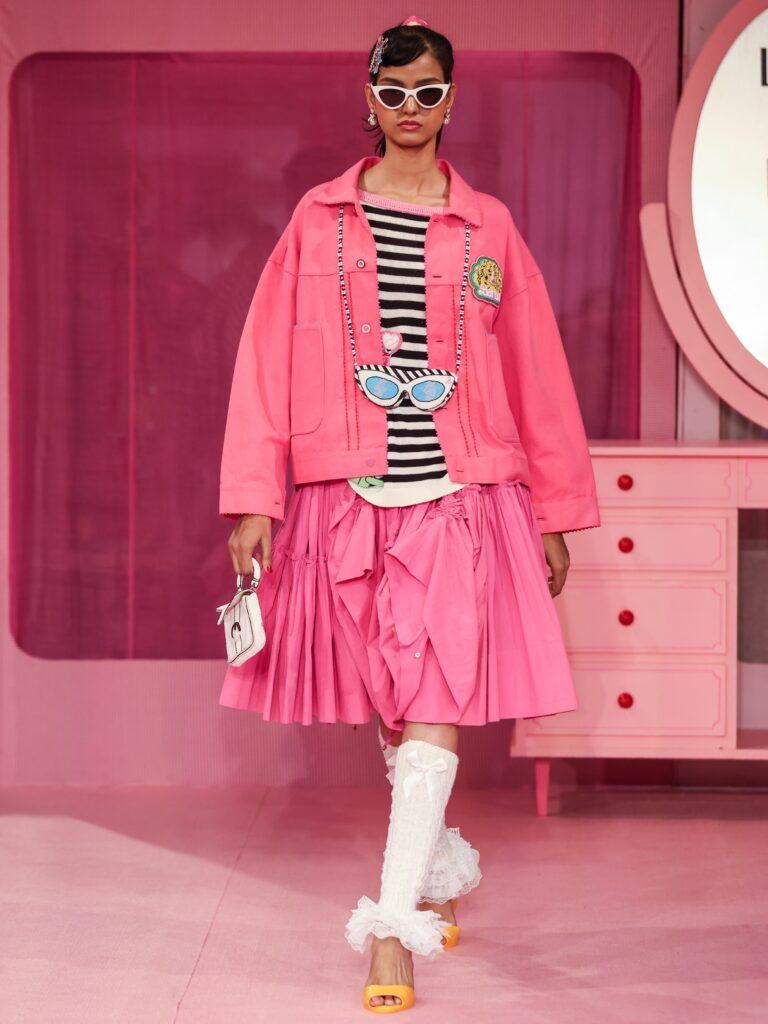
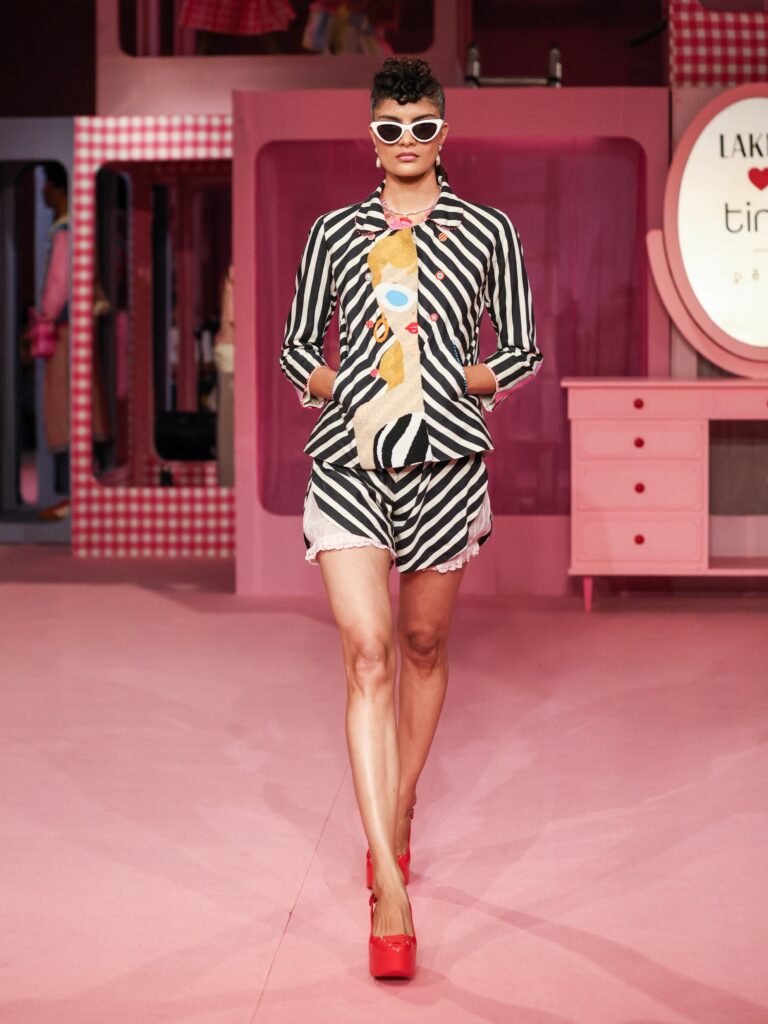
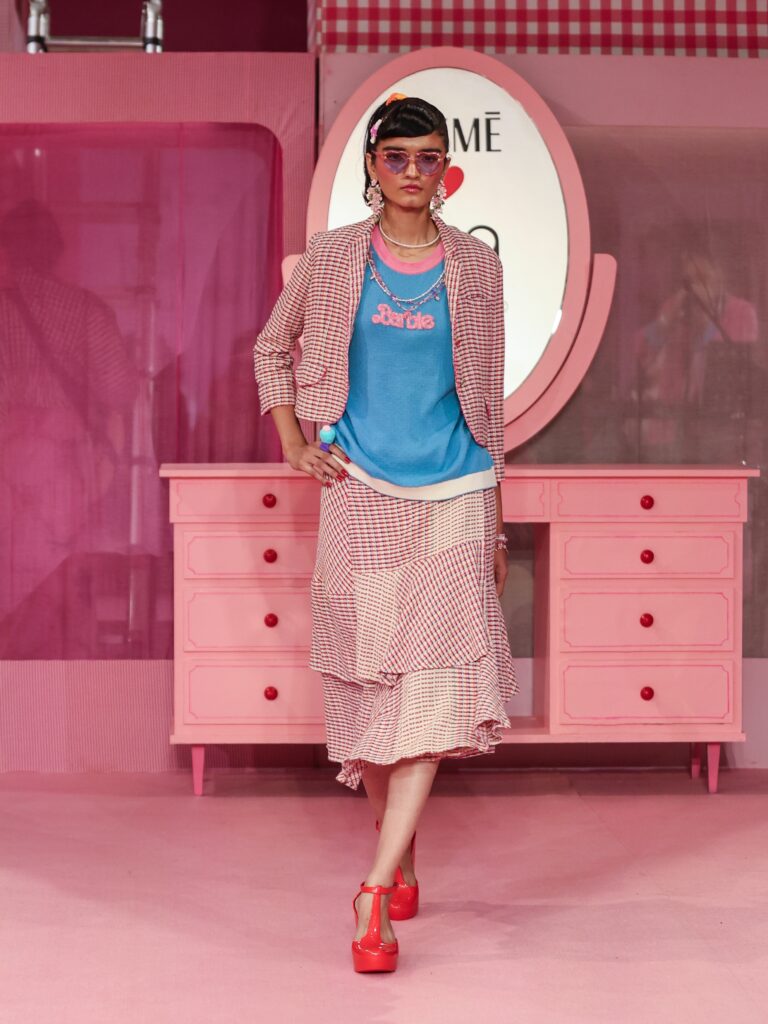
“Whether it is author Arundhati Roy or Meera Nair Pero fans, they will find their pieces from the Barbie collection,” she smiles. The theme is “dream dress up”, even though Pero for a buyer has always been a combo of textiles and intellect, for a thinking woman who knows her mind, is comfortable with her body. Like artist Mithu Sen or her long time friend Himashu Shani.
She this time too offers “classics” as she calls them, along with fun, and playful clothing, breaking the stereotype that Barbie has to be a certain “blonde” only.
Pink and Barbie are synonymous, Aneeth will do the “girlie hue” but in her own way, as it can have million tones. “I did have reservations because I wasn’t sure if the brand expected me to do their version of pink,” she laughs, adding, “There won’t be any pencil skirts or bodycon. The first swimsuit Barbie wore which was black and white has been given an interesting new avatar with Chevron stripes woven in Mashru,” she explains.
“Barbie loves stripes,” says Aneeth. Few know that Japan has been one of the biggest markets for her, along with the US, Europe. For the girl who came from small-town Udaipur, is now retailing from 300 stores all over the world. “Japan respects handmade, funnily it has two extreme sides, one is textile the Zen side, other is crazy Harajuku, both co-exist peacefully,” she says.
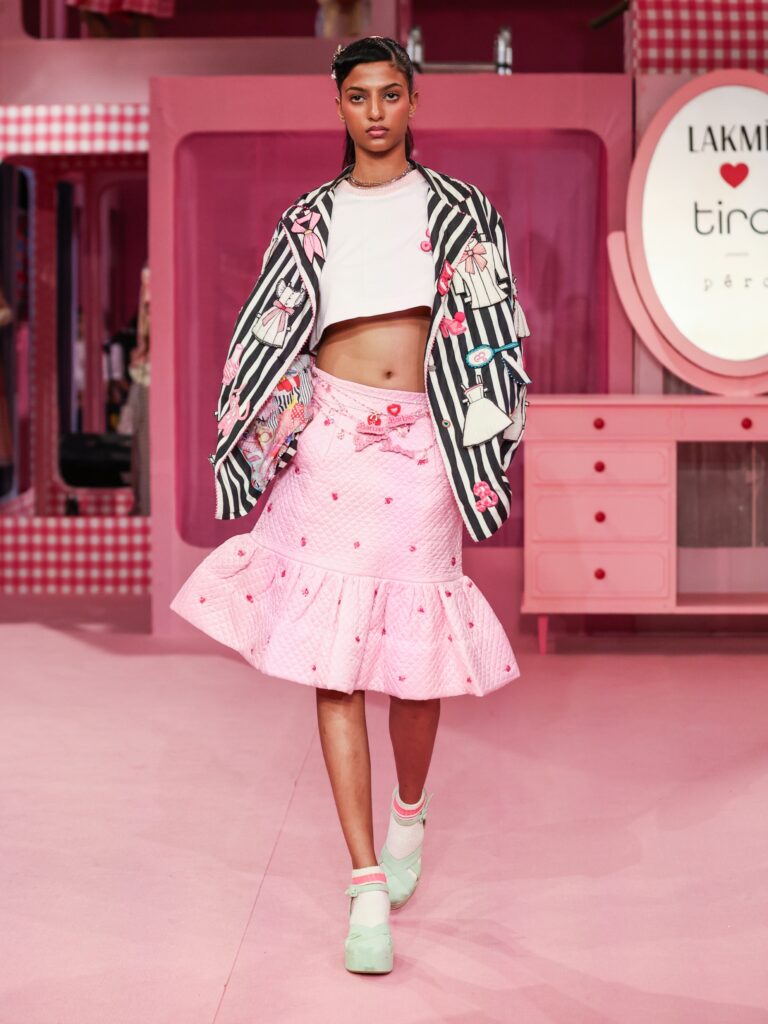
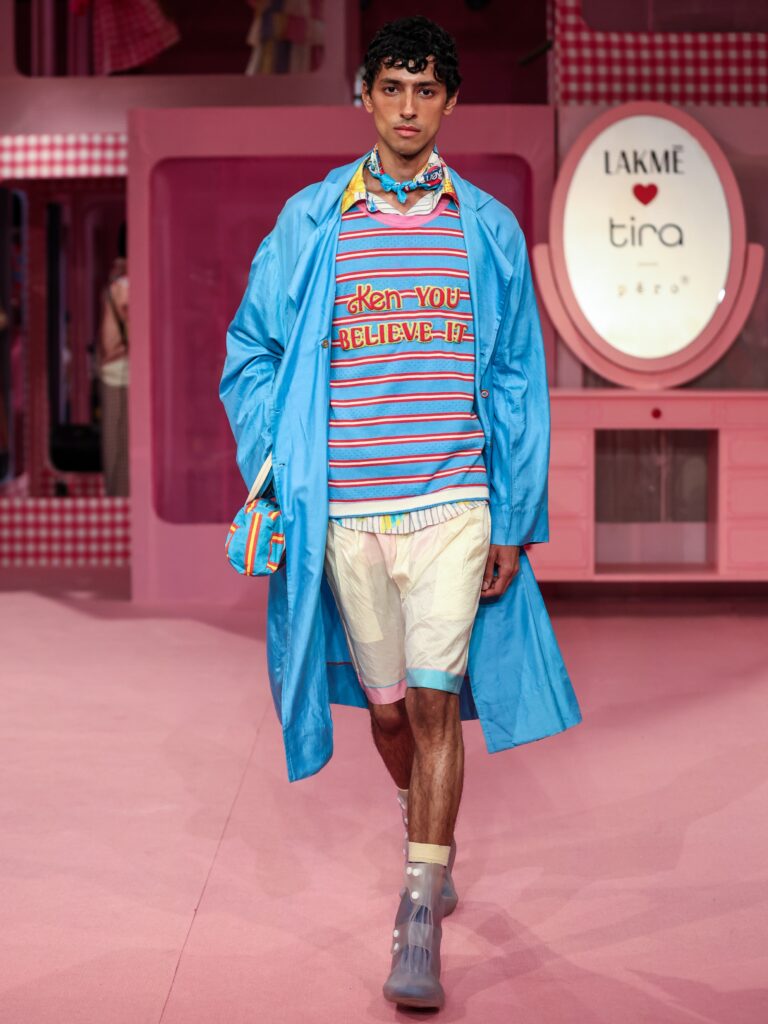
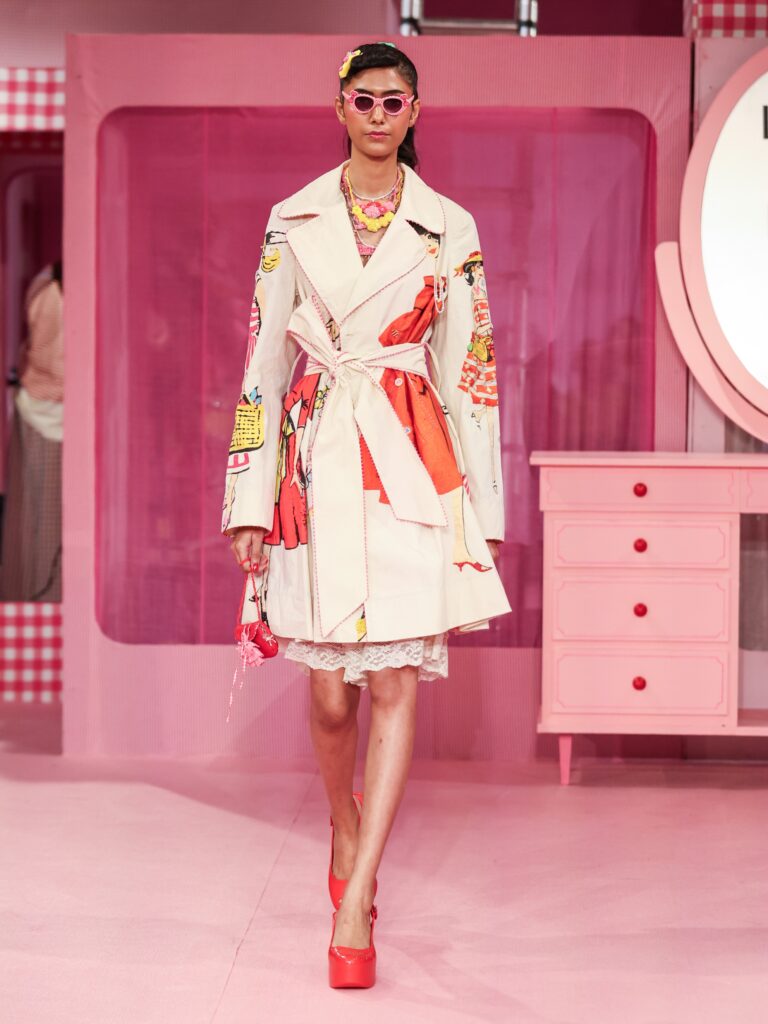
A bit like Aneeth, sometimes “more is less” for her, the underlined emotion remains nostalgia, childhoods are not very different whether they are in India or abroad as innocence remains a common thread. “So is curiosity, isn’t it?” she says.
With economic downturn, wars and political uncertainty, does Aneeth look at fashion differently? “I am just trying to bring happiness to everyone’s lives despite the dark era. When you wake up and wear something that gives you joy, that matters,” she adds. On a serious note, 300 artisan families are associated with the brand and 3,000 others rely on her, “clothes can’t solve any problems, but at least they make you feel lighter on a dull day,” she says.
Her staples Chanderi, Mashru from West Bengal, vibrant stripes, pink on pink done in Banaras, Kadwa, to jacquard introduces us to Barbie who loves Indian crafts. “We have also dressed her in hand spun cotton, as well as Banarasi Brocades,” she smiles.
This time she has done jersey, hand knitted, flat bed, as a plastic doll she isn’t that flexible, this is new and expected for her, crochet added for an extra edge. She has channelled her famous song, “Life in plastic is so fantastic,” chorus from the 1997 hit “Barbie Girl” by the Danish-Norwegian dance-pop group Aqua with recycled plastic, with “Found Pero”. She is inspired by tiffin baskets called “Koodai”. It is a traditional, hand-woven South Indian basket, crafted using Chettinad plastic wire techniques in Tamil Nadu. “We have recycled plastic and made mini-Barbie bags,” she admits.
Craft doesn’t need to be serious, even when she did Kullu intense textiles for Woolmark, many years ago, she felt the end consumer understood it better when you can add a bit of fun. “In a 20-minute show what can you really show, so I decided I want mine to be experimental. It is an experience we offer, you travel to a different world,” she says.
The travesty is when Ralph Lauren uses Madras checks everyone writes about it, but here, they take crafts for granted. In a time when everything is AI and online frenzy, Aneeth opened a retail store. “I like doing things my way, when I am ready. When Barbie came to us there was this message, ‘you can be anything’ but I want to say, ‘you are already everything’,” she concludes.