
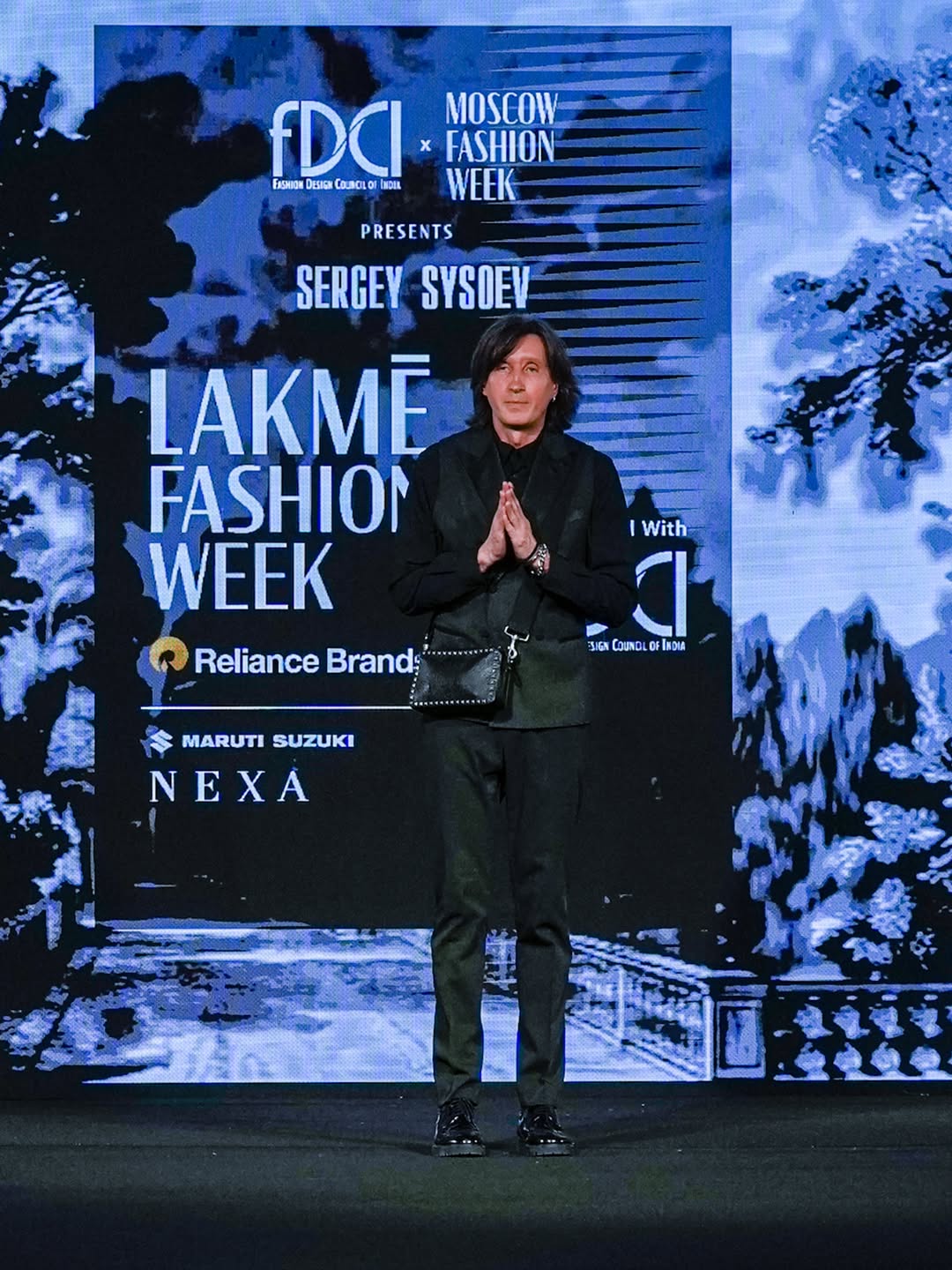
Even though Russians have made a mark on global fashion, Demna Gvasalia, Guram, Lotta Vokova, post the collapse of the Soviet Union, Sergey Sysoev believes he wants to revive traditional folk arts-Gzhel ceramics, Vologda lace, this LFW he pays homage to the fragrant flowers of Ivanovo.
By Asmita Aggarwal
On 26 December 1991, the Soviet Union was formally dissolved, due to many factors, primarily economic stagnation. Till then they never knew what Coca Cola tasted or how well Nikes glided. There was a time in Russia when there was no exposure to brands, today they are huge consumers with a market of $2.59–$2.6 billion. That’s not all. Russians are creatively heading global brands—-think Balenciaga by Georgian Demna Gvasalia, now Gucci, and his brother Guram both launched Vetements, to stylist Lotta Volkova, born in Vladivostok, Russia, now styles Miu Miu.
Sergey Sysoev showcased at LFW XFDCI, a label he launched in 1996, teaches art history in Kosygin State University, Moscow. He says, the former USSR is more than just Matryoshka dolls, Vologda lace, Gzhel ceramics as old as 14 th century, and silk shawls. “I have never been to India, it is my first time, but I know about the intense and deep love for colours here, as well as age-old textiles. I may not be able to name any, but I remain fascinated by weaving heritage,” he says. After 30 years of working in the industry Sergey loves folk art and craft, like porcelain painting, which is often used in tableware. “In my last collection I paid homage to Russian native ornaments,” he confirms, like Slavic, Byzantine, and folk-art traditions.
Gzhel lace has been his favourite, eight years ago he reinvented decorations, into a modern language so that younger customers are serenaded. “I’m happy Demna and Lotta are doing well globally, very proud. I never set out to pursue recognition outside my multicolored country, I want to dress women in Russia,” he smiles.
He is hoping to collaborate and understand Indian cultural and embroidery techniques, expand his craft, without losing focus on Russia’s cultural identity. The government is supporting Moscow Fashion Week, earlier they only had Mercedes and Volvo Fashion Weeks, but Putin is making an effort to grow domestically. “We wanted to break free from systems set up by European countries, hoping to nurture ‘Made in Russia’, which looks at what our people want, not what Western brands dictate,” he adds.
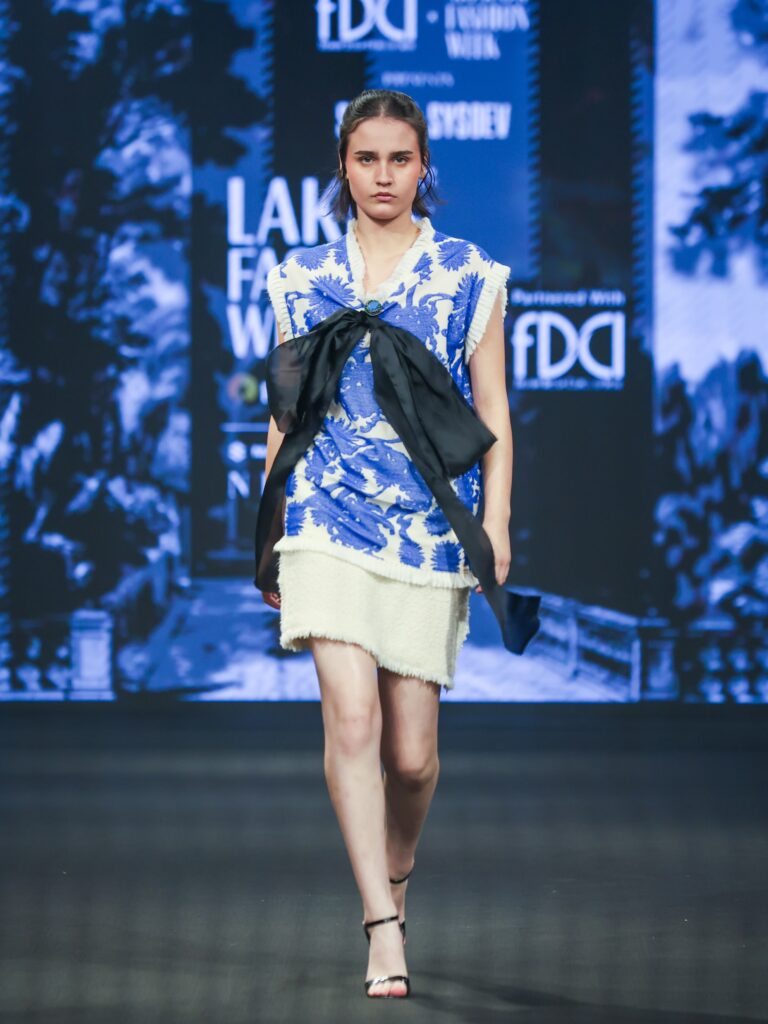
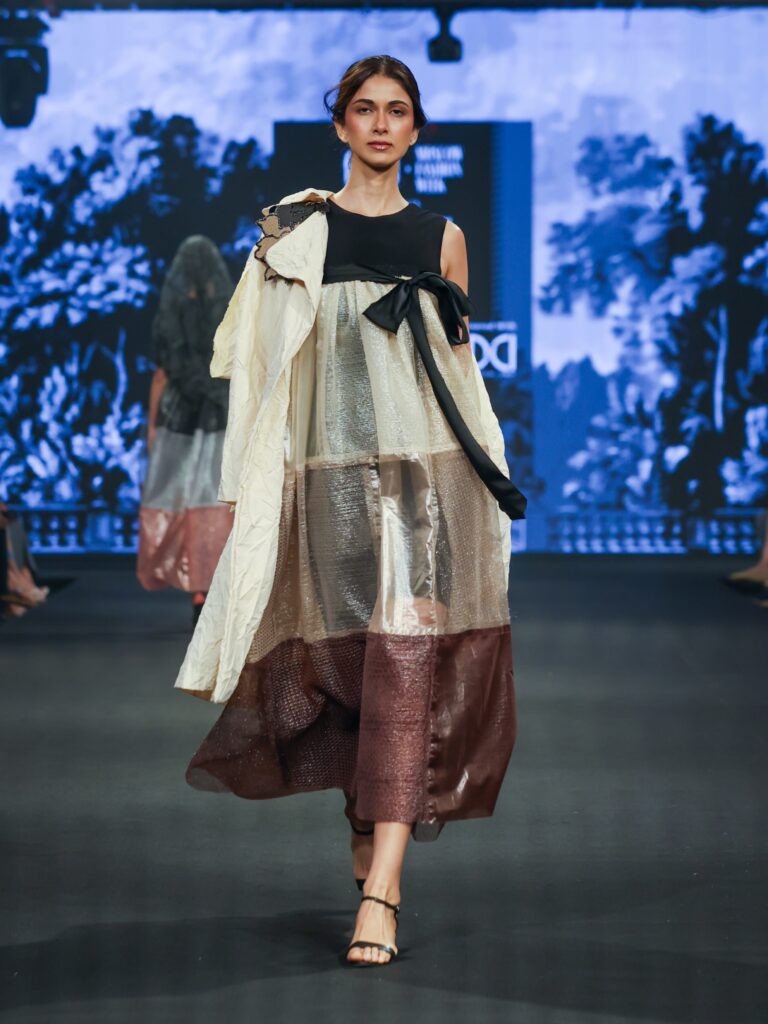
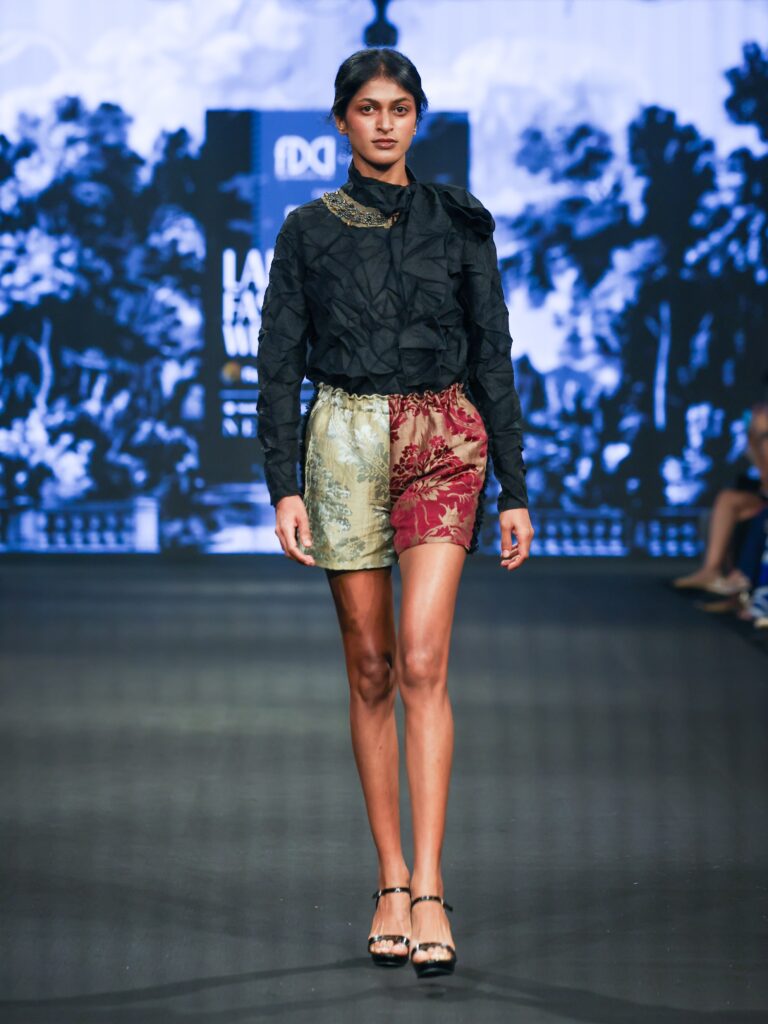
“The Sarafan traditional Russian dress is also being contemporized in linen with hand embroidery,” he explains, adding there is silk which also elevates the ensemble.
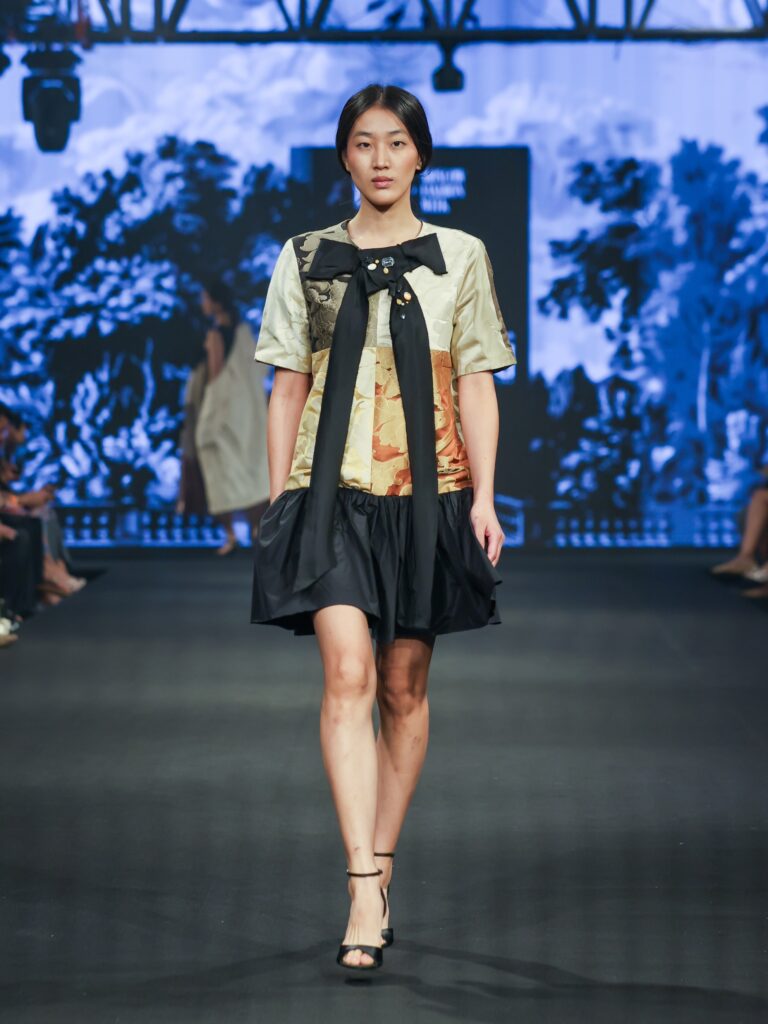
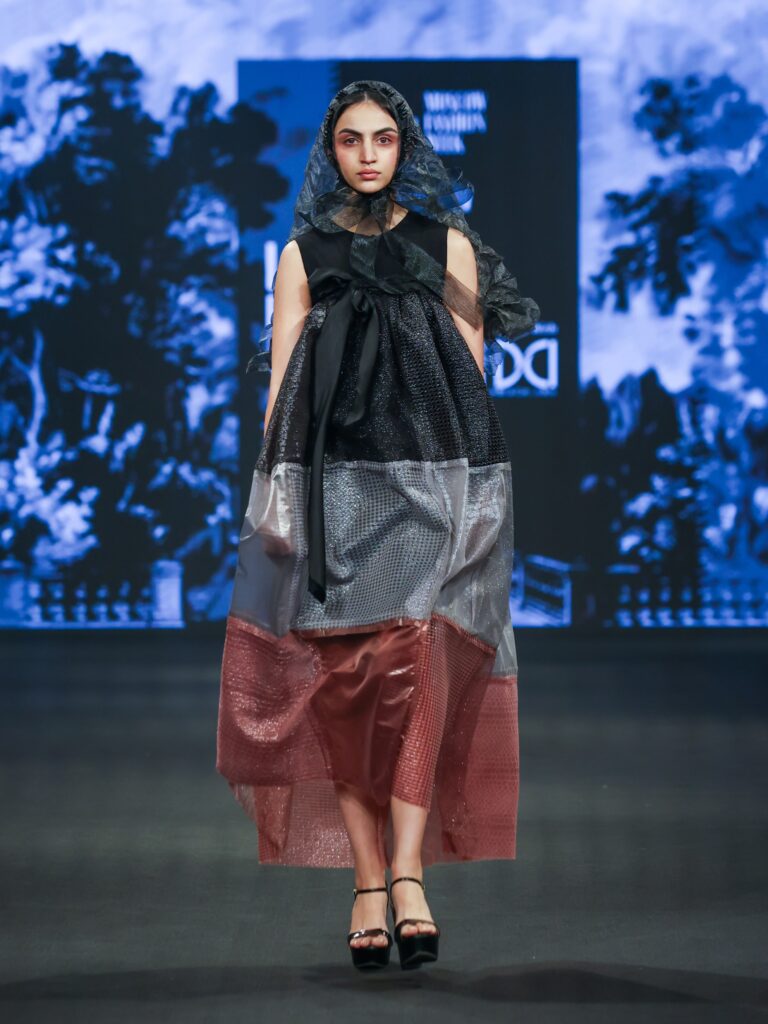
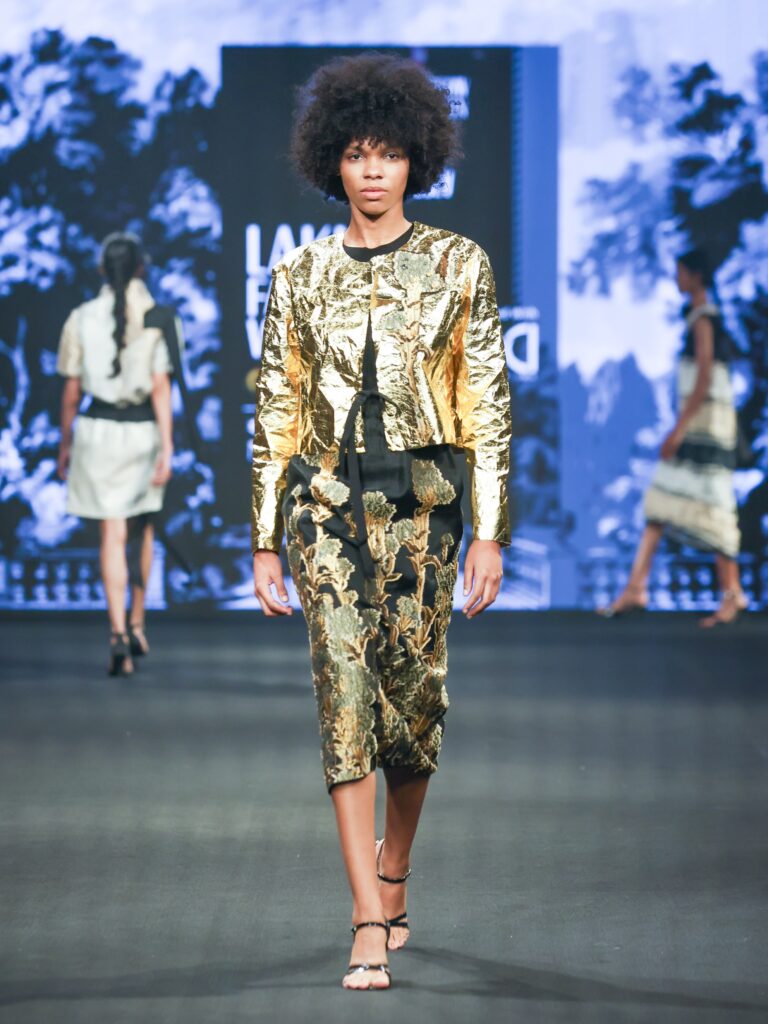
He combined knitted fabrics and the flowers of the city of Ivanovo, as homage to his mentor, designer Slava Zaitsev, who was born there. Inspired by the beauty of the region, known as “City of Brides”, “Russian Manchester” as it has a burgeoning textile industry. At the LFW show on the sounds of church bells ringing, and birds chirping, he showed his mastery over crushing techniques, metallics in three colours, predominantly tangerine, exaggerated bows, Jacquards and sheer. “I like stripes, my embellishment is restricted to yokes, so that it doesn’t overpower the outfit,” he says. Though the crushed gold, bunched up waists offer comfort, along with pleated dresses. His effort was to be restrained, thus mixing different diverse patterns often clashing to drive home the idea that fashion doesn’t need to be linear.
“I grew up listening to Bollywood songs, actors, many movies were re-watched in Russia, saw one on my flight here too, can’t recall the name. The story was about love, washed with music and colours. I’ve seen Russians wait outside hotels for hours hoping to catch a glimpse of their favourite movie stars,” he smiles.
He admires the way Belgian great Dries Van Noten is inspired by India, how he uses the iconography, culture and its myriad aspects, dating back to his first trip to here in 1987. “His use of Ikat in 2022, Kalamkari, hand-painted and block-printed cotton as well as Kantha is spectacular,” he concludes.