
Luck doesn’t help, focus does: Payal
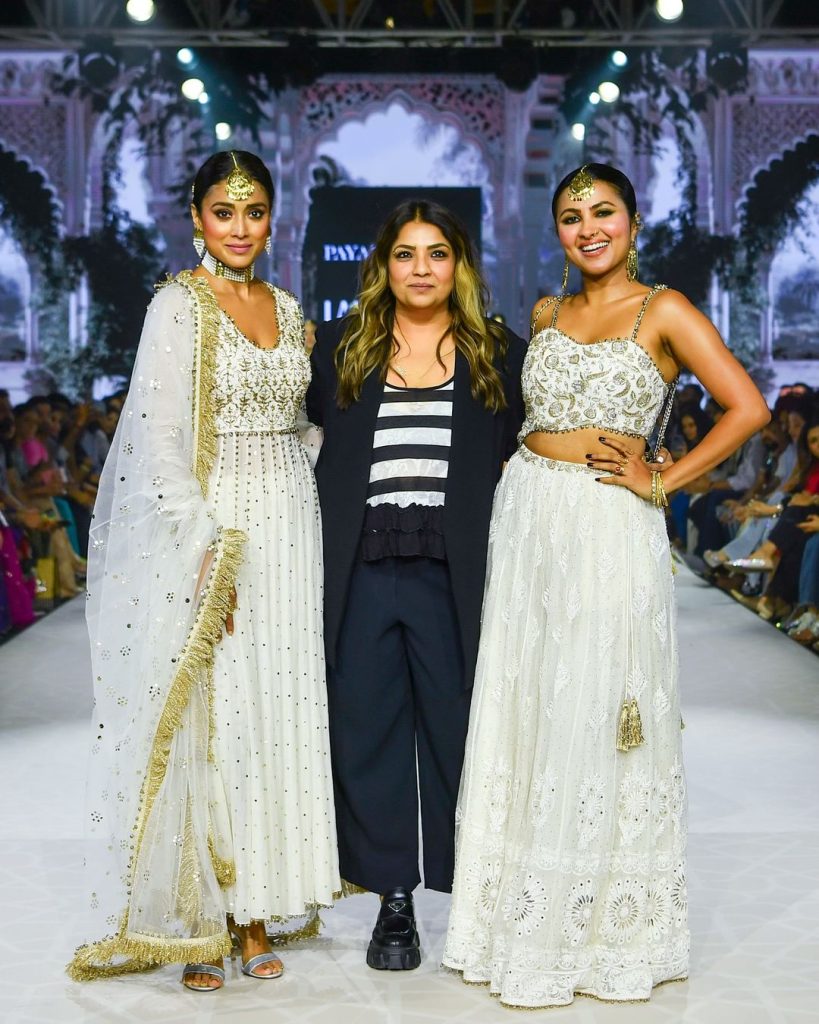
From her backless cholis to Aishwarya Rai wearing her award-winning Anarkali, Payal Singhal in 25 years of business has been consistent leaving theatrics to greenhorns, adopting practicality for survival. By Asmita Aggarwal Payal Singhal completes 25 years in the business of fashion, and if there is one designer who truly understands finances, it is the Mumbai-based guru of the “backless choli”. Her latest collaboration has been with the American sneaker company End State, that unfortunately could not be launched in India (due to laws changing) but is being sold in the US for $250. Designing the kicks with Stephanie Howard, ex-Nike designer, Payal says technology is the future as this one comes armed with a 3-chip futuristic approach. It is NFC based, interestingly they reached out to her, seeing her fan following (earlier they have collaborated with artists and musicians). “The shoe was a crossover between the East and West, June it was launched in the US, now sold online,” says Payal adding, it was inspired by Adivasi tattoos and she added her signature mukaish work, trying not to make it too Indian but global. You add brushed gold to this and you have a unisex sneaker. That’s not all. She has associated with Coach, also Namrata Lodha for hats inspired by the wheat farmers in Madhya Pradesh, she makes a line of kids wear, home, jewellery, resort wear as well as menswear, her portfolio is large and impressive. When she looks back, it is only resilience that helped stay afloat, keeping her head down and working, admitting “my career is not based on the luck factor” but a gradual graph upwards. She has survived covid, demonetisation, GST, and bad markets only to learn from those upheavals. “Innovation is the core of my brand; you cannot stick to a formula and make it work. I get bored easily, I need to be creative with my craft,” she adds. Twenty-five years is a long time to survive in the industry, when she started making Indo-Western with backless kurtas, to add sensuality, clients asked her “where is the back?” From 20-year-olds her customers, who spend more money than brides, Payal each season looks for excitement and freshness abandoning the complacency that comes with success. This year like always, there will be hallmark pieces—prints, fusion of art and architecture, shapes deconstructed and you cannot term her prints quirky or pretty. The backless choli remains her clients go to, and thus has been copied extensively too, the tasselling work added a new dimension to it several years ago when she started. “Luckily, I didn’t make any big errors, went slow, and sustained even during covid. We are self-funded, but tangibility and freedom helped us,” she adds. Payal has been a conservative businesswoman, never wanted to show off, flew under the radar, didn’t plan on opening a 10,000 feet store, when you visit her stores, “it is like having a chat with friends, not imposing or intimidating”. In 2005, she had a store in New York, which she shut down, even though she is the queen of collabs, she hasn’t ventured into the already crowded beauty segment, but came close to doing it. At 47, there is clarity of vision, every piece she wants to channel functionality and comfort. “Clothes should not be fussy, but easy, and clean, so repeatable. I always tell myself keep your eye on the prize, focus always works, and do not be in a hurry,” she adds. The LFW XFDCI line is a subtle nod to the 25 years, the first outfit showcased was the one she made, and won, for being the youngest designer in a Shopper’s Stop competition she took part in. “I was 15 years old, it was a national contest, the katarva cotton weave with a shadow effect won me the honour. Aishwarya Rai Bachchan has worn the winning Anarkali, I remember,” she laughs. There is nostalgia in the show, subtle panels of zardozi in gold, silver, and black, Mughal motifs. “My dad was an exporter and the biggest lesson he gave me was practicality,” she adds. Though Payal has no appetite for theatrics, “storytelling is important but I have done it without it,” she grins. The line is just in time for the festive season — extensive gotta-patti, creamy whites, tone on tone, ghungroos for embellishment!
“Armani taught me to be me,” says Ankur of Til
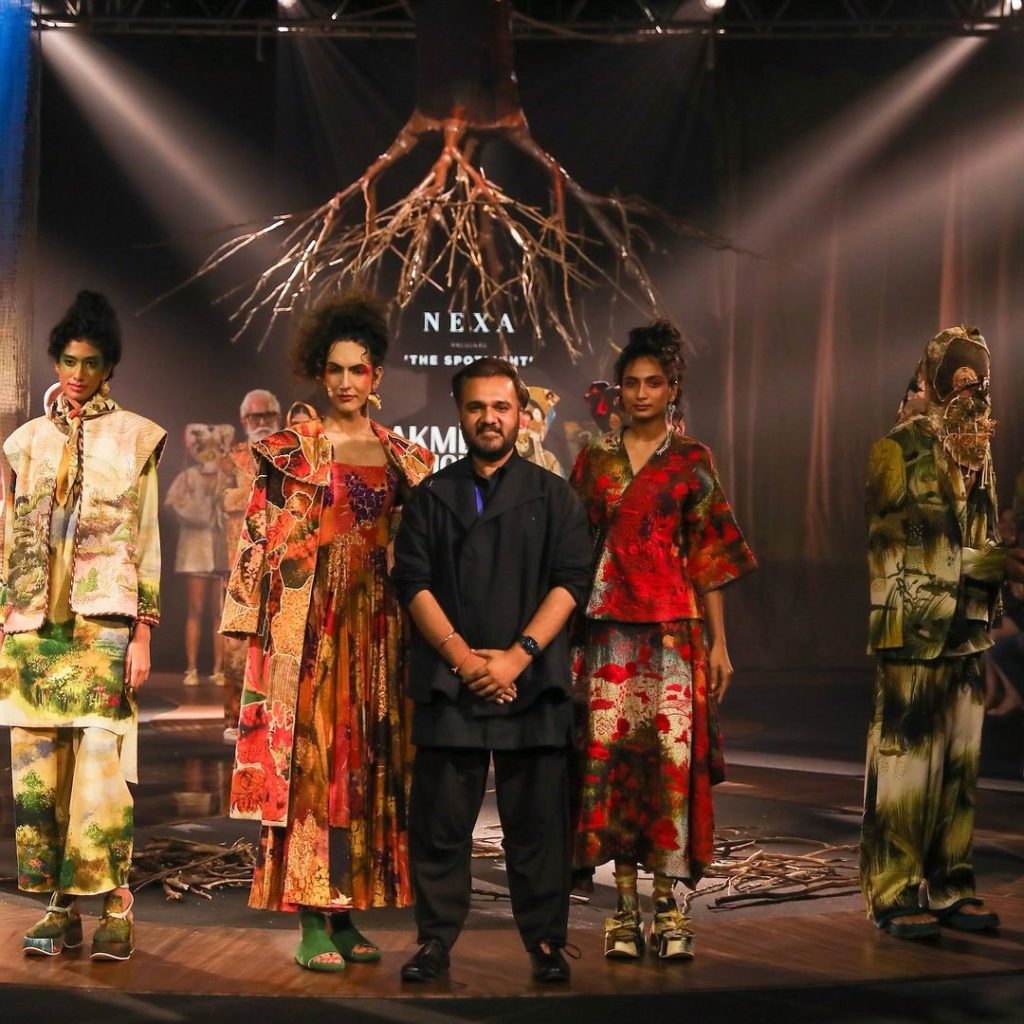
Whether it was working with Armani or Bottega Veneta, even Sabyasachi, Ankur believes good design is instinctive, that’s why his latest line for LFWX FDCI is experimental, comfortable and inclusive. By Asmita Aggarwal He lost his grandmother, whom he was closest to in the family during Covid, she would always tell Ankur Verma, who grew up in Chandini Chowk, that of you have a til (mole) on your hand, you will always have money, this stayed with him, thus the name of his label. It is also the moniker for Till We Meet Again (TIL). Ankur was creative, doodling, decided to study leather design at NIFT Kolkata, then Domus Academy, Milan, Masters in Fashion & Accessories, as well as fashion management from London College of Fashion, though his focus has been body textures—freckles, wrinkles to folds, which he reinterprets through prints. The highlight of his journey was working with Armani, in Italy, though what changed his life was winning an opportunity to learn from Bottega Veneta, the only Asian to have cracked the competition in collaboration with Università Iuav di Venezia (IUAV University), Venice. It was the year 2017, the six months he spent at the headquarters of the famed luxury brand in Montebello, Vicenza, understanding simplicity of the intrecciato (braiding) technique, honesty of approach, were principles he still applies to his design process. “I had worked with Sabyasachi Mukherjee who is a maximalist, at Bottega I learnt how to cut it all down, making things austere but effective,” he laughs. Ankur confesses growing up in the narrow bylanes of Chandini Chowk, he was a “very filmi boy” used to paint, indulge in clay sculptures, very inquisitive, decided when he was a tween, he wanted international experience. It was the year “Band, Baja, Baraat” a show was aired, on TV, only two designers are known in Kolkata-Anamika Khanna and Sabya. He pursued Sabya, went unannounced to an Aza event, the designer seeing his enthusiasm invited him to his office the next day, and hired him, noticing his undiluted passion without asking for his portfolio. Sabya taught him artisanal strengths, embroideries, dyeing techniques, worked on the Buckingham Palace, London project with him, designed 1,000 hairbands, embroidered niftily, bangles, mostly accessories, in 2012, upcycling along the way. His first encounter with fashion was watching Ram Leela in Chandini Chowk, where he fell in love with how actress Raveena Tandon dressed in diaphanous saris, (he watched her sway in “Tip Tip Barsa Paani” from the film Mohra) he realised, “It is not about clothes, it is how you carry them—the sari magically transformed her,” he smiles. This year for LFWXFDCI, the show has real people on the catwalk, inclusive, experimental but always comfortable shapes, play of textures, thread work to zardozi, patchwork to upcycle waste. He had added Chanderis, hand spun cottons, and indulged in layering, offering separates, making each ensemble versatile and individualistic. The vibe is green, blues, olives, and earthy tones, “as young designers we restrict ourselves always looking for a winning formula, we try to be commercial, fearful of experimentation,” he admits, saying he launched his brand three years ago, took a big risk decided not to do any motifs. His constant admiration comes from the Skin Museum in Amsterdam, by Gunther von Hagens’ titled “Body Worlds”, it chronicles how happiness impacts our minds and then body. It is a kind of Surrealist approach, which he mirrors in his line, showcasing palms, and body hair through textures. But this theatricality comes from his participating in plays, at the National School of Drama, performing with greats like Naseer-ud-din Shah, Ashish Vidyarthi at the kamani Auditorium. He even got admission into the College of Art, but left it to pursue design. Ankur is a keen learner and says every nook and corner of his life, he has been like a sponge, he still remembers what he learnt at Armani, when he worked on a line of shirts in 2016, “was to be ‘me’, they kept me grounded and taught me to tell my story, be original,” he concludes.
A & T celebrate inconsistencies
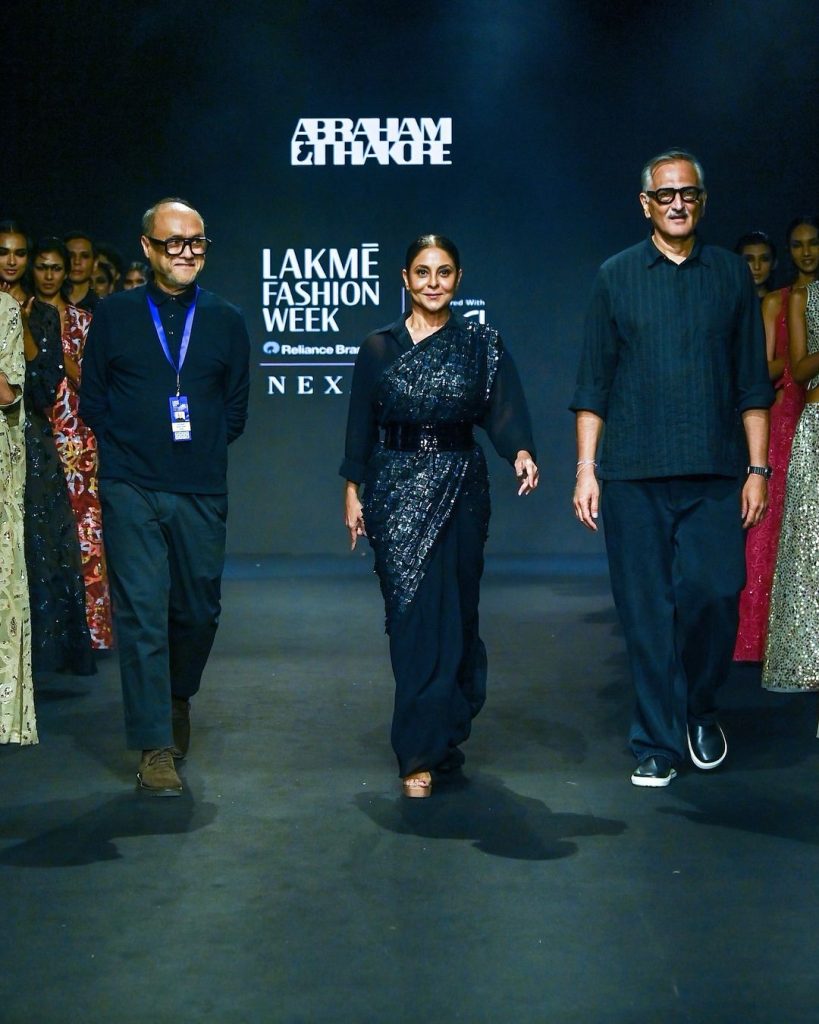
Discarded cassette tapes, toffee wrappers, bin bags are now RTW and make for new-age embellishment, as the trio Thakore, Abraham and Nigli tell us “What we buy and how we buy” is of brevity at their LFWXFDCI show. By Asmita Aggarwal Shefali Shah is a thinking actress, chooses her roles, is known for plain-speak and this authenticity of thought has won her a legion of followers. Just like A and T she is a natural, thus a perfect show stopper at the LFWxFDCI showcasing on Day 2. Three seems to be the lucky number for David Abraham, Rakesh Thakore and Kevin Nigli even though the third member is often a silent partner. The NID, Ahmedabad educated designers have seen the trials and tribulations of an industry from its infancy, maybe that makes them more resolute to doing what they do. Their leitmotif began with pursuing textile and has this season moved on to celebrating discarded materials—very Japanese in their thinking—using broken, damaged pieces to create something brand new. “The idea of using traditional craft, techniques or reinventing materials in new and unexpected ways that are both modern and now has been the concept this year,” says Thakore. Unspooled cassette tapes are woven into organza, chip wrappers are now knee-length dresses with laser-cut sequins which you will never know is from X-rays and believe it or not cement sacks are refashioned as evening gowns. That’s not all gunny bags, toffee wrappers, bin bags, kitchen foil and rice sacks can now be worn for your next lunch date! While working with discarded materials key is employing innovative techniques to give them a new avatar, but it can be limiting as the raw material is not chosen but procured. “We have used various found materials from cement sacks, X-rays, old cassette tapes and plastic shopping bags. The challenge was getting them cut into shapes that could be used for embroidery or to embroider onto fabric,” says Abraham. David Abraham as creative director decides the general theme for the season, Rakesh Thakore works on colour palettes and woven fabric. Kevin Nigli oversees merchandising and production. “While we generally agree on most things, if there is a difference in opinion then popular vote counts! It has been 30 years almost so it has worked with each one finding their spaces,” smiles Nigli. After three decades in the business of fashion has it changed for the better? They believe it has grown enormously from a single boutique like Ensemble to many multi brand outlets today. “From a handful of designers to a vast fashion community, from traditional bridal wear to a huge choice of ready-to-wear… and from a miniscule market share to a large consumer segment that is aware and wants to consume fashion,” says Thakore. Sustainability is today an “abused” word and do consumers really understand it, even though there is rampant greenwashing. They agree, “sustainability is over used, the very concept of fashion is not sustainable in the fact, it demands constant change every season.” What is important, they say is to consume mindfully, “what we buy and how we buy. If we want to be sustainable then we need to invest in clothes with a longer shelf life, be willing to pay more or things that have value, can last,” adds Abraham. Often called the masters of minimalism, more lovers of everything natural, ingrained in our culture and ideology, they believe in minimalism in that less is more, “that you can speak without having to shout, that the extra sequin may not be that necessary.” They love anything done by hand, especially block printing and Ikat, their signature. “We have explored that over the years and constantly try to push the boundaries on these. In a world of mass consumerism, true luxury is small quantities done with the power of the human hand. It celebrates its inconsistencies as something beautiful rather than a fault,” says Thakore. Their biggest weakness they confide, they did not also learn business management, which is a whole different thing to the purely creative process, ultimately no matter how beautiful something is it must be marketed and sold eventually. “The fleeting trend buyer, hopefully he will grow up and become a customer eventually,” they say in unison.
Greenwashing is rampant in fashion: Drishti
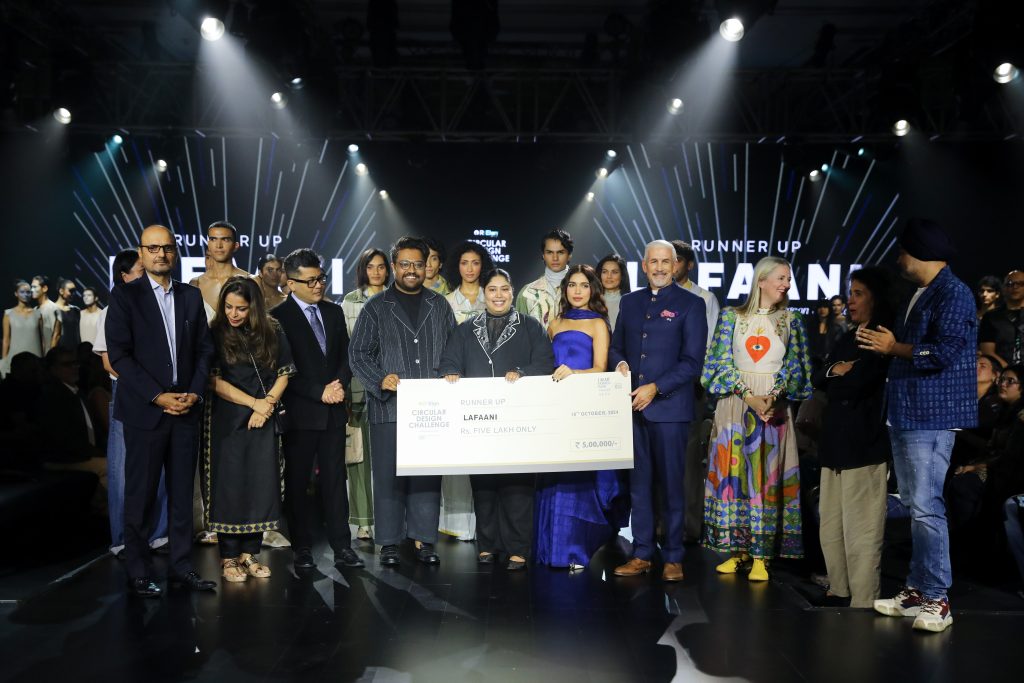
Drishti Modi and Rashmick Bose of Lafaani, CDC runner ups, bring circularity through unrestricted shapes, kala cotton and their love for repurposing. By Asmita Aggarwal She is a big movie buff, so the brand name is a result of binge-watching cinema, although alternate, thus Lafaani, was picked from the dialogue of Vishal Bharadwaj’s Haider, starring Shahid Kapoor, (the dialogue goes, “Rooh Lafaani”). “Lafaani is an Urdu word which means immortality—immortalizing artisans and making a product last a lifetime, transcending trends is what we hope to achieve through our brand,” says Drishti Modi. They won Rs 5 lakh as award money at the Circular Design Challenge in association with United Nations, as runner’s up. Modi is well-educated, maybe not in design, but at Teri School of Advanced Studies, she completed masters in environmental studies and resource management, though she did a short certificate course from NIFT later in business of fashion. Drishti met her brand partner, Rashmick Bose in Teri and they both decided to launch the label in 2021. Growing up in North India, the initiation to sustainable fashion was from childhood when she saw her mother and grandmother being judicious. “I grew up in Pune, Delhi, and Mumbai, I was always fascinated with craft and textiles. My size fluctuated, and I would often not get clothes that fit me well. I had to choose from one rack, I decided I must design clothes for women like me,” she smiles. Drishti, started by repurposing her mother’s saris, she married her academic training with her passion. Working with craft communities, cotton farmers she understood what she really wanted to do in life during Covid. “Bose joined me, he comes from Bengal which is a treasure trove of crafts, we try to bring what sustainability means in a global context,” she adds. His first exposure to craft was a baby blanket that was made by his grandmother in Kantha, they realized they had synergy in aesthetics. “I have no connection to fashion, don’t come from a design background, I had to build an eco-system—it was challenging,” she admits. Her mentor has been her father, who used to work with monster.com earlier, left to work in the social impact space. “He has been an angel investor and mentor for me,” she says. For LFW X FDCI she has worked with kala cotton, hand crafted embroidery, and reached out to a company in Mumbai which recycles flowers waste from Haji Ali and Siddhivinayak temple. They combined this with eco-printing, and hand painting on ensembles which are layered, minimal everyday pieces, multifunctional and adaptable. “Reversibility gives you freedom to wear it two ways. Our aim is to fight greenwashing by many labels that persist in the fashion space, a consumer is unaware about it. Buyers do not really understand sustainability, like kala cotton does not have certification, it is important to prove it, bring value to things,” she confesses. The move forward is strengthening their story, she says circularity is in her DNA, it’s deeply embedded, she hopes more consumers watch what they buy and are curious about who is making it and how it is made.
Bill Clinton told us to be at MOMA: Gautam Malik
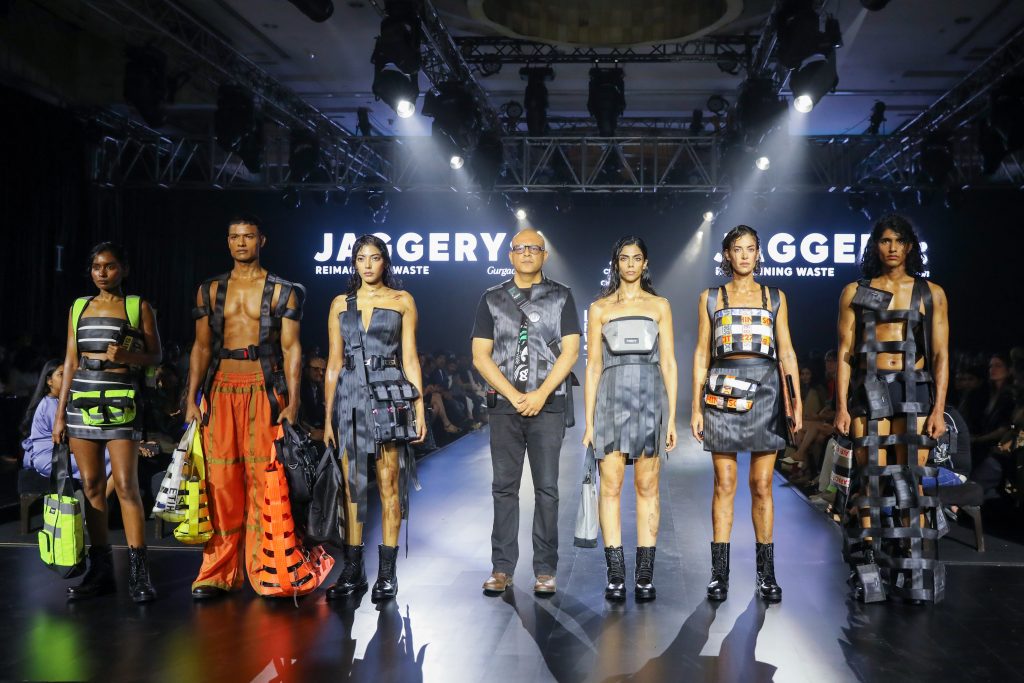
Making bags out of discarded seat belts, the JNU kid, who grew up with a father who taught quantum physics is today building a sustainable community one gilet at a time with his brand Jaggery. If Apple can sell electronics, why can’t jaggery sell bags? By Asmita Aggarwal Former US President Bill Clinton met him at the New York Fashion Week, recently concluded, and told Gautam Malik of the label sustainable Jaggery, that one day he hopes to see his products at Museum of Art (MOMA), New York, the store invites purpose-driven makers. So, the passionate entrepreneur went unannounced to MOMA and pitched his sustainable bags and ensembles, even though onboarding is online. Meet the social innovator, Gautam Malik part of the Circular Design Challenge in partnership with United Nations. You would never imagine a Jawaharlal Nehru University kid delving into fashion—it is not impossible but it is unprecedented. Malik’s parents are both professors—his dad taught quantum physics in JNU and mom super conductivity in Delhi University. It was surprising he chose to study fine arts and media studies from University at Buffalo University, and then Memphis University where he studied communication design. He says, whatever he learnt, he is applying to what he is doing today—whether it is documentary filmmaking, storytelling to making bags out of waste at Jaggery–Reimagining Waste, a women-led social enterprise. They upcycle discarded car seat belts, decommissioned cargo belts and ex-army canvas into sustainable products. “Since 2018, we have been able to divert 2400+ tons of waste from the landfills of Delhi, impacting the lives of 25,000 people,” he adds. His childhood sweetheart Bhawana Dandona, (University of Pennsylvania M.Sc in historic preservation) who worked in conservation of old buildings, found a meeting point in ideas. “We discussed structuralism, cultural heritage, and I loved jamming with her. When I returned from the US in 2010, I worked in the corporate sector in UA/UX design in India after ten years of living in America,” says Gautam. His experience is vast—Time Turner to Jabong, e-commerce designer, the creative head also launched a fashion magazine, but he calls himself a “social innovator”, someone who wants to impact society. In the year 2000, he got a chance to intern at Auroville, Pondicherry, where people from different nationalities have renounced their citizenship, are living as a community, he then decided he wanted to build one too, thus Jaggery. They work in Haryana to Jharkhand mostly with “aspirational districts”, most importantly with Nuh, known for its political tensions. “How do you decide who to work with?” he asks. “Jaggery” or “repurpose” the toss-up was there for the name of the brand, the former fitted in—-as while making jaggery nothing goes to waste; it is produced in small batches, the process is thus humanised, it leaves behind a witty flavour. If Apple can sell electronics why can’t jaggery sell bags?” he laughs. Growing up simply he went to Modern School, found a huge inequality in terms of social status, he would get Rs 25 weekly allowance, he learnt to live in that, JNU is in his DNA. “I had to come back from the US, as I saw India was the hot bed of startups, also living in the US you never feel part of it,” he admits. For LFWXFDCI he is donning a fashion designer’s hat creating bags and garments from repurposed car and airplane seat belts (cars which are 15 years old must be scrapped, according to government policy). This creates enormous waste—they use the rubber, roof lining, seat belts, residue, and have come up with a system wherein many NGOs (also Mayapuri car scrappers) are helping them source it. “We tie up with RWAS like we did in Gurgaon where we are based to start donation drives—you can give your old denims and corduroys and we will spin them into a new designer ensemble,” he admits. He believes in co-creating and partnerships, with Volvo Jaggery does corporate gifting, Tata any car scrapped they can utilise, they ask them to replace cardboard box boxes for Diwali sweets with recyclable bags, their new work is with EVs. “Earlier vendors would fleece us asking for money for things that are waste, they would just throw. They thought we are using it for profit, now they understand many years later what we are doing,” he adds. He faced many challenges, even how workers they would hire, when he would inform they are working with discarded materials, “why can’t we work with new ones? They would say. The bags he makes are sold at Embassy fairs like the US and Austrian as well as Dastkar though he knows the sword is always dangling for this bootstrapped company. “We never know when we will fold, we want to partner people who understand what work we do, it is a dual impact model. Waste is recycled, it is circular, creates jobs, we create a value chain. It’s an ethos-based brand,” he adds. You can get a wallet for Rs 750, and a duffel bag for Rs 7,000. “Also on offer are bespoke products, cargo belts come in different colours, we customise you can choose British, Qatar or Singapore Airlines, play around with the sequence. I started with just one employee Shahid bhai, now we are nine in total,” he says. FDCIXLFW line of garments are risqué-jackets, gilets, reinterpreting the Nehru jacket, corsets, and asymmetrical skirts. The philosophy is gender agnostic pieces, like the caged maxi dress it’s avant-garde but with an industrial vibe. “Society cages us, this is breaking free for me,” he concludes.
Batik has unique monotones: Madhumita
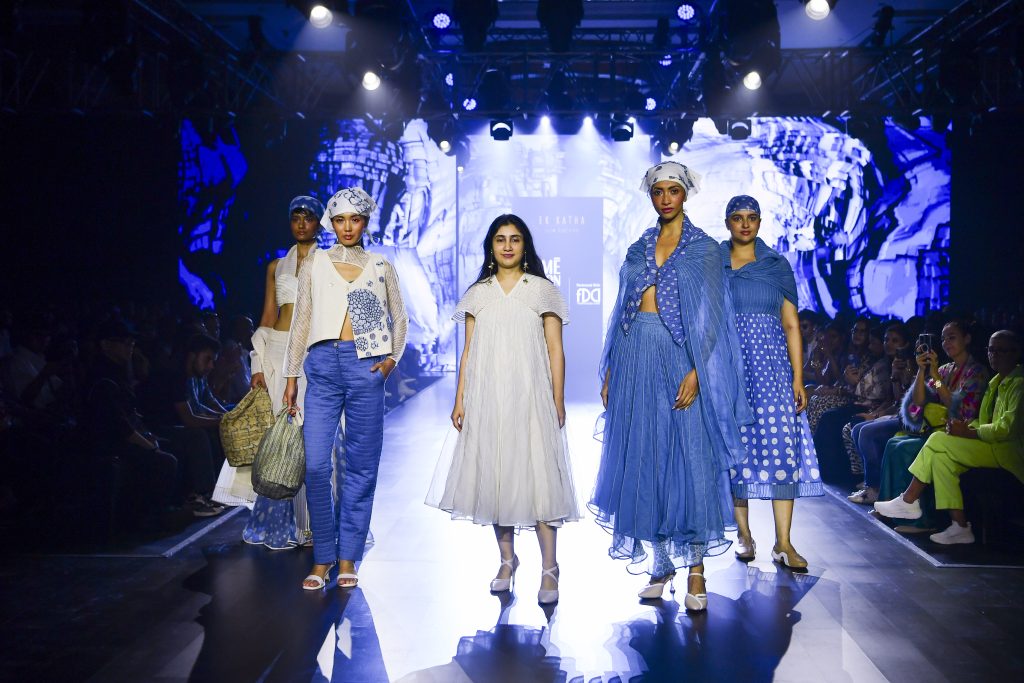
Working with Batik master craftsman Shakil Khatri for the last ten years in Gujarat, to revive the 1000-year-old tradition using vegetable dyes, Madhumita Nath of Ek Katha hopes to serenade a young audience with reimagined crafts. By Asmita Aggarwal She studied textiles at NIFT Mumbai and JJ School of Art, the Mumbai-raised, Nagpur-born Madhumita Nath of the label Ek Katha took time to launch her label. She came from a renowned family of science mavericks, with her grandfather Prof. M. C. Nath, moving from Dhaka to India, setting up the Biochemistry institute, in 1946, Nagpur. Most family members are Ph.Ds, so when she decided to study textiles, it was met with “surprise.” 2016, was the year when she decided she would like to concentrate on Kutch weavers, she sought advice from mentor Kudeep Gadwi, who took her to meet artisans exposing her to lesser-known jewels like Batik from Mundra, Gujarat. The “khakan” is made locally, earlier they used oil of a seed, not paraffin wax to dye, but now only four families are left out of hundreds who have abandoned this process, six in the adjoining village— digital printing killed traditional art. “You can make digitals in Rs 15 to Rs 30 per meter, which ends up in Dadar market, it is quick. Ancient techniques, 1,000 years old, have a subtle layering, the beauty of it has been erased due to bulk digital prints. Batik used vegetable dyes, chemical- free, laborious, painstaking but excellent,” says Madhumita. Master craftsman Shakil Khatri’s family has been batik block printing for six generations, using oil of the pilu tree (Salvadora persica), locally known as kakhan, as a resist. As it is thick and sensitive to heat—the oil can only be used in the morning. Kutch batik left natural dyes shifted to naphthol-based ones, but Shakil sticks to sustainable processes, he makes 12 shades of natural colours from indigo, rust iron, turmeric, pomegranate skin, madder and onion after he was trained at the Kala Raksha, in innovative ways. He gave life to Batik with new designs, artisans in Batik Kutch are Khatris, Kutchi-speaking Muslims. “Khatri didn’t give up block making, his gradations due to the layering is unmatched,” says Nath, who in 2018, made a line for the Sustainable fashion day in Spain with The Circular Project. “I am not a businesswoman, when Covid struck, I shut shop for two years,” she says. Providence gave her an amazing opportunity to learn from an incubator program for women entrepreneurs, NSRCEL, started by the Indian Institute of Management, Bangalore, in 2023. IIM (Bangalore) has partnered with Goldman Sachs, Capgemini and Maruti also. “I received helpful inputs on the financial aspects of running a business, for six months through the management institute. It was a learning to see where I belong, how to survive when you do slow fashion, meet investors, pitch in front of them,” she adds. Apparel Export Promotion Council (AEPC) membership helped her figure out how small batches of hand-made can be exported to the US and the Middle-East. “I wanted to do something craft-based, but I am not a sustainability warrior,” she admits, as she worked with kala cotton, reducing carbon footprints with hand-made techniques. “I love crafts, bazaars, haats, seeing lots of stuff stacked up, and the beauty of Batik is that it is monotone, unique in so many wonderful ways,” she adds. Generally, she admits, Gujarat is often associated with colourful embroidery. “I did start with Ajrakh, but soon shifted to Batik, Kala cotton is not glamorous, but I know North Indians will be hesitant, but the Japanese will buy it at any price, as they know its value. When you can get a heavily embroidered piece for Rs 10,000 anywhere, why would anyone but pure, natural, plain fabrics? Many don’t realise the artistry,” she confesses. For LFWXFDCI, Nath has combined Batik with fabric cording, using khadi and kala cotton from Bengal, also paying homage to Kota Doria, adding delicate, subtle textures to create flowy shapes. Her love for patchwork, cutwork and quilting used in abundance can be seen, without serenading waist defining silhouettes, yet the line is young in appeal. “I would like to do B2B exports in the future —I know I have to build my capacity first,” she concludes.
CDC winner’s clothes with a conscience
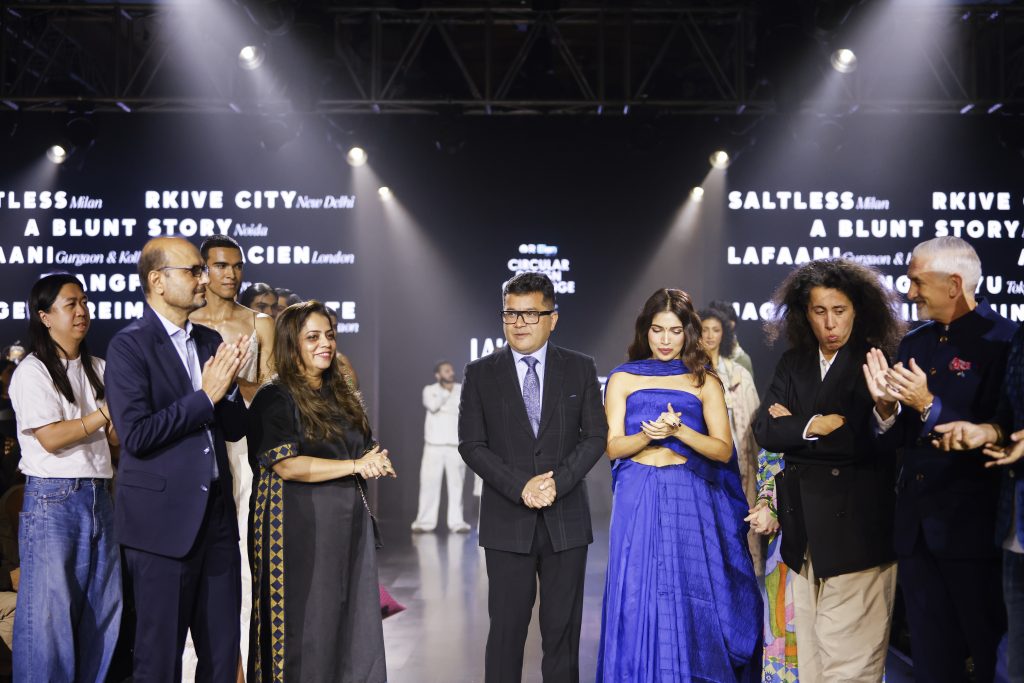
Life took a turn for the better from seeing his grandfather’s dyeing unit polluting, to now only dealing with second hand garments, reconstructing them into new shapes, Ritwik Khanna, 25, of Rkive City is a force to reckon with. By Asmita Aggarwal This generation is something else—they really know what they want to do, and one thing is certain, they want to work for themselves. Thus, talking to the Amritsar-born Ritwik Khanna of Rkive City, only 25, was refreshing. He won the Circular Design Challenge in partnership with the United Nations and Rs 15 lakhs fund at the LFW x FDCI show His grandfather had a textile mill, the dyeing house, he noticed, no one ever really cared about the environment, the water was contaminated due to the chemicals dumped in it. At that time, he was not aware of its toxicity, it was not treated. The business shut down, his parents began weaving cashmere scarves, his earliest memory is of sitting on the shop floor packaging, as there were not enough employees for an SOS order. His mom used to run a children’s boutique, often dressed Ritwik in boys’ and girls’ clothes to show customers how it would look on their kids, his trips to Sadar Bazar to buy material were a lesson. As serendipity would have it —life took a 360 degree turn when he left to study fashion business management at FIT, New York. Though Mayo School, had exposed him to seven different types of uniforms he would change in a day to keep up with the strict regimen —in a way it was universalizing design. “Whatever I had grown up seeing, New York was different. I remember having a conversation with my roomie about fashion, when he suddenly stopped, and started talking to a random stranger on the road about his Supreme t-shirt. He knew the price, which year it was launched, graphics, its entire history. This took me by surprise, it was not my culture,” he laughs. He giggles and reveals his fashion was “USPA chinos”. At FIT everyone looked “cool”, they really dressed the part, and trying to keep up, all Khanna could afford was second-hand designer jeans. “In India we don’t like wearing ‘worn before’ stuff, in America it’s a classic trend. I saw the quality was good and began running a small business,” he shares. He would flip Comme des Garcons, Rick Owens second-hand stuff he would buy for almost nothing, and make a 300 percent profit selling it on eBay. He began rolling in moolah, accidently, he did not need the business degree he was already adept at. But he did come back, without completing his course. Covid hit, and education through a computer did not make sense, spending US $25,000. On his return, he visited second hand clothes collection centres in Panipat and Kandla Gujarat, and wondered what happens to torn, damaged clothes, discarded clothes—they are shipped to India. Panipat is known as the world’s “cast off capital”, tonnes of clothes come from UK, US, and other countries, from the port town of Kandla, Gujarat they are popularly known as “mutilated” clothing. Ritwik was alarmed at the kind of “stink that emerges from the factories”. “Only ten per cent of this is recycled, I decided to work with discarded waste, consumer textile, we were able to use old garments, and create something brand new,” he says. Though he does admit unlike in fashion where you get to choose the finest silks and dupions here you work with limitations, as there is no roll of fabric, or colours or any frills–just your imagination. He is happy in the last 22 months he has managed to make a small impact on the environment. His label questions existing supply chains, he is remanufacturing garments, he sorts out the garments at his factory—white shirts, camouflage, old jeans, then the processes begin—sanitising, reconstructing, it is an end-to-end solution, as a brand. “The hardest thing in garment upcycling is consistency, each piece is different, now two pieces are alike,” he says, adding, he elevates the androgynous ensembles with touches of hand embroidery, patchwork, applique, his power lies in the way he crafts them; they do not seem upcycled– he lets the natural fading persist. His brother, 21, has joined his business, he is the operations manager, a “Genius”, he calls him, both sons now don’t work with family business, and they hope to progress, even though they are bootstrapped. He says one day his dad will be proud of the work he is doing. “I know my North star, I know who I want to be,” he smiles, adding he is not a sustainability activist, and neither is he interested in putting anyone else down, to show what “good work is” but he is certainly in a league of his own. Why Rkive City because he will one day have a city that understands how important upcycling and recycling is, also why RKive as it is archival fashion that he is serenading—perfect moniker!
FSP’s brides court shine
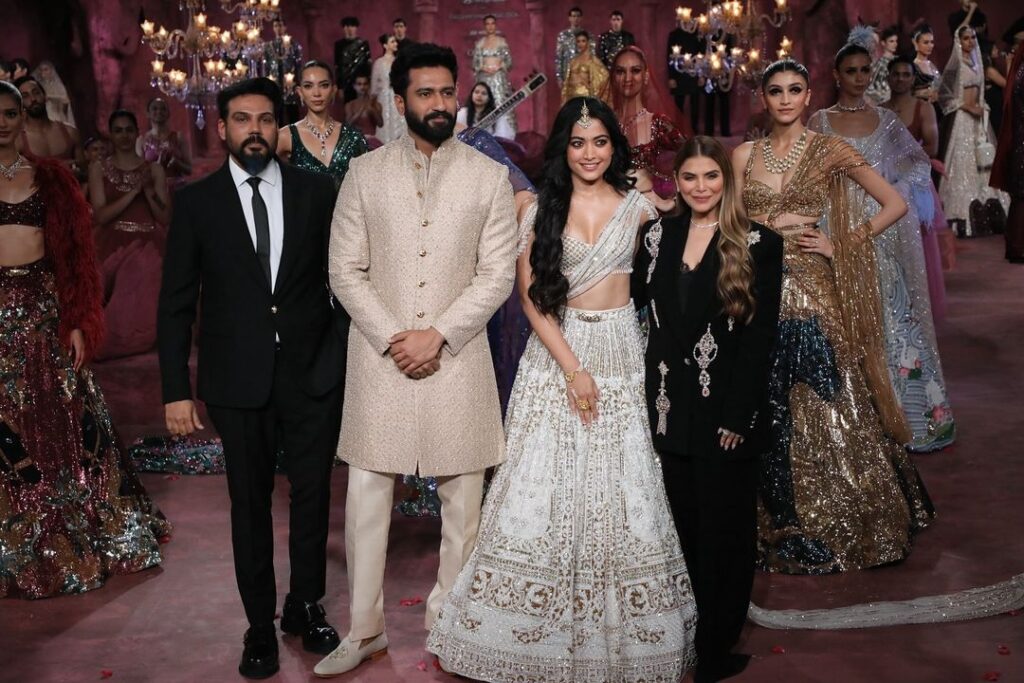
What lights up a dull, dark rainy day? Heartthrob Vicky Kaushal, for sure, as Falguni and Shane Peacock didnt shy away as usual from shine, all kinds of it, as well as clashing colours, but added Banarasis to celebrate two decades of making brides sparkle, presenting “Rang Mahal” at the Hyundai India Couture Week 2024. By Asmita Aggarwal As Delhi almost got submerged in rains, a brave few ventured out for the Hyundai India Couture Week 2024. Many felt watching Bollywood heartthrob Vicky Kaushal dressed as a groom for Falguni and Shane Peacock was worth battling the deluge. Though some things only Vicky can do, shake the bands lead singer’s hand, which really held the show together with their renditions of A R Rahman to Bollywood numbers, help his fellow show stopper Rashmika Mandana on the stairs as she wore a heavily embellished white lehenga. Shook hands with journalists he knew and asked them if his catwalk was appropriate. My first car was a Hyundai and I also banged it several times, laughed Vicky. He is a gentleman. We were showered with rose petals, after all it was the grand finale and frankly, we smelt and felt fabulous. The ornate set created, had swans on the ramp and a pool with rose petals, vintage chandeliers hung from the ceiling, the theme was an ode to the magnificence of legendary palaces, the people behind who created these –artisans. Few would have heard, Only fools fall in love by Elvis Presly, being strummed live on a sitar by the musician who was sitting in between opening petals! Freestyle dancing, artistes wearing salmon pink ruffled skirts gave the silver and white lehengas that Falguni-Shane introduced, a heady beginning. The Rang Mahal collection, had for the first time Banarasi brocade lehengas, Chikankari, lace and of course a tornado of sequins, there were mild tremors felt with golden and copper, lehengas, brimming with motifs — swans swimming with abandon, diyas, to banyan trees to peepal leaves. FSP added an extra dupatta to saris, the Banerasis came in pink with pure gold borders, former cricketer Mohammed Azharuddin, seemed to enjoy the unabashed ode to crystals, as the saris came with a shimmering cape. The live band crooned, Yeh jo desh hai Mera, by A R Rahman, FSP decided to replace their semi-precious stone bustiers with silk blouses sans any embroidery, maybe as an option to team it later with a pair of denims. This is their 20th year in fashion, and they are known for not shying away from any kind of glitter, or colour in the rainbow, also combining myriad hues in one fish tail gowns from stark blues to cold silvers. The transparent churidar came in black, and the Spanish influences on wrap shawls, in velvet with tessellation were nifty. Mirror work this year has been everyones favourite, only FSP used larger ones, and created Mughal motifs, resembling the arches of the Taj Mahal. The longest trails like a princess, and French lace complemented zardosi. Pink is another hue that is being celebrated in couture, and it is true, the Peacocks can never execute a line without faux feathers, it is called the Peacock effect. Reliance Industries, will now be venturing into handicrafts, with Swadesh their brand, a bit like Cottage Emporium stores, FSP tied up with them to create a special woven ensemble. The showstoppers Vicky and Rashmika are part of ‘Chhava’, a period drama, where Chhatrapati Sambhaji Maharaj, and his wife, Yesubai Bhonsale form the storyline.
Hardware to Soft Wear
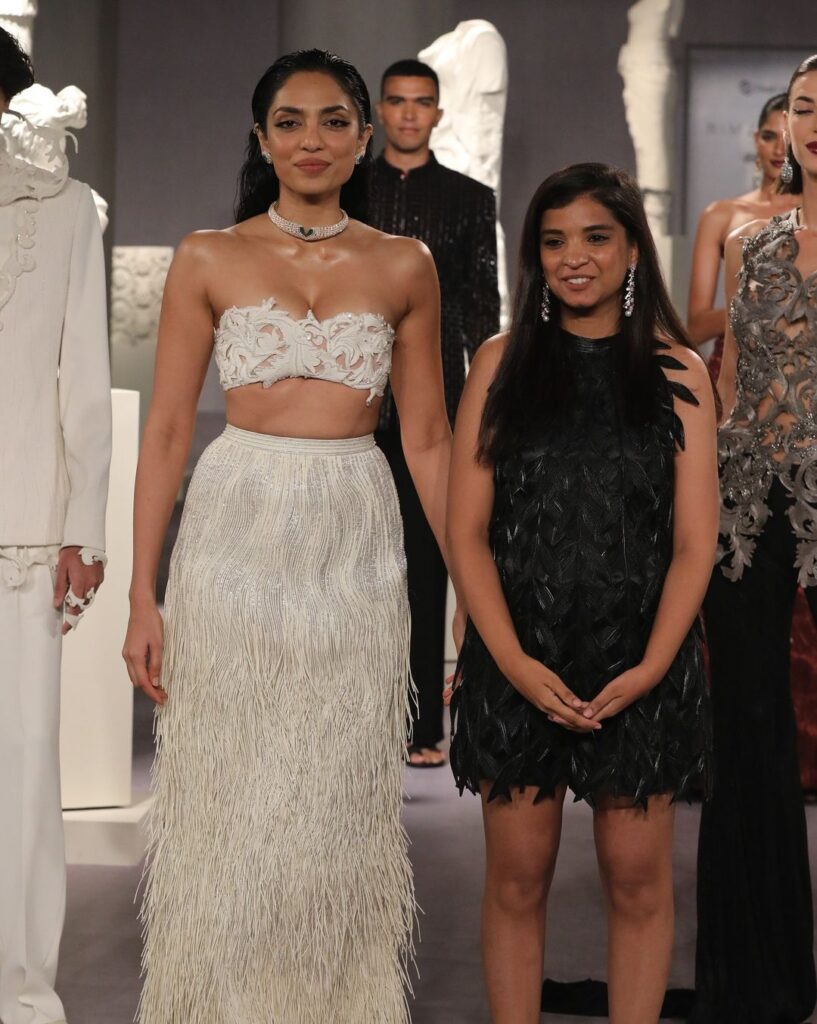
Rimzim Dadu shifts gears and adds motifs, inspired by Baroque, Western classical music, and architecture, to give intrepid women a flavour of innovative material manipulations. By Asmita Aggarwal Engineered gowns, signature metal saris, couture has a different meaning for Rimzim Dadu, it is more of a play of textures, and thats why Bollywoods svelte Sobhita Dhulipala in a white seemed to be the perfect muse. The dhoti is having its moment, its unisex, equally loved by both so are her corsets, as we all marvelled at the way she folds, moulds, tough metal into flowers, petals, beating them into submission. Sequins were placed ingeniously to create pixelated embroidery, I also liked how she took the steam out of couture and told us it could be worn with flats. The interesting aspect about interviewing Rimzim, is she confesses, her husband tells her, he can talk better about the brand than she can, she giggles and tells me. The designer known for her heady experimentations with acrylic, leather, steel, metal, mostly hardware, which she smoothly converts into soft wear, is a quiet samurai. She launched her menswear label, opened a store in Delhi, says, inclusion and sustainability are much abused words”; she launched a line called Disco, which is very unlike her personalityreticent. I wanted to offer men something cool, edgy, and fun. I felt there was a gap, she admits. She confesses, most throw around difficult words, without practicing it —just because you add one plus-size, or dark-skinned model, it doesnt make it cool, rather it seems like a marketing tool. I dont believe in trends; I want to create something which is relevant 30 years down the linea classic. Neither do I study the market, as bridal wear is a very tricky zone. Brides so far like to be safe, but in the last few years have seen a seismic shift, they want to push the proverbial envelope, and abandon herd mentality, she explains. It was uphill mentally to see brides embracing outfits made of steel for their D-day. When Dadu began, the belief was to be an antithesis of fashion, offer clothing that breaks away from the norm or any set restrictions, and this year for ICW 2024, it is no different. She developed or rather delved into a unique visual language inspired by the Baroque style of architecture. There is Western classical music that held me in awe, also architecture which I interpreted through my own vocabulary of cording, twisting, surface texturing. The only change is we have attempted to create motifs, which we never did before, she explains. When she began, almost 15 years ago, Dadu confesses, she was before her time, the market was not ready, she was embarking on a new direction. When you run a business, you have to gauge the audience, it must be a sweet balance between innovation, and marketability, she admits. To achieve a Baroque look-she created a POP (plaster of Paris) type of appeal, thus the line is titled Stucco. Besides new surfaces, they have traditional themes, zardozi, the first time it has been executed, a new one for Dadu. Working with hardware comes with unpredictability, but 15 years of experience has taught her how to make materials malleable, how to stitch a steel sari, even though it came with no rule book. There was R and D that saved us, trial, and error, we also understood how to protect, and finish our pieces. How to tame materials, initially it was challenging, even now we face roadblocks, she admits adding, artisans whom she trained in the processes have been with her from the beginning. Making samples is one thing, but how a garment will sit on a body is another ball game, she adds. Dadu launched couture three years ago, she enjoys meeting brides, she is learning every day, and says she is still in the honeymoon period of crafting couture, it does not seem like a chore or monotonous. Over the years, she has chosen various faces that match her brand identityAnanya Pandey — she is a Gen Z style chameleon; Vijay Varma for taking the road less travelled, as he enjoys dressing. If you ask Dadu whom she admires in the couture space it would be Schiaparelli, and what Daniel Roseberry has done with the Italian label. India is changing rapidly, there is effortlessness in couture, which is my favorite part, she concludes.
Gaurav Gupta’s ode to Indology
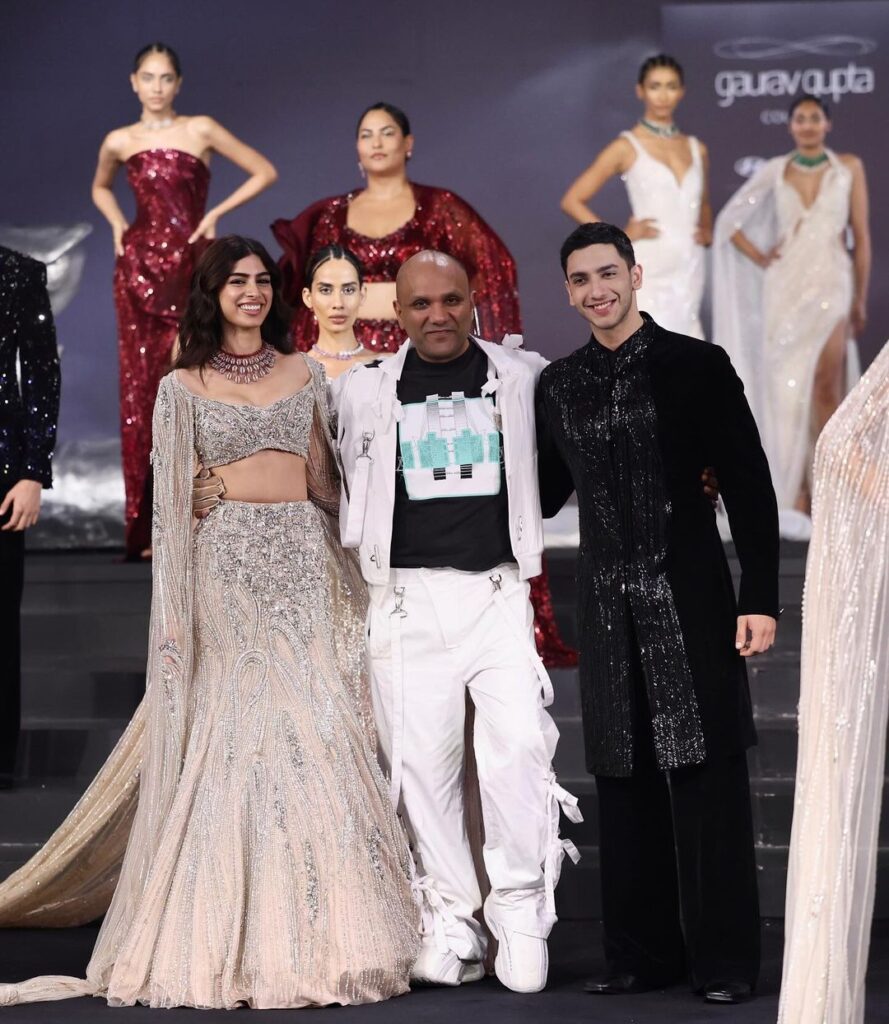
Gaurav Gupta is a man who vacillates between the ancient past and the ultra-modernfrom Shunya to Kundalini to now Arunodaya, or dawn, for India Couture Week 2024, he is in awe of scriptures. He has not forgotten the power of AI in the past, when he teamed up with tech to design a gown with IBM. Today, life has taught him to live in the moment! By Asmita Aggarwal Think Gyan mudra, with a snake coiling on the ramp, add star daughter Khushi Kapoor and Vedang Raina, and you get a Gaurav Gupta showcasing at the Hyundai India Couture Week 2024. Bustiers, breast plates, everything was fitted at the top and flowy, including sheer draped dresses with sequinned bodices. He channelled exaggerated shoulders, sleeves and the drip pattern seemed to be a favourite, a bit like molten wax scattered on buff shoulders of mens jackets. Architectural elements in gowns can be clearly seen, as smoke emanated on the stairs leading to the top of the ramp, probably in sync with his serpentine bodices that wrap the body. Gaurav Gupta knows how to serenade women —in a country of shalwar-kameez he has got them to try his gowns glittering in the daytime. To add to this is his prestigious foray at the Paris Couture Week, three times. He may have dressed Beyonce, Cardi B, Mindy Kaling, but there is a lot he is internally fighting for— damages of Rs 2 crore from copycats, and an accident that left him injured, and his partner in the ICU. A graduate of Londons Central Saint Martins, Gupta retails from Neiman Marcus, Bergdorf Goodman, Moda Operandi among others, he makes his presence felt globally. A recent accident reinforced lifes unpredictability and deepened my appreciation for the present moment. Embracing uncertainty, I have channeled this into my work, creating designs that reflect lifes fragility and resilience. With the support of my team and external partners, I am recovering and excited to return to creating magic. I am looking forward to India Couture Week to feel that magic once again, he exclaimed. There is a certain innate sexiness to his offerings, one shoulder is slipping off, a toned thigh exposed daintily, burnt maroons playing with ivories in his line for Paris Haute Couture Week, the Autumn Winter 2024, titled Jyotirgamaya (darkness to light). The way he drapes, pleats, and manipulates fabric, with 3D elements, has won him a devoted clientele. He understands gowns are a play of proportions, and like a master mixer he often gets them right. He launched a line of jewellery, in silver/gold with the sculptural shapes, he is known for, a brand extension of sorts. He believes, global acclaim brings with it a responsibility to maintain the essence of our cultural heritage, it also necessitates embracing futuristic elements, and noble practices. The industry should focus on creating heirloom pieces that are timeless, and can be handed down through generations, he adds. He adds, I think bridal wear today is about individual expression and personal stories. When brides come to us, they seek pieces that go beyond traditional definitions, blending cultural heritage, with contemporary aesthetics, he admits. This season, he is ushering in a new era of high-end couture, offering embellished lehengas, saree gowns, and draped sarees that reflect both uniqueness and versatility. Our collection, Arunodaya is crafted to celebrate each brides personal style while ensuring she feels both graceful and empowered, he confessed. He dressed Bhumi Pednekar in a custom sari in black with three pallus, the saris ran along her curved lines, ensuring the sari remained in a womans wardrobe but with a twist. This year, age-old techniques meet contemporary elements, from intricate floral embroidery revived with Indian zardozi techniques, to cage embroidery in sequins. We’ve also incorporated futuristic elements — metallic breastplates paired with conventional forms, says Gaurav. The pattern cutting fosters sculptural and fluid appeal. The ethos behind this collection is to celebrate renewal and transformation, embodying the spirit of dawn, he adds. If you look closely, most of the titles of his collection are based on an aspect of Hindu mythology, Aarohanam, Arunodaya to Jyotirgamaya and Kundalini —he seems to be a reader of scriptures, is in awe. I find immense inspiration in mythology and ancient scriptures. The Vedas, with their profound spiritual and philosophical insights, have always held me in awe. They offer a rich tapestry of stories and concepts that transcend time, providing endless inspiration for my designs. The idea of transformation, inner light, and the journey from darkness to light, as depicted in these texts, deeply resonates with me, and is often reflected in my collections, he explains. Lizzo, Janelle Monae, Jenna Ortega, Jeremy Pope, and Fan Bing Bing, have been seen attending his Paris Couture Week shows, his first line in the mecca of fashion was named Shunya the Sanskrit word for zero, but he has proved the power of zero. If you place it against any number, it only multiplies, like Gaurav has. He keeps in mind the measured application of crystals, silver metallic embroidery, badla, and zardozi to allow the wearer to take a slice of India with her. This he updates with nose rings, exaggerated shararas, ear cuffs, and a play of light and shadow with ivories and charcoals. Since he began in 2004, almost 20 years now, he believes, translating a vision into a collection is a journey filled with experimentation, failure, and eventually success. It starts with a concept, in my case often inspired by cosmic, mythology, or personal experiences. This is followed by extensive research and sketching. Fabric selection and testing are crucial, as they bring the designs to life. There are times when the initial ideas don’t work out as planned, requiring us to rethink and adapt. However, each failure is a learning experience that refines the outcome. The process is iterative and collaborative, involving countless hours of craftsmanship and innovation to ensure the final collection resonates with the envisioned theme, he concludes.