
Simple Weaves
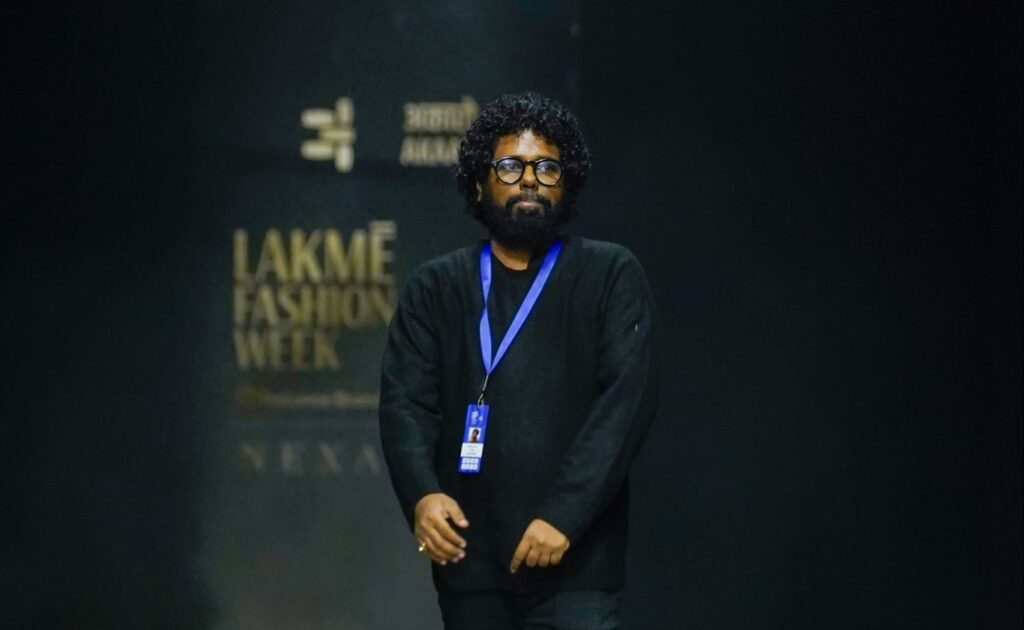
Gaurav Jai Gupta takes you on a journey to watch a Wes Anderson film through his ingenious weaving techniques, blazing ochres and endearing kinji saris in ‘Moonrise’. Asmita Aggarwal When you must fight for everything you get, you take nothing for granted, and sometimes that story of struggle becomes a lighthouse for others. The fashion industry is an isolated space, where some are unable to hustle, but when you choose to create on your own terms without diluting your brand ethos succumbing to market demands or financial constraints you are a winner of sorts. I am not a gimmicky designer where I am telling stories through Insta videos to capture the fancy of GenZ. My story telling is restricted to my shows, and in art the story lies in the abstraction, says Gaurav Jai Gupta founder Akaaro. His work is layered, and he believes as he is not an activist and neither into hectic advertising, the brand sticks to what it knows best—-dressing intense, powerful women with a mind of their own. If you look at art, the products tell the story and you connect with it instantly, he explains. Textiles, quality, and tailoring has been Akaaros mainstay not settling for mediocrity to serenade a fleeting audience, his training in textiles and weaving has helped him hold his own. Textiles are my DNA and I do not know anything else, what I did in college is what I have continued till today and in some ways, couture is continuity isnt it? he asks. His LFW 2024 line is about innovation in textile, with heavier cottons, to muslin, hoping to craft ensembles which are both functional and urbane. His classic kinji or stretch one of the brands archival fabrics which he has been working with for the last 15 years, with pleating is perfect for this seasons exaggerated sleeves, volume, detailing and big shoulders. The conversation has been how to market handlooms in a modern way to a younger more unpredictable audience, so there are denim finishes on handlooms, chambray used as denim, khadi as denim, with detailed stitch lines and oversized clothing. This time I would say there is a bit more fashion in my clothing, he smiles. To add to this mix is ruching and metallics, puffer jackets, skirts, tops with a global vibe where luxury meets craft. Gaurav has used threadwork, surface texturing only when he needs to, but till today he is known for his metallic saris, where even now there is a waiting, along with his outerwear—tailored trench coats and nifty capes. The pandemic had taken its toll on designers, many were forced to shut down or downsize, rethink their brand identity, and despite not being a bridal label Akaaro was able to sustain the storm. I look at fashion as a maker, what is my potential, there is a need to always elevate creative processes. Unfortunately, India does not recognize pure talent, it has a Capitalist way of looking at success, totally dependent on your balance sheets, he admits adding that dressing Bollywood stars or red carpet has never been his end game. Frankly, we are confused as a society, and have let stars decide our future, he adds. What makes him happy today is the evolution of women in this space, their astute understanding of textiles, their experimental attitude, buying power, exposure, and clarity of thought. As Gaurav is a master of bespoke tailoring, he has been working on his version of a bridal line of saris, keeping his brand language in mind—a bit of kinji palla saris, stretch which is built in the weave. These are different from his linen, metallic blends, that have a loyal fan following. LFW X FDCI 2024 story resembles a Wes Anderson palette that he had taken to a New York trade show recently. The yarn that was wasted, the warp was reused to create checks —-ochre, muddy reds, blues, pinks, and ivory, along with colour blocking, thats why the LFW collection 2024 is titled Moonrise. It was fascinating how yarn wastage can be converted into a full collection and the theme of capturing the moon through its 16 stages has its own perceptions. Ignition point of any line is curiosity and as my brands tagline has always been look within, seek within, he confesses. Working at his own pace, and not succumbing to the pressures of feeding the social media monster, he feels technology has to be used sparingly, and the fundamental question for those with massive followers is how can 3 crore people like everything you do? The ball is up in the air on this one.
One size fits all
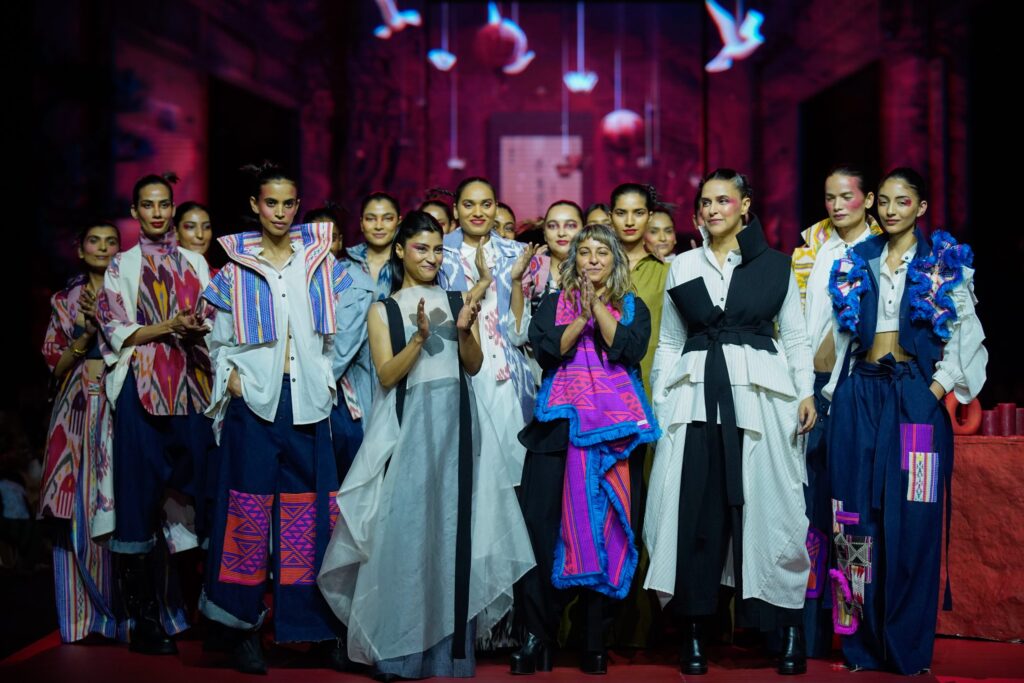
Chola by Sohaya Misra is back after five years to tell us clothes must be alive, have movement and adjustable, defying conventional norms of dressing according to your size and body type. Asmita Aggarwal Little did she know that the name she kept for herself as a toddler, Chola would one day become the moniker of her fashion label, after all stylist-turned-fashion designer Sohaya Misra, a psychology major credits her love for free-flowing garments as a starting point of this six-year-old journey into the world of fashion. The alacrity of Sohayas clothing is that it is ageless, genderless and retail spaces which sell as small, medium, extra large, Chola offers you ingenious strings and buttons to adjust it the way you feel comfortable in every outfit you buy from her. I dont embellish and neither do I embroider, it is not my vocabulary, says Sohaya, but she does believe her clothes as a version of art and thats why she was excited to collaborate a few years ago with her cousin, an artist Renuka Jalan. Moving to Goa five years ago and a conscious decision to slow down, raising her son on the sandy beaches, Sohaya, is a woman who believes in collaborations. As her clothes are super easy and allow freedom of movement without any constriction, she dressed dancers working with Peeya Rai Chowdhary of Omaggio Performing company. The desire to make clothing without boundaries, came from the fact that Sohaya felt not being a conventional body type in India comes with hassles to find the right fit where you can adjust if you put on or lose weight. Clothes dont have to be boxy, thats why I love the Japanese designers. They break rules through minimalism and black. The anti-fits, the love for austerity is what I learnt from them, as I am a self-taught designer who never went to a fashion school, she explains. Sohaya is adamant in sourcing locally, with a small five-member team, she only makes as much as it can be consumed. I feel many times women shop with a set mindsetsilk and formal, but now all that is slowly changing. Women are conscious and intelligent. The embroidery fascination has ended, they want to wear and rewear their clothes, she adds, saying that she tries to add elements that wont bore the buyers after a few wears. Unlike others, who first sketch then buy fabrics, she works backwards, so this year she is back with a bright, coloured denim plus patchwork (made from recycled deadstock) as well as linen. Add layering, print-on-print, handwoven ikat to craft structured jackets as well as frills and you get Sohaya Misras carefree offering.
Sari is the Chanel of luxury
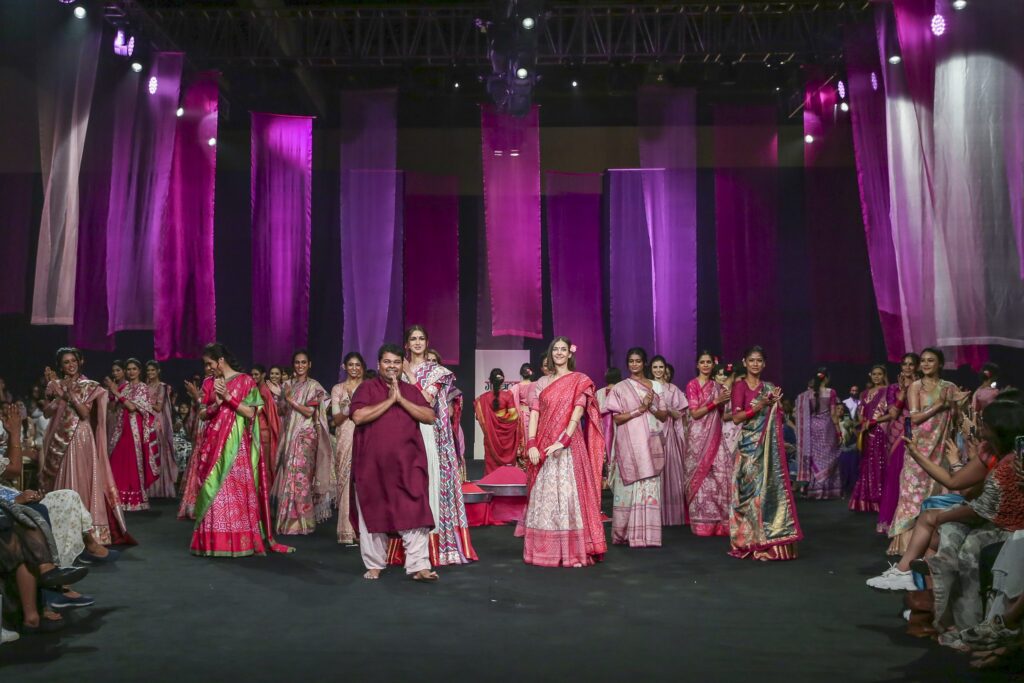
Hand woven and timeless Gaurang Shah for LFW X FDCI 2024 is back with an ode to spring with Gulal, with hand painted charkha woven khadi saris. Asmita Aggarwal Designer Gaurang Shah, won the National Film Award for Best Costume Designer in the Telugu film Mahanati, directed by Nag Ashwin, the film starring Keerthy Suresh is a biopic on legendary yesteryear actress Savitri. This isnt the only feat that Shah is overwhelmed by, as he believes his real achievement is when he started showcasing at LFW in 2012, he was the only one who came armed with hand woven saris. In 2001, he recalls, handlooms were finished, their popularity was dimming, this was primarily due to the lack of design intervention, no direction given to weavers, they were unable to fill the gap between modern needs of a well-travelled woman and traditionality. The consumer and weaver needs to be aligned and this is where Gaurang jumped in. He worked on the yarn design, made sari sustainable, added innovative ideas and he explains, in India the sari is its innate identity. The sari is a six-metre-long canvas for the weaver, if you look at his experiments with the Jamdani, every inch he elevated with fresh hues and discerning motifs. His belief in the Hindu calendar and how to dress according to seasons, is the reason his LFW X FDCI line is titled Gulal, paying tribute to Holi, the festival that ushers in Spring. In 2022, he had launched Sindoori for the festive season, and he confides it takes two years for the weaving process and thats why he took a break to be back this year. Each state has been represented through pink in this collection, whether it is Kashmir to Andhra and Madhya Pradesh. We have added indigenous weaves, plus hand painting. But this creative process is time consuming —you begin with drawings on paper, then the yarn is dyed and put on looms, families then weave the entire day by hand, we dont use power looms. Sometimes it takes two years for just one sari, it is a slow process, explains Gaurang. 2024, the motifs are refined in Shahs collection, with a use of matka silks, hand charkha khadi, Jamdani, jacquards, to even gara, French Knots, chikankari and the exclusive petit point needlework done by the nuns in Kerala. We give older techniques a contemporary flavour and the challenge this year was to display shades of pink there is no other colour used, he explains. Sari industry is more than Rs 288 billion in India, and it is still the most bought garment in the country till today, though Gaurang also has a range of Anarkalis, lehengas to ghagras and the beauty of his offerings is he uses only natural fibres used, the material only gets smoother and softer with each wash. We work with more than 2,000 plus looms all over the country, and thankfully over the years, we have built a reliable, sophisticated clientele, which values each weave and hopes to make it an heirloom, he confesses. The sari is the Chanel of luxury, he laughs and says it truly transcends time, much like his Patan Patolas, which take almost two-three years to weave, an investment for a lifetime. We work only with real zari, which never goes out of style, woven for generations of weavers in Surat. It is not just looms, sari weaving is an emotion, they put their stories in the fabric. Unlike sequins and heavy embroidery which has a shelf life, our saris are timeless, says Gaurang as he explains each motif is region specific. The kanjeevarams have wall sculptures inspired by South Temples, but they have innovated by adding ornamental designs and sometimes floral jaals.
Dressing Big B
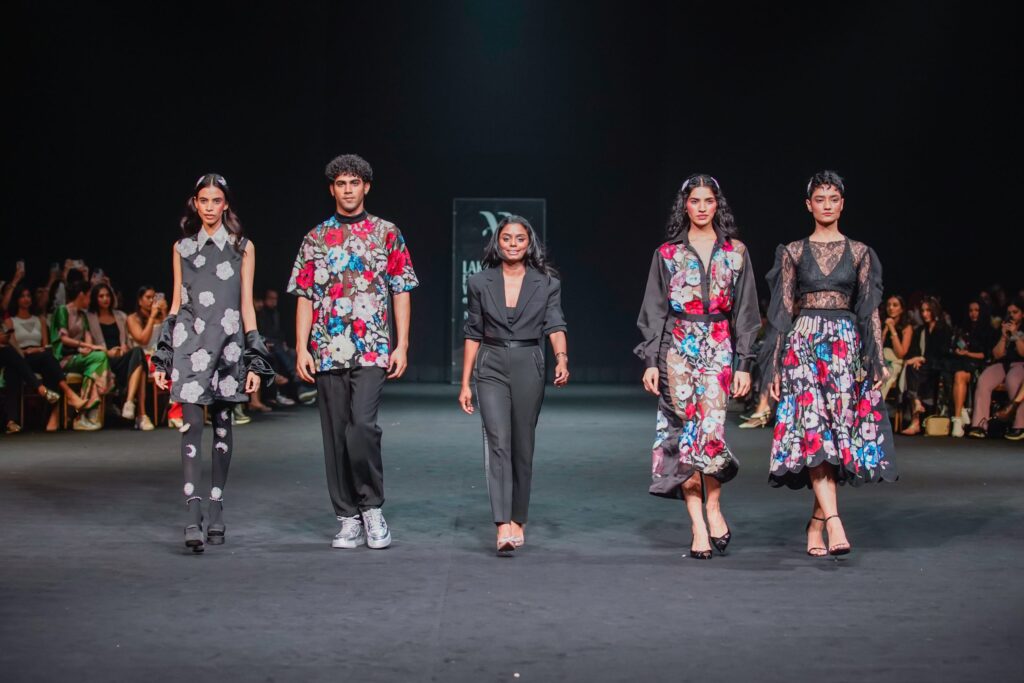
The Sun and Moon two stars have fascinated Archana Rao thus the moniker for her LFW X FDCI 2024 line, but she is excited to have done costumes for Amitabh Bachchan, Deepika Padukone and Kamal Haasan in Kalki 2898 AD, creating futuristic character sketches! By Asmita Aggarwal Hyderabad-based Archana Rao is celebrating ten years of her eponymous label, but there is a lot more to be happy aboutand that is her foray into South films. She won the National Award for the best costume designer for Mahanati, an Ashwin Nag biopic on Savitri, and she admits movies come easily to her, just like designing. Costumes for films and designing for a real character seemed real for me, says Archana, as she shuttles between films and running a successful brand. In Kalki 2898 AD, starring Amitabh Bachchan, Deepika Padukone and Kamal Haasan among others, she admits designing for Big B in this futuristic film was a learning curve. It has taken us three years to finally come this close to the release date of the film. Big B is the easiest star to work with, as he does not look at his comfort, rather he prioritizes the character. Deepikas biggest strength is her collaborative personality, she is open to ideas and we worked with her stylist Shaleena Nathani for Kalki, explains Rao. Rao had to begin from the scratch, for this film, as there was no reference that she could dip into, while designing for a futuristic film, but admits, she had used innovative materials for Amitjis character and created new textiles. Unlike Mahanati where we could look at Savitris vintage photos to craft a character on 70 mm, with Kalki the challenge was different, she explains adding finally it is a team effort —from the director to the cinematographer and numerous other technicians in between. Back at LFW X FDCI 2024, Rao a NIFT graduate, who honed her skills at Parsons School of Design, started her career working with a menswear label. Winning the Vogue Fashion Fund in 2013, when she began, she knew she was doing something right. I always design separates, and I do not dictate looks. Even if two people are wearing my clothes, they are styling it differently, personalizing it, she explains. She loves designing surface textures, in silk organzas, where sheer fabrics dominate, and on them she adds embroideries. The 2024 line is titled Sun and Moon, she liked the contradictions in the two, even though they are different, they share a secret harmony. This gave birth to two robust huesbright whites merging with midnight blues. This year, less is more for Rao, as she focuses on impactful design, adding minimal shapes, very straight forward with the play of only one key element in the silhouettes. I have tried bling this year, with 3-D flowers, peek-a-boo with sheer and strong fabrics for our tailored looks, she confessed. When she started out, Rao admits her offerings were in some ways too girlie and ultra feminine, fast forward to now she has turned to hassle-free clothing, which is versatile. You can wear her pant-suit that comes with a bustier later on with a sari, you already possess. Or buy a new sari from her that comes armed with power shoulders. My strength I have to say is my embroidery, Hyderabad is currently thriving with design talent, but everybody here has their own distinct language, she confides. In the future, I do want to do many more trade shows and of course films, which always make me happy, she concludes.
Tiger Tales
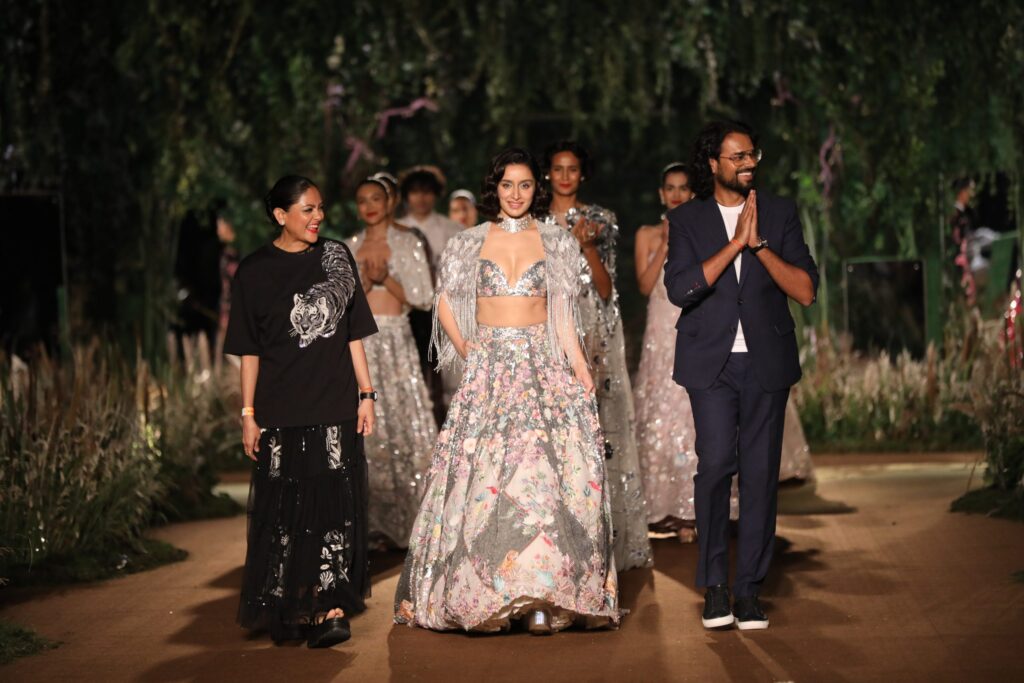
Couturier Rahul Mishra is a conversation starter, a dialogue initiator thats why couture for him is about a narrative that transcends the discussion about silhouettes, shapes or forms. ICW 2023 was an ode to sequins, flowers and the king of the jungle! By Asmita Aggarwal
Royal Hues

From the Taj Mahal, Shekhawati, Qutab Minar to the banks of the river Sabarmati and the historic Port Jail in Goa, the FDCI has effortlessly paid a tribute to traditional techniques, by synchronizing them with presentations at unforgettable heritage sites. By Asmita Aggarwal
Gandhis vision 3.0

The FDCI and KVIC show proved Khadi is the fabric of the future! Khadi is no longer stiff and just meant for the intelligentsia, now it is fine, supple and malleable bringing with it modern shapes and quirky prints, serenading a fast-moving GenZ. By Asmita Aggarwal
Poetry in Motion

Varun and Nidhika welcome the return of ivories, while Mahima Majahan pays a floral tribute to Gulzar sabebs couplets. By Asmita Aggarwal
M for Mixed bag

Risqué, youthful and sequinned, Manish Malhotra lets us into his world where he leaves behind elaborateness and serenades sass. By Asmita Aggarwal
Despair to Hope

The Pearl Academy talented final year students of fashion design, show us how silhouettes can display human emotions, the crisis civilisation faces with wars to earthquakes, through hand made garments which exude confidence, and reveal skilled processes. By Asmita Aggarwal