
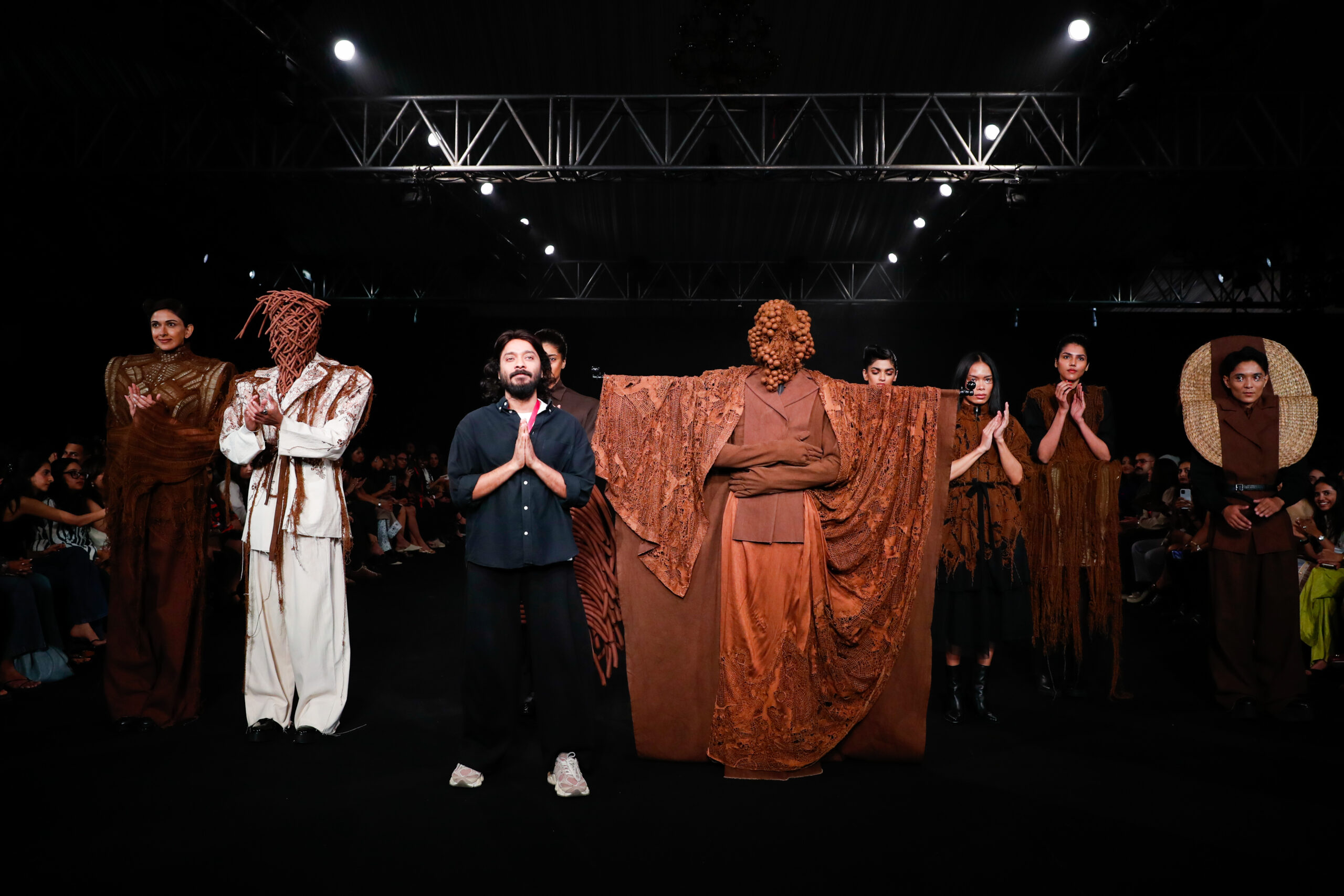
Water hyacinth gets converted into nifty baskets for gifting and packaging, as Anurag Gupta gives sex workers a dignified life training them in weaving water grass, Pacchu Tola, Biskohar.
By Asmita Aggarwal
It was a bright, sunny day, Anurag Gupta decided to visit Bharat Tex, his gaze fell on a stall from Bihar, and saw how beautifully the bags were crafted. “On a closer look it was water hyacinth, (Jalkumbhi) or water grass, mostly seen as a waste material,” he says. Locals have found a way to put it to good use by making mats, baskets, bags, as it is a much better and stronger alternative than jute. The NGO Anurag visited rescued sex workers more than 1300, trained them in this craft, “what I liked is that they ‘made’ artisans in Hajipur, on the border of Bihar-Jharkhand, didn’t work with existing ones. The idea was to offer them a dignified life which resonated with me,” he says.
Anurag grew up in Biskohar, Uttar Pradesh, he realized there is raw material available there too, he wanted to highlight the marginalized, often not spoken or written about, especially women who work in red light districts. “My village is divided into two parts; Pacchu Tola, is a red light area, even though Biskohar survives on agricultural produce these patches face extreme poverty and helplessness. Women lack employment; I wanted to speak about their daily struggles, politicians come during elections, promise things, situations remain the same,” he says.
Anurag will pay them to learn how to weave water hyacinth, start training 30 women, they can work from home, he has aptly titled it “Jal se Jivika”. “This can turn to custom packaging, boxes for corporate gifting, and the product is fully sustainable,” he remarks.
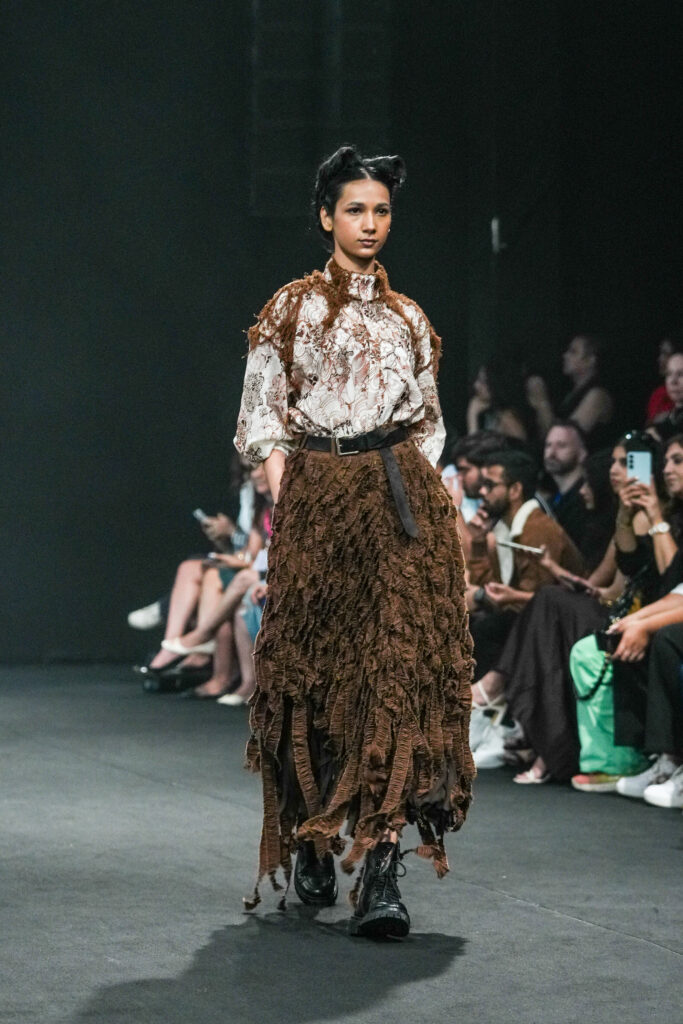
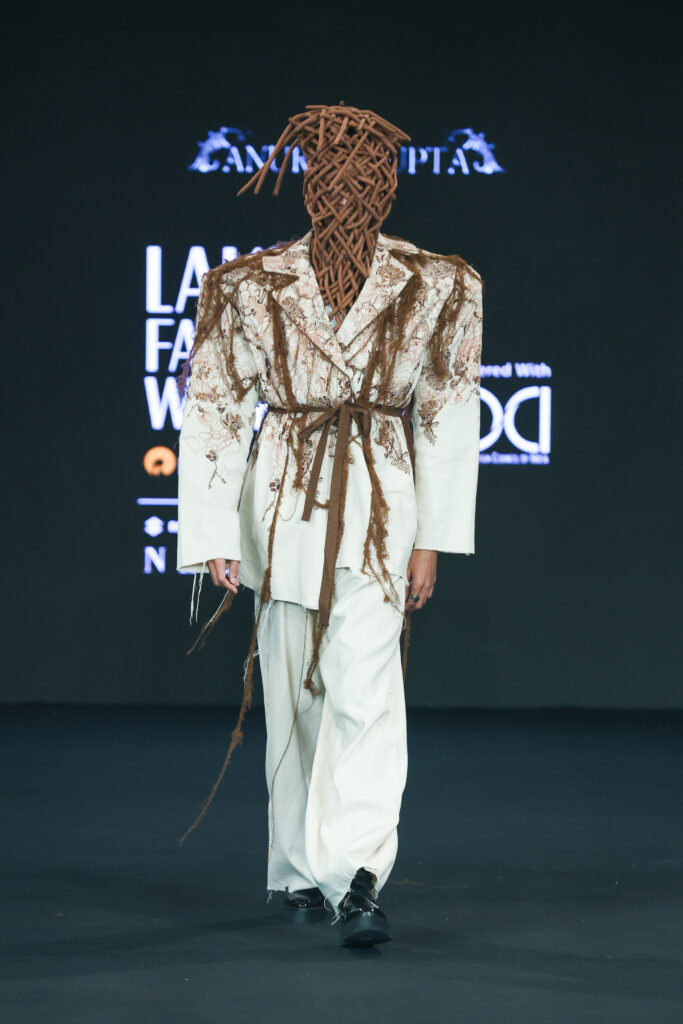
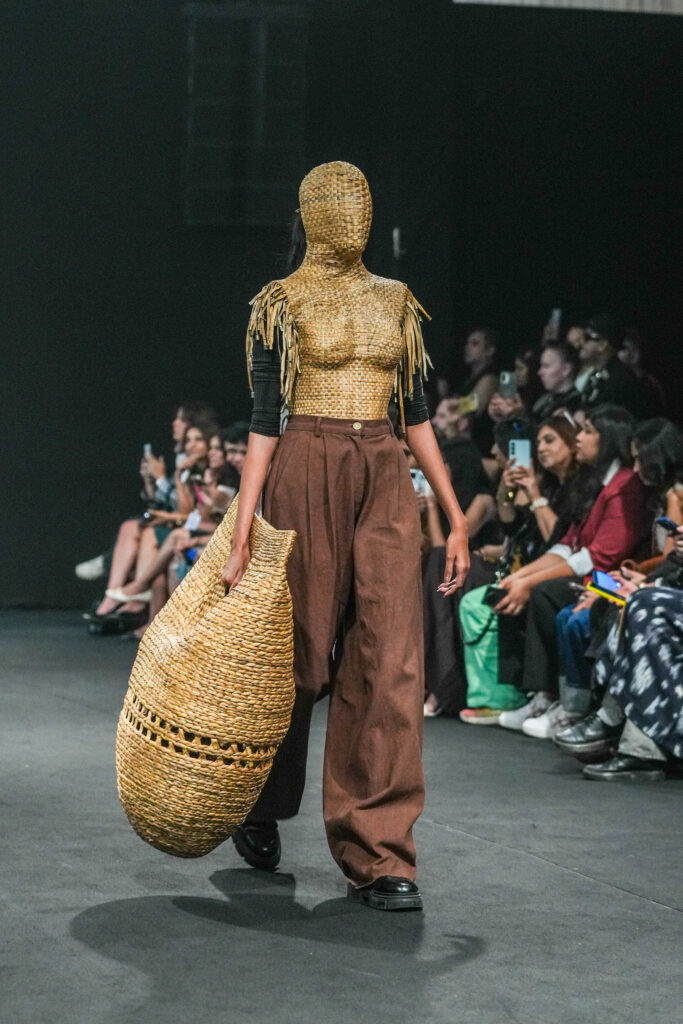
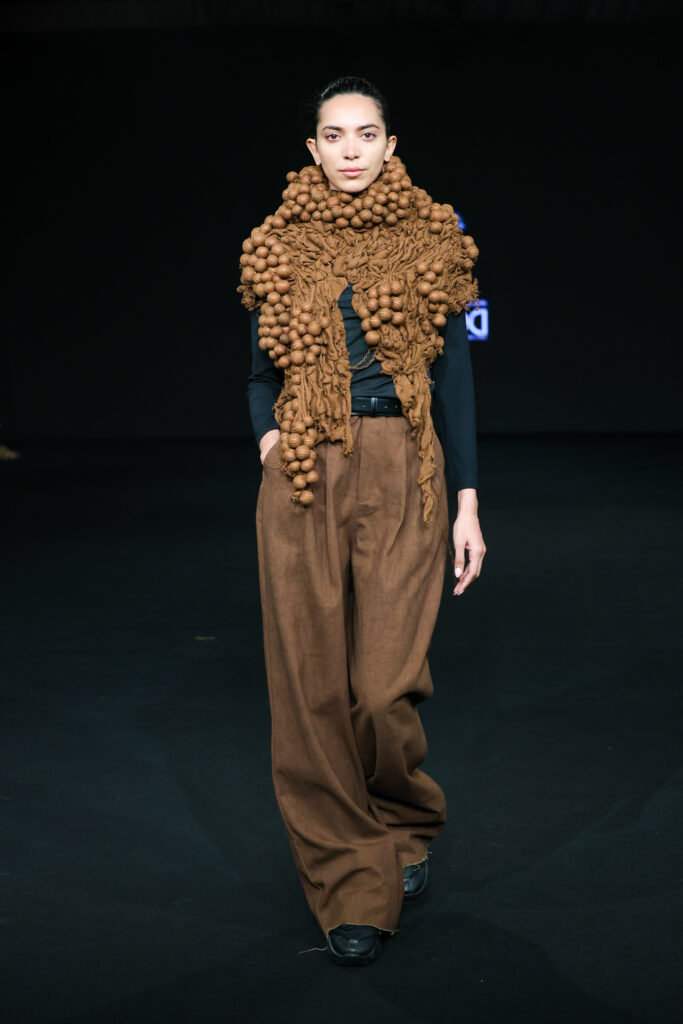
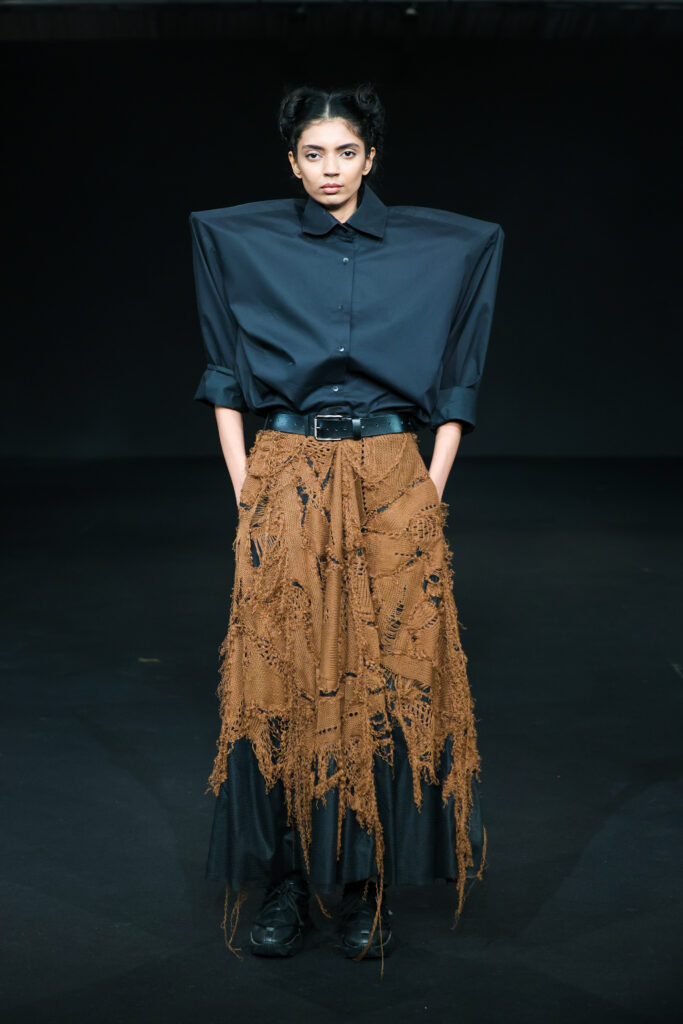
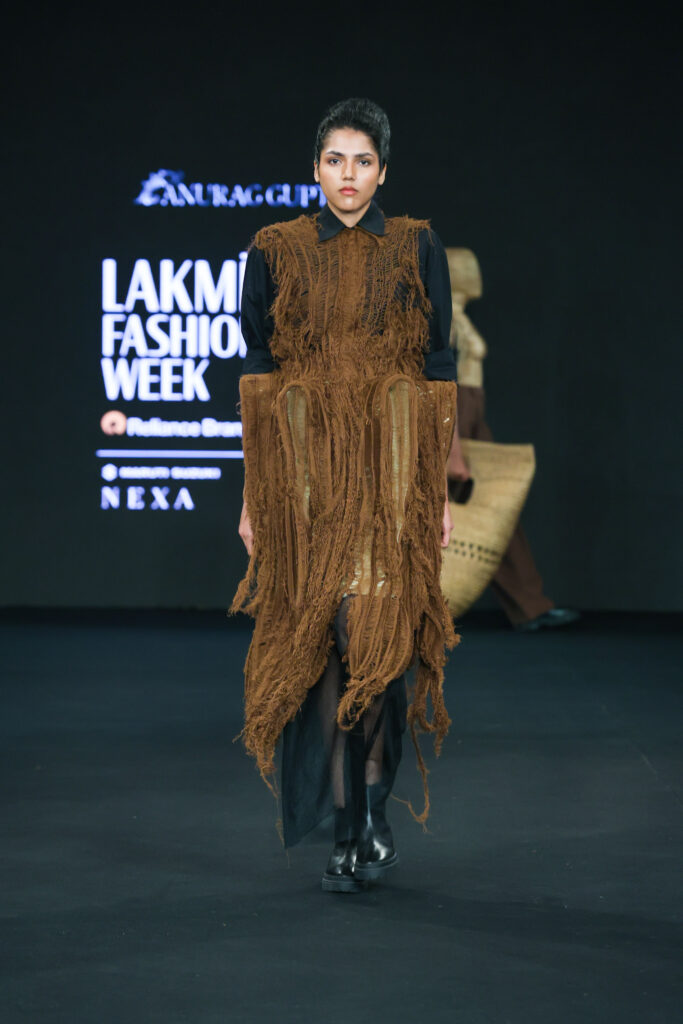
For LFW x FDCI Anurag has worked with knitted textures, stepped out of his fantasy world, is making a “commercial” line, minus the avant-garde drama. Shapes remain experimental, knitwear is woven, combined with jacquards, and interesting textures. “We must talk about protests, as a community, it affects everyone. It is important for fashion to be politically conscious. Why should it be dominated by only Bollywood, stars, glamour?” he asks. His efforts have been to take the industry to the village, not other way round “we need to provide alternatives to people living on the fringes”.
Social causes, putting a spotlight on what he internally and strongly believes in, Anurag felt he started with manual scavengers, but fashion media is partisan. “They look only at shiny people, privileged, don’t entertain me, maybe I’m not a people pleaser,” he confirms. Diet Sabya tried to police, and has fallen too in the trap of Elle, Vogue and Harper’s Bazaar, “big designers overshadow smaller ones who never get spoken about, just the top five are praised by magazines. How much will we talk about Sabyasachi. We know his contributions. We need to move on,” he concludes.