
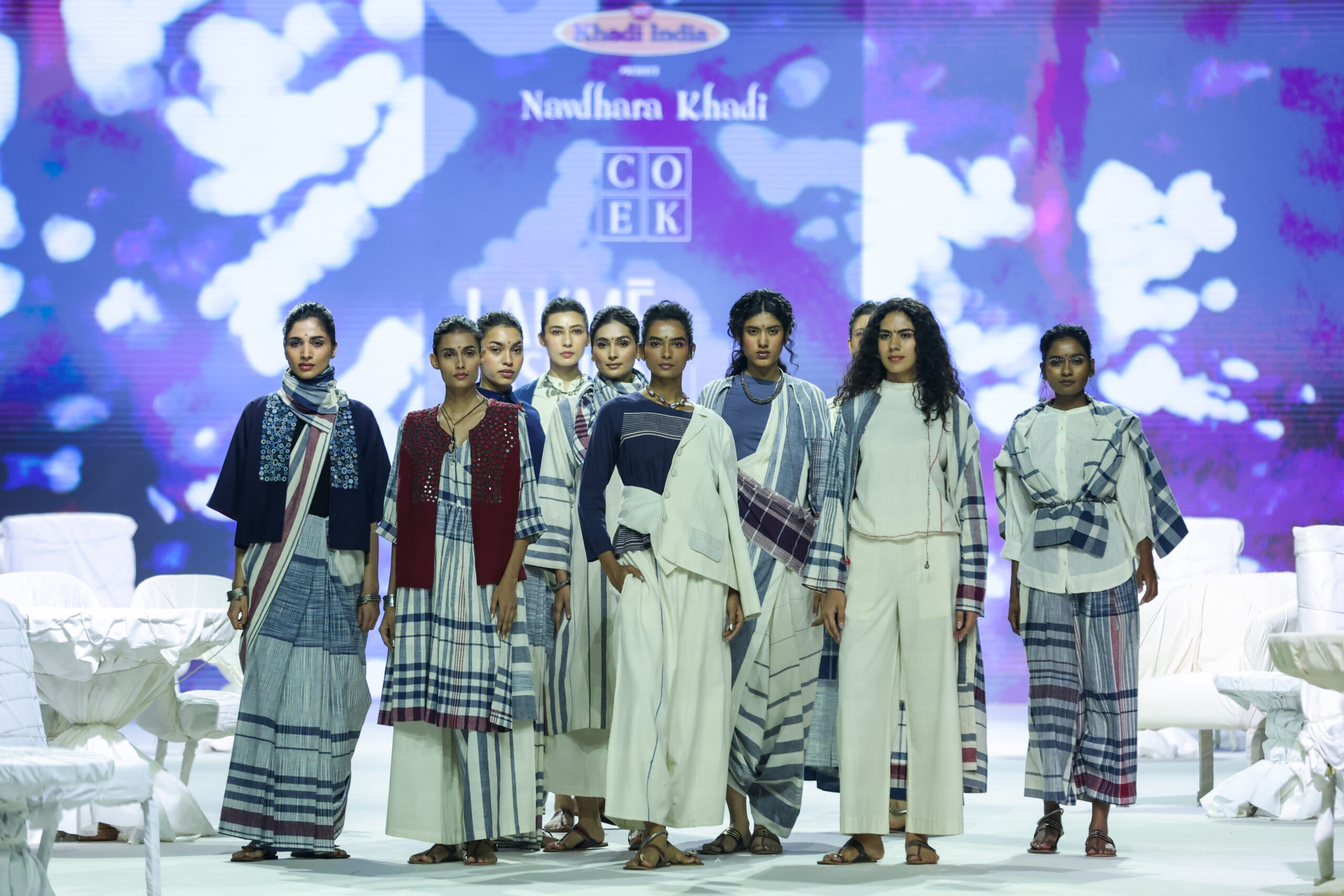
Emblazoned with seashells, mirrors, colorful threadwork khadi gets a cool makeover with tribal women from Sandur’s deft hand work at the FDCI Khadi showcasing.
By Asmita Aggarwal
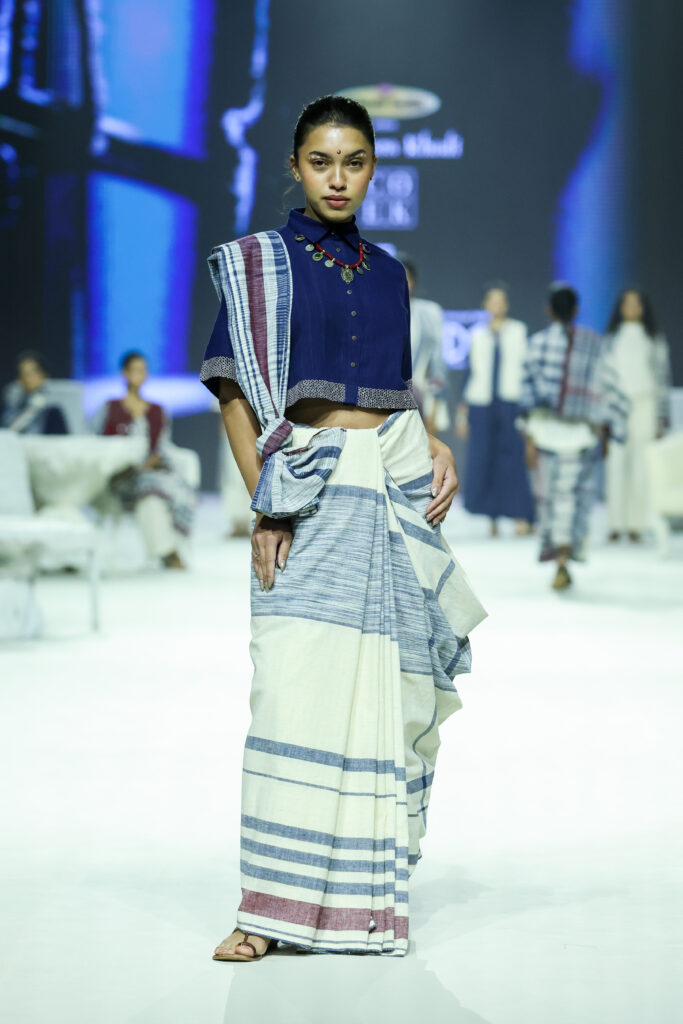
The beauty of Khadi is in its enviable properties—summer cool and winter warmth, when you combine empowerment and women artisans in this mix, it becomes a movement of sorts. Sandur Kushala Kala Kendra (SKKK) has tied up with Co-Ek, (Centre of Excellence for Khadi), an initiative by the Ministry of MSME and KVIC, attempting to make Khadi young, cool and fresh.
SKKK is working with tribal Lambani women from Tanda of Susheelanagar, a nomadic community, almost 500 artisans, hoping to make them self-reliant. Further the Khadi Commission equipped them with handlooms, Ambar charakas, so this year at LFW they will be showcasing their cotton khadi—hand spun spinning, weaving, and natural dyeing. Villages of Yeswantnagar, Krishnanagar, and Sandur, is using Ambar charkha, with 76 skilled women executing intricate Sandur Lambani embroidery.
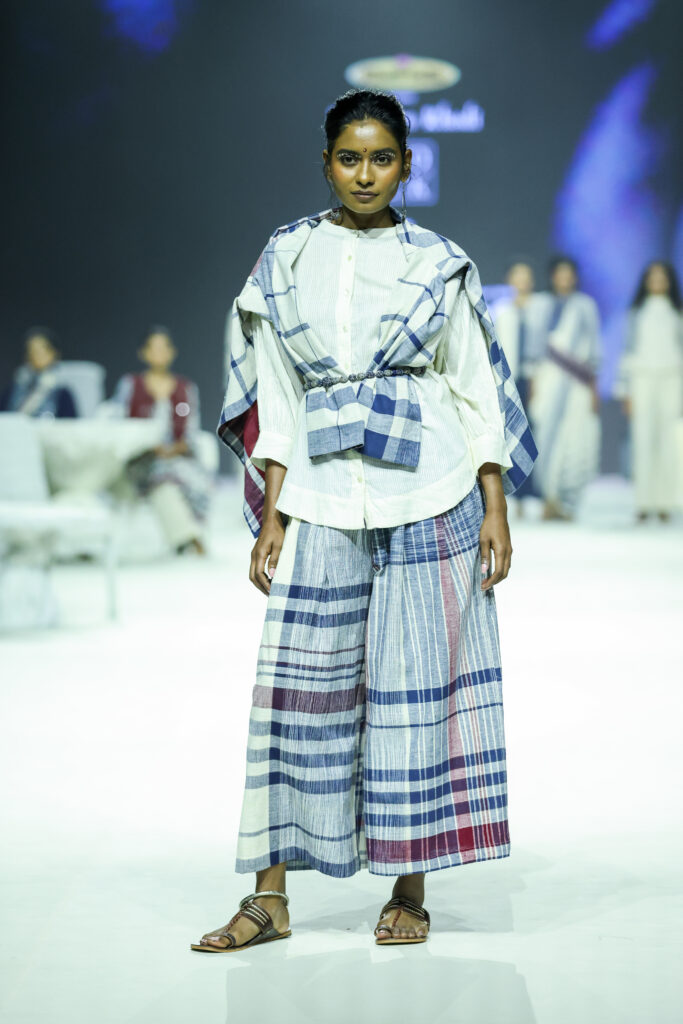
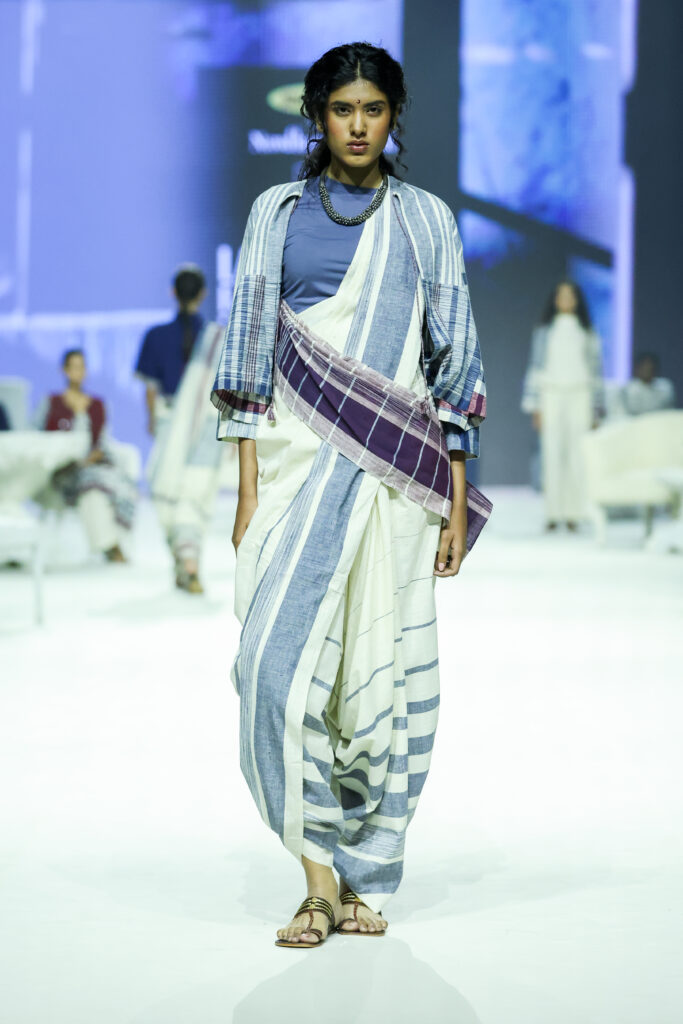
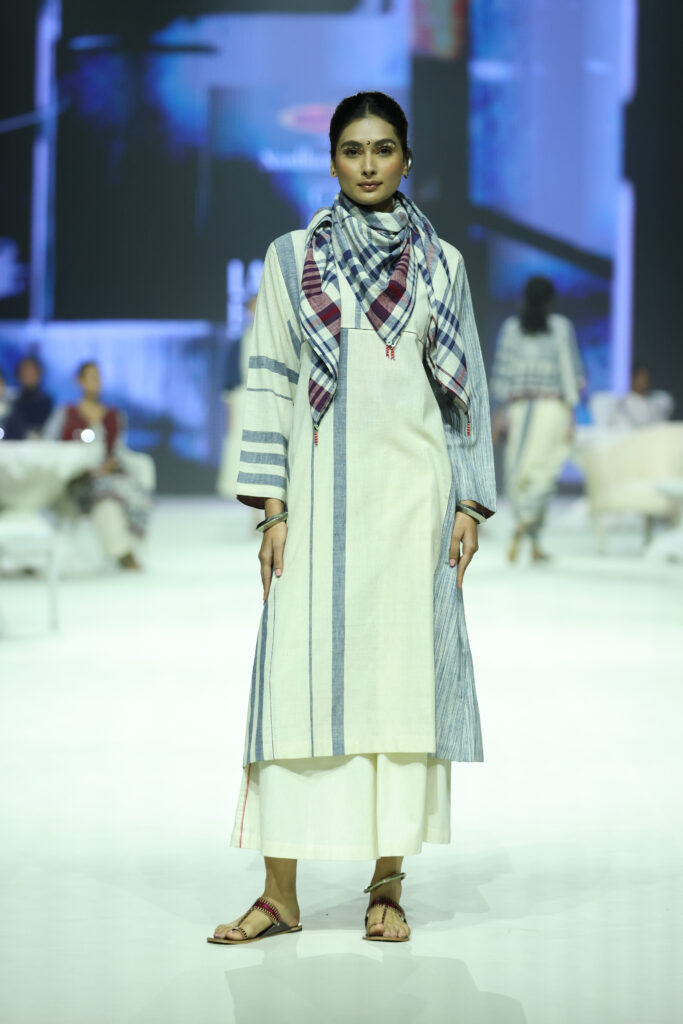
SKKK has worked to preserve the Lambani craft, won the UNESCO Seal of Excellence for Handicrafts in South Asia and has the Geographical Indication (GI) tag for “Sandur Lambani hand embroidery”.
The inspiration has been nifty checks at Victoria and Albert Museum; here is the twist rather than uniformity they added surprises in the warp and weft. This was executed by the Devanga weaving community, artisans with 40-year experience who previously worked with the Karnataka Khadi Gramodyoga Samyukta Sangha, Hubballi, the only BIS-certified national flagmaker.
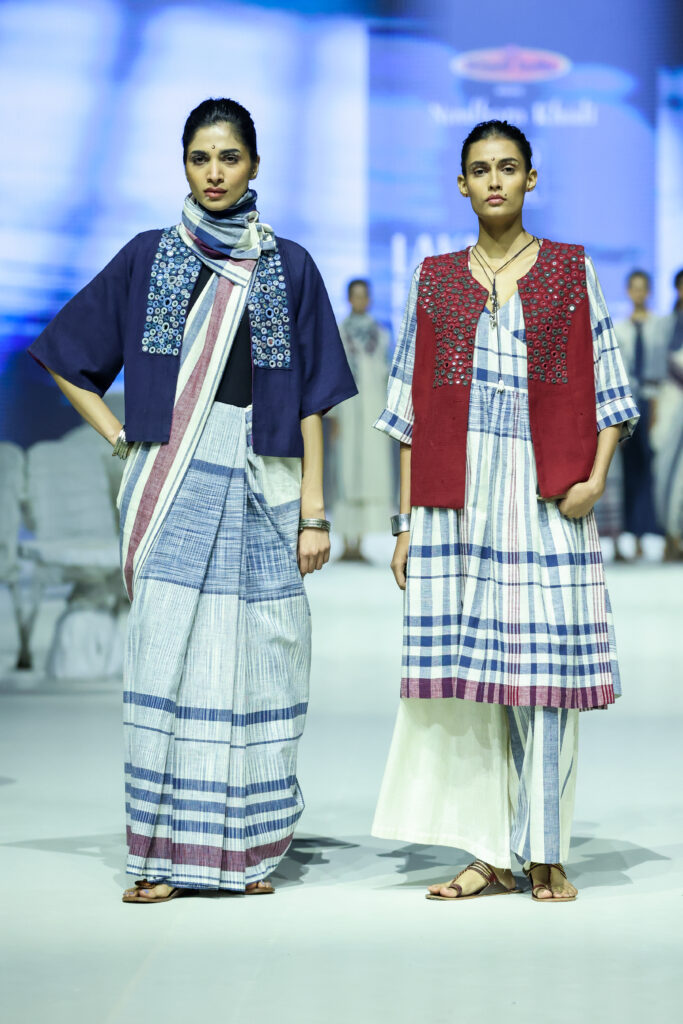
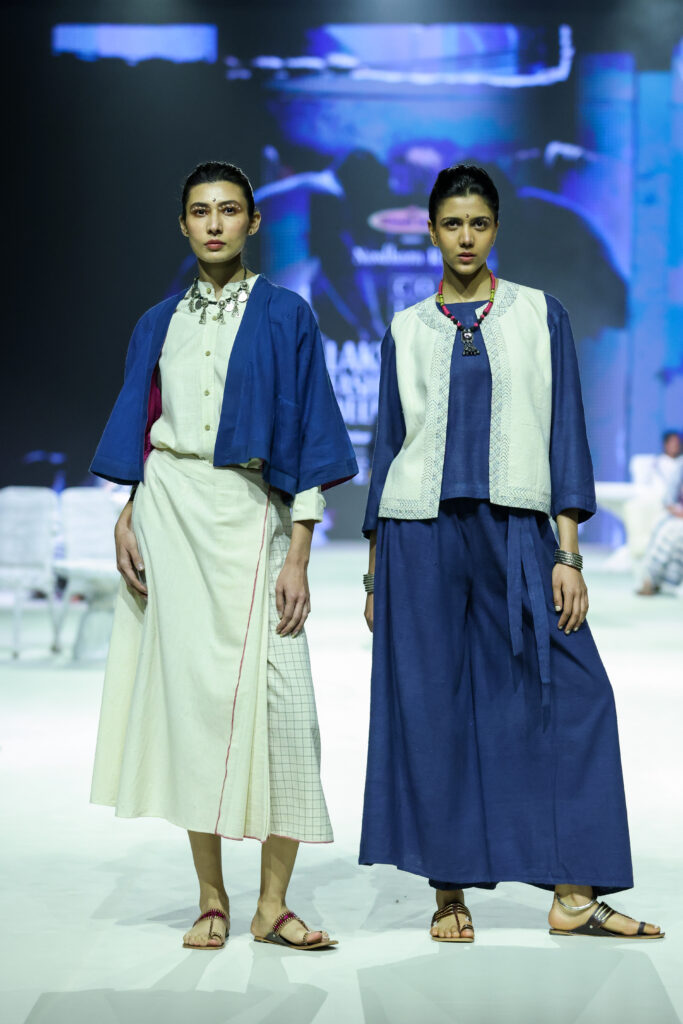
“We have worked with Bijli embroidery, ‘lightning’ work, reflective, has a sparkling effect. It is space dyeing, with a chambray effect, looks complicated, but is simple,” says Nargis Zaidi, head, Apparels at the Centre of Excellence for Khadi. The Khadi unit currently employs around 98 weavers, but most clusters are set in their ways, hesitant to experiment, adds Nargis.
The Lambanis use vivacious hues, red to indigos, but Co-Ek has toned them down, offering classic shapes, kedia tops, reversible jackets. “There is an increased awareness amongst youngsters about hand-made, hand embroidered, it is like a limited edition sneaker for them in some ways,” adds Nargis.
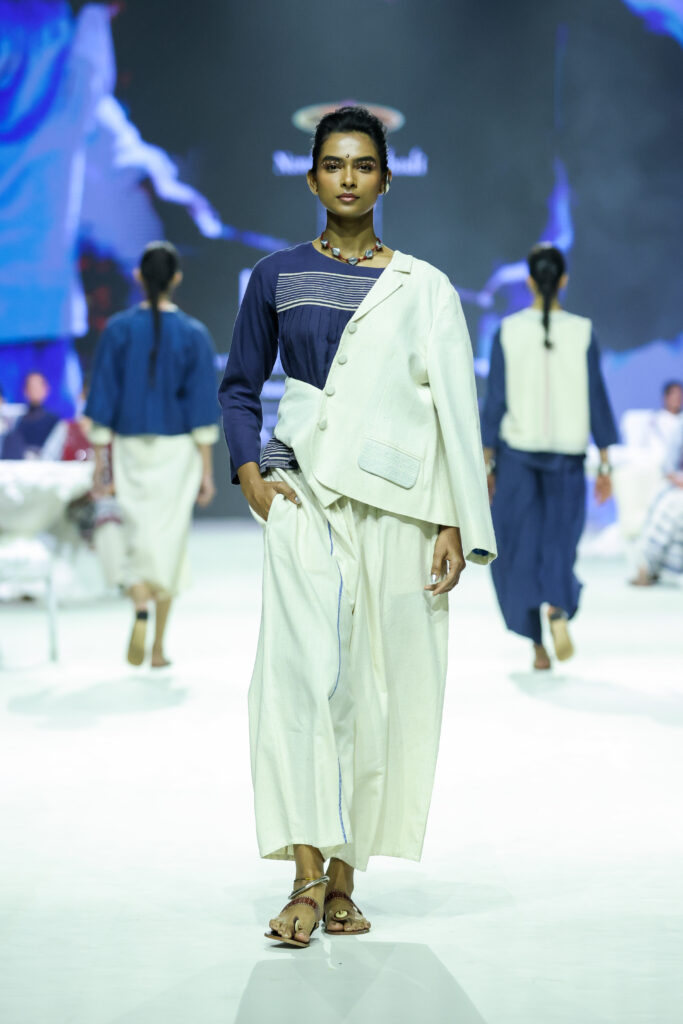
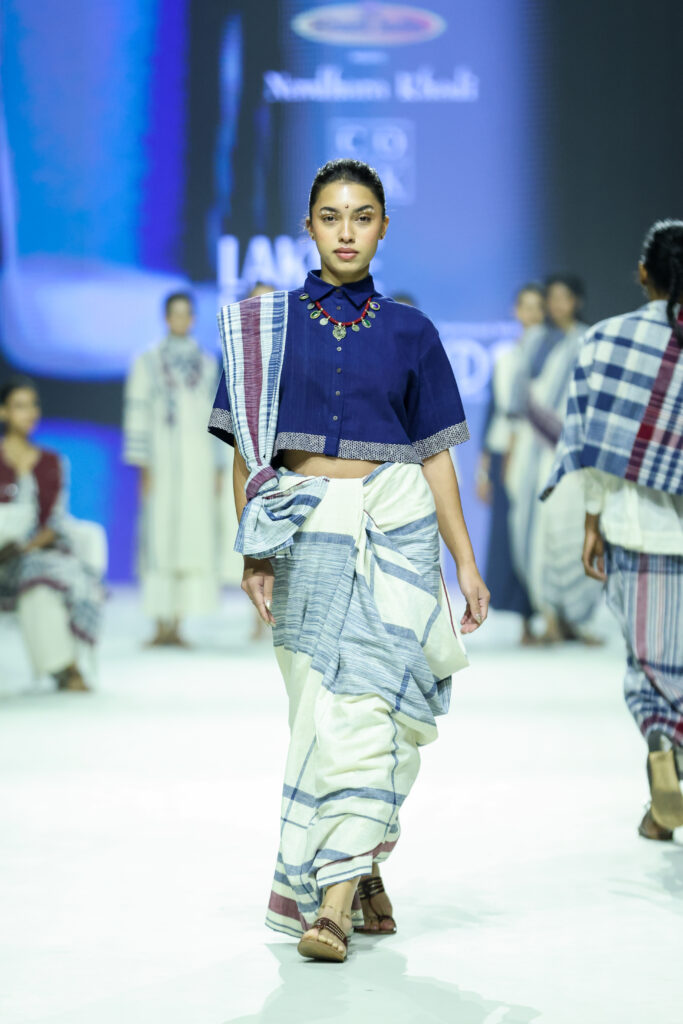
Shruthi Muniyappa from Sandur Kushala Kala Kendra, says, “2023 a Guinness World Record was set at Hampi for the largest display of Lambani items. Artisans are skilled at block printing, and khadi production, our attempt is to make women breadwinners.”
The patch work embroidery, mirrors and white metal jewellery along with seashells, intermingled with coloured threads makes each piece unique, as it carries 500 years of legacy, when they moved from Rajasthan to South India for trading, in Karnataka- 16th century!