
Clothes with feelings
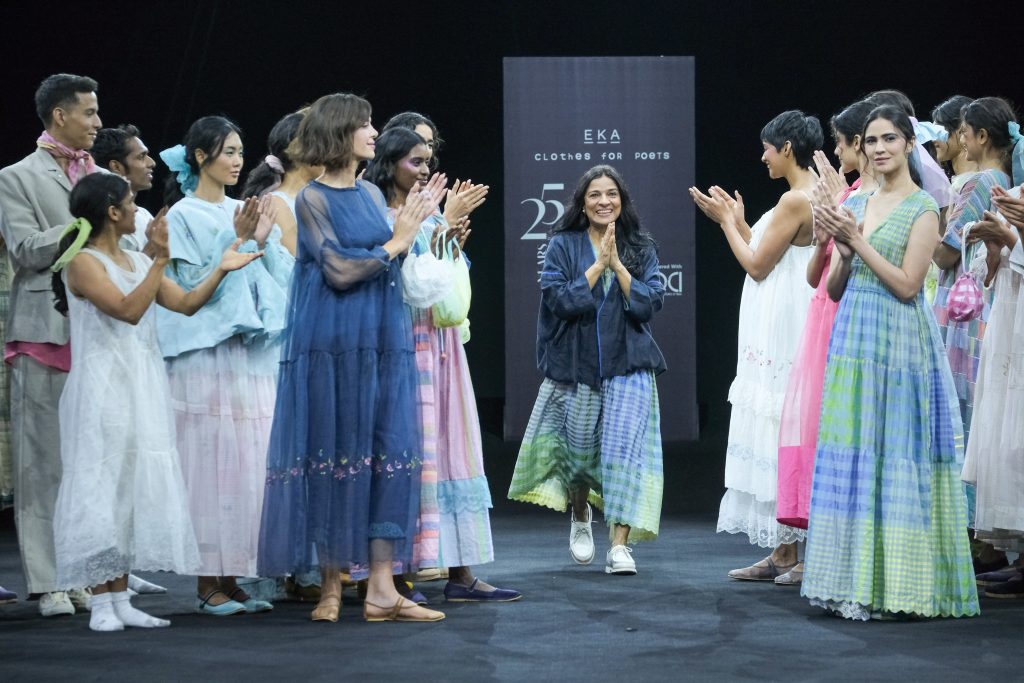
From serenading poets to artists, Rina Singh’s Eka is a case study of craft upliftment. By Asmita Aggarwal If clothes could have feelings Eka would be a right fit! Rina Singh, who built a brand, brick by brick, over 13 years believes it took years of developing product knowledge and working closely with clusters and weavers that helped her finally launch a brand. Unlike Gen Z who know marketing, but learn about product excellence along the way, their skills are so polished that business turns out to be good! “They do it right out of college, I took several years to have the courage and wherewithal to launch my label,” says Rina, adding, “the world of design has changed unequivocally.” Eka and Eka Core are two different ethos—but same mothership, the latter is ready-to-wear, younger, less moody, uses archival textiles and repurposes, so circular in ethos. Rina overdyes it, uses quilting, makes it trans-seasonal as most are leftover fabrics. Eka is known for its love for hand spun and slow, thus the making process is not instant and takes a year of planning. She took a concerted decision to be on the ramp, after a hiatus, to offer woven wonders from Bhagalpur, Banaras, Kota to Bengal, telling a story in Muslin, lace, inspired by Amer, Jaipur with its imposing mirror mosaics, for LFW this year, but she has interpreted it differently—appliqué to tiny embroidered motifs. The idea was to have movement in clothing, like choreography, how clothes adapt to the body and its wearer; as the DNA of the label remains the same every year, but the inspirations are rooted in craft upliftment. You may have boxy trousers, laces only show shifts in moods, things you can wear from Kutch to Tokyo, as it remains feminine, layered, and translucent—this time it’s silks, gossamer and diaphanous. “Sandeep my husband, is a pillar of support—he manages operations, so I am free to design, it takes a huge load off me, in the last decade, he has been a backbone. But I have learnt marketing needs to be loud, brands must have their own voice, and over the years I have learnt not to be rigid about my product,” she adds. Kurukshetra where she was born to agriculturalists, made a deep impact on her psyche growing up, she valued crafts and the “thinking before doing” process of clothing, where you deliberate rather than buy –it is laborious, time consuming, and expensive, but it is also timeless and hand spun, the beauty is unmatched. “I come from a Rajput family where traditionally women invest in weaves, pearls and Kashida, as well as vintage shawls, they understand aesthetics,” she says. Working with the European markets, especially Japan, Rina believes the real jewel in the crown in India is ready to wear, yet we are focussed on weddings, a money churner. “I know the Indian woman likes to be comfortable, yet classy, so why not give her craft-soaked offerings with hints of colour?” she concludes.
Tribute to Shakti
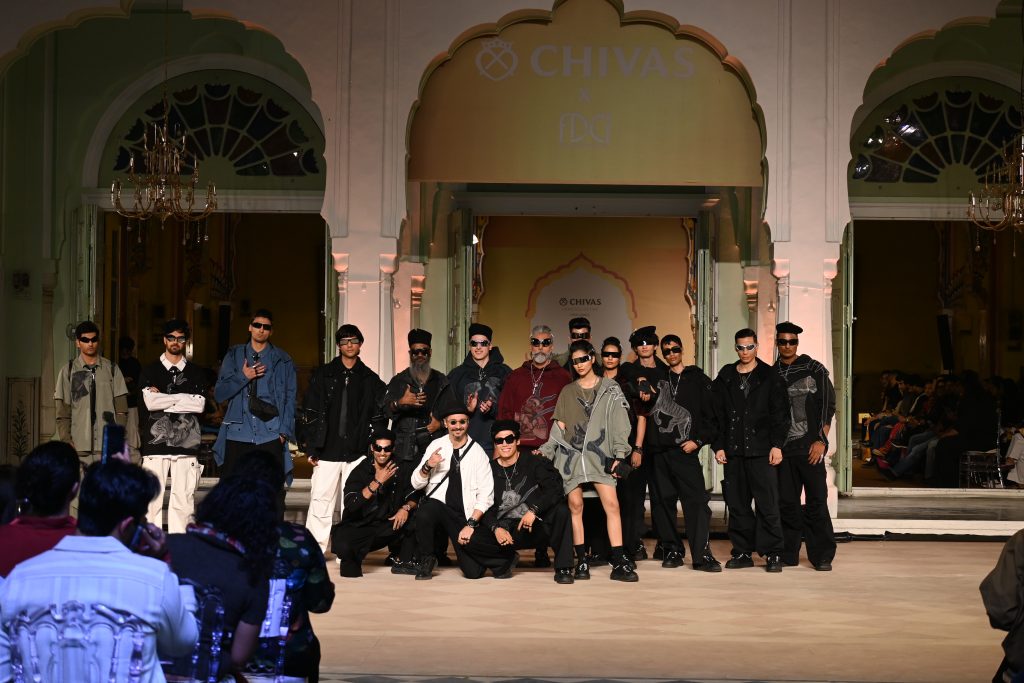
Hindu texts are replete with engaging tales of the goddess and demons, for Nitin Bal Chauhan, the 17th C Devi Kothi became a metaphor, for his streetwear line inspired by Chamunda, and the demons to be slayed — both external and internal in his menswear line titled ‘A Tale of Chamba’. By Asmita Aggarwal You will often see him in black, like the rest of us lovers of this hue, that blends in rather than stands out, I wonder if it has anything to do with how we think or how we want others to think about us? Nitin Bal Chauhan, is in charcoal just like me, when I meet him on a sun-drenched afternoon, bougainvillea blooming in Jaipur, we decided to sit on wrought iron heavy chairs made in the 1850, at Diggi Palace, accompanying heavy duty marble table tops. He had just shown his line at the Chivas Luxe Collective Perfumes presents FDCI India Men’s Weekend 2025 in Jaipur, a line inspired by the temple of Devi Kothi in Chamba. Built by Raja Umed Singh in 1754, dedicated to Goddess Chamunda, it is the northwestern frontier of the kingdom. Chamunda, another form of Durga, is from the text ‘Devi Mahatmya’, warrior goddess, who slayed demons Chanda and Munda. Vijay Sharma, a Padma Shree awardee artist and former curator of the Chamba Museum, and renowned art historian and scholar Dr Vishwa Chander Ohri revived the Chamba miniature painting tradition, Pahari school of art. “Devi Kothi temple’s architecture has an embellished wooden ceiling, and pillars which caught my eye,” says Chauhan, who was raised in Himachal, adding it is remotely placed, and the paintings are almost 300 years old in Tissa, 4-hour drive from Chamba. Bal decided to pay homage to the Chamunda, with hand painting, brush, and Air Ink, (ink made from collecting vehicular carbon emissions in Delhi and NCR. Founded by Anirudh Sharma, a graduate of Massachusetts Institute of Technology in Boston (USA), Graviky produces it) channelling sustainability. “How I’ve dressed myself in the last 20 years is very liberating yet simple,” he smiles. Using cotton twill, detailing like armored core used, a bit like Medieval armour in street wear. To match the Chamunda spirit, he had tracks from the American band GodSmack (had three of their hits– “Woo doo” and “Serenity”) to elevate the pagan elements associated with Chamba, the band connected to that vibe. Bal courted riveting, external elements inspired by armour, he added godets to enhance the shape of armour, straps have a defining factor of street wear, along with broad fringes. “The fighting spirit in clothing comes from Japan, but has entered India only now,” says Chauhan. He adds Hiroshi Fujiwara, is the father of street wear, way back in 1992, and Chauhan added his unique spin on it. Born in Shimla, specifically Mandi, studying at NIFT changed his life, he would come back home, climb walls, get into orchards, jump around, and live carefree. He decided not to get a job, started an NGO titled Sewa Himalayas, revived almost ten crafts – Chamba rumal (detailed patterns), metal carvings, carpet and blanket weaving, Pattu weaving (woollen fabric woven in the Kullu Valley) to woodworking, setting up 73 clusters. “Looked at marketing solutions. Himachal festivals Kullu Dussehra are big draw for tourists and Devis are honoured by carrying them on ornate palki, almost 200 carriages are taken out, it is like the Hornbill of the Himachal, (Shivaratri is huge here),” he says talking about the rich cultural tapestry. “I see a boom in street wear culture, sneakers have boosted it, Gen Z has purchasing power. They know they buy it for Rs 6,000 but can sell it for Rs 12,000. The fastest moving product now is hoodie, the market is in a good place,” he signs off.
From the earth for the Universe
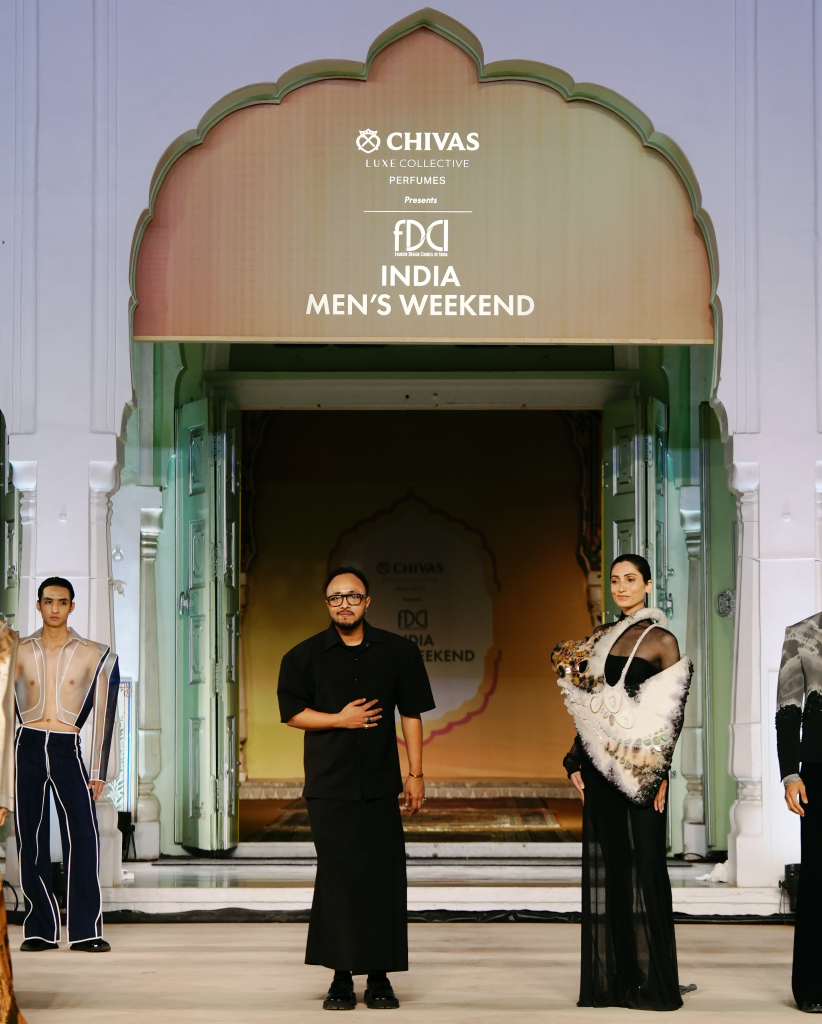
From healing crystals, to dressing body types and not genders, raw wool to unconventional shapes, Akshat Bansal is thinking out-of-the-box! By Asmita Aggarwal Small town boys have this innate desire to succeed, quite different from Metro cities, maybe it has to do with fewer opportunities, and exposure back home. Akshat Bansal of the label Bloni is interesting, from Hisar, went to Central Saint Martins, decided not to do bridal lehengas, but took the rather tough path of understanding science in fashion. Think reflective materials, colour sensitive fabrics, hemp, econyl regenerated, nylon flooring, industrial waste, and fabric scraps to craft ensembles. In 2022, he made his Paris Fashion Week debut, engagingly mixing rubber with tie and dye to crochet, hues which change along with body heat. In his line, the jacket can sometimes become a leotard, then a jumpsuit too, but here the dichotomy is lines like ‘Seher’ beautifully shot capturing small-town aesthetics and its austere life. He attempts to build a bridge between the past and future, and his experiments with felt are ingenious, so is his usage of 100 percent wool, raw in its form (heavily non-processed). ‘Passages’ his line for the Chivas X FDCI is where different dimensions align, fully couture, in its appeal. He uses gemstones, crystals, deconstruction of what earth holds, digging for that era gone by. “From the earth for the universe”, where you have no mechanisms, natural dyes used, mostly tie and dye, vegan rubber, futuristic in its look. “Crystals when they are not polished, but left as they were found, is what we use, it’s a different perception of beauty that many may find ‘dirty’. Just like hemp, it has in-built anti-bacterial properties, found in abundance,” says Akshat. This co-exists with manmade stainless steel, he believes it is impossible to go zero plastic, as there will always be silicon, plus Woolmark does merge Merino wool with polyester for elasticity. His denims are hand woven, by artisans, “I’m wearing CK jeans but I’m missing the comfort of my own creations,” he smiles. His fervent desire to take the road less travelled got him an invitation from Nature Morte gallery, where Peter Nagy termed his creations more “art than fashion”—you can buy it, wear it, or simply display it. A bit like what Natasha Poonawalla wore—a teardrop, it can be a lamp or just a pot too. 3D modelling, traditional hand hammering was employed from Moradabad artisans, to add to this chrome electroplating finish! Another such is a piece Sudha Murthy wore ‘Breathing Cocoon’ biomorphic wearable piece made of metal, wool, agate, and gemstones, which Akshat thinks could also be an artefact placed in a drawing room, breaking rules of what is traditionally considered art. “Why do we always talk of preserving art, but it is living, you can evolve it, isn’t it?” he asks. Crystals, he believes have healing powers, calming effects, remembering amethyst trees back home, protection from negative energy! “I did a Ted talk where I spoke about innovation over decoration, why did we wear jewellery? In history if you see silver releases electromagnetic waves, it isn’t about beauty but energy,” he explains. Cotton is the same wavelength as humans, linen more spiritual he believes, there is a hidden meaning to everything, he calls himself future friendly, not futuristic, but the quest is to find true purpose. His Paris experience was interesting, as looking at his offerings he was often asked, “where did you grow up”? Instead it should be where were you born? His lines are always fluid, and gender for him is nothing but ‘body’. “So many clients who do not fit into womenswear prefer the pieces I make for men. I think it is a body type not a gender we dress. I wonder who set those boundaries? Named these pieces? Why this segregation?” The search is to make a classic, which is named by him-as he asks why can’t pants have a train channelising a non-conformist approach to what is conventionally considered silhouettes, as he completes seven years in business, turned a wise 34 years!
In Fine Print
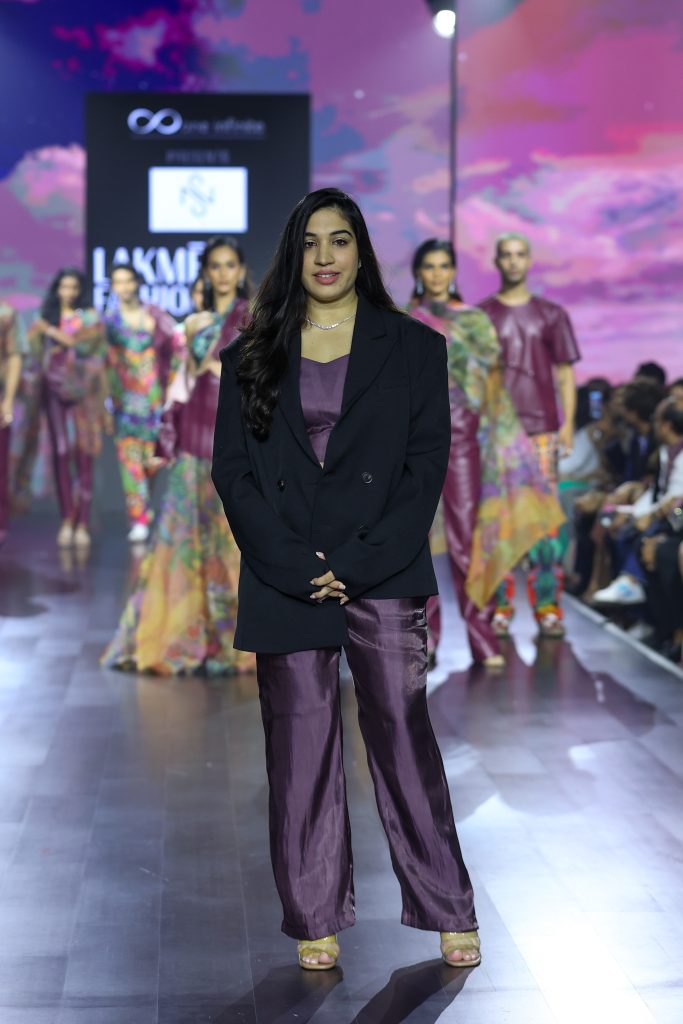
From Picasso, to Banksy and Mr Brainwash, Salita Nanda reinterprets art pieces through her unique rendering of hand illustrated prints in satiny draped dresses. By Asmita Aggarwal Born and raised in London, Salita Nanda studied at the London College of Fashion, University of the Arts, and then further honed her skills at Domus Academy in pattern making. The Indian community in the UK was vibrant, she decided to launch her brand in 2014, later moved to Mumbai after she met her investment banker husband. Known for 3 D printing, and selective laser centering a technique which accentuates conceptual prints, Nanda combined this with hand painting and illustrating original artworks, in the ready-to-wear line. “Growing up, I observed my mother loving all types of fabrics. She understood how to convert them into stylish clothing herself. We would go to different suppliers with her, that’s when I knew clothes would be something that I would do in the future, of course, in my own interesting way,” she smiles. Even though Nanda belongs to a family which is into construction from Pune, her father took the road less travelled and started the food exports industry in the UK. There was a void in the UK, in custom-made occasion wear, she teamed up with her mother, winning a clientele from Mumbai to Dubai and UK. “Prints are our signature, colorful and fun, most of the time they are inspired by artists,” she says. Some years ago, it was Picasso and his painting Les Demoiselles d’Avignon (The Young Ladies of Avignon, originally titled The Brothel of Avignon) from 1907 by the Spanish artist now part of the Museum of Modern Art, New York. “The angular, unusual body shapes, some Egyptian, African, and Asian styles were converted into paintings. Each of the five women were represented with symbols we handmade and broke down the colour ways, adding gradations,” she says. Art has been a recurring leitmotif in her collections as she was fascinated by graffiti street artist Bansky known for his political statements and also his protégé Mr Brainwash or Thierry Guetta, a French-born Los Angeles–based street artist. He reworks popular imagery as well as some from Jeff Koon’s steel balloon animals and Banksy’s ‘Throwing Man’, in a playful manner. “Mr Brainwash has designed album covers for Madonna’s Celebration, and Red-Hot Chili Peppers I’m With You, among others,” she adds. She is searching for an Indian artist she can immortalise with her artworks reinterpreting them uniquely. Satins, organza, crepes, on flowy silhouettes, and drapes gives each piece unmatched fluidity. “There is a song that has been playing in my head. It is about the sky. It is a 60s song, vintage but represented through the hues of what we see when we look above,” she says. It is not your typical blue—but yellows, pinks, and flaming orange, to depict changing seasons and ties of the day. “This year we have spray painted and also used watercolours mixing it with hand illustrations,” she explains.
“Embroidery is our DNA,” says Ashdeen
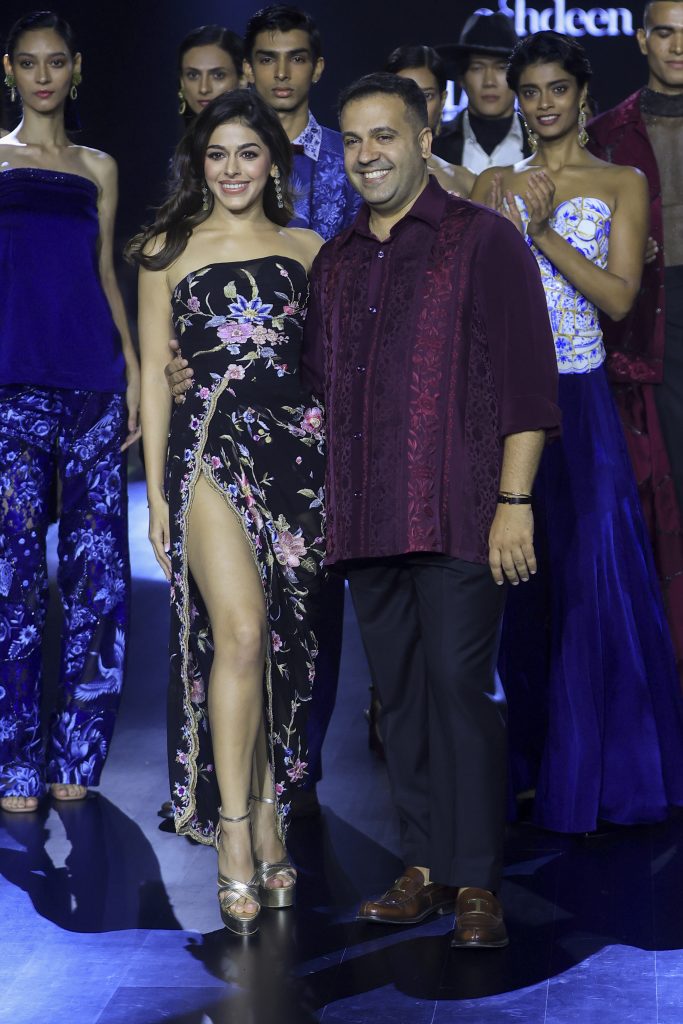
Dutch artist Patrick Bergsma and his broken ceramic pottery where bonsai grows is where Ashdeen found his stimuli, though his simple shapes complement the complex needlework techniques he uses to offer modern jackets. By Asmita Aggarwal Ashdeen Z. Lilaowala is a trained textile designer from the National Institute of Design, Ahmedabad (2002), with almost 22 years in this space, he decided to embark on a journey to really understand embroidery—2012 was when he decided to anchor the ship, launched his label. For a country which can’t get enough of embroidery, in any form, Ashdeen seems to have made the right choice, the only differentiator is, he doesn’t go where everyone has been, he uses these delicate age-old techniques on shapes and styles to serenade a younger audience, like his competition Patine. Growing up in Mumbai to a Parsi, working class parents, he was encouraged seeing his older sister study fashion design, and decided to follow her footsteps, at 17, he joined NID. Worked with NGOs, export houses, wrote extensively for magazines, his label was a result of providence, not premeditated. Ashdeen was working with a company in Los Angeles, used to import embroideries to America, till one day he made a Parsi gara for a friend, there was no looking back, he had found his market, from word-of-mouth. His experience was in-depth, working in the backend, he understood processes, techniques, markets, finance, how to run a business, and grew faster even though he started “late”. “I did my own shoots styling, wrote my press notes, it was a 360-degree learning, to know every aspect of the business,” he says. Twelve years in the business, with three stores (Mumbai, Delhi, and Hyderabad), Ashdeen believes embroidery is no longer a cultural aspect, it is all encompassing—you can wear a brocade jumpsuit, Parsi gara jacket or Kanjeevaram skirt. “Embroidery is part of our DNA, there is a new appreciation for it, consumers are ready to pay the price for the effort/labour intensive techniques. Honestly, 80 percent of my clientele is not Parsi, even though we have a dwindling population in India,” he admits. Parsis began trading with China in the early 17 century and saw these heavily embroidered pieces, they decided to bring it to India, Mumbai became a thriving centre. “Embroidery attained a new identity, it was Oriental, they adapted it for themselves—the jabla, wearing it, grew within the community. Trade blossomed, women kept the pieces, to be passed down to the next generation,” he explains. This year —birds, cranes, flora and fauna, chrysanthemums, peonies, roses will bloom on the LFW X FDCI Ashdeen line, almost looking like you are “painting with a needle”, inspired by the works of a Belgian artist, who creates magic with broken ceramic, letting a plant grow inside, almost giving you an image of an imposing floral arrangement. “Raised in a family of antique dealers, Patrick Bergsma was surrounded by art – using bonsai trees and using them in broken vessels, the visuals struck me,” says Ashdeen. It seemed as if fragments of time had been pieced together, almost like kintsugi, which he has attempted to portray in patchwork, without the Bollywood glam, simple shapes. Social media has put in so much pressure, how do you show classic ensembles, each piece is a labour of love, craftsmanship, so much consumption on Insta, how do we slow down? It is the question that plagues him. “It takes almost six weeks to make one piece,” he says, adding, “it is heavy on research, then polishing and finishing takes time. But I do feel this is where I find my creative stimuli. If I didn’t design, I would be a travel researcher and photographer,” he grins.
Builder’s daughter Monisha Jaising constructs ‘bling’
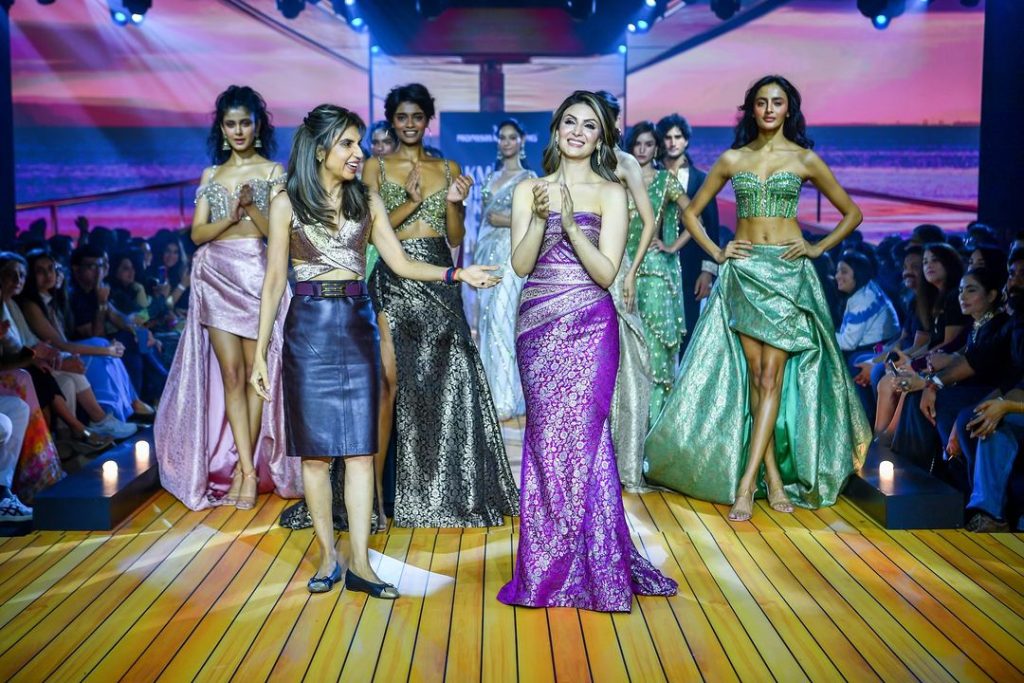
35 years in style business, the doyen believes, her biggest contribution has been keeping alive classic Indian ethos. By Asmita Aggarwal Her father was one of the biggest builders in Mumbai, specially the Bandra area, though he taught at the London School of Economics for many years too. Narain Bhojwani and Monisha Jaising share a common love for architecture, and interiors, even though fashion was her ultimate choice. The inventor of the ubiquitous kurti, (like the LBD) a multipurpose garment 35 years ago, Monisha felt it was Indian yet global-you could team it with jeans, skirt, dhoti, palazzos. It was kind of channeling Boho chic, a mix of what she learnt at the Royal College of Art, UK and her Indian heritage. She admits there have been more high points, than low ones in her career, her collaboration with star daughter —Shweta Bachchan, making jerseys for Mumbai Indians, “creativity gives me happiness”. Even though she faced recession, commercially sometimes things don’t do well, she believes “it happens in all businesses you can’t lose your bounce”. Her biggest contribution to fashion over three decades has been the modern woman, even the youth to live and like classic clothing, keeping Indian spirit alive! Some years ago, she paired her laser cut lehenga with a plain white knotted T-shirt, telling us you don’t need a bustier or a choli, this can work too! “Don’t think about building a brand, even if you don’t have your own, start working, gain experience. Look at Maria Grazia Chiuri, Nicolas Ghesquiere or even Sara Burton, they all worked for huge luxury labels,” she adds. There is a world of difference from the time she began, to now, no one understood why “fashion” when she began. There had to be education and awareness, “we had to convince and educate people, it was tough to get jobs, easier to open our own labels,” she explains. “Retail is booming in India, we had to tell customers, we are selling ‘fashion’, not ‘ready-made clothing’ there is a fine distinction between both,” she laughs. Social media has altered the psyche of buying, it has its pros and cons—you can either leave your brains on the table, or indulge in serious marketing tactics. Earlier we would spend a lot on marketing, editorials, and TV ads, “Instagram has finished all that—you can put out what you want in your own voice,” she says, “it has democratized the business—a fresh graduate has the same tools as me to expand her business.” Monisha over the years, hasn’t lost her sense of humour and giggles, “A young woman today will wear whatever her mother will tell her not to, she definitely wants innovation as she is able to see the world with a tap on her phone. How people dress –Pondicherry to Turkey,” she adds. Now is the era of mix and match—top from Zara, trousers from Fashion Street, you can put it together ingeniously, you look affluent. “I live in Bandra, I see young college going girls every day, who may not be as widely travelled, the way they swish their sunglasses, hipster jeans looks like they know it all, this is due to the information tornado on social media,” she admits. After almost four years, Monisha is back in Delhi for LFW X FDCI, she confesses laidback styles and her love for bling is eternal, MJ’s clothes can be worn anywhere. “Fashion degree always helps, you can be a designer even if you don’t have one, but learning is faster,” she adds. Co-Ord sets, blazers and of course the kurti have been her defining offerings to the Indian style-scape, “I love shine, but I use it judiciously, control it,” she admits. Besides, fashion, her love for spaces comes from her father, diversification does not interest her, but if given an opportunity she would have started a design college. “Fashion is ever evolving, I loved how glamour was edgy in Oscar de la Renta’s rendition of luxury, stylists have really upped the ante,” she adds. Sometimes they help sell, to customers who trust their judgement more, “homegrown labels may not have the knowledge of how to present that’s where stylists come in and change the entire perspective.”
“I wanted to dress like my father,” Pranav Mishra
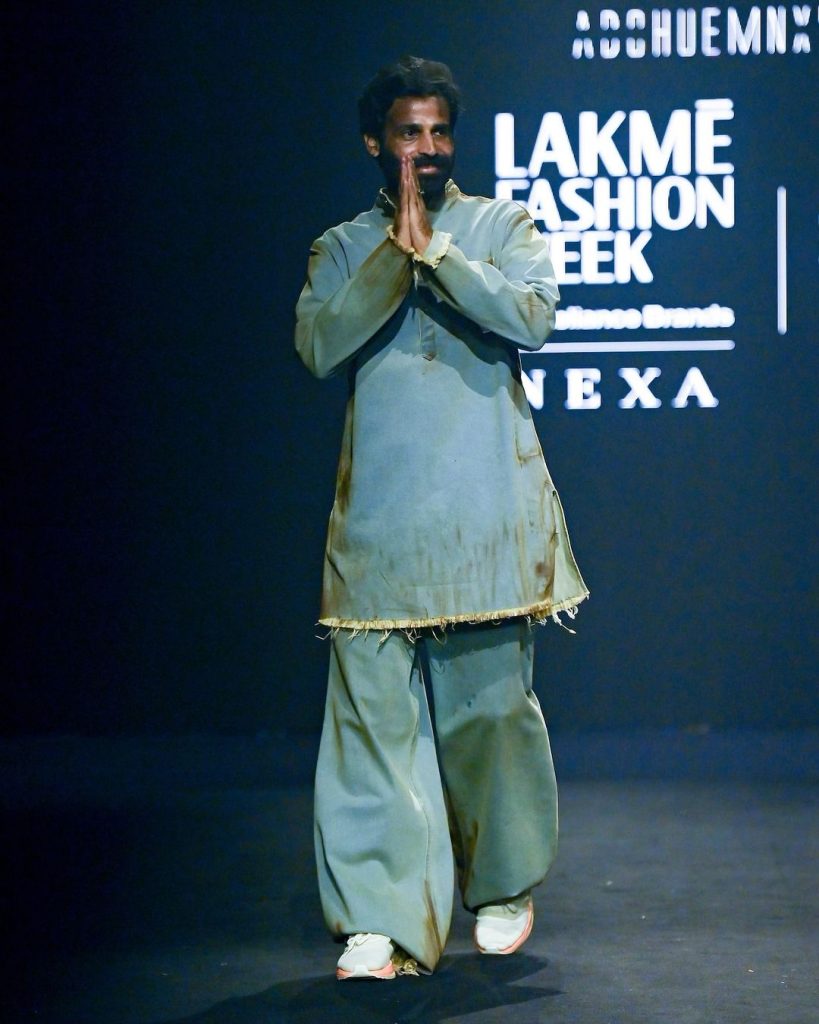
Huemn may be his alter ego, but the designer behind it calls himself a storyteller, who loves the possibilities of what denim can do; this season, he takes on a new journey by recycling creating invigorating landscapes in his anti-fit everything. By Asmita Aggarwal There is a huge conundrum between Pranav Mishra, the poet, and fashion designer of the rebellious brand Huemn, even though he says rather vociferously, he doesn’t identify with the latter. He has, in every interview, been repeatedly saying that creation is an “accidental process”, he only mirrors what he sees around him. Any poem, film or even collection, a creative entity comes alive when like a “child you let it go”, he doesn’t fit his oeuvre into a box of mood boards or theme, leaves it free-flowing. “It is a spontaneous process, just like I write phrases,” says Pranav. It is 12 years of the label, he started with Shyama Shetty, NIFT graduates, who now has taken over a different role—of a mother, wife though the Thailand-basen designer remains a stakeholder as well as advisor to Huemn. Pranav is not fazed by her absence, in fact he believes she is “omnipresent”. Fashion has changed though, “earlier there were many ‘gatekeepers’, Covid has altered the fabric, internet rules, and passion helps,” he explains. Diversification is the key, he admits Huemn was one of the first few to show sneakers on the catwalk way back in 2013, “we didn’t see our clothes being paired with uncomfortable shoes.” Lays was his most recent collaboration (they also tied up with Balenciaga last year), then Royal Enfield and Pepsi (which earlier associated with Alexander Wang). “It was interesting to work with corporates, understand how they think, as well as design something other than clothing,” he confesses. The result is you get more disciplined with any partnership, also it’s an opportunity to reach out to a newer audience. The only difference he sees when he works in fashion is the pace, which gets accelerated, as you are building something, “it’s a two-way street, someone is going to buy your product, I feel a sense of urgency to create a market,” he smiles. But when he is writing poetry, no sale is involved. No filter, just him and words, it’s free, the audience can like or discard it, it doesn’t matter even if he is trolled. He has loved literature, especially mid-19th century writers, but Rainer Maria Rilke, Austrian poet has been most impactful in his life. “Can’t be friends with them, would have liked to, they are gone, but the only way to establish a relationship is to bond through their writings. It is like talking to my friends, four out of five will engage, one will just observe,” he laughs, adding, “Rilke mentally stimulates me, just like Charles Bukowski was a German-American poet.” He “shook” Pranav, the more he read, the more desperate he got to learn, and his design is an amalgamation of what he personally encountered in life. “I can’t say my collections are inspired by butterflies or Turkey, we don’t interpret, we allow the audience to deduce and feel,” he admits. This year for LFWX FDC, he has tied up with RRelan, sustainable, recycled fabrics were used, also in some ways limiting him, even though the brand is popular for its avant-garde denim, especially the hand made one launched in 2022, with a seven-step wash, to give textures, leaving you to wonder if it is a print? He doesn’t believe in machine-made, thus his blood-plasma textures look alive, surfaces excite him, landscapes are a favourite, which he also did in his Kashmir line, a few years ago. Endless scrolling on the internet has created a bigger appetite for fashion, design now, he says is a part of our lifestyle, everyday life is now an “occasion”. If you want to watch a film, you want to look good, it’s not just about dressing up for a friend’s wedding. “You won’t wear a lehenga for a concert, you will try a denim, nicely cut, we fill that vacuum,” he says. He agrees rather candidly, “he had to work on himself”. The entrepreneurial journey humbled him, “we can’t do things alone, team is important, there is no hand holding, each one contributes and is a stakeholder, I have lost my arrogance,” he confides. “I’m a storyteller, not a fashion designer, objective till today is not to create clothes. Only when we have something to say we show at LFW, after two years we are back on the catwalk,” he says. His first encounter with fashion was watching his late father, a published poet, dressed in crisp, white kurtas in the city of nawabs-Lucknow, “I wanted to be as sophisticated as him, soft spoken, funny and magnetic, I often debated how I should drape my shawl like him,” he concludes.
Luck doesn’t help, focus does: Payal
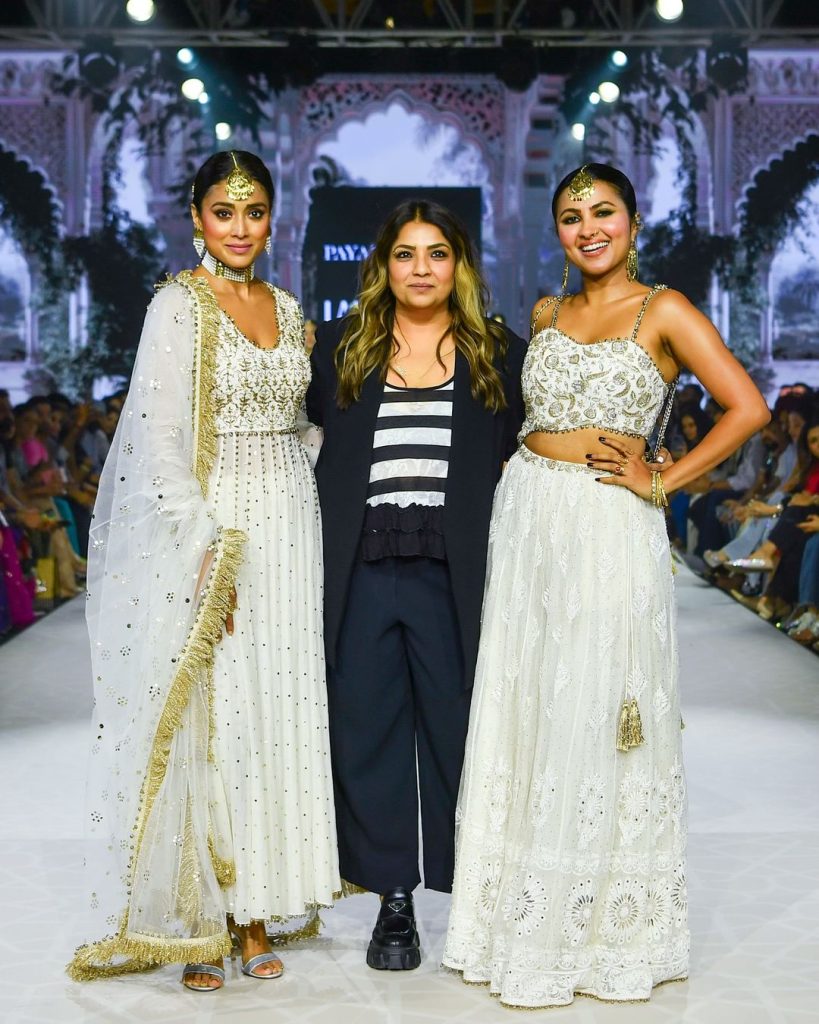
From her backless cholis to Aishwarya Rai wearing her award-winning Anarkali, Payal Singhal in 25 years of business has been consistent leaving theatrics to greenhorns, adopting practicality for survival. By Asmita Aggarwal Payal Singhal completes 25 years in the business of fashion, and if there is one designer who truly understands finances, it is the Mumbai-based guru of the “backless choli”. Her latest collaboration has been with the American sneaker company End State, that unfortunately could not be launched in India (due to laws changing) but is being sold in the US for $250. Designing the kicks with Stephanie Howard, ex-Nike designer, Payal says technology is the future as this one comes armed with a 3-chip futuristic approach. It is NFC based, interestingly they reached out to her, seeing her fan following (earlier they have collaborated with artists and musicians). “The shoe was a crossover between the East and West, June it was launched in the US, now sold online,” says Payal adding, it was inspired by Adivasi tattoos and she added her signature mukaish work, trying not to make it too Indian but global. You add brushed gold to this and you have a unisex sneaker. That’s not all. She has associated with Coach, also Namrata Lodha for hats inspired by the wheat farmers in Madhya Pradesh, she makes a line of kids wear, home, jewellery, resort wear as well as menswear, her portfolio is large and impressive. When she looks back, it is only resilience that helped stay afloat, keeping her head down and working, admitting “my career is not based on the luck factor” but a gradual graph upwards. She has survived covid, demonetisation, GST, and bad markets only to learn from those upheavals. “Innovation is the core of my brand; you cannot stick to a formula and make it work. I get bored easily, I need to be creative with my craft,” she adds. Twenty-five years is a long time to survive in the industry, when she started making Indo-Western with backless kurtas, to add sensuality, clients asked her “where is the back?” From 20-year-olds her customers, who spend more money than brides, Payal each season looks for excitement and freshness abandoning the complacency that comes with success. This year like always, there will be hallmark pieces—prints, fusion of art and architecture, shapes deconstructed and you cannot term her prints quirky or pretty. The backless choli remains her clients go to, and thus has been copied extensively too, the tasselling work added a new dimension to it several years ago when she started. “Luckily, I didn’t make any big errors, went slow, and sustained even during covid. We are self-funded, but tangibility and freedom helped us,” she adds. Payal has been a conservative businesswoman, never wanted to show off, flew under the radar, didn’t plan on opening a 10,000 feet store, when you visit her stores, “it is like having a chat with friends, not imposing or intimidating”. In 2005, she had a store in New York, which she shut down, even though she is the queen of collabs, she hasn’t ventured into the already crowded beauty segment, but came close to doing it. At 47, there is clarity of vision, every piece she wants to channel functionality and comfort. “Clothes should not be fussy, but easy, and clean, so repeatable. I always tell myself keep your eye on the prize, focus always works, and do not be in a hurry,” she adds. The LFW XFDCI line is a subtle nod to the 25 years, the first outfit showcased was the one she made, and won, for being the youngest designer in a Shopper’s Stop competition she took part in. “I was 15 years old, it was a national contest, the katarva cotton weave with a shadow effect won me the honour. Aishwarya Rai Bachchan has worn the winning Anarkali, I remember,” she laughs. There is nostalgia in the show, subtle panels of zardozi in gold, silver, and black, Mughal motifs. “My dad was an exporter and the biggest lesson he gave me was practicality,” she adds. Though Payal has no appetite for theatrics, “storytelling is important but I have done it without it,” she grins. The line is just in time for the festive season — extensive gotta-patti, creamy whites, tone on tone, ghungroos for embellishment!
A & T celebrate inconsistencies
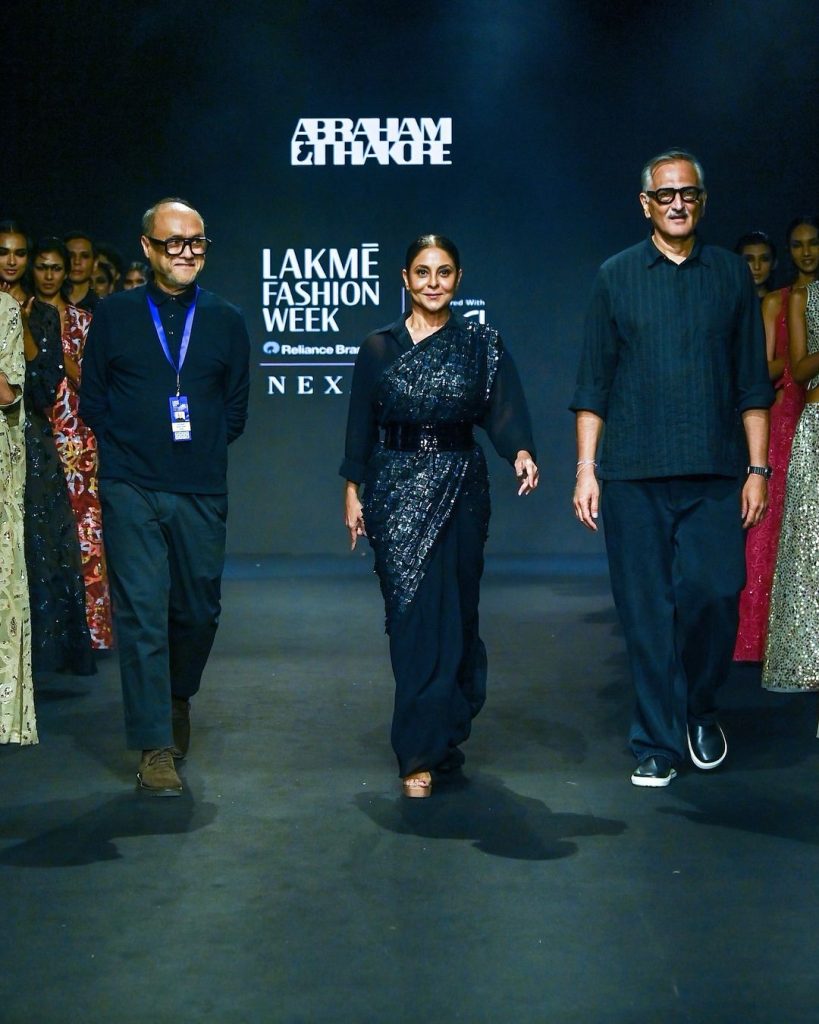
Discarded cassette tapes, toffee wrappers, bin bags are now RTW and make for new-age embellishment, as the trio Thakore, Abraham and Nigli tell us “What we buy and how we buy” is of brevity at their LFWXFDCI show. By Asmita Aggarwal Shefali Shah is a thinking actress, chooses her roles, is known for plain-speak and this authenticity of thought has won her a legion of followers. Just like A and T she is a natural, thus a perfect show stopper at the LFWxFDCI showcasing on Day 2. Three seems to be the lucky number for David Abraham, Rakesh Thakore and Kevin Nigli even though the third member is often a silent partner. The NID, Ahmedabad educated designers have seen the trials and tribulations of an industry from its infancy, maybe that makes them more resolute to doing what they do. Their leitmotif began with pursuing textile and has this season moved on to celebrating discarded materials—very Japanese in their thinking—using broken, damaged pieces to create something brand new. “The idea of using traditional craft, techniques or reinventing materials in new and unexpected ways that are both modern and now has been the concept this year,” says Thakore. Unspooled cassette tapes are woven into organza, chip wrappers are now knee-length dresses with laser-cut sequins which you will never know is from X-rays and believe it or not cement sacks are refashioned as evening gowns. That’s not all gunny bags, toffee wrappers, bin bags, kitchen foil and rice sacks can now be worn for your next lunch date! While working with discarded materials key is employing innovative techniques to give them a new avatar, but it can be limiting as the raw material is not chosen but procured. “We have used various found materials from cement sacks, X-rays, old cassette tapes and plastic shopping bags. The challenge was getting them cut into shapes that could be used for embroidery or to embroider onto fabric,” says Abraham. David Abraham as creative director decides the general theme for the season, Rakesh Thakore works on colour palettes and woven fabric. Kevin Nigli oversees merchandising and production. “While we generally agree on most things, if there is a difference in opinion then popular vote counts! It has been 30 years almost so it has worked with each one finding their spaces,” smiles Nigli. After three decades in the business of fashion has it changed for the better? They believe it has grown enormously from a single boutique like Ensemble to many multi brand outlets today. “From a handful of designers to a vast fashion community, from traditional bridal wear to a huge choice of ready-to-wear… and from a miniscule market share to a large consumer segment that is aware and wants to consume fashion,” says Thakore. Sustainability is today an “abused” word and do consumers really understand it, even though there is rampant greenwashing. They agree, “sustainability is over used, the very concept of fashion is not sustainable in the fact, it demands constant change every season.” What is important, they say is to consume mindfully, “what we buy and how we buy. If we want to be sustainable then we need to invest in clothes with a longer shelf life, be willing to pay more or things that have value, can last,” adds Abraham. Often called the masters of minimalism, more lovers of everything natural, ingrained in our culture and ideology, they believe in minimalism in that less is more, “that you can speak without having to shout, that the extra sequin may not be that necessary.” They love anything done by hand, especially block printing and Ikat, their signature. “We have explored that over the years and constantly try to push the boundaries on these. In a world of mass consumerism, true luxury is small quantities done with the power of the human hand. It celebrates its inconsistencies as something beautiful rather than a fault,” says Thakore. Their biggest weakness they confide, they did not also learn business management, which is a whole different thing to the purely creative process, ultimately no matter how beautiful something is it must be marketed and sold eventually. “The fleeting trend buyer, hopefully he will grow up and become a customer eventually,” they say in unison.
Greenwashing is rampant in fashion: Drishti
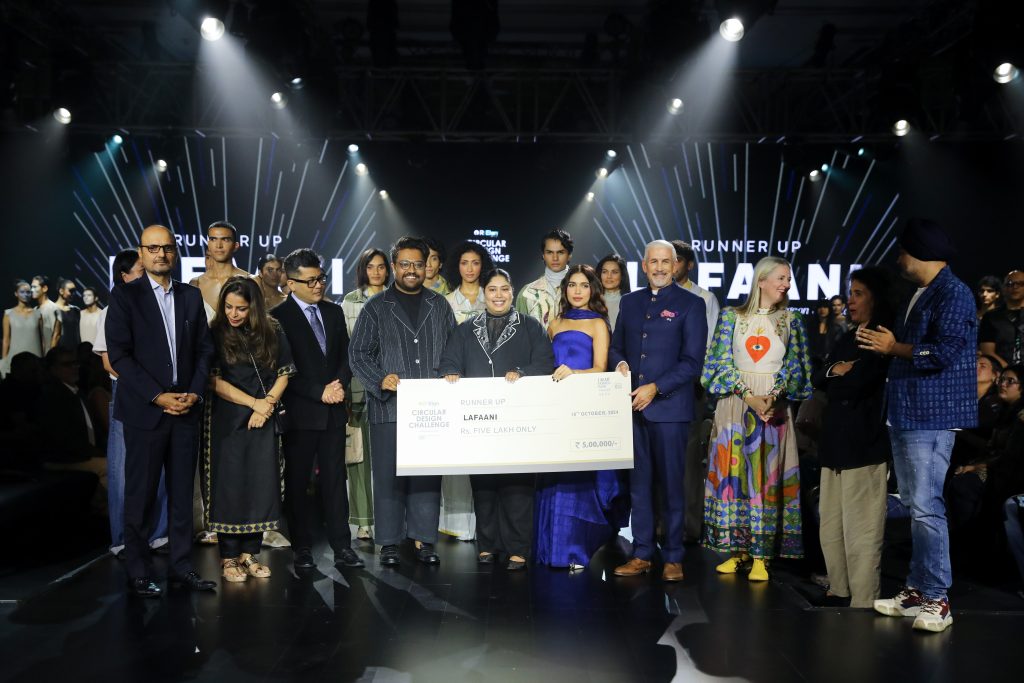
Drishti Modi and Rashmick Bose of Lafaani, CDC runner ups, bring circularity through unrestricted shapes, kala cotton and their love for repurposing. By Asmita Aggarwal She is a big movie buff, so the brand name is a result of binge-watching cinema, although alternate, thus Lafaani, was picked from the dialogue of Vishal Bharadwaj’s Haider, starring Shahid Kapoor, (the dialogue goes, “Rooh Lafaani”). “Lafaani is an Urdu word which means immortality—immortalizing artisans and making a product last a lifetime, transcending trends is what we hope to achieve through our brand,” says Drishti Modi. They won Rs 5 lakh as award money at the Circular Design Challenge in association with United Nations, as runner’s up. Modi is well-educated, maybe not in design, but at Teri School of Advanced Studies, she completed masters in environmental studies and resource management, though she did a short certificate course from NIFT later in business of fashion. Drishti met her brand partner, Rashmick Bose in Teri and they both decided to launch the label in 2021. Growing up in North India, the initiation to sustainable fashion was from childhood when she saw her mother and grandmother being judicious. “I grew up in Pune, Delhi, and Mumbai, I was always fascinated with craft and textiles. My size fluctuated, and I would often not get clothes that fit me well. I had to choose from one rack, I decided I must design clothes for women like me,” she smiles. Drishti, started by repurposing her mother’s saris, she married her academic training with her passion. Working with craft communities, cotton farmers she understood what she really wanted to do in life during Covid. “Bose joined me, he comes from Bengal which is a treasure trove of crafts, we try to bring what sustainability means in a global context,” she adds. His first exposure to craft was a baby blanket that was made by his grandmother in Kantha, they realized they had synergy in aesthetics. “I have no connection to fashion, don’t come from a design background, I had to build an eco-system—it was challenging,” she admits. Her mentor has been her father, who used to work with monster.com earlier, left to work in the social impact space. “He has been an angel investor and mentor for me,” she says. For LFW X FDCI she has worked with kala cotton, hand crafted embroidery, and reached out to a company in Mumbai which recycles flowers waste from Haji Ali and Siddhivinayak temple. They combined this with eco-printing, and hand painting on ensembles which are layered, minimal everyday pieces, multifunctional and adaptable. “Reversibility gives you freedom to wear it two ways. Our aim is to fight greenwashing by many labels that persist in the fashion space, a consumer is unaware about it. Buyers do not really understand sustainability, like kala cotton does not have certification, it is important to prove it, bring value to things,” she confesses. The move forward is strengthening their story, she says circularity is in her DNA, it’s deeply embedded, she hopes more consumers watch what they buy and are curious about who is making it and how it is made.